Author: [email protected]

  • Vegan Diet Significantly Better for the Environment than Mediterranean Diet: New Research

    Vegan Diet Significantly Better for the Environment than Mediterranean Diet: New Research

    Following an entirely vegan diet may be significantly better for the environment than the Mediterranean diet, according to new research published in the International Journal of Environmental Research and Public Health. The study also indicated positive outcomes related to weight loss, insulin sensitivity, and cholesterol levels for those eating vegan.

    A vegan diet eschews all animal products. Mediterranean diets, meanwhile, exclude all red meat and are largely plant-based but include some fish, chicken, and dairy. For this study, Italy-based researchers compared the environmental footprints of the two diets using a life cycle assessment—an analysis of the environmental impacts of products during their entire life cycle. They found that although animal products only make up about 10% of the average Mediterranean diet, their inclusion makes the diet significantly less environmentally friendly than it would be without any animal products: By the researchers’ calculations, vegan diets produce 44% less environmental impact. The assessment was based on a theoretical 2,000-calorie diet.

    Master plant-based cooking with Forks

    Get 25% off through February 21

    “Despite the low content of animal foods, the Mediterranean diet has shown a total environmental impact higher than that of the vegan diet,” says Luciana Baroni, MD, one of the study’s authors. “The diet of each person is important because it represents the most powerful single action to affect the health of the environment. We won’t get very far as a species if the environment poisons us, makes us sick, and doesn’t provide us with the resources to survive. Unfortunately, people don’t know this, because they only hear recommendations,at most, to reduce meat consumption to combat climate change.”

    Eating Healthfully to Protect the Planet

    A growing body of research underlines how cutting meat and dairy products can help better protect the planet from climate change and pollution. Another 2023 study, published in The American Journal of Clinical Nutrition, concluded that vegan diets are the least environmentally damaging diet.

    The study found that vegan diets generate 0.7 kg of carbon dioxide per 1,000 calories consumed whereas a meat-heavy diet, such as keto, generates 3 kg of carbon per 1,000 calories. Additionally, a study published in The Lancet Planetary Health in 2022 found that healthier foods such as plants, grains, fruits, and vegetables offer the lowest environmental impact, signifying a correlating relationship between foods that are good for human health and good for the planet.

    By contrast, diets primarily featuring animal products, especially beef, present significant threats to the environment. Animal products require 83% of the planet’s farmland, despite only producing 18% of the world’s calories. Overall, research indicates that animal products, even in low-meat diets such as in the Mediterranean, produce notable environmental consequences, such as wasted energy and excessive methane emissions.

    “Research agrees that the consumption of animal foods is the main determinant of the environmental impact of a diet,” Baroni says. “Switching to a vegan diet is not only the most powerful action any of us can do for the planet but also the cheapest and the easiest.”

    To learn more about a whole-food, plant-based diet, visit our Plant-Based Primer. For meal-planning support, check out Forks Meal Planner, FOK’s easy weekly meal-planning tool to keep you on a healthy plant-based path.

    Credit: Source link

  • 10 tips to slow down ageing

    10 tips to slow down ageing

    Have you ever considered that your daily habits can slow down or accelerate your ageing process?

    As much as we all wish for a miracle cure to remove wrinkles, laugh lines, age spots, and saggy skin, we’re still waiting. It is up to us to figure out how to turn back the clock or at least slow it down, so that you can age slowly and gracefully!

    As we age, our skin starts to sag, lines become more pronounced and sun spots start appearing like polka dots.

    While these are normal and come with age, there are various external and internal factors that play a role in either accelerating or slowing down the ageing process.

    With the right approach from these 10 anti-ageing secrets, you can defy the ageing process to keep looking radiant, young, and vibrant.

    READ MORE | Study Suggests Excessive Blue Light From Devices May Accelerate Ageing

    #1. Drink enough water

    It all starts with good old H2O! After all, our bodies are mostly made up of water. Without adequate fluid, our body will become dehydrated. This becomes especially noticeable in the skin, which shows more wrinkles and loses elasticity.

    Drinking a minimum of eight glasses of water a day will help reduce the likelihood that you will develop saggy, wrinkled skin.

    #2. Exercise & Maintaining a Healthy Weight

    An active body is a young body! Simply put, if you do not exercise regularly, then your body and face will age at a faster rate.

    Being underweight or overweight can add to the ageing process. Being underweight reduces the natural fats in your face, which in turn makes your skin more saggy and wrinkly.

    Being overweight can lead to several health problems that can accelerate skin and biologically ageing (your biological age is the age of your physiology compared to your age in years – your chronological age).

    So get up and get moving! Ditch the excuses and watch your overall health improve along with your skin, which will look younger, firmer and more radiant.

    #3. Maintain a Healthy Diet

    Focusing on your nutrition and knowing what you put into your body helps radiate health and youthfulness from the inside out.

    Focus on fresh homemade meals, fruits, vegetables, lean proteins, and whole grains to slow the ageing process.

    If you fuel your body with processed foods that contain sugar and artificial and manufactured foods, then both your body and your skin won’t get the nutrients they need and you will age at a faster rate.

    You may even develop acne, rosacea, and inflammation because of these foodstuffs. Sugar is one of the top culprits that can cause dark circles and fast-track the ageing process, especially on your skin! So skip the sugar and processed food and start focusing on a healthy diet!

    #4. Get Sufficient Sleep

    We all know that the body needs sleep to recharge and heal itself. But did you know that lack of sleep can lead to many health problems, including premature ageing?

    During sleep, our skin enters a repair and rejuvenation phase as our body restores its cells. This is why it is ideal to apply richer creams and serums before bedtime.

    During the day, we are in fight or flight mode, and our skin is constantly fighting off external factors like pollution, whereas our skin is at peace and can heal itself at night.

    Struggling with your sleep? Try these tips to get better quality shuteye:

    • Set a schedule: A standard bed time will help your body’s natural internal clock maintain a more regular sleep/wake cycle. So set that timer and get to bed!
    • Avoid alcohol, caffeine and stimulates: These substances interfere with your ability to fall asleep! Switch to herbal teas (my favourite is lemon, turmeric, and ginger).
    • Relax and turn off your devices at least 1 hour before bedtime: Avoid stimulating activities that wake you up, and bright lights from screens as this can stimulate your brain.
    • Relax: Take a warm shower or bath to relax the muscles
    • Support your sleep: Take a magnesium supplement.

    READ MORE | Beneficial Sleep Is About Quantity And Quality

    #5. Supplements

    Certain supplements are extremely beneficial in helping to slow down the ageing process. In particular, vitamins A, B, C, D, E and collagen are important!

    Supplements help to support natural collagen and elastin production, which are two important proteins for your skin that begin to break down at a faster rate and production of new fibres slows as we age.

    For example, research shows that collagen production decreases by around 1% each year after the age of 25!

    And this is where supplements can help.

    • Vitamin A: Helps to increase cell reproduction and stimulates collagen production.
    • Vitamin B: Increases the skin’s elasticity, reduces inflammation in the skin, and helps with acne!
    • Vitamin C: Helps prevent damage to your cells, which in turn helps with collagen and elastin production.
    • Vitamin D: Helps with overall bone health and the immune system.
    • Vitamin E: An antioxidant that helps maintain moisture and protect skin cells.
    • Collagen: Improves the condition of skin, hair, nails, and connective tissues.

    In short, skin-supporting supplements rejuvenate and revitalise your skin by improving the health of your skin cells and help to produce proteins like collagen!

    READ MORE | Healthy Radiant Skin Needs Collagen

    #6. Apply SPF Every Day

    Sun damage is a leading cause of wrinkles and other visible signs of ageing! The sun’s UV rays also cause pigmentation, age spots, and other types of discolouration. That’s why it is important to protect your face from the sun.

    Invest in a top quality sunscreen with an SPF50 factor to use every day! Opt for a full spectrum mineral-based sunscreen as it blocks both UVA and UVB rays and reduces free radical damage.

    Even if you don’t spend too much time outside, apply sunscreen if you sit in front of a computer screen all day. And invest in a blue light cover for all your digital screens as blue light causes photo ageing to the skin.

    READ MORE | Studies Confirm, High-Fibre Diet Improves Longevity

    #7. Invest in Skincare Products

    Apart from using your sunscreen every day, you need to have a proper at-home routine that is custom-made for your skin type and goals.

    When attempting to slow the ageing process, it is vital to follow a daily skincare routine to nourish it from the outside.

    Your daily morning and evening skincare regiment is key to keep skin looking radiant and healthy. If you skip your skincare routine or, worse yet, go to bed with makeup, then you will accelerate your skin’s ageing process.

    Dirt and makeup that is trapped in your skin can cause premature ageing, acne, breakouts, and cause uneven skin texture and tone, just to name a few issues.

    So get into the habit of removing your makeup and taking care of your skin every night and day!

    #8. Make the Most of Aesthetic Treatments

    Just like you need a skincare routine, you also need a skin treatment plan. But with all the advanced treatments and technology available today, there is no need to go under the knife to look younger.

    It is possible to stimulate collagen and elastin production with treatments like micro-needling, IPL, chemical peels, and fractional lasers, among others.

    These treatments can focus on problem areas such as sagging and wrinkling skin and provide a treatment plan that will reduce those lines and tighten and tone the skin without needles, toxins or surgery.

    At-home micro-needling, micro-current and face roller devices will improve your skin’s overall appearance, making it look smooth and radiant.

    After you cleanse your skin using light pressure, gently roll over the skin with your roller, then apply your serum and moisturiser. This process will help with product absorption and tighten the skin. An at-home micro-current machine is a muscle stimulator that helps to lift the skin, stimulate collagen production, and reduce fine lines and wrinkles by leaving you with tighter, toned, more defined, and younger-looking skin.

    #9. Don’t Smoke and Drink Excessive Alcohol

    Smoking and drinking lead to all kinds of health problems, and accelerate skin ageing. Smokers end up with more fine lines, typically around their mouths and eyes. Plus, smoking deprives the skin of oxygen, which it needs to thrive and survive.

    Excessive alcohol can also cause major havoc, not only on the internal organs but the skin, too. Excessive alcohol consumption can cause broken capillaries to form and create redness like rosacea, as well as discolouration

    READ MORE | 4 Skincare Trends To Watch Out For In 2023

    #10. Massage your Face

    Giving yourself a regular face massage will help stimulate circulation and cell growth. And it will help with lymphatic flow, which in turn helps reduce water retention. Facial massages can also rejuvenate your skin and prevent fine lines and wrinkles to make you look younger.

    Use your favourite moisturiser or skin oil and apply upward and side strokes. Just think about wiping the wrinkles off your face!

    This type of massage also relaxes facial muscles. Concentrate on areas where you use repetitive facial expressions, such as squinting and frowning, as these can create fine lines.

    While ageing is part of life, it does not mean that we should simply toss in the towel and neglect our body and skin. By following the steps above and your willingness to make a change in your lifestyle, we can all age more gracefully and be healthier inside and out.

    By Laura Soulios

    About the author

    Laura is a multi-award winning Medical Esthetican and owner of Body Tuned By Medi Spa and Rehab Centre in Toronto, Canada. Laura is a representation of natural beauty and health. She also is a body transformation coach who helps people achieve their health and fitness goals without starving themselves and spending hours doing cardio. She approaches each of her clients in a holistic way, treating skin and body issues from the outside and inside using the latest and most advanced technologies and techniques to get clients the skin and body they have always wanted. Laura is a fitness model who has graced fitness, glamour, fashion and luxury magazines all over the globe. She represents what she believes and preaches. Visit www.bodytunedby.ca for more info and reach out to Laura with any question on IG @Body_Tuned_By & @Laura_Soulios.


    Author: Pedro van Gaalen

    When he’s not writing about sport or health and fitness, Pedro is probably out training for his next marathon or ultra-marathon. He’s worked as a fitness professional and as a marketing and comms expert. He now combines his passions in his role as managing editor at Fitness magazine.


    Credit: Source link

  • Adidas drops new lightweight running shoe, Ultraboost Light

    Adidas drops new lightweight running shoe, Ultraboost Light

    Adidas has unveiled the latest member of its most iconic running shoe franchise – the Ultraboost Light.

    Testament to their constant strive to take innovation to the next level, and in response to consumer feedback, the new Ultraboost Light has a ground-breaking new material at its core – Light BOOST.

    READ MORE | Adidas Unveils 4DFWD: A Running Shoe Coded To Redefine Forward Motion 

    Adidas-drops-now-lightweight-running-shoe-Ultraboost-Light-2

    Lighter material

    Marking a decade since the introduction of BOOST technology, the new and improved Ultraboost Light benefits from 30% lighter BOOST material, resulting in a performance running shoe designed to offer epic energy, ultimate cushioning, and unrivalled comfort and responsiveness.

    Taking runners’ experiences to the next level, the all-new Ultraboost Light also boasts:

    • A redesigned Linear Energy Point (LEP) found on the sole of the shoe, reworked to optimise responsiveness and working in harmony with the new Light BOOST material.
    • PRIMEKNIT+ upper for an adapted fit that offers the ultimate breathability and comfort.
    • Continental™ natural performance rubber provides optimum traction in all weather conditions.
    • A 10% lower carbon footprint* compared to previous versions.

    The new Ultraboost Light launches in a white colourway, featuring solar red and core black detailing, and is now available from adidas concept stores countrywide, online at adidas.co.za and on the adidas app.

    READ MORE | Up Your Training Intensity With New Adidas HIIT Collection

    Adidas-drops-now-lightweight-running-shoe-Ultraboost-Light-3

    Special anniversary edition

    To celebrate the 10th anniversary of BOOST technology, adidas is also revealing a special edition version of the adidas Ultraboost Light with a dedicated colourway.

    The 10th-anniversary edition comes in a primarily black colourway, with black and yellow detailing – the same design that was found on the first-ever adidas silhouette with BOOST technology, the Energy Boost.

    Follow the @adidasZA #ULTRABOOST conversation on Instagram for more information.


    Author: Pedro van Gaalen

    When he’s not writing about sport or health and fitness, Pedro is probably out training for his next marathon or ultra-marathon. He’s worked as a fitness professional and as a marketing and comms expert. He now combines his passions in his role as managing editor at Fitness magazine.


    Credit: Source link

  • 5 outdated women’s health myths that must fall!

    5 outdated women’s health myths that must fall!

    From dismissive doctors to inadequate research, women do not always receive the proper medical care they need and deserve due to various outdated women’s health myths that still pervade modern life.

    Legitimate health concerns are often dismissed because they are wrongly attributed to stress, mental illness, or hormonal imbalances.

    Additionally, a great deal of incorrect information exists about women’s health.

    There is a lack of research into health issues that primarily affect women because medical studies by the National Institutes of Health were not mandated to include female subjects until 1993.

    That’s why continued education and better awareness is essential to empower and protect women, especially as new research discredits various commonly-held beliefs. A few of the more common myths include:

    READ MORE | 8 Myths That Undermine Your Weight Loss

    Myth #1: Cranberry juice can prevent or cure urinary tract infections

    It is true that cranberry juice contains ingredients that can prevent bacteria from sticking to the bladder wall.

    However, it does not have sufficient amounts of these substances to make any difference.

    A review of 24 large studies investigated cranberry products for urinary tract infections (UTIs) and concluded that neither juice nor supplements significantly reduce a person’s risk of experiencing an infection.

    Most UTIs occur when bacteria enter the urethra and spread to the bladder. Sometimes the body can rid itself of the bacteria on its own, but most are treated with antibiotics. If it isn’t treated promptly, serious complications can arise because it can spread to the ureters and kidneys.

    While the science doesn’t seem to be there, there’s likely no harm in using cranberry products to prevent a UTI. Just know that there isn’t necessarily a benefit, either.

    READ MORE | 5 Early Warning Signs That Your Health Needs Attention

    Myth #2: Only men get heart disease

    Heart disease is actually a killer that strikes more women than men, and it is deadlier than all forms of cancer combined.

    While one in 31 women dies from breast cancer annually, heart disease is the leading cause of death among women.

    For the longest time, women would look for signs like shortness of breath, nausea, vomiting, and pain in the back, neck, or jaw while for men, it was a classic elephant-on-the-chest feeling.

    However, in one recent study of individuals being evaluated for a possible heart attack, European researchers asked patients to describe their symptoms and then analysed the responses. Surprisingly, they found little statistical difference in the answers. Chest pain was fairly standard among all patients and the other symptoms were relatively common. So, if you’re not feeling right or if you think you’re having a heart attack, call your doctor, stat.

    Preventive care measures include tracking your blood pressure, blood sugar, and cholesterol, maintaining a healthy weight, eating a heart-healthy diet, and remaining active.

    READ MORE | Survey Finds South Africans Surprisingly Heart Healthy

    Myth #3: Severe anger, depression, or anxiety before your period is normal.

    Anxiety is a symptom of premenstrual syndrome (PMS), affecting 30–80% of people with a period. During the luteal phase, which begins after ovulation and typically lasts until a woman’s period starts, women can experience a combination of emotional and physical PMS symptoms.

    Researchers still don’t fully understand why anxiety occurs before a period. Still, it may occur due to changing hormone levels because the luteal phase corresponds with peak estradiol and progesterone levels.

    The severity of PMS symptoms can vary. Some people can experience no symptoms while others can develop severe symptoms, which may be a sign of premenstrual dysphoric disorder (PMDD).

    PMDD is a health problem that is like PMS but is more serious. It can cause severe emotional distress a week or two before your period, and symptoms can be debilitating and affect various aspects of your personal life. Symptoms usually go away two to three days after your period starts.

    A person can try several strategies to help reduce anxiety and other signs of PMS. These include regular exercise, sleep, a healthy diet, and avoiding alcohol, caffeine, and salt. However, if you have concerns, you should talk to your doctor, who can recommend treatment to manage your condition.

    READ MORE | Work With Your Cycle, Not Against It

    Myth #4: Miscarriages are caused by lifting a heavy object.

    Most miscarriages occur due to genetic abnormalities in the embryo and not by lifting heavy objects. In late pregnancy, the current recommendation states that women should reduce the maximum load that she could lift in her pre-pregnancy state by 20-25%.

    Late in pregnancy, a woman’s ability to safely lift a load decreases, mainly because her centre of gravity and balance change. And the pregnancy hormone relaxin causes connective tissue, ligaments, and tendons to soften, so a pregnant woman can injure herself if she lifts a heavy load. But no studies show that lifting more than 11 kg affects birth weight or prematurity.

    If a woman has a history of previous preterm births, multiple miscarriages, known abnormalities of her uterus or cervix, or has underlying heart or lung problems, she should limit her activity.

    Other causes of miscarriage include chronic health conditions like diabetes, physical disorders affecting the reproductive system, and lifestyle habits like alcohol use during pregnancy.

    When considering pregnancy, talk to your healthcare provider to review your medical history and discuss what you can do to help ensure a healthy pregnancy. But remember, even if you do everything ‘right’, you may not be able to prevent a miscarriage.

    READ MORE | Fitpregnancy Tips Every New Mom Should Know

    Myth #5: It’s normal to have some leakage after childbirth when you laugh, run or sneeze.

    It is common for pre- and post-natal women to experience some urinary incontinence. However, it is not normal.

    According to a 2019 study, approximately one-third of people experience urinary incontinence between the second trimester of pregnancy and the first three months after childbirth.

    The Office on Women’s Health (OWH) suggests that hormonal changes during pregnancy, childbirth, and menopause may cause this condition.

    Pelvic floor muscles support the bladder and other organs, and during pregnancy and after birth, the strength of the pelvic floor muscles decreases. Exercising these muscles can strengthen them and help reduce or eliminate your urinary incontinence symptoms.

    Some good pelvic floor exercises to incorporate into your routine include:

    1. Heel slides
    2. Toe taps
    3. Diaphragmatic breathing.

    Contact your physician if the incontinence continues for more than six weeks after birth.

    By Brittinie Wick

    About the author: Brittinie Wick is a health and fitness coach who empowers all women to gain confidence, lose weight, and celebrate the feeling of strong and sexy through fitness and nutrition. Grab Brittinie’s “Healthy at Every Age” guide! This ebook is aimed at people just like you, who want to live their best, most active life, starting today and continuing deep into the future! Find it at www.brittiniewick.com/freeguide. Follow Brittinie on @Brittiniewick_fitness on IG.

    Author: Pedro van Gaalen

    When he’s not writing about sport or health and fitness, Pedro is probably out training for his next marathon or ultra-marathon. He’s worked as a fitness professional and as a marketing and comms expert. He now combines his passions in his role as managing editor at Fitness magazine.


    Credit: Source link

  • Cheap Eats: Toni Okamoto’s New Plant-Based on a Budget Cookbook Makes Vegan Meals Accessible for All

    Cheap Eats: Toni Okamoto’s New Plant-Based on a Budget Cookbook Makes Vegan Meals Accessible for All

    A commonly cited obstacle amongst people considering going vegan is the perceived cost. And it makes sense: Many Westerners build their diets around cheap highly processed foods, government-subsidized dairy and meat products, and the social expectation that a “real meal” should be centered around animal protein. While studies show that plant-based diets are actually the most cost-effective out of any dietary style, going vegan without a road map can certainly cause financial anxiety. Toni Okamoto, author and founder of the popular blog Plant-Based on a Budget, is here to prove that thriving on a plant-based lifestyle can actually be inexpensive.

    Okamoto’s new cookbook, Plant-Based on a Budget: Quick & Easy, comes out March 7 and is packed full of vibrant recipes that get you the most bang for your buck. FOK spoke with Okamoto about her early days of being a thrifty vegan, how her family’s health challenges spurred her to create the blog, and how she hopes this new book will retire the misconception that plant-based eating isn’t an accessible option for everyone.

    Struggling to cook healthy meals at home?

    Forks Meal Planner is here to help.

    How were you first introduced to a plant-based diet?

    Toni Okamoto: There are two chapters of my early childhood that were important to my transition to plant-based eating. My dad was really young when I was born and he went into the Navy full-time, so I lived with my grandparents while he was away. My grandpa was very active as a Japanese gardener here in the Central Valley of California, so I had easy access to fresh food and meals made from scratch. This was what I ate in my early years. Then when my dad came back from the Navy we lived the bachelor life together and ate a lot of things like boxed mac ‘n’ cheese or hotdogs with canned chili. My dad was super busy trying to raise two little kids, work full-time, and make sure we were involved in extracurricular sports. He did his very best, and that meant fast, convenient foods became my norm.

    At 16 I was running track, and I would always get sick to my stomach after a long run. One day my coach said, “Hey, that’s not normal for you to get sick every time you run. What are you eating?” And I thought it was such a weird question, because to me food was about how it tasted and whether it made me full. It turns out the Taco Bell that I was eating every day at lunch wasn’t good for me! Same with the Hamburger Helper that I loved so much. So my coach advised me to cut out red meat, fast food, and processed foods. That was really the beginning of looking more critically at what I ate.

    How did your family influence your focus on creating cost-effective, plant-based meals for your blog and subsequent cookbooks?

    TO: I grew up in a primarily Mexican-American community and it was a bit of a challenge to even stop eating red meat when I was within my home, because my parents just didn’t understand. Culturally, food is so important to them, and it can be a sign of rejection or disrespect when you aren’t eating someone’s food. So it wasn’t until I was 20 and attending community college that I was able to fully go vegan. When I made the change, I still was able to eat a lot of the food that I grew up eating by making simple swaps. That was really the foundation of Plant-Based on a Budget, because I wanted to show my family that they could continue eating the foods they loved and shopping at the places that were familiar to them. It didn’t have to be a big drastic change.

    Another huge motivator was watching my family struggle with so many health issues. My aunt lost her life to Type 2 diabetes and had multiple amputations prior. My grandpa, who helped raise me, had a heart attack and then passed away from complications in a triple bypass surgery. I also had an uncle who was very young when he suffered a heart attack. Everywhere I looked, it was normal for people to take a bunch of medications for their Type 2 diabetes or their cholesterol or heart issues. Meanwhile, I was thriving on a plant-based diet and I wanted to share that. But cost came up over and over again, which is what inspired me to really hyperfocus on the issue of cheap, tasty recipes. I wanted to help people who felt sentenced to poor health due to a lack of finances to understand that there were alternatives.

    What is your personal experience with eating plant-based on a budget?

    TO: While my family was the primary motivator [behind starting the blog], I was also living below the poverty line. Until pretty recently, I was in a massive amount of debt and trying to work my way out of it by being very diligent about budgeting and meal planning. When I started Plant-Based on a Budget 11 years ago, I only posted recipes. But when I got to know my audience on a more personal level, it wasn’t the recipes that people struggled with. It was the planning and knowing how to get the absolute most amount of meals out of your ingredients without wasting anything. Meal planning really became my focus after that. At that time in 2013, if you were on government assistance, the maximum amount of benefits you could get was $180 a month for food. So I started making meal plans with that budget in mind, and I actually got it down to $100 a month for one person. I started a Plant-Based on a Budget Meal Plan Challenge, which is what helped the blog grow so much and lead to being featured in the Netflix documentary What the Health.

    How does the new Quick & Easy cookbook differ from the first Plant-Based on a Budget book?

    TO: I wrote my first cookbook during a time in my life when I didn’t have a lot of money, but I had a lot of time. So, I wanted to show how you could do it on the dirt-cheapest budget. That meant making your own pizza dough from scratch, making your bread from scratch, cooking your beans from dried beans, etc. With the new Quick & Easy book, I wanted to show that it can still be done without cooking every ingredient from scratch and finding a nice balance between being budget-conscious and not spending hours in the kitchen. I really go back to my meal planning roots and write about all the different ways that you can meal prep and be really efficient in the kitchen so you can spend more time doing things you love instead of toiling away over the stove. This book shows you how to save money, save time, and still eat healthy, tasty meals.

    The book includes a section in each recipe for the reader to write in their own notes. What inspired you to include this?

    TO: When I went vegan 16 years ago I learned how to cook by checking out cookbooks from the library. I’d photocopy the recipes that I wanted to try before I invested in buying the book, and I would write all over those pages about any adjustments I made. Sometimes there’d be a spice that was too expensive, or I’d make a substitution based on what I had on hand. I wanted my recipes to be that same type of guide so you can really make them your own.

    I’ve broken down each recipe in the book into four sections: There’s the basic recipe that will be delicious and the most budget-conscious. But if you have more money or if you have certain ingredients on hand, I have the optional additions and swaps section to enhance the flavors. Then I have my own personal tips on how I like to make it, and finally I included the testers’ tips.

    Who tested the recipes?

    TO: I worked with 100 recipe testers for this book, five people per recipe. They’re extremely diverse. Some of them eat fast food. Some of them eat no oil, sugar, or salt. Some of them are literally kids. I asked all of them how much money they spent on the recipe and where they shopped to make sure they didn’t have to go to specialty grocery stores to find specific ingredients. I wanted to make using the book a really inclusive experience so people of all backgrounds can appreciate it.

    Some of your recipes include oil. How can oil-free readers adjust the recipes?

    TO: I’ve surveyed my audience and 65% of people still eat animal products, and they’re just dipping their toes into plant-based eating. I think of my recipes as kind of a bridge to a healthier lifestyle. I do have a lot of [readers] who don’t eat oil, though, so I’m very conscious about providing alternatives and swaps to try and be inclusive for everybody. Any recipes of mine that include oil will let you know how to substitute water or broth for it instead.

    What’s one of your favorite recipes in the new book?

    TO: There are a few that hold a special place in my heart. One of them is sopa de fideo, it’s a soup with broken up angel hair pasta. The base is made from tomatoes, and it has zucchini, black beans, onion, and garlic, and you can add more vegetables if you want. It was something that my grandma made me, and every time I eat it I’m transported back to a place in my life where I was comforted and loved. When my grandma would make it, she would sometimes use the little stars or the little macaronis. You can easily use any type of whole wheat pasta that you want.

    What are your best tips for people who are brand-new to a plant-based diet?

    TO: First, I would explain the importance of a good mindset. It’s not all or nothing; it’s about progress over perfection. For me, I had setbacks in my early years that could be overwhelming, but I’ve decided to show myself grace. So, as long as people know that they can continue to choose plant-based for their next meal over and over again, it seems more achievable.

    The second piece of advice I have is stocking your kitchen with the right equipment that will set you up for success. You don’t need all the fanciest stuff up front, but investing over time, which is what I did, will help you in the long run. When I first started I didn’t even have a pot with a lid. I would put my frying pan over a pot to cook rice! You can do it with the bare minimum, but if you can buy a nice knife, cutting board, some Tupperware—and if you have the money, a good blender, pressure cooker, and air fryer—then you’ll be totally set for your transition.

    What do you hope the new cookbook provides for people?

    TO: I hope that it makes plant-based eating more accessible and less overwhelming. I know that in my early days it was a challenge, and I want to eliminate a lot of the concerns right up front about cost, convenience, taste, and cook time to help make someone’s transition really easy. I want them to feel like we’re friends, because I really truly care about them and believe that they can make a huge change in their lives that will benefit their family for generations.

    Credit: Source link

  • Is Light or Dark Roast Coffee Healthier?

    Is Light or Dark Roast Coffee Healthier?

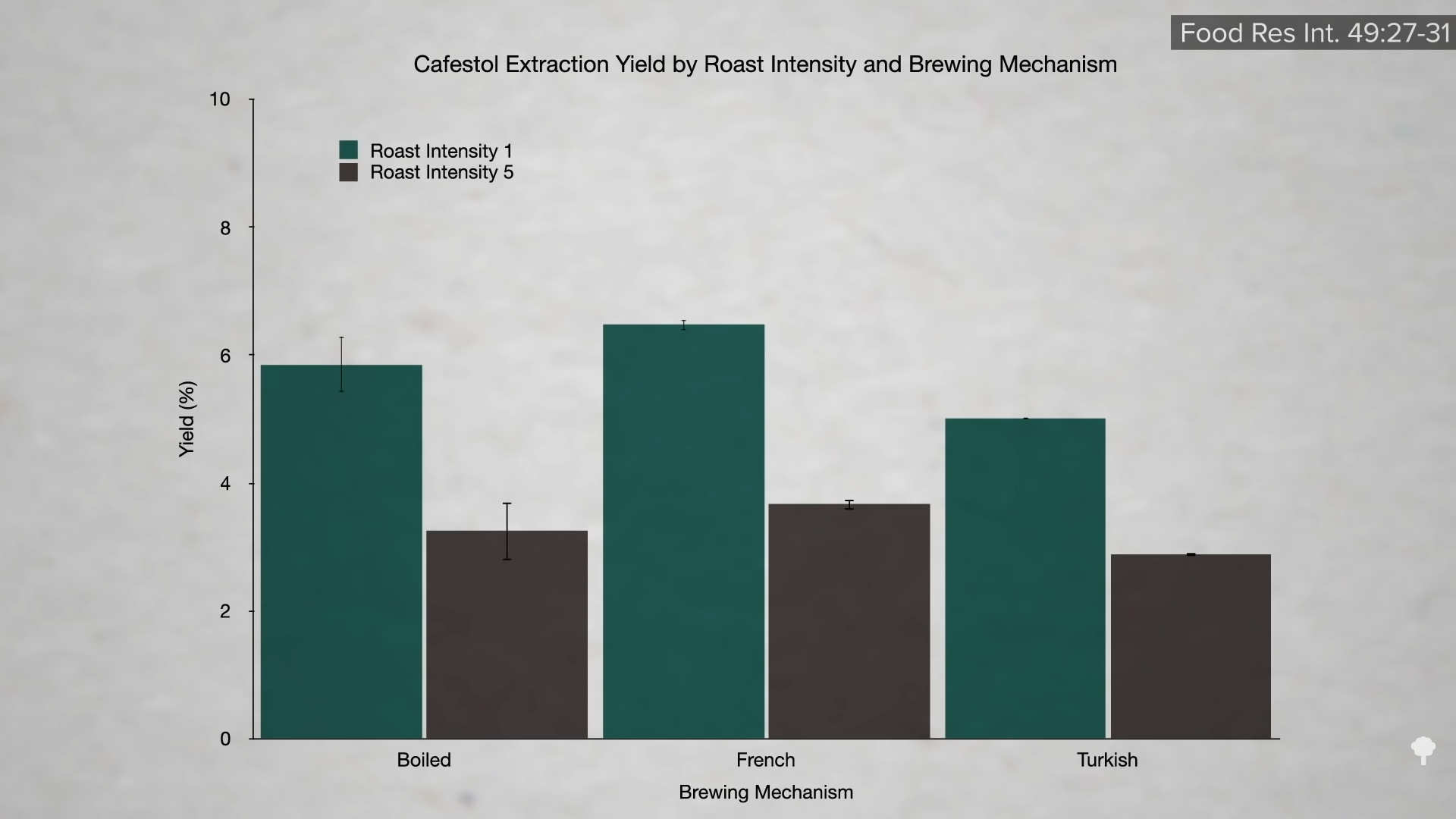
    When it comes to reducing body weight, dark roast coffee is more effective than light roast coffee. If you drink non-paper-filtered coffee, such as boiled, French press, or Turkish coffee, you should know that the amount of cholesterol-raising compounds in the lightest roast coffee beans may be twice as high as in very dark roast coffee beans, as you can see at 0:07 in my video Which Coffee Is Healthier: Light vs. Dark Roast. It appears some of the cholesterol-raising compounds are destroyed by roasting, so, in this case, darker is better. (Alternatively, as I described in Does Coffee Affect Cholesterol?, you can use a paper filter and eliminate 95 percent of the cholesterol-raising activity of coffee regardless of the roast.)

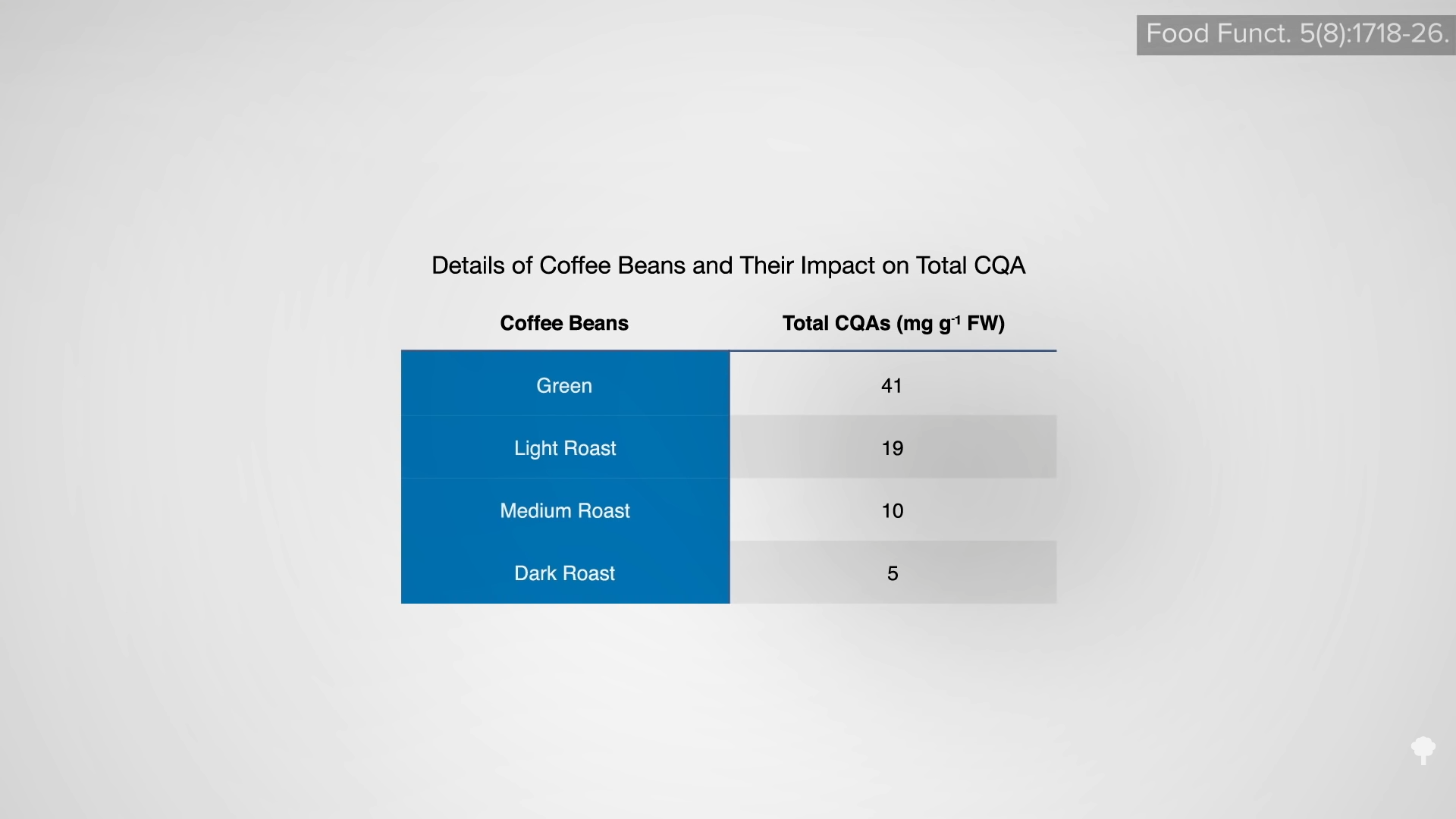
    You may be familiar with another video of mine—Friday Favorite: Does Adding Milk Block the Benefits of Coffee?, which showed that dark roasting may also destroy up to nearly 90 percent of the chlorogenic acids, the antioxidant, anti-inflammatory phytonutrients purported to account for many of coffee’s benefits. In that case, light roast would be better, as you can see at 0:39 in my video. However, dark roasting can wipe out up to 99.8 percent of pesticides in conventionally grown coffee and more than 90 percent of a fungal contaminant called ochratoxin, a potent kidney toxin found “in a wide range of unprocessed and processed food including coffee”—foods that can get moldy.

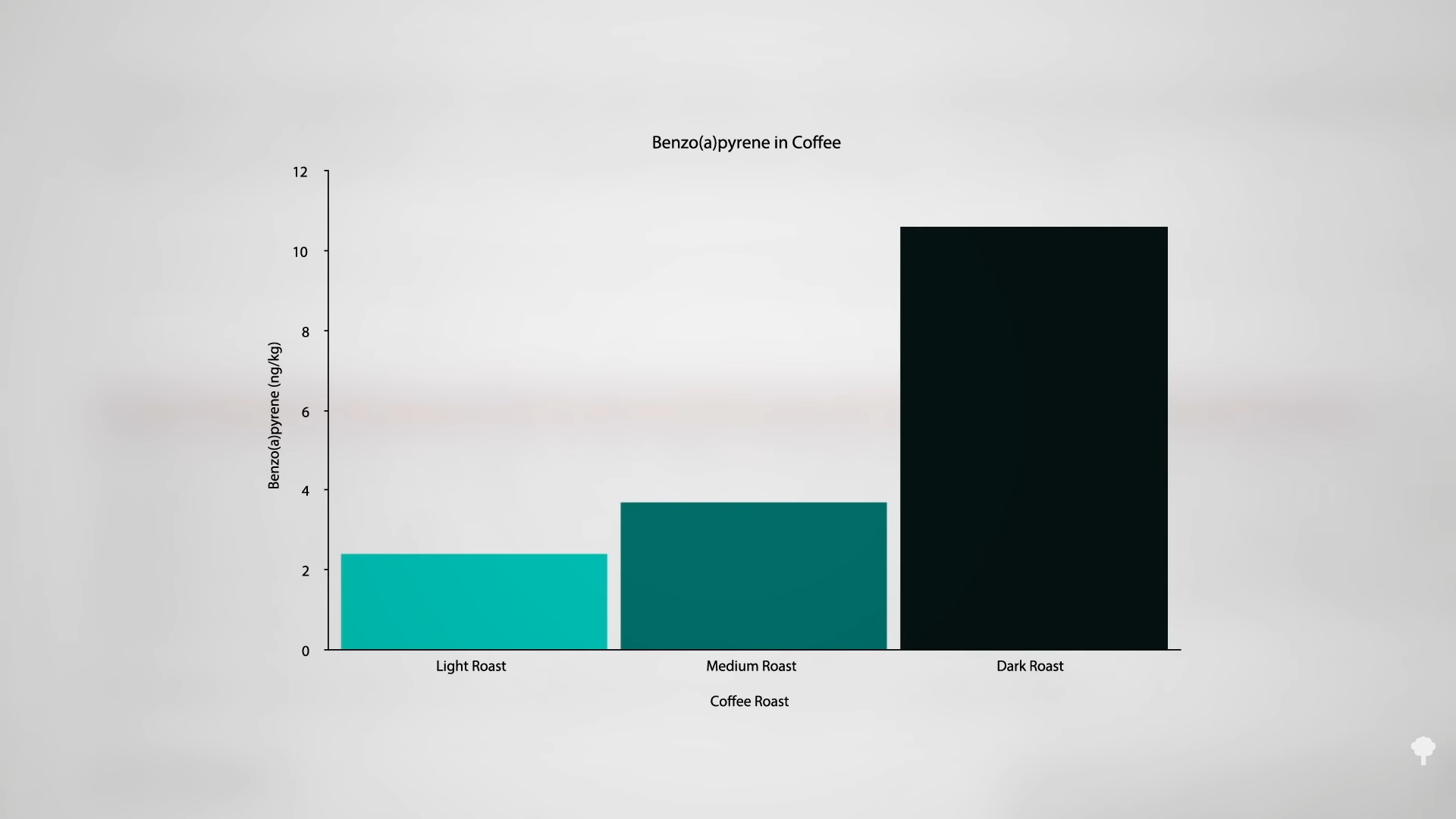
    What about the polycyclic aromatic hydrocarbon (PAH) products of combustion that are suspected to be carcinogenic and DNA damaging? As you can see in the graph below and at 1:16 in my video, darker roasts may have up to four times more than light roasts. “Thus, roasting conditions should be controlled to avoid the formation of PAHs due to their suspected carcinogenic and mutagenic properties.” To put things in perspective, benzopyrene is considered to be “the most toxic and the most carcinogenic” of these compounds, and even the darkest roast coffee might only max out at a fraction of a nanogram of benzopyrene per cup, whereas a single medium portion of grilled chicken could have over 1,000 times more, as you can also see in the graph below at 1:39 in my video.


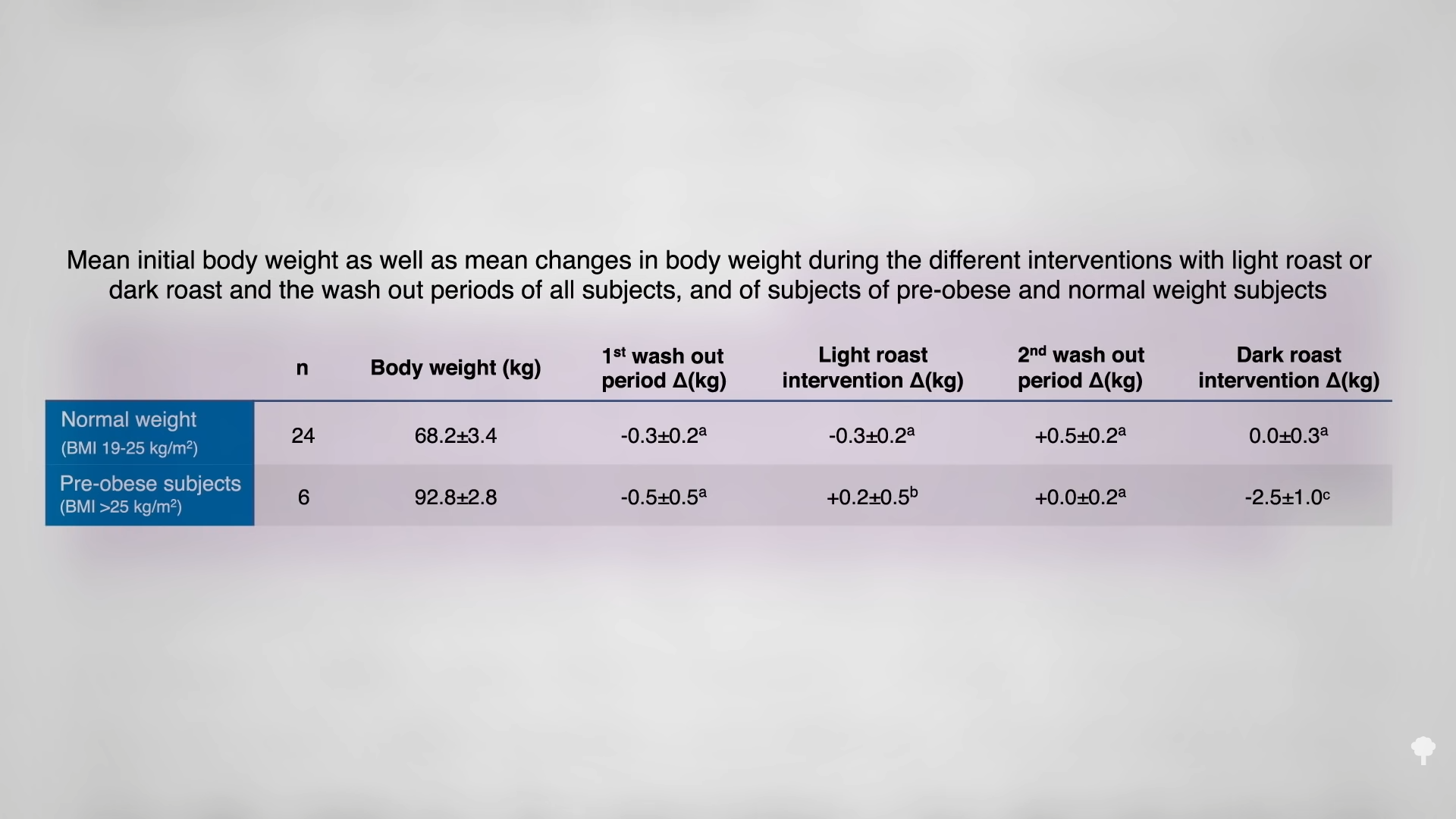
    Overall, you don’t know if light versus dark roast is better until you put it to the test. A study found that “dark roast coffee is more effective than light roast coffee in reducing body weight” and even said so in the paper’s title. Folks were randomized to a month of drinking two cups a day of light roast coffee or dark roast coffee, roasted from the same batch of green coffee beans. In normal-weight participants, it didn’t seem to matter—there were no significant weight changes either month—but overweight study participants ended up about six pounds lighter drinking dark roast coffee than light roast coffee, as you can see at 2:05 in my video. They lost more than a pound a week just drinking a different type of coffee.

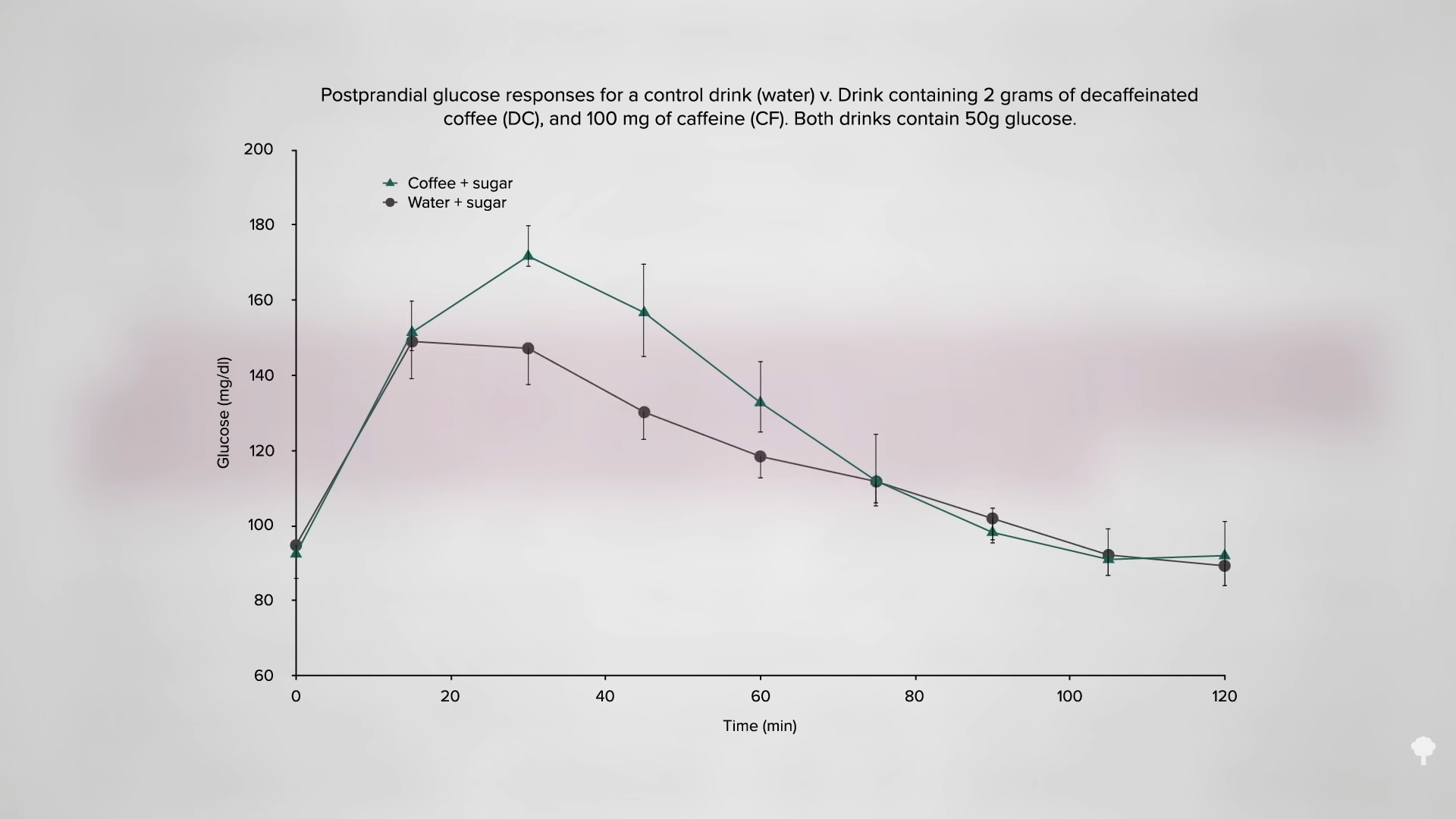
    What about light versus dark in relation to blood sugars? We’ve known since 2015 that even a single cup of coffee can affect the blood sugar response. As you can see at 2:33 in my video, after drinking a cup of coffee with more than a dozen sugar cubes in it, which is about a quarter cup of sugar in one cup of coffee, blood sugar spikes higher over two hours compared with the spike from the same amount of sugar in just plain water. “What is not known is whether this statistically significant increase in blood glucose [sugars] is physiologically relevant,” clinically meaningful. After all, coffee consumption does not seem to increase the risk of diabetes, and if you compare drinking light roast coffee with dark roast coffee 30 minutes before “a 75-g oral glucose tolerance test,” that is, drinking about 20 teaspoons of sugar, there didn’t appear to be any difference. Perhaps the take-home message is that regardless of whether the coffee is light or dark, maybe we shouldn’t be adding 20 spoonful of sugar to it.

    Finally, what do we know about the effect of different roasts on heartburn and stomach upset? We find out in my video Does Low Acid Coffee Cause Less Acid Reflux?.

    How Much Added Sugar is Too Much? Check out the video!


    Credit: Source link

  • Baked Gochujang Cauliflower Wings

    Baked Gochujang Cauliflower Wings

    Sweet-spicy-crunchy Gochujang Cauliflower can be served as an appetizer or an entree! Gochujang Cauliflower Wings make a perfect game day snack, or serve it over rice for a delicious, veggie dinner. Glutenfree Nutfree

    gochujang cauliflower wings in bowls with rice and green onions

    This recipe has an amazing, spicy flavor and a crunchy texture without the need to deep fry. While you bake the cauliflower, prepare the sauce in a pan on the stove. Toss it all together, and enjoy!

    gochujang cauliflower wings in bowls with rice and green onions

    If you’re not familiar with gochujang, it’s a fermented Korean red chili paste with a sweet and spicy flavor. It adds sweet heat and an umami flavor to all sorts of dishes and pairs perfectly with crunchy, baked cauliflower.

    gochujang cauliflower wings in bowls with rice and green onions

    Why You’ll Love Gochujang Cauliflower

    • Easy to make
    • Baked, not fried
    • Perfect, crunchy texture
    • Full of flavor
    • It’s naturally gluten-free

    cauliflower tossed in gochujang sauce in the pan

    More Vegan Cauliflower Recipes:

    Sticky Sesame Cauliflower

    General Tso Cauliflower

    Cauliflower Tikka Masala

    Black Pepper Cauliflower

    gochujang cauliflower wings in bowls with rice and green onions

    Print Recipe

    Gochujang Cauliflower Wings

    Sweet-spicy-crunchy Gochujang Cauliflower can be served as an appetizer or an entree! Gochujang Cauliflower Wings make a perfect game day snack, or serve over rice for a delicious, veggie dinner. Gluten-free Nutfree Recipe

    Prep Time15 mins

    Cook Time30 mins

    Total Time45 mins

    Course: Appetizer, dinner, Drinks, Main Course, Side Dish

    Cuisine: Korean

    Keyword: gochujang cauliflower wings, korean baked cauliflower

    Servings: 4

    Calories: 206kcal

    Author: Vegan Richa

    Ingredients

    For the Baked Cauliflower

    • 1/2 cup rice flour
    • 3 tablespoons tapioca starch or cornstarch
    • 1/2 teaspoon garlic powder
    • 1/4 teaspoon salt
    • a good dash of black pepper
    • 1/2 cup water
    • 2 teaspoons oil
    • 1 teaspoon sesame oil
    • 1 small head of cauliflower chopped into equal-sized florets, about 4 cups

    For the Gochujang Sauce

    • 1/2 cup gochujang, I use Mother-in-Law brand
    • 2 tablespoons soy sauce ,use tamari for gluten-free
    • 2 tablespoons maple syrup
    • 1/4 teaspoon salt
    • 1 tablespoon rice vinegar or apple cider vinegar
    • 1 teaspoon cornstarch mixed with 1/4 cup of water
    • green onion and sesame seeds for garnish

    Instructions

    To Bake the Cauliflower

    • Preheat the oven for 425° F/220° C. Line a baking sheet or baking dish with parchment paper.

    • In a large bowl, add the dry ingredients for the batter. Mix well, then add in the wet ingredients and mix until smooth.

    • Add in the cauliflower and toss to coat. The batter should be just thick enough so that it coats the cauliflower well, and it’s going to be enough for the cauliflower. The batter keeps thickening as it sits, so you’ll want to mix it in pretty quickly.

    • Transfer the cauliflower florets to the lined baking sheet, and bake for 30 minutes, or until cauliflower inside is cooked. Meanwhile, make your gochujang sauce.

    To Make the Gochujang Sauce

    • Add the gochujang, soy sauce, maple syrup, salt, and vinegar to a large skillet on medium heat and mix well.

    • Mix the cornstarch in the 1/4 cup of water, and add to the simmering sauce mixture and mix well. Take off the heat as soon as the sauce thickens.

    • Add your baked cauliflower to the skillet, and toss well to coat. Garnish with some green onion, or sesame seeds if you like. Serve with rice or noodles or in lettuce cups.

    Notes

    Substitutes Gochujang: use other Asian chili sauces Rice flour: use all purpose flour Variation: make this with pressed and torn 14 oz extra firm tofu  Make sure you have your cauliflower ready to go before mixing up the batter. The batter thickens quickly, so you want to toss the cauliflower in immediately. When you spread the cauliflower onto the baking sheet, do it in a single layer, and make sure the wings aren’t touching each other, or they will stick together. Store leftovers in a covered container in the refrigerator. They will keep for up to 3 days. Reheat in a 350° F oven or on the stovetop. Do not microwave, because the batter will be mushy if you do that.

    Nutrition

    Nutrition Facts

    Gochujang Cauliflower Wings

    Amount Per Serving

    Calories 206 Calories from Fat 36

    % Daily Value*

    Fat 4g6%

    Saturated Fat 0.5g3%

    Sodium 608mg26%

    Potassium 396mg11%

    Carbohydrates 42g14%

    Fiber 2g8%

    Sugar 10g11%

    Protein 4g8%

    Vitamin A 68IU1%

    Vitamin C 37mg45%

    Calcium 38mg4%

    Iron 1mg6%

    * Percent Daily Values are based on a 2000 calorie diet.

    gochujang cauliflower ingredients in bowls on a marble table

    Ingredients:

    • cauliflower coating: we use rice flour, tapioca or corn starch, garlic powder, salt and pepper, water, oil, and sesame oil. Rice flour gives a nice crunchy coating. You can use all purpose flour as well but it won’t be as crunchy
    • cauliflower cut into bite-sized florets
    • gochujang sauce: a spicy Korean chili paste
    • rest of the sauce ingredients: soy sauce, maple syrup, salt, rice or apple cider vinegar, and cornstarch mixed with water (to thicken)

    Tips:

    • Make sure you have your cauliflower ready to go before mixing the batter. The batter thickens quickly, so you want to toss the cauliflower into it immediately.
    • When you spread the cauliflower onto the baking sheet, do it in a single layer, and try to make sure the wings aren’t touching each other.

    How to Make Gochujang Cauliflower Wings:

    First, cut the cauliflower into florets and gather your batter ingredients.

    Mix the dry ingredients for the coating in a large bowl. That’s the rice flour, starch, garlic, salt, and pepper. Then, add the water and oils and mix until you have a smooth batter.

    dry ingredients in a bowl before mixing
    cauliflower batter in the bowl after mixing

    Toss in the cauliflower florets, mixing to coat them really well in the batter. The batter should be just thick enough so it coats the cauliflower well, and it’s going to be enough for the cauliflower. The batter keeps thickening as it sits, so you’ll want to mix it in pretty quickly.

    cauliflower in the bowl with the batter before tossing together
    cauliflower in the bowl with the batter after tossing together

    Transfer the cauliflower to a parchment paper-lined baking sheet in a single layer, making sure the florets are spread out and not touching each other. Bake at 425° F/220° C for 30 minutes.

    cauliflower on the baking sheet before baking
    cauliflower on the baking sheet after baking

    While the cauliflower bakes, make the sweet-and-spicy gochujang sauce.

    Add the gochujang, soy sauce, maple syrup, salt, and vinegar to a large skillet over medium heat and mix well.

    gochujang sauce ingredients in the pan before cooking

    When all of that is combined, mix the cornstarch in a quarter cup of water, then add that to the skillet, mixing again. As soon as the sauce thickens, remove the pan from the heat.

    gochujang sauce ingredients in the pan after cooking

    Add the baked cauliflower to the skillet, tossing to coat in that flavorful sauce.

    adding cauliflower to the pan of gochujang sauce
    cauliflower tossed in gochujang sauce in the pan

    garnish with green onions or sesame seeds, if you like. Serve with rice or noodles or in lettuce wraps

    Storage and Reheating:

    Store in a covered container for up to 3 days in the refrigerator. Reheat in the oven at 350° F or in a pan on the stove. Do not microwave, because the breading will get mushy.

    Credit: Source link

  • Hysterectomy & Menopause Support

    Hysterectomy & Menopause Support

    I have been asked many times about menopause and less about hysterectomy. I can honestly say that hysterectomies should be avoided, and menopause cannot be avoided. However, there are circumstances where even hysterectomies can
    be lifesaving. In these rare instances we should apply the same support that we give for menopause.


    Menopause usually comes on gradually whereas hysterectomies happen suddenly and are usually more
    shocking and traumatic to the recipient. If a woman is postmenopausal the effect of hormonal loss due to surgery can be diminished, because she has already lost hormonal secretions from her ovaries. 


    In both situations, the lost hormones can cause hot flashes, osteoporosis, cardiovascular concerns, vaginal tissue thinning resulting in dryness, infections and injury, urinary tissue thinning – leading to increased bacterial infections and incontinence, and emotional crisis. All of these scenarios can be ameliorated with proper diet, exercise, and herbs.


    Phytosterols, or plant hormones, can be found in fresh fruits and vegetables, sprouted grains and legumes, especially organic soybeans and most other beans. These plant hormones take up the same binding sights on your body’s hormone receptor cells resulting in healthier hair and skin, stronger bones, a healthier
    heart, and most important, improved emotions. Vitamin E and Omega 3 fatty acid rich foods such as avocados, mangoes, kiwi and almost all nuts and seeds, especially flax, help prevent hot flashes, night sweats, breast tenderness and vaginal dryness. One tablespoon of wheat germ oil contains 135% of DV for Vitamin E.


    Exercise has been shown to prevent hot flashes in many studies. Kronenberg surveyed 2,000 women and found they experienced fewer menopausal symptoms when exercising three times per week.1  A Swedish study showed no hot flashes in women who chose three and a half hours weekly exercise
    over hormone replacement therapy. 2


    Plant hormones are especially high in herbs, particularly Black Cohosh and Ginseng. Dr. Christopher’s Hormonal Changease formula, which employs both, has been
    successfully used by thousands of women for over seventy years, in easing menopausal concerns. Evening primrose oil is an excellent lubricant. Nettles is abundant in essential minerals especially silica. 


    I hope that all women suffering from menopausal or hysterectomy conditions will try the aforementioned solutions that many women swear by in contrast to women who use other products like HRT and swear at, because of all the side effects.


    1. Flint, M, F. Kronenberg, and U. Wulf (Eds.) 1990. Multidisciplinary perspectives on menopause. Annals of the New York Academy of Science, Vol. 592.
    2. Hammer, M. 1990. Does physical exercise influence the frequency of postmenopausal hot flashes? Acta Obstetrics and Gynecol Scandinavia 69:409-12

    Credit: Source link

  • Dr. Greger’s Top Takeaways on Parkinson’s, Fibromyalgia, and Tea Tree Oil

    Dr. Greger’s Top Takeaways on Parkinson’s, Fibromyalgia, and Tea Tree Oil

    Every month, we publish around eight new videos, four Friday Favorites, eight blogs, and four podcasts on NutritionFacts.org. We are bursting at the seams with health and nutrition information! Starting now, we are taking all of that information and wrapping up the juiciest bits into a nice, bite-sized blog as an end-of-month recap in case you missed anything or just want a refresher. So, what were the highlights in February?

    Treating Parkinson’s Disease with Velvet Beans and Fava Beans

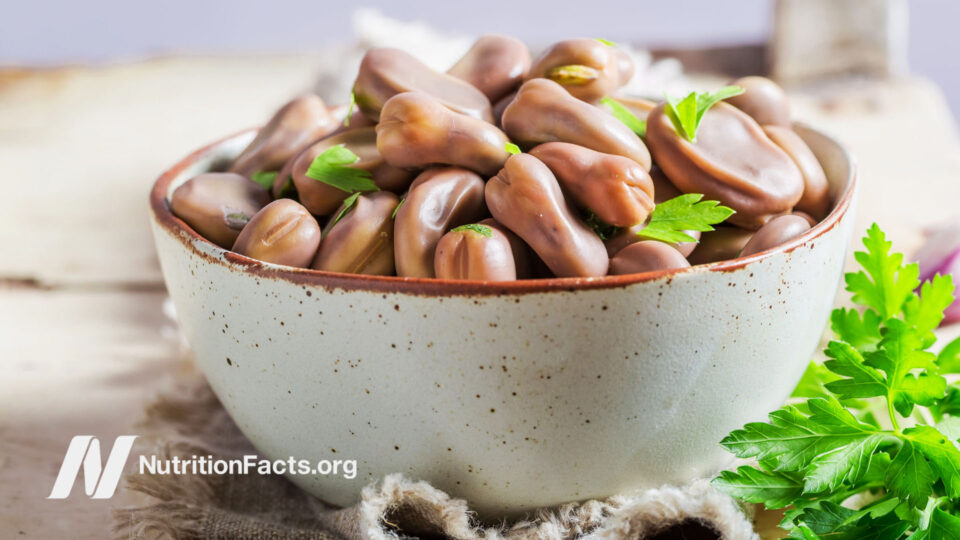
    Fava beans in an enameled bowlOur two new videos on Parkinson’s disease released this month addressed the question, If we have known for decades that Parkinson’s is manifested by a dopamine deficiency in the brain, why not eat a dopamine diet? The dopamine in foods can’t actually cross the blood-brain barrier, but its precursor, levodopa (L-dopa), can and is then able to be converted into dopamine. Dr. Greger found interesting data on velvet and fava (or broad) beans, which both contain L-dopa. The information on velvet beans looked promising at first, but there are some hurdles to its use—including its nasty taste.

    What about fava beans? They contain less L-dopa than velvet beans, but they are tasty—so you can eat more of them—and can be consumed as a whole food. Substantial clinical improvements were noted in patients after they ate fava beans, similar to that of receiving a standard drug. Overall, the research is ongoing, and, until we know more, Parkinson’s combo drugs like Sinemet should remain the first-line therapy, but adding beans to our diet can only help. Even just one and a half spoonsful’s worth of roasted soybeans (“soynuts”) led to a significant improvement in symptoms as an adjunct treatment.


    The Best Diet for Fibromyalgia and Other Chronic Pain Relief

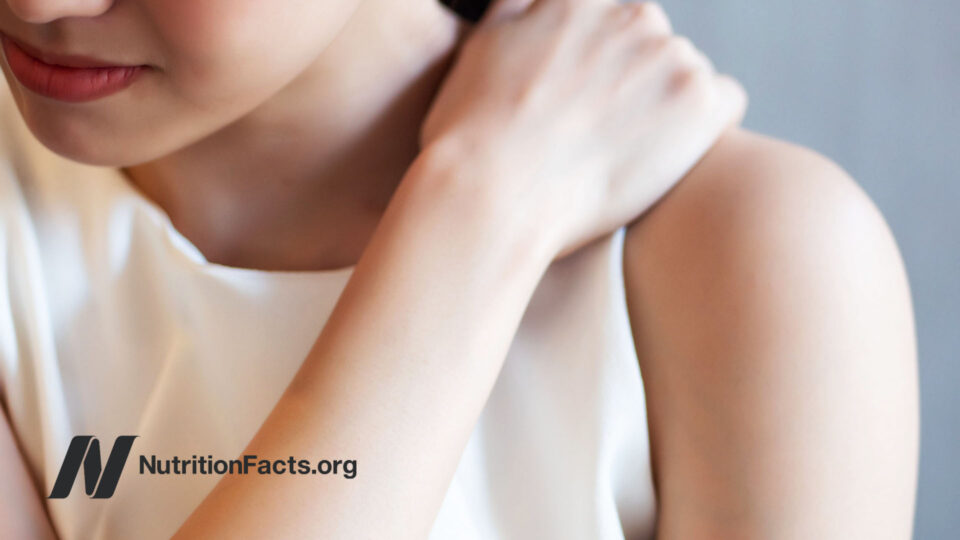
    Woman holding upper shoulder as if in painFibromyalgia has long been dismissed as a psychological phenomenon, but it’s now understood to be a disorder of pain regulation and sensitization. If pain is typically caused by inflammation, does an anti-inflammatory diet help reduce the effects of fibromyalgia? A recent study found that on a plant-based diet, perceived pain decreased an average of three points (on a ten-point scale), falling from an average of five or six points down to just two out of ten. The study didn’t have a control group, but there’s no downside to giving healthier eating a try—not only to help with fibromyalgia pain, but for a whole host of other concerns.
     

    Vinegar for Blood Sugar Control and Polycystic Ovary Syndrome (PCOS) Treatment

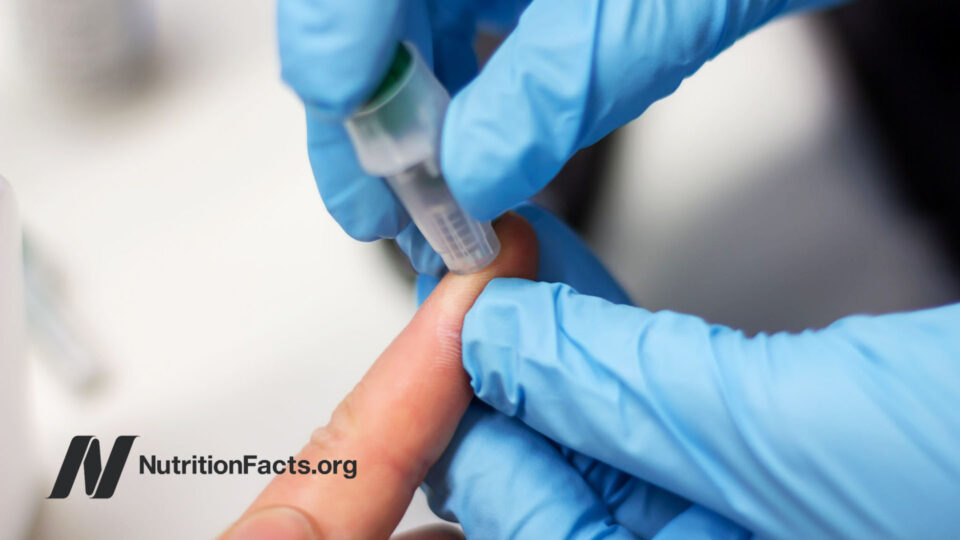
    Gloved hand doing a finger prick on another person’s handVinegar has been shown to help accelerate weight loss, reduce cholesterol, act as a disinfectant, and blunt spikes in blood sugar and insulin after meals. Since insulin resistance has been suggested as one possible cause of polycystic ovaries and we know vinegar can improve insulin resistance, could it also benefit those suffering from PCOS? A tiny study using one tablespoon a day showed improvement for about half of the participants. The jury is still out, but this suggests that vinegar may help, so why not give it a try? Whatever your reason for taking a daily dose of vinegar, remember to never drink it straight, as it can cause second-degree caustic burns down your throat.
    It has been suggested that insulin resistance is one of the causes of polycystic ovaries and we know that vinegar can improve insulin resistance, so researchers decided to study the effect of vinegar for PCOS. Seven patients seeking a non-pharmacological treatment for PCOS were given a beverage containing a tablespoon of apple cider vinegar every day for a few months. The insulin resistance did improve in most, but did their cycles return? Yes, in four out of seven. Before the study, they were either having their periods every 50 or so days or not at all, or they were not ovulating, but most resumed within 40 days on the vinegar. Now, this doesn’t prove anything, but it’s at least sufficient to indicate the possibility that it may help. And, what’s the downside? A tablespoon of vinegar would cost less than 10 cents a day. (Another reminder to never drink vinegar straight.)


    Dr. Greger in the Kitchen: Groatnola

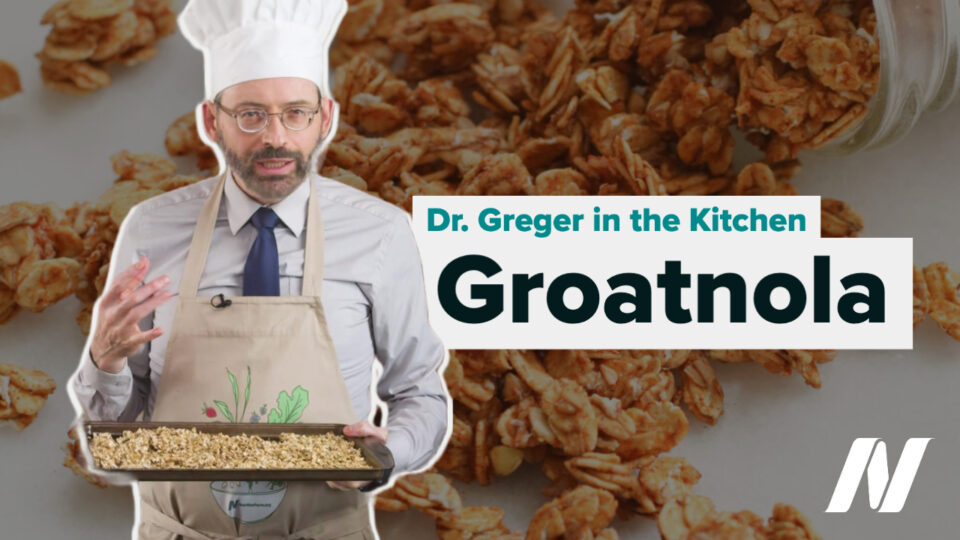
    Dr. Greger holding cooking tray with groatnolaTwo years ago, Dr. Greger made a video about his then-favorite breakfast, the Cran-Chocolate Pomegranate BROL Bowl. He still loves it, but with pomegranate season waning once again, he’s on a new kick: groatnola! What’s that? Whole-food granola made with buckwheat groats, sweet potatoes, and spices. Give it a try, and let us know what you think!

     

    Tea Tree Oil for Cold Sores and Warts?

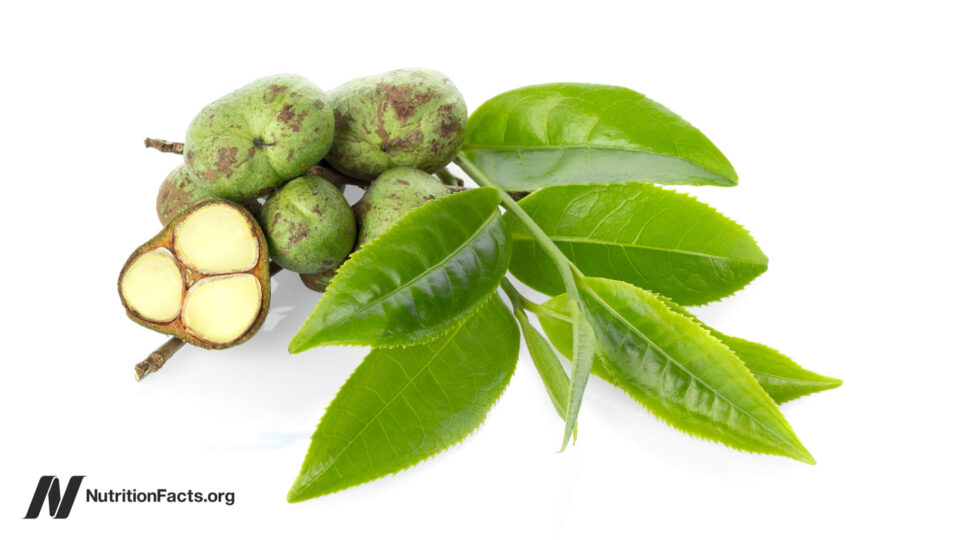
    Tea tree oil has antifungal and antibacterial properties, as shown in videos such as Does Tea Tree Oil Work for Dandruff and Athlete’s Foot? and Do Natural and DIY Tea Tree Oil Cleaning Products Disinfect as Well as Bleach?. Warts and cold sores, on the other hand, are caused by viruses, so does tea tree work on those conditions? Maybe on warts (at least in a singular case report), but not on cold sores.

     

    Vegetarian Athletes

    In this three-blog series, starting with What Is the Gladiator Diet and How Do Vegetarian Athletes Stack Up?, Dr. Greger looked at the history of vegetarian athletes and how they stacked up to their omnivorous competition. Top groups of athletes, from ancient Romans and Greeks to modern-day Olympic runners, have been known to eat largely plant-based diets. Overall, most studies have found little difference between vegetarian and omnivore athletes when it comes to cardio or strength fitness. Since extensive research has shown that a plant-based diet has the benefit of greater long-term health outcomes, it seems like a winning choice. 

    Healthy Bones

    This month’s spotlight is all about bone health. Do people eating plant-based have greater bone loss? Does animal protein intake lead to bone loss? What is the relationship between milk consumption and rates of hip fractures? Check out the podcast for answers to those questions and more. In a nutshell, though, for the strongest bones, eat plenty of phytonutrient-packed plant foods and incorporate weight-bearing exercise.


    This has been a wrap-up of just a small sampling of our recent content. To see everything from the past month, be sure to check out the video, blog, and podcast pages.


    Credit: Source link

  • Veggies in Hot Garlic Sauce

    Veggies in Hot Garlic Sauce

    Lovers of takeaway-style Indo-Chinese dishes will love this vegan recipe for Veggies in Hot Garlic Sauce! A One-Pot recipe that is perfect for a quick lunch or dinner! Serve with rice. Gluten-free + nut-free option included.

    a plate of Indo Chinese Sweet & Spicy veggies served with rice
    Indo-Chinese cuisine is a sub cuisine in Indian cuisine, which revolved with adapting from Chinese style stir fry’s and sauces. It has various dishes with use plentiful veggies and amazing sauces. You will be all over these  veggies in hot garlic sauce. A super flavorful way to get a big helping of healthy veggies and with a sweet and spicy hot garlic sauce.

    As with all stir-fries, I recommend you prep all your ingredients and have them ready at the stove. Once you’ll start cooking it will come together very quickly.

    As with all of my recipes, you can adjust the garlic and chili level according to your personal taste. Add more or less veggies, add some pan fried tofu or cooked chickpeas for making it a hearty meal. I like these veggies for  a light dinner but very satisfying to the senses!

    side view of a plate with sweet & sour Indo Chinese veggies served with rice

    More vegetable stir-fries and curries:

    Diwani Handi Vegetables

    Sweet Sour Tofu Veggie Stir Fry

    Vegetable Korma- Creamy Indian Korma Recipe

    Tofu and Veggie BBQ Bowl

    Print Recipe

    Veggies in Hot Garlic Sauce

    Lovers of takeaway-style sweet and sour Indo-Chinese dishes will love this vegan recipe for Veggies in Hot Garlic Sauce! A One-Pot recipe that is perfect for a quick lunch or dinner! Serve with rice. Gluten-free + nut-free option included.

    Prep Time15 mins

    Cook Time15 mins

    Total Time30 mins

    Course: Main Course

    Cuisine: Indo Chinese

    Keyword: garlic sauce vegetables, sweet and sour vegetables, veggie stirfry

    Servings: 4

    Calories: 116kcal

    Author: Vegan Richa

    Ingredients

    • 2 teaspoons sesame oil
    • 2 dried red chilis such as cayenne, use California red for less heat, or use 1/4 teaspoon pepper flakes
    • 6 cloves garlic minced
    • 2 teaspoon minced ginger
    • 1/2 cup thinly sliced carrots
    • 1 cup thinly sliced mushroom
    • 1 cup onion chopped into 1-inch slices
    • 1/2 green bell pepper chopped into 1 inch slices
    • 1/2 to 1 red bell pepper, chopped into 1 inch slices
    • 1/2 cup brocollini or thinly sliced green beans
    • 1/4 teaspoon salt

    For the sauce:

    • 3 tablespoons soy sauce or use tamari for gluten-free
    • 1 tablespoon sambal oelek, sriracha or Asian chile sauce or use Gochujang for variation
    • 1 tablespoon white vinegar or rice vinegar
    • 1 tablespoon finely minced green chili such as serrano or Indian
    • 2 tablespoons ketchup
    • 1/2 teaspoon pepper flakes
    • 1 teaspoon brown sugar

    For thickening:

    • 1 tablespoon cornstarch mixed in 1 1/2 cups of water

    For topping:

    • 2 tablespoons chopped green onion
    • 2 tablespoons crushed roasted peanuts or cashews

    Instructions

    • Heat the sesame oil in a large skillet over medium high heat.

    • Add the garlic and red chilies and cook until the garlic is starting to turn golden on some edges.

    • Then add in the ginger, carrots, and mushroom and cook until the mushroom is starting to get golden on some of the edges.

    • Add the onion, bell peppers, other vegetables (1/2 to 1 cup) if you’re planning to use and salt and toss well.

    • Cook for another 1-2 minutes. Then add all of the sauce ingredients and mix really well. Bring to a good boil.

    • Mix the cornstarch in the water and then add that to the skillet and bring to a boil.

    • Let the sauce to start to simmer evenly and thicken a little bit.

    • You can add more water at this point if you want it saucier. About 1/2- 1 cup more then continue to cook to thicken it for another minute or 2.

    • Then switch off heat. Taste and adjust salt and flavor carefully

    • Top with green onions and roasted peanuts and serve over rice or noodles.

    Notes

    • For nut-free, just omit the peanuts.
    • You can add any variety of vegetables such as bok choy, bean sprouts, cauliflower florets, sliced celery, baby corn or whatever you like.
    • Add a cup of cooked chickpeas or cubed crisped tofu for added protein 

    Nutrition

    Nutrition Facts

    Veggies in Hot Garlic Sauce

    Amount Per Serving

    Calories 116 Calories from Fat 36

    % Daily Value*

    Fat 4g6%

    Saturated Fat 1g6%

    Sodium 698mg30%

    Potassium 478mg14%

    Carbohydrates 18g6%

    Fiber 3g13%

    Sugar 8g9%

    Protein 5g10%

    Vitamin A 3574IU71%

    Vitamin C 81mg98%

    Calcium 45mg5%

    Iron 1mg6%

    * Percent Daily Values are based on a 2000 calorie diet.

    a big white skillet with sweet and sour veggies in hot garlic sauce sprinkled with chopped nuts and green onions

    Ingredients:

    • garlic minced, red chilis, and minced ginger are fried in some sesame oil to get the flavors going
    • veggies: sliced carrots, mushrooms, onions, green and red bell pepper as well as brocollini or thinly sliced green beans
    • For the sauce, we mix soy sauce with sambal oelek, ketchup and white vinegar or rice vinegar
    • the sauce is thickened with a cornstarch slurry
    • finely minced green chili or pepperflakes are added
    • For topping, we use chopped green onion and crushed roasted peanuts or cashews


    Tips & Substitutions:

    • To keep this gluten-free, use tamari instead of soy sauce.
    • For nut-free, just omit the peanuts.
    • Instead of sambal olek you can use sriracha or Gochujang
    • You can add any variety of vegetables such as bok choy, bean sprouts, cauliflower florets, sliced celery, baby corn or whatever you like.

    Eat the rainbow!

    ingredients for veggies in hot garlic sauce on a marble countertop

    How to make Veggies in Hot Garlic Sauce:

    minced garlic and chili in a frying pan

    Heat the sesame oil in a skillet over medium high heat.

    Add the garlic and red chilies and cook until the garlic is starting to turn golden on some edges.

    sliced mushrooms, minced ginger and chilies in a frying pan

    Then add in the ginger, carrots, and mushroom and cook until the mushroom is starting to get golden on some of the edges.

    Add the onion, bell peppers, other vegetables if you’re planning to use and salt and toss well.

    chopped vegetables in a frying pan

    chopped veggies frying in a pan

    Cook for another 1-2 minutes. Then add all of the sauce ingredients and mix really well.

    Bring to a good boil.

    sauce ingredients being added to a frying pan with vegetables

    Mix the cornstarch in the water and then add that to the skillet and bring to a boil.

    minced green chili being added to a pan with chopped veggies

    minced green chili being added to a saucepan with vegetables and sweet and sour sauce

    Wait for the sauce to start to simmer evenly and thicken a little bit.

    a sauteeing pan with vegetables simmering in hot spicy tangy Indo Chinese Sauce

    You can add more water at this point if you want it saucier. About 1/2- 1 cup more then continue to thicken it for another minute or two.

    Then switch off heat. Top with green onions and roasted peanuts and serve over rice or noodles.

    side view of a bowl of Indo Chinese veggies in hot garlic sauce served with rice

    Storage

    Store in a closed container refrigerated for upto 3 days


    Credit: Source link