Author: [email protected]

  • Smoked almonds – Lazy Cat Kitchen

    Smoked almonds – Lazy Cat Kitchen

    smoked almondssmoked almonds

    These smoked almonds are a delicious and super simple recipe inspired by a snack I had while on holidays in Greece. They come together really quickly and only require a few staple ingredients and about 2 minutes of prep, that’s it. They can be a real life saver if you want a quick savoury snack to go with your glass of wine or beer.

    I made them for friends last week and they went down really well. Smokey, savoury, salty and crunchy yet definitely healthier than a bag of crisps. There is not much to lose so I hope you will give them a go.

    MORE ABOUT THE INGREDIENTS

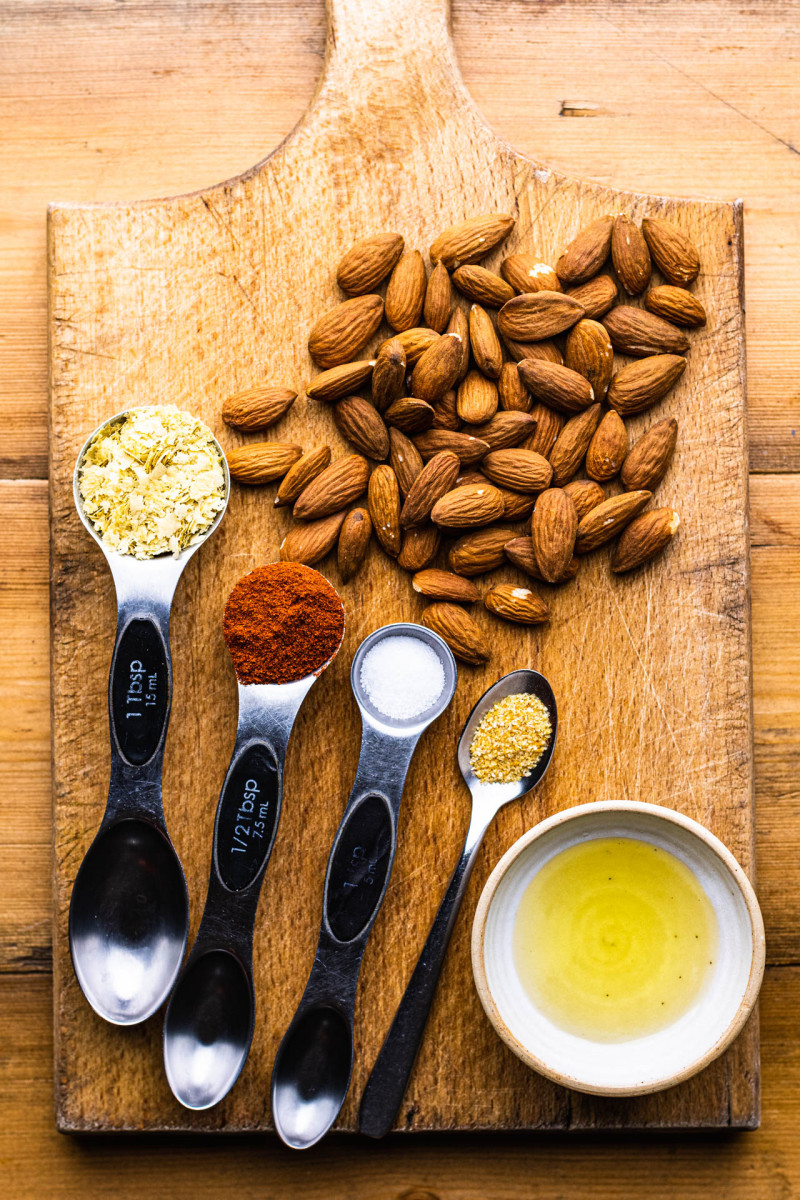
    smoked almonds ingredientssmoked almonds ingredients

    ALMONDS – a bag of almonds is what you need for this simple snack. I recommend regular, unblanched almonds as those tiny cervices help the spices to stay put. You could probably do this with other medium size nuts too but I like to use almonds as their natural flavour takes all these lovely spices so well and their regular shape is quick and easy to work with.

    OIL – a little bit of oil helps the spices to stick to the surface. I used mild olive oil that I use for cooking, but any neutral flavour oil (like canola, sunflower, rice bran) will work.

    NUTRITIONAL YEAST – nutritional yeast is a bit like magic dust that makes pretty much everything better – even my cat is obsessed with it! It’s basically inactive yeast that tastes cheesy and adds a nice depth of flavour to things. You can skip it if you want to but I think it makes this simple snack 10 times better so its worth seeking it out. I use Marigold Engevita brand, which is available in all big UK supermarkets these days.

    SMOKED PAPRIKA – smoked paprika is what turns these almonds into smoked almonds. I use sweet smoked paprika, also known as pimentón, but if you fancy a bit of heat adding a bit of hot smoked paprika into the mix is a great idea.

    SALT – salt needs no further explanation, I am sure. I found that a slightly heaped half a teaspoon of fine salt is ideal for this amount of almonds but you can also adjust that amount to your own preference.

    GARLIC POWDER – a touch of garlic powder deepens the flavours of these smoked almonds nicely. I only use a quarter of a teaspoon as I didn’t want the garlic flavour to dominate but to reinforce other flavours gently.

    smoked almondssmoked almonds

    • 1 tbsp nutritional yeast (optional)
    • 1 heaped tsp sweet smoked paprika
    • ½ heaped tsp fine sea salt
    • ¼ tsp garlic powder
    • 250 g / 2 scant cups almonds
    • 20 ml / 1½ tbsp olive oil

    METHOD

    1. Preheat the oven to 180° C / 355° F and line a large baking tray with a piece of baking paper/parchment.
    2. Combine the first four ingredients in a small bowl. Mix well.
    3. Place almonds and olive oil in a mixing bowl and stir until well combined.
    4. Add dry spices and mix until all of the almonds are evenly coated.
    5. Spread spiced almonds on the prepared baking tray and bake for about 8-10 minutes, until the nuts are toasted. Keep an eye on them especially towards the end as they tend to go from beautifully roasted to burnt quite quickly.
    6. Cool completely and enjoy. Store in an air-tight jar for up to a week.

    NOTES

    NUTRITIONAL INFO

    *per 1 out of 10 portions

    Credit: Source link

  • Needles, Knots and Nudges: A Guide to Alternative Therapies for Pain and Injury

    Needles, Knots and Nudges: A Guide to Alternative Therapies for Pain and Injury

    When pain or a niggling injury lingers despite conventional approaches, rest and rehab, it’s tempting to look alternative therapies for relief.

    Pain that won’t budge can wear you down. Maybe it’s a stiff lower back from long days at a desk, a running niggle that flares at 10km, or a shoulder that hasn’t felt right since you lifted your toddler at an awkward angle.

    For many women, that’s when complementary therapies enter the conversation. Some are used by physios alongside conventional rehab, others sit well outside mainstream medicine, and the research behind them ranges from promising to thin.

    We unpack seven of the most popular options – what happens in a session, who tends to use them and how strong the science is – so you can make an informed choice rather than a hopeful one. Complementary therapies work best alongside your doctor or physio, not instead of them.

    READ MORE | Getting to the root of your injury woes

    Fascinating fascia

    Fascia is your body’s connective ‘cling wrap’. It wraps individual muscle fibres, whole muscles and muscle groups, forms your tendons and ligaments, and surrounds organs, blood vessels and nerves. Two of the therapies below focus on it.

    Fascial tissue manipulation, such as Bowen therapy, connective tissue massage and the Stecco Method, uses gentle, precise inputs at key points on the body. The theory is that restoring balanced tension on both sides of the body encourages it to self-regulate and may ease musculoskeletal pain.

    Rolfing Structural Integration takes a hands-on and movement-based approach. Developed by an American biochemist in the mid-20th century, it combines deep manual work with movement education, aiming to release fascia and improve alignment, posture and ease of movement.

    Your practitioner may ask you to move in specific ways during a session to help tissue relax and lengthen. People describe sensations from warmth to pressure or tingling.

    It’s popular with dancers, runners and yogis chasing better range of motion, and with people recovering from injury, surgery or years of poor posture. The research base is small, so results are hard to predict.

    READ MORE | A biokineticist shares her top tips to reduce injury risk

    Getting to the point

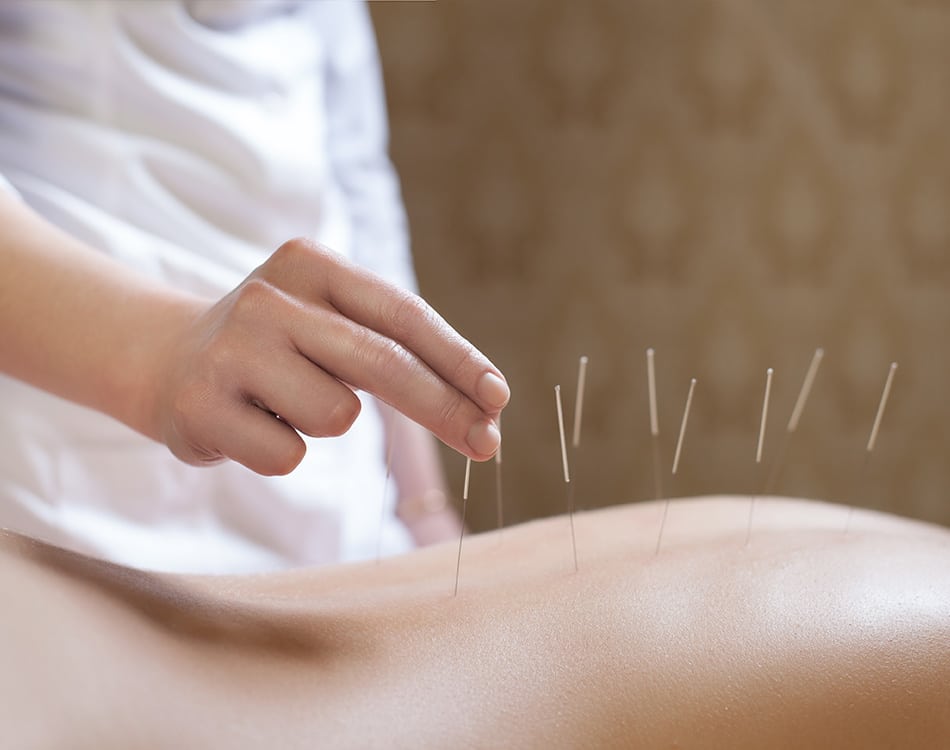
    Dry needling is a rehab tool, not a stand-alone fix. Physiotherapists and other trained clinicians insert thin, solid (filiform) needles into myofascial trigger points – tight, tender knots in muscle – to provoke small twitch responses that may help the muscle relax.

    It’s used for muscle pain, and for overuse problems such as tennis elbow, Achilles tendinopathy and plantar fasciitis. It should sit within a full rehab programme that includes targeted exercise.

    Reviews suggest it may offer short-term pain relief for some myofascial pain, though study quality varies. Expect some muscle soreness for a day or two afterwards.

    Acupuncture comes from traditional Chinese medicine. It’s based on the idea that energy, or qi (pronounced ‘chee’), flows through channels called meridians, and that blocked flow contributes to ill health.

    Fine needles are placed at specific points and usually left in for five to 30 minutes. Most people feel a mild tingle or dull ache at the needle sites, and many find sessions deeply relaxing.

    The evidence is strongest for some chronic pain, such as low back pain, knee osteoarthritis and tension-type headaches. How much of the benefit comes from needle placement itself, rather than placebo effects, is still debated.

    Needles can be part of the plan, but the exercise you do between sessions is what builds lasting resilience.

    READ MORE | The Truth About Foam Rolling

    A hands-on, whole-body approach

    Osteopathy is a manual therapy focused on muscles, joints and nerves. It was developed in the 1870s by an American physician and surgeon, and modern practice draws on current anatomy and healthcare science.

    Your first visit should start with a full history and examination. Alongside hands-on assessment, an osteopath may check your blood pressure or reflexes, and refer you for X-rays or blood tests if something is unclear.

    Treatment usually combines hands-on techniques with home exercises to support recovery. Most people go for back, neck or joint pain, or for sports and work-related injuries; some use regular sessions to stay on top of training niggles.

    Manual therapy, including spinal manipulation, appears in some international guidelines as one option for low back pain – usually alongside exercise rather than on its own. A good practitioner of any kind will tell you when your problem needs a doctor instead.

    Reflexology works on the feet, hands and ears. It’s based on the idea that reflex areas on these parts of the body correspond to organs and systems, and that precise pressure can support the body’s own healing.

    Most sessions are hands-only, using stimulating or calming pressure-point massage. Many people find it deeply relaxing, and some small studies suggest it may help ease pain for some people.

    There’s no good evidence that foot reflex points map to organs, or that tender spots or skin colour can reveal disease. If you’re pregnant, check with your midwife or doctor before booking.

    Specialised kinesiology centres on muscle testing. Don’t confuse it with the academic study of movement, which underpins biokinetics. A practitioner applies light pressure to your limbs to assess what they describe as imbalances in the body’s energy, an idea linked to acupuncture’s meridians.

    Practitioners say it can help with pain, mobility, coordination and food sensitivities. However, controlled tests of muscle testing have not shown it to be more accurate than chance.

    An alternative option

    Alternative therapies aren’t a cure-all, but some may earn a place in your recovery toolkit. Dry needling, acupuncture and osteopathy have the most research behind them for pain, while reflexology and kinesiology are better seen as relaxation than treatment.

    If you want to try one, make it work for you:

    • Get a proper diagnosis from a doctor or physio first.
    • Pick a registered practitioner and ask what results to expect.
    • Agree on a set number of sessions upfront, and track your pain and what you can do – climbing stairs, running 5km, sleeping through the night.
    • Keep up your strength and mobility work between sessions.
    • Stop if nothing has changed by the end of your trial, and speak to your healthcare professional about next steps.

    Author: Pedro van Gaalen

    When he’s not writing about sport or health and fitness, Pedro is probably out training for his next marathon or ultra-marathon. He’s worked as a fitness professional and as a marketing and comms expert. He now combines his passions in his role as managing editor at Fitness magazine.
    Credit: Source link

  • Why CrossFit is a powerful transformation tool for mind and body

    Why CrossFit is a powerful transformation tool for mind and body

    Your local CrossFit box may look like a playground for elite athletes, but the real secret to lasting results there isn’t punishing intensity – it’s a consistent, well-recovered approach you can stick with for years.

    Walk into any CrossFit box and it’s easy to assume you need to leave every session flat on the floor. That belief keeps many women away – and burns out plenty of those who do sign up.

    However, the opposite is true. It’s not all WODs, all the time. A big chunk of your work in the box goes into technique, mobility and accessory work – the unglamorous sessions that all matter to your overall health and appearance.

    Results don’t come from destroying yourself in one session. They come from showing up for hundreds of them.

    Focusing on performance makes you stronger, fitter and more resilient – physically and mentally – which doesn’t come from chasing a look.

    READ MORE | 5 reasons you should try CrossFit

    Why the box works for women

    You don’t need to be lining up for the CrossFit Open to benefit. Here’s what a well-coached box can offer you.

    • Strength you’ll use every day. Squats, deadlifts and presses build the kind of strength that helps you carry a sleeping toddler, haul shopping bags up the stairs or push open a heavy door without a second thought.
    • Support for healthy ageing. Regular resistance training is linked to better bone density and muscle mass as you get older – especially relevant through perimenopause and beyond.
    • A bigger engine. Mixed workouts on the rower, bike and SkiErg build conditioning that carries over to parkrun, trail running and HYROX.
    • Mental grit. Finishing a workout you weren’t sure you could do builds a confidence that follows you out of the box and into the boardroom.
    • Built-in community. Coached classes, and a crowd that cheers loudest for the last finisher, make it far easier to keep showing up.
    • Scaling for every level. Every movement can be adapted, so a first-timer and a seasoned athlete can do the same workout side by side.

    The box meets you where you are – your job is simply to keep coming back.

    Mistakes that stall your progress

    Most plateaus in the box aren’t about effort – they’re about approach. Watch out for these:

    • Max effort, every session: Going all-out daily leaves your body no time to adapt. You get stronger while you recover, not during the workout itself.
    • Programme-hopping: Switching to a new plan every four or five weeks means you never stick with anything long enough to know whether it works.
    • Skipping the ‘boring’ bits: Mobility, technique drills and accessory work feel less thrilling than a timed WOD, but they’re what keep you lifting well and training consistently.
    • Under-fuelling: Training hard on too little food may leave you flat, sore and stuck, and can affect your energy and hormones over time.
    • Forgetting life outside the gym: Short sleep, high stress and long days at a desk all shape how well you recover and perform.

    Consistency beats intensity – every single time.

    READ MORE | 5 supplements that will give you the edge in the CrossFit box

    Your consistency game plan

    No single plan works for everyone, so expect some trial and error. Get these basics right first, then fine-tune.

    1. Choose your lane and commit. CrossFit, bodybuilding, running or HYROX – pick one and give it at least a few months before judging it.
    2. Plan your hard days. Balance high-intensity sessions with technique, strength and easier conditioning days. Ask your coach to help you map out the week.
    3. Protect your sleep. Most adults need seven to nine hours a night, so treat a regular bedtime as part of your training.
    4. Fuel to perform. Build meals around protein, vegetables and quality carbohydrates, and notice how different foods leave you feeling. A registered dietitian can tailor this to you.
    5. Ditch food guilt. Rather than labelling meals as ‘cheats’, notice which choices leave you feeling flat and why you reach for them.
    6. Supplement wisely. Get the food basics in place first, and speak to a healthcare professional before adding anything new.
    7. Manage your stress. A walk, time outdoors or a few minutes of slow breathing can all help you switch off between sessions.
    8. Move outside the box. Walk the dog, play with your kids, or hike Lion’s Head or Joburg’s Melville Koppies on a weekend.
    9. Track how you feel. Log your energy, sleep and lifts, not just the scale. A wearable can help, but don’t let it override how your body feels.

    Small, boring habits repeated week after week are what make the difference.

    READ MORE | 3 things to consider before joining a CrossFit box

    Stick with it

    CrossFit can be a brilliant tool for any woman, whatever her starting point. The magic isn’t in one brutal workout, but in a sensible plan you follow consistently, backed by good sleep, food and recovery.

    Start where you are, stay patient and, once the basics are in place, make small tweaks. That’s when the results arrive – including a few you weren’t expecting.

    Author: Pedro van Gaalen

    When he’s not writing about sport or health and fitness, Pedro is probably out training for his next marathon or ultra-marathon. He’s worked as a fitness professional and as a marketing and comms expert. He now combines his passions in his role as managing editor at Fitness magazine.
    Credit: Source link

  • [RECIPE] Almond & Honey Bars

    [RECIPE] Almond & Honey Bars

    This Almond & Honey Bars recipe creates a scrumptious bar with rich, flaky layers of almond flavours and the sweet touch of honey.

    Whether you’re looking for a delightful dessert or a luxurious snack, these bars Will tick the box!

    Ingredients

    Lifestyle Food Gluten Free Sponge Cake Mix is blended for a light crumb, which is the hardest thing to get from gluten-free flours. Let the batter stand for ten minutes before it goes in the tin, since the flours take up liquid more slowly than wheat.

    Instructions

    1. Preheat your oven to 180°C.
    2. Follow the instructions on the box to prepare the Gluten Free Sponge Cake Mix.
    3. Line a square baking tin with parchment paper. Scoop the prepared cake mix into the lined baking tin, creating an even layer.
    4. In a separate bowl, thoroughly mix the almond butter, honey and coconut oil.
    5. Drizzle the almond butter mixture evenly over the cake mix. Sprinkle the shredded almonds across the top, adding a sprinkle of sugar for a bit of extra sweetness and crunch.
    6. Place the tin in the preheated oven and bake for 40-45 minutes, or until the top is golden brown and a toothpick inserted into the centre comes out clean.
    7. Allow the bars to cool in the tin before slicing them into individual bars. This ensures they set properly and are easy to cut.

    Author: Pedro van Gaalen

    When he’s not writing about sport or health and fitness, Pedro is probably out training for his next marathon or ultra-marathon. He’s worked as a fitness professional and as a marketing and comms expert. He now combines his passions in his role as managing editor at Fitness magazine.
    Credit: Source link

  • Training Run series for 2027 Totalsports Two Oceans Marathon powered by BYD announced

    Training Run series for 2027 Totalsports Two Oceans Marathon powered by BYD announced

    As preparations build for the 2027 Totalsports Two Oceans Marathon (TTOM) powered by BYD, entrants are invited to join the event’s official Training Run series, consisting of 10 training runs across Johannesburg, Cape Town, Durban and Stellenbosch.

    Training Run #1 will take place in Sandton on Sunday, 1 November 2026, under the guidance of Team Vitality.

    Distances on offer at each training run include 10km and 21km, with select events also offering a 30km option. The dates for the 10-run series include:

    1. Johannesburg, 1 November 2026
    2. Western Cape, 22 November 2026
    3. KwaZulu-Natal, 28 November 2026
    4. Western Cape, 6 December 2026
    5. KwaZulu-Natal, 24 January 2027
    6. Gauteng, 7 February 2027
    7. Western Cape, 13 February 2027
    8. Gauteng, 21 February 2027
    9. Gauteng, 14 March 2027
    10. Western Cape, 21 March 2027

    Free for TTOM entrants

    Free of charge to all 2027 TTOM entrants, the Training Run series will give participants the opportunity to prepare for race day, build confidence and connect with fellow runners, while providing a structured platform to work towards the challenge of The World’s Most Beautiful Marathon.

    Chris Goldschmidt, Chairperson of the Two Oceans Marathon NPC, says the Training Run Series is about creating a sense of community and keeping runners connected throughout their journey to race day.

    “The journey to the Totalsports Two Oceans Marathon powered by BYD is about so much more than race day. Our Training Run Series gives runners the opportunity to come together, stay motivated and build towards their goals alongside fellow members of the TTOM community. We want to create that excitement and anticipation from the very first training run right through to race weekend.”

    Community connection

    Wade Bromfield, Event Director of the Totalsports Two Oceans Marathon powered by BYD, says the series also provides an opportunity for partners to engage meaningfully with the running community.

    “Our Training Run Series gives our partners a valuable opportunity to connect with runners in an authentic, on-the-ground environment, while adding real value to their training journey. From expert advice and training support to product experiences and activations, we want every training run to offer something meaningful for the TTOM community.”

    For entry and event info, visit www.twooceansmarathon.org.za.

    Author: Pedro van Gaalen

    When he’s not writing about sport or health and fitness, Pedro is probably out training for his next marathon or ultra-marathon. He’s worked as a fitness professional and as a marketing and comms expert. He now combines his passions in his role as managing editor at Fitness magazine.

    Credit: Source link

  • Rest Days, Reimagined: Active Recovery for Women

    Rest Days, Reimagined: Active Recovery for Women

    Skipping the gym to flop on the couch might feel like recovery, but for women balancing training, work and family, gentle movement, solid sleep and smart fuelling may do far more to help muscles bounce back.

    After a heavy leg day or a long run, the instinct is often to do nothing at all. But recovery isn’t the absence of training – it’s the part of your programme where the progress actually happens.

    READ MORE | Don’t no-rep your recovery. Up your recovery standard with these tips

    Rethinking rest days

    Training is the stimulus; recovery is where you adapt. A lifting session, a long run or a HYROX simulation creates small amounts of muscle damage and fatigue.

    Your body repairs and strengthens itself in the hours and days that follow – if it gets what it needs.

    Short-change that process for long enough and the balance tips towards overreaching, niggling injuries and a tiredness no amount of coffee will fix. Recovery isn’t time off from your training. It’s the half of your training that happens outside the gym.

    READ MORE | Go the distance on your running journey with these recovery tips

    Move it to improve it

    Active recovery means easy movement on rest days or after hard sessions. Think a 20- to 40-minute walk, an easy spin, a gentle swim, mobility work or yoga – effort you could hold a conversation through.

    Active recovery should leave you feeling better than when you started – not like you’ve squeezed in another workout.

    However, your recovery needs are shaped by more than your training log. Work deadlines, school runs, caregiving and the mental load of running a household all draw on the same reserves your muscles rely on to repair.

    READ MORE | Putting the debate to rest: Do you need a day off every week?

    Understanding recovery as a woman

    Your cycle may play a part in your recovery from exercise. Many women notice energy, sleep and how hard a session feels shift across the month.

    A meta-analysis in Sports Medicine found any performance changes across menstrual cycle phases were trivial on average and varied widely between women, so tracking how you feel beats a rigid rulebook.

    Midlife also brings its own recovery hurdles. Sleep disruption, including night sweats, is common in perimenopause and menopause, and poorer sleep can make bouncing back harder. Strength training remains hugely valuable at this stage – recovery simply deserves more attention.

    READ MORE | 5 simple steps to improve your post-workout recovery routine

    Sleep, fuel, repeat

    When it comes to optimal recovery, sleep is a non-negotiable. The US National Sleep Foundation recommends seven to nine hours a night for adults, and people in hard training may benefit from the upper end.

    Getting by on four hours isn’t a badge of honour – it’s a recovery debt. Keep consistent bed and wake times, keep your bedroom cool and dark, and move intense sessions earlier in the day if late workouts leave you wired.

    READ MORE | Making the link between collagen and recovery from exercise

    Fuel your recovery

    Protein is another critical part of the repair job. The International Society of Sports Nutrition suggests spreading protein across the day, with roughly 20g to 40g per meal.

    After long or intense sessions, add carbohydrates to refill your energy stores. Under-fuelling quietly sabotages recovery.

    Regularly eating too little for your training is linked to low energy availability, which may affect hormones, bone health and performance. If your periods become irregular or stop, speak to your doctor.

    Keep your plate simple. Eggs, yoghurt, beans, lentils, chicken, fish, oats, fruit and veg all do the job – no special ‘recovery foods’ required. Water is your default drink, though tea and coffee in moderation count towards your fluid intake, too.

    READ MORE | Take the plunge to elevate your recovery with contrast therapy

    Contrasting approaches

    Saunas and ice baths are all over social media. Here’s what the evidence actually supports. Sweat cools you down; it doesn’t clean you out.

    Sweat is mostly water and electrolytes. Your liver and kidneys handle waste removal, and sweating doesn’t meaningfully flush out ‘toxins’.

    A sauna may help you unwind, though. Heat increases blood flow and many people find it relaxing. A Finnish study in JAMA Internal Medicine linked frequent sauna use with lower cardiovascular risk, but it was observational and involved only men.

    Cold water may ease soreness – with a catch. Cold-water immersion is linked to lower perceived muscle soreness after hard exercise. Protocols commonly use water of about 10°C to 15°C for around 10 to 15 minutes.

    However, a small study in The Journal of Physiology found that regular cold-water immersion after strength sessions blunted gains in muscle size and strength over 12 weeks (the participants were physically active men, though).

    Check before you plunge or steam. If you’re pregnant, have a heart condition, high or low blood pressure, or Raynaud’s, speak to your doctor before using saunas or cold immersion.

    READ MORE | Our Nervous System: The Hidden Key to Better Training, Recovery & Results

    A recovery day done right

    You don’t need six hours at a bathhouse. A realistic active recovery day fits around work and family:

    • Start with easy movement: A 20- to 30-minute walk or gentle jog – a loop of Zoo Lake in Joburg or along the Sea Point promenade in Cape Town.
    • Eat a protein-rich breakfast: Eggs on wholewheat toast with spinach, or plain yoghurt with oats and fruit.
    • Mobilise for 10 to 15 minutes: Focus on hips, upper back and ankles – the areas desk days and heavy sessions tend to tighten.
    • Add heat or cold if you enjoy it: A short sauna or cool shower at your gym, with water on hand. Skip it if it feels like a chore.
    • Hydrate through the day: Water as your default, plus an electrolyte drink if you’ve sweated heavily.
    • Protect your wind-down: Dim the lights and put your phone away well before your usual bedtime.
    • The best recovery day is the one you’ll actually repeat every week.

    Active recovery isn’t a luxury – it’s part of training well. The evidence for trendy tools like saunas and ice baths is modest and mostly drawn from men, while the basics – easy movement, enough sleep and enough food – do the heavy lifting.

    Build one or two genuinely easy days into your week, adjust for your cycle, life stage and stress levels, and notice how you feel. If you’re pregnant, recovering from injury or managing a health condition, speak to your doctor, a biokineticist or a physiotherapist before changing your routine.

    Author: Pedro van Gaalen

    When he’s not writing about sport or health and fitness, Pedro is probably out training for his next marathon or ultra-marathon. He’s worked as a fitness professional and as a marketing and comms expert. He now combines his passions in his role as managing editor at Fitness magazine.

    Credit: Source link

  • Strong in equal measure: The importance of strength symmetry

    Strong in equal measure: The importance of strength symmetry

    Carrying your toddler on the same hip, long days at a desk and a programme built around the muscles you see in the mirror can all throw your body and strength out of balance.

    If you look closely and you may notice it: one shoulder sits a little lower, one leg does more of the work on the stairs, and your stronger arm always finishes the set first.

    Almost everyone carries some degree of muscle imbalance – and this isn’t about how you look. What matters is how those imbalances affect the way you move, lift and stay injury-free.

    But achieving balance isn’t about looking symmetrical – it’s also about moving well, lifting well and staying in the game.

    READ MORE | Unlock Your Strength: 5 Smart Strategies to Sculpt Your Best Self

    Why We All End Up Uneven

    Your dominant side does more than its share. Most of us favour one arm for daily tasks, lead with the same leg and shift our weight onto that side when we stand. Think handbag on one shoulder, baby on one hip, the same foot always stepping up first.

    Lifestyle adds to the load. Hours of sitting, slouching over a laptop and repeating the same activities day after day mean some muscles work overtime while others switch off.

    Your body is a master of compensation. When your main movers and stabilisers aren’t strong enough for the job, other muscles – and less robust structures such as tendons and ligaments – pick up the slack, which can set you up for injury.

    Structural factors such as a leg-length difference or a curve in the spine can play a part too. So can old injuries: training through or around a niggle that was never properly rehabilitated is one of the more common causes of asymmetry.

    Then the gym amplifies it. If one side is stronger and you load both sides without a plan, the gap simply grows – in strength and in size. Train an imbalance without a plan and you don’t fix it – you reinforce it.

    READ MORE | 3 strength training myths that must fall

    Mind the Mirror Muscles

    What you see isn’t the whole story. The traditional gym workout focuses on “mirror muscles” – the visible muscles at the front of the body – which is a big driver of imbalance between your front and back.

    This tends to lead to issues such as rounded shoulders, which alters your posture, and can directly contribute to both shoulder and neck tension and movement dysfunction.

    Small muscles matter too. Many upper-body issues start with weak rotator cuffs, which forces the trapezius to take over and shifts the load through your shoulder joint.

    Watch your quad-to-hamstring balance. If your leg days lean on squats and lunges with little hamstring work, take note. The strength of the quads relative to the hamstrings can predict your risk of hamstring strains, cruciate ligament knee injuries, or even lordosis.

    This is especially relevant for women, who are reported to have a higher rate of ACL injuries than men. A strong back is just as important as a strong front – your posture depends on both.

    READ MORE | How your menstrual cycle could affect your injury risk

    Why Balance Pays Off

    It may lower your injury risk. Even strength on both sides and between opposing muscle groups means fewer weak links for your joints, tendons and ligaments to cover for.

    It can make your lifts more effective. When one muscle group dominates – overdeveloped arms during chest or back exercises, for example – it can limit how fully the target muscles are recruited, reducing the training effect.

    It supports better posture. A strong upper back and rotator cuffs help counter the rounded shoulders that long days at a desk can encourage.

    It makes everyday life easier. Carrying a child on either hip, lugging shopping bags from the car or pushing a heavy door all feel smoother when both sides of your body pull their weight.

    Balanced strength isn’t a luxury – it’s what keeps you training for decades.

    READ MORE | Addressing a Pressing Gym Issue: Why It’s Time Women Claimed the Bench Press

    Know Your Numbers

    Knowing you should do squats and Romanian deadlifts is only the starting point. Few gym-goers know how to balance loads between opposing muscle groups, and there are set ratios worth working towards.

    The important ones include:

    • Ankle plantar flexors (calf muscles) and dorsiflexors (shin muscle) – 3:1
    • Elbow flexors (biceps) and extensors (triceps) – 1:1
    • Hip flexors and extensors (glutes and hamstrongs) – 1:1
    • Knee flexors (hamstrings) and extensors (quads) – 2:3

    The difference between your left and right sides shouldn’t exceed 10 to 15%, and the gap between a muscle’s concentric (lifting) and eccentric (lowering) strength should ideally be under 10%.

    These are targets for a professional assessment, not a DIY test – but they show why “just train harder” rarely fixes an imbalance.

    Mistakes that can tip the scales include:

    • Mirror-first programming: Prioritising what you can see over your back, hamstrings and the muscles that stabilise your joints.
    • Skipping the small stuff: Leaving out rotator cuff and other accessory work because it doesn’t feel like a “real” workout.
    • Training through niggles: Working around a sore spot instead of getting it checked, which can create compensation patterns further along the chain.
    • Always leading with your strong side: Starting every unilateral set on your dominant side, then cutting the weaker side short when you tire.
    • Dropping the warm-up and cool-down: They are key to mobility and balance.
    • Copy-paste programmes: No programme should ever be cookie cut. Weights, volume and frequency need to fit you.

    The fix often starts with the parts of your session you’re most tempted to skip.

    Find Your Balance

    Get assessed before you get hurt. Most people incorrectly believe that you only need a movement or strength assessment once you’ve been injured. Screening by a qualified biokineticist before starting a new programme or training phase is the ideal approach.

    Start with mobility. A good assessment first checks range of motion at key joints such as your shoulders and hips, comparing left and right.

    Fix how you move. Next come movement patterns, as poor patterns put you in weak positions under load, which raises injury risk.

    Only once your movement is sound should you target strength ratios, using isolation moves or unilateral exercises that give your weaker side more load or volume.

    A simple cue: start each single-leg or single-arm set on your weaker side, then match those reps on your stronger side.

    Protect your warm-up and cool-down. Use dynamic stretches and mobility drills before training. Small habits through the day add up, improving range of motion and body awareness.

    Assess first, move well second and load third – in that order.

    The bottom line is that some asymmetry is completely normal – nobody is perfectly even, and your skeleton may not be either. The goal isn’t a flawless reflection, but a body that moves and lifts evenly enough to keep you strong and injury-free.

    Any imbalance can be corrected with the right approach, though, you just need to first determine where these issues lie.

    Author: Pedro van Gaalen

    When he’s not writing about sport or health and fitness, Pedro is probably out training for his next marathon or ultra-marathon. He’s worked as a fitness professional and as a marketing and comms expert. He now combines his passions in his role as managing editor at Fitness magazine.

    Credit: Source link

  • Vitamin B3 for women: Understanding niacin for better health and energy

    Vitamin B3 for women: Understanding niacin for better health and energy

    If you’ve ever stood in the vitamin aisle at Dis-Chem wondering whether vitamin B3 (niacin) deserves a place in your routine, you’re not alone – it pops up in energy formulas, B-complex blends and half the serums on your bathroom shelf.

    Niacin is vitamin B3, one of the eight B vitamins your body relies on to turn food into fuel. It’s water-soluble, so your body keeps very little in reserve. Whatever you don’t use leaves in your urine, which is why you need a steady supply from food, or a supplement, day after day.

    Niacin is really an umbrella term for two main forms:

    • Nicotinic acid
    • Nicotinamide

    Once absorbed, both forms are converted into a coenzyme called NAD (nicotinamide adenine dinucleotide). Think of NAD as a tireless courier, shuttling electrons between reactions so your cells can get things done.

    According to the US National Institutes of Health (NIH), more than 400 enzymes depend on it. Your body also builds a sister molecule, NADP, which helps make fatty acids and cholesterol and keeps your cellular antioxidant defences topped up. 

    READ MORE | B your best self: Unpacking the benefits of B complex vitamins

     Where to find niacin on your plate

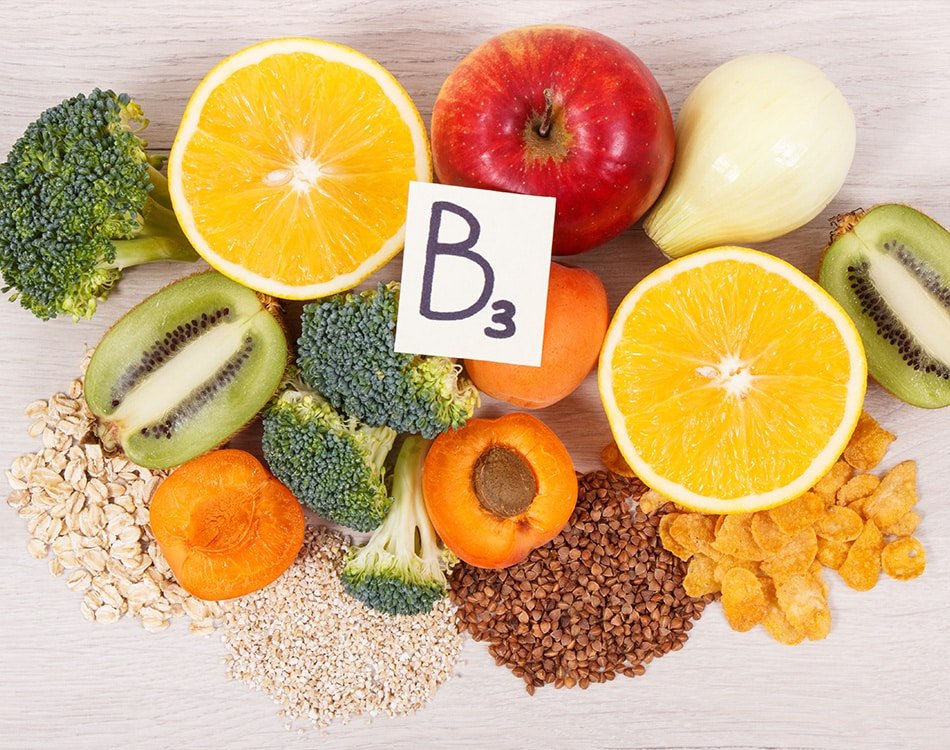
    Niacin is easy to come by in your daily diet. Chicken, tuna, salmon and beef are among the richest sources, with a typical serving providing roughly 5 mg to 10 mg.

    If you lean toward plant-based eating, peanuts, legumes, brown rice, mushrooms and whole grains tend to offer around 2 mg to 5 mg per serving.

    There’s a small catch with grains. In some unrefined cereals, much of the niacin is bound up in a form your gut struggles to release, so you absorb only part of it. Here at home, maize meal and wheat flour are fortified with niacin under South African food regulations, which helps close that gap for many households.

    Your body has a backup plan, too. Your liver can make niacin from tryptophan, an amino acid in protein-rich foods like chicken, eggs and dairy. It’s not especially efficient, though: roughly 60 mg of tryptophan yields just 1 mg of niacin.

    For most women eating a varied diet, food covers the basics. Shortfalls are more likely if you eat very restrictively, drink alcohol heavily or live with a condition that affects nutrient absorption.

    Severe, long-term deficiency causes a condition called pellagra, marked by a rough, darkened skin rash, digestive upset and mental changes. It’s rare today and needs medical diagnosis and treatment; a supplement is not a substitute for that care.

    READ MORE | Fuel your fire and fight fatigue with B complex vitamins

    What niacin does for you

    Niacin isn’t a “women’s vitamin” in the way iron or folate sometimes are. Women need slightly less than men, and needs rise during pregnancy. But the work it does shapes how you feel every single day.

    Every time you eat, NAD helps your mitochondria convert the kilojoules from carbohydrates, fats and proteins into ATP, the energy currency your cells run on. The NIH niacin fact sheet describes energy metabolism as one of niacin’s core jobs.

    That’s why niacin is recognised for contributing to normal energy-yielding metabolism and the reduction of tiredness and fatigue. A word of honesty: if your intake is already adequate, more won’t give you extra energy. Niacin helps fill a gap; it doesn’t create a surplus.

    Your brain is a demanding organ, and it leans heavily on NAD. Niacin plays a role in producing the chemical messengers that help regulate mood, memory and focus, and the NIH notes that a serious shortfall shows up partly in the nervous system.

    Niacin contributes to normal psychological function, which matters during busy, high-pressure seasons of life. To be clear, niacin is not a treatment for depression or anxiety, and it should never replace care from a healthcare professional.

     Skin is one of the first places a niacin shortfall shows, which tells you how much it relies on a steady supply. Most of the exciting skin research, however, involves niacinamide applied to the skin rather than swallowed.

    A study in the British Journal of Dermatology found that topical niacinamide increased production of ceramides, the lipids that help your skin barrier hold on to moisture.

    Oral niacin supports the maintenance of normal skin, but evidence that a supplement visibly changes healthy skin is limited. If skin is your focus, browse the Biogen Hair, Skin & Nails range.

    NAD also feeds enzymes involved in DNA repair and cell signalling, while NADP helps recycle the antioxidants that protect cells from oxidative stress. These are quiet jobs, and much of the research behind them is lab-based. Treat them as a reason niacin matters in your diet, rather than a reason to take more of it.

    READ MORE | Product focus: Biogen Supreme B-Complex – An Activated B-Vitamin Complex For Optimal Absorption

    The niacin flush, explained

    If you’ve ever taken nicotinic acid and felt your face and chest go hot, pink and prickly, welcome to the niacin flush.

    It usually starts 15 to 30 minutes after a dose. Nicotinic acid prompts the skin to release prostaglandins, which widen the small blood vessels near the surface, causing warmth, redness and sometimes itching or tingling.

    It can feel alarming the first time, but in healthy adults it generally passes within an hour and isn’t considered dangerous.

    Despite what social media might tell you, it’s not your body “detoxing”. It’s simply blood vessels doing what nicotinic acid tells them to do. If you ever notice swelling, hives that don’t settle or difficulty breathing, get medical help straight away, because that isn’t a typical flush.

    To soften it, take your supplement with a meal and split larger doses across the day. Nicotinamide doesn’t cause a flush at all. “No-flush” products made with inositol hexanicotinate release very little free nicotinic acid, so they don’t behave the same way in the body, which is worth knowing before you assume they’re a like-for-like swap. 

    READ MORE | Time your vitamin and mineral intake to get the best benefits

     How much vitamin B3 do women need?

    Most adult women need 14 mg of niacin a day, rising to 18 mg in pregnancy and 17 mg while breastfeeding. These figures come from the NIH and are measured in niacin equivalents, which count the niacin your body makes from tryptophan.

    The upper limit applies to niacin from supplements and fortified foods, not what occurs naturally in your meals, and it’s set mainly to avoid flushing. Products sold in South Africa show their dose against a Nutrient Reference Value (NRV) on the label, so check there too.

    The ideal time to take your supplement in the morning with breakfast. Food slows absorption, which softens any flush, and splitting a larger dose across the day helps too.

    Always follow the dosage instructions on the product label unless your doctor or pharmacist advises otherwise.

    If you are pregnant or breastfeeding, stick with the amount in your prenatal multivitamin and avoid high-dose standalone niacin unless your doctor or midwife recommends it. Large doses haven’t been shown to be safe for a developing baby.

    Choosing a niacin supplement

    On the shelf at Dis-Chem you’ll find everything from single-ingredient niacin tablets to multivitamins with a little B3 tucked in.

    Because the B vitamins depend on each other, a complete B complex is often the more practical everyday choice, with standalone product like Biogen Vitamin B3 Niacin best kept for a specific, identified gap.

    Check each label for the exact dose per serving. If you’re 50 or older, a broader formula such as Biogen Multivitamin 50 Plus Advanced covers niacin alongside the other nutrients your needs shift towards.

    Author: Pedro van Gaalen

    When he’s not writing about sport or health and fitness, Pedro is probably out training for his next marathon or ultra-marathon. He’s worked as a fitness professional and as a marketing and comms expert. He now combines his passions in his role as managing editor at Fitness magazine.

    Credit: Source link

  • Pickled Paradox: Kimchi’s Link to Stomach Cancer

    Pickled Paradox: Kimchi’s Link to Stomach Cancer

    What explains the Achilles’ heel in certain Asian diets?

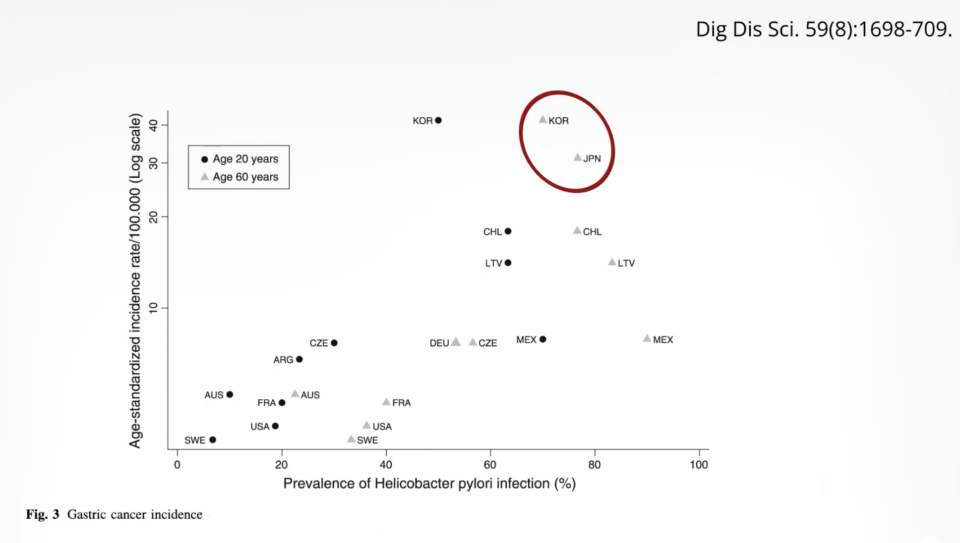
    For decades, Japan has had the longest life expectancy in the world, while spending just a fraction on healthcare compared to other high-income countries. This longevity has been attributed in part to Japanese dietary patterns, which are thought to have contributed to their comparatively low rates of coronary artery disease. Japan has historically had among the lowest rates of colon, breast, ovarian, prostate, bladder, and blood cancers. Japan, however, has among the highest rates of stomach cancer, as you can see below and at 0:42 in my video The Role of Kimchi and H. Pylori in Stomach Cancer.

    Japanese men may have had seven times less prostate cancer than Americans, but they had six times more stomach cancer. Is there some Achilles’ heel in the Japanese diet?

    One of the first theories, proposed in the 1970s, was that it was the talc used to polish white rice to give it a glossy sheen. That was the case with ovarian cancer, which led to billions in damages against Johnson & Johnson’s baby powder, as I detailed in one of my videos, but that did not appear to be the case with stomach cancer. Could it be just genetics? No. Studies on Japanese migrants show that as they and their children westernize their diets and lifestyles, their stomach cancer rates drop accordingly.

    The most well-established risk factor for stomach cancer is H. pylori, a bacteria that infects the lining of the stomach and causes the chronic inflammation that can lead to cancer. H. pylori infection is considered a Group 1 carcinogen, indicating the highest level of certainty that it indeed causes cancer. Korea and Japan have the highest rates of stomach cancer and among the highest incidence of H. pylori infection, as you can see below and at 1:52 in my video.

    Case closed, then, right? The mystery seemed to have been solved.

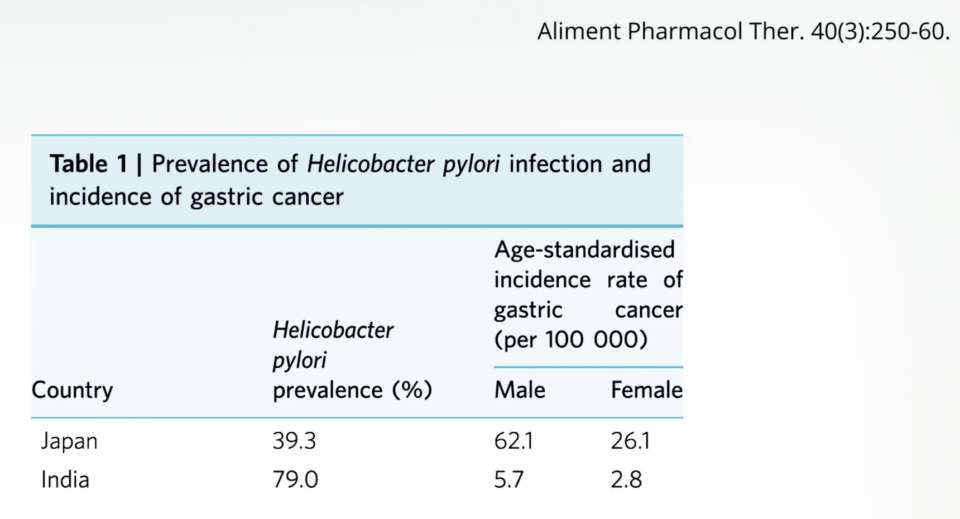
    But then came the “African enigma.” Countries such as Nigeria had even more H. pylori infections, but only a fraction of Japan’s stomach cancer rates. Then came the “Indian enigma.” H. pylori is twice as prevalent in India than Japan, yet Indians get ten times less stomach cancer, as you can see below and at 2:19 in my video.

    Obviously, H. pylori alone can’t explain Japan’s epidemic.

    Though most cases of stomach cancer are thought to be caused by H. pylori, most people with H. pylori don’t get cancer. H. pylori is one of the most common human infections. It has been estimated that half of the world’s adult population is infected with H. pylori, yet half of us don’t get stomach cancer. There must be some kind of co-factor in countries like Korea and Japan that explains their elevated cancer rates. The inflammation caused by H. pylori may just set the stage for cancer formation, increasing the susceptibility of the stomach lining to dietary carcinogens. But what’s so carcinogenic about Korean and Japanese diets?

    Studies that have compared the dietary components of different Asian populations with similar H. pylori rates but dramatically different stomach cancer rates have suggested preserved, salted foods—both fish and vegetables—as the culprits. Fresh vegetables and fruits, on the other hand, were associated with an 85% reduction in stomach cancer odds, whereas consumption of fresh fish doesn’t appear associated with stomach cancer either way.

    A review of 60 studies found that the consumption of pickled foods was associated with significantly higher rates of stomach cancer, though more so in Korea than Japan, perhaps because per-capita Korean consumption of salt-fermented vegetables, like kimchi, is five to eight times greater. You can’t know for sure though, until you put it to the test.

    Pickled vegetable extracts can cause DNA damage in cells in a petri dish, but what about in people? Over a three-day period, researchers in Vancouver fed people 30 ounces of fukujinzuke (assorted vegetables pickled in soy sauce) or pickled cucumbers. Biopsies taken from their stomach lining before the experiment started were normal, as were the biopsies taken after eating fresh carrots or cucumbers. But after just a few days of consuming pickled vegetables, moderate to severe tissue abnormalities were found, suggestive of stomach irritation.

    The consumption of non-fermented soy foods, such as tofu, edamame, and soymilk, is linked to a lower risk of stomach cancer in Japan, whereas no association was found with fermented soy foods—even highly salted miso. The protection afforded by soy foods was attributed to the anti-inflammatory and antioxidant effects of the isoflavone compounds in soybeans.

    Salt itself isn’t considered a direct carcinogen, but it may damage the stomach lining, thin the protective mucus layer, enhance H. pylori colonization, enhance the penetration of carcinogens, and enhance the formation of carcinogens. Even moderately high salt intake is associated with significantly increased risk of stomach cancer, though in Japan this effect may be limited to those already suffering from H. pylori-induced inflammation.

    H. pylori infection is typically treated with a cocktail of multiple antibiotics. Is there any way to eradicate it naturally through diet? We’ll find out in the next blog.

    Doctor’s Note

    Stay tuned for the follow-up blog: The Best Foods to Fight H. Pylori.

    The talc video I mentioned was Talcum Powder and Fibroids.

    I previously talked about Japan’s stomach cancer rates in Vegetarians and Stroke Risk Factors: Saturated Fat, and Is Miso Healthy? has more on salt consumption and cancer.


    Credit: Source link

  • Easy Vegan Cream of Mushroom Soup

    Easy Vegan Cream of Mushroom Soup

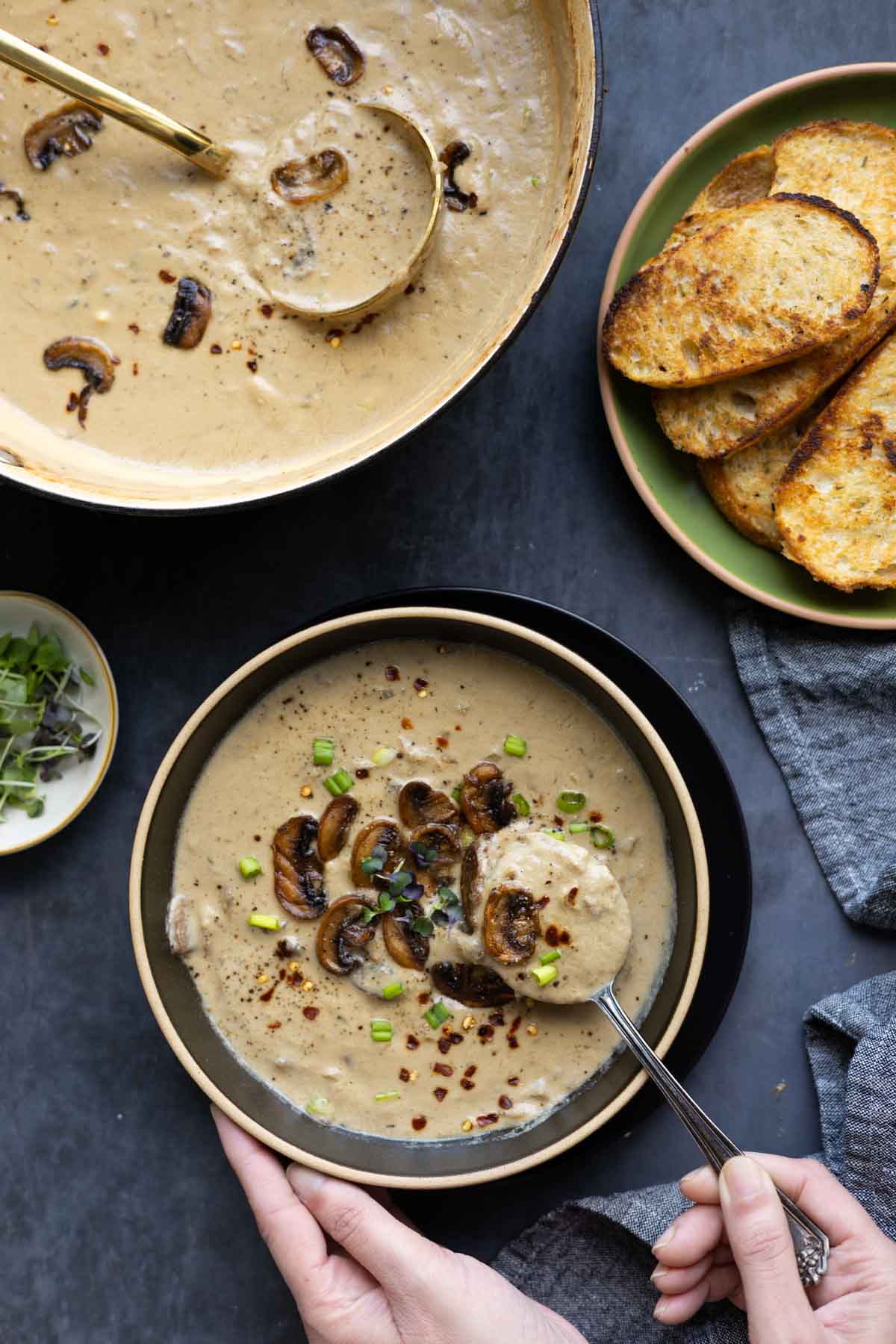
    This easy vegan cream of mushroom soup is rich, savory, and packed with mushroom flavor, plus 14g protein per serving! Made with simple ingredients and ready in just 30 minutes. Perfect with crusty bread for dipping! (gluten-free, soy-free with easy nut-free option)

    This recipe was originally posted March 6, 2013. It has been updated with modified recipe, pictures and video.

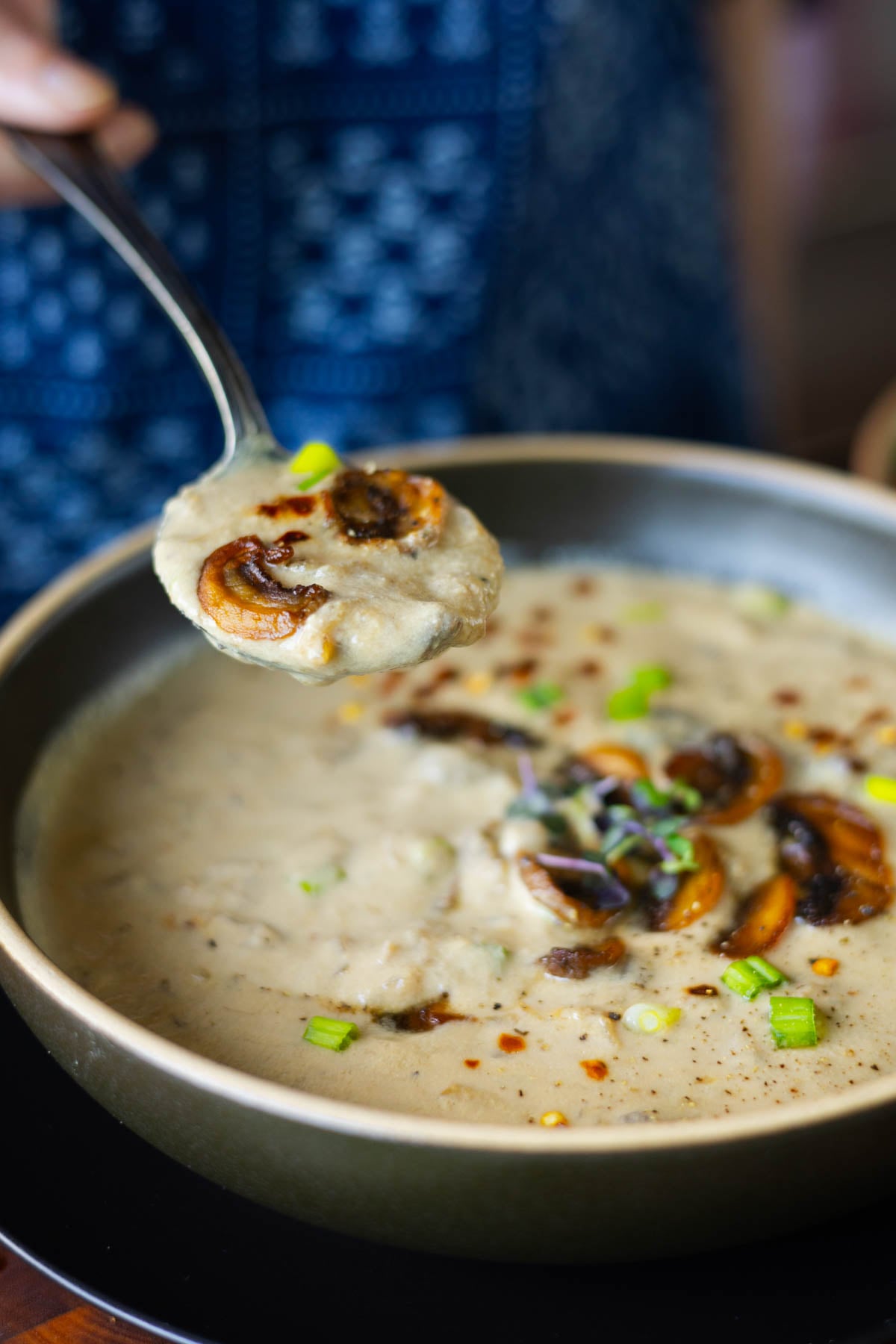
    taking a bite of cream of mushroom souptaking a bite of cream of mushroom soup

    This cream of mushroom soup is a recipe that my friend Somer McCowan shared on my site over 10 years ago. Somer passed away from cancer months ago, and I’ve been thinking about her a lot, which got me thinking about this soup .

    I tweaked Somer’s recipe a little bit, reducing the cashews, and changed a couple of the steps in the cooking method to make it simpler. 

    close-up of a bite of cream of mushroom soupclose-up of a bite of cream of mushroom soup

    The original recipe called for adding all of the stock to the mushroom mixture and boiling it and then blending some of that soup, but it’s not as easy when you have to transfer boiling liquid into a blender. So instead, I’m blending part of the cooked onion and mushroom mixture with the cashews and adding that back into the pan, then adding the remaining stock. 

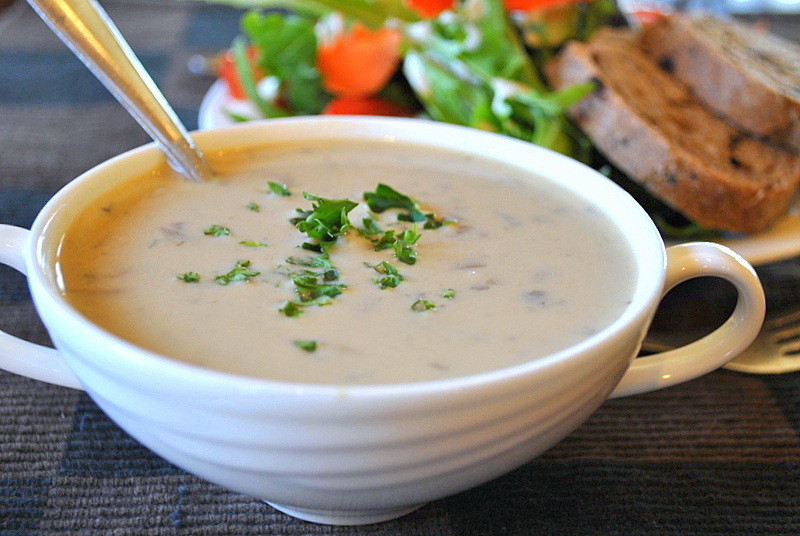
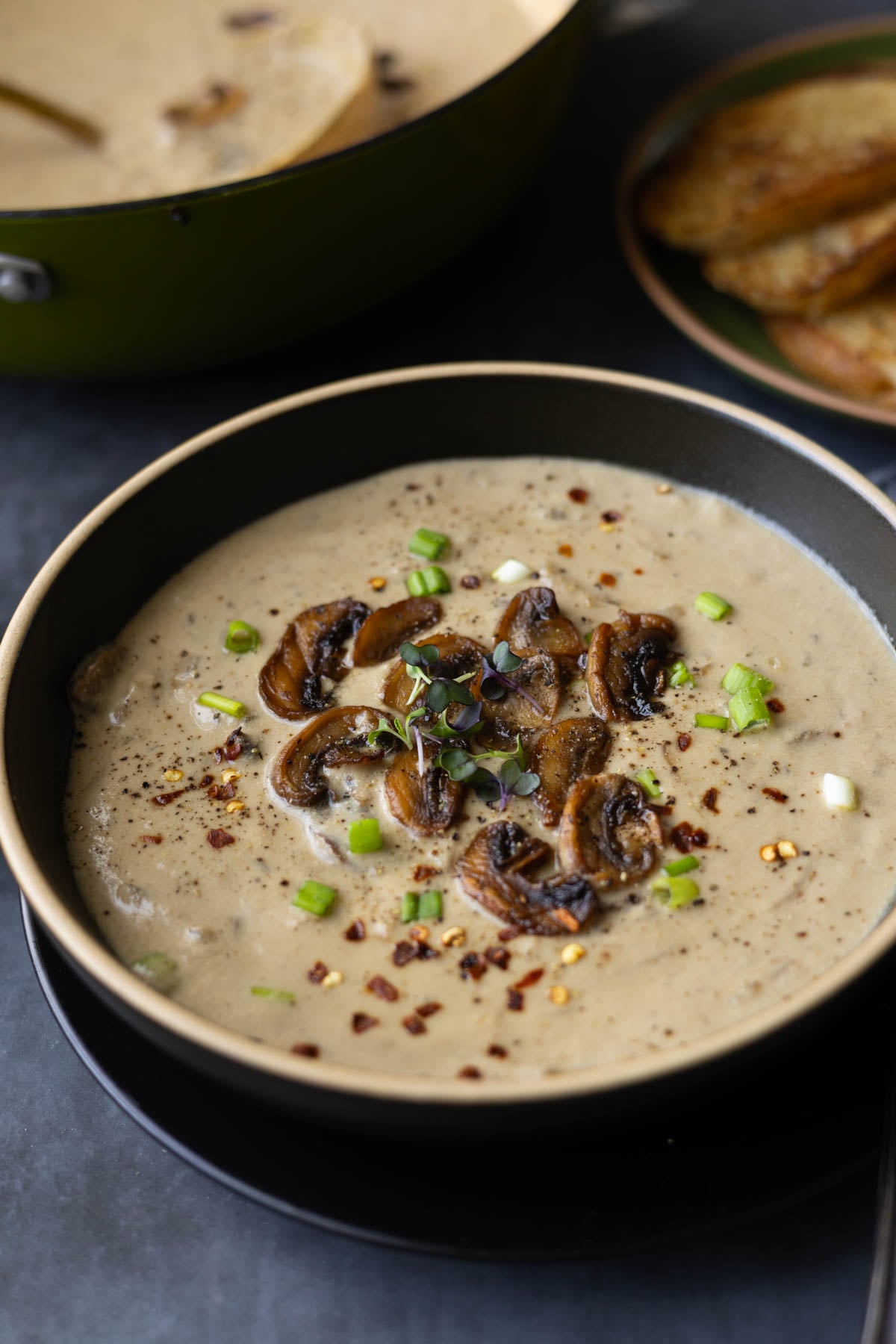
    bowl of cream of mushroom soupbowl of cream of mushroom soup

    This is just such a simple and delicious soup! You can change up the flavors to preference, deepen the flavors by adding some miso, add some fresh herbs for additional flavor, and some pepper flakes for a little bit of heat, if you like. If you don’t have wine, you can use balsamic vinegar instead.

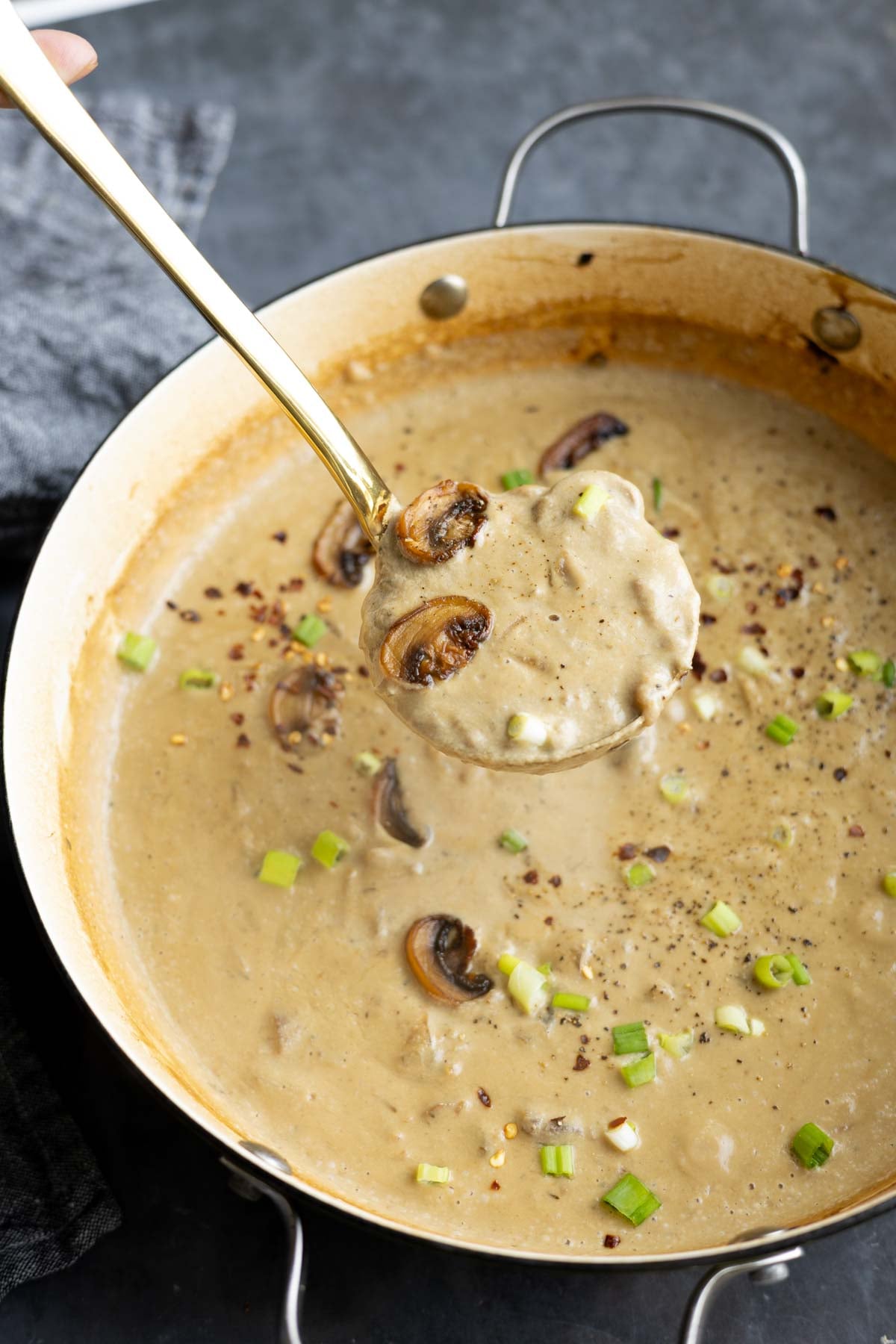
    close-up of a ladle serving vegan cream of mushroom soupclose-up of a ladle serving vegan cream of mushroom soup

    Somer was just an amazing person, and her recipes were always incredible. When I was dealing with health issues, she pitched in with this guest recipe to help keep my blog going. She was just an absolute superwoman. She wrote for Forks Over Knives, co-hosted the Virtual Vegan Potluck, and was just the sweetest, most beautiful, compassionate person.

    Somer’s cream of mushroom soup recipe is simple, yet it’s so creamy and flavorful with herbs and plenty of umami! She said, “I’d like to think if I was able to go to Richa’s house and bring her some lunch, that I’d bring her a big bowl of this soup. Feel better soon, girl.”

    bowl of cream of mushroom soupbowl of cream of mushroom soup

    Why You’ll Love Cream of Mushroom Soup

    • delicious, creamy soup with amazing herb and mushroom flavor
    • easy to make in 30 minutes with simple ingredients
    • gluten-free and soy-free with nut-free and oil-free options

    More Quick and Easy Soups

    For the Cream of Mushroom Soup

    • 1 tablespoon extra virgin olive oil, divided. Or broth fry for oil-free.
    • 16 ounces mushrooms, sliced 1/8” thick, such as white, cremini, oyster, shiitake, portobello, or any mushrooms you like. You can also use a mix of these.
    • 1 1/2 cups chopped white onion
    • 5 cloves garlic, minced
    • 1/2 teaspoon salt, or more to taste
    • 1/4 cup sherry, or red wine, see notes for wine substitutes
    • 1/2 teaspoon dried oregano
    • 1/2 teaspoon dried thyme
    • 1/4 teaspoon black pepper
    • 5 cups vegetable stock, or mushroom stock, divided
    • 2 tablespoons nutritional yeast
    • 3/4 cup raw cashews

    Prevent your screen from going dark

    Brown some of the mushrooms for garnish. 

    • In a large, thick-bottom saucepan, Dutch oven, or deep skillet, heat 2 teaspoons of the olive oil over medium heat. Once the oil is hot, add in 1 to 2 ounces of the sliced mushrooms in a single layer. Add a good pinch of salt, and cook 2 to 3 minutes per side until browned on both sides. Remove and set aside for garnish. 

    Make the cream of mushroom soup.

    • In the same pan, add the onion, garlic, and a good dash of salt. Mix and cook for 5 minutes or until the onion starts to turn translucent. If the pan dries out, add 1 tablespoon or more stock. 

    • Add the remaining mushrooms, herbs, and the remaining salt and olive oil, and mix well. You can also add 1 to 2 teaspoons vegan butter at this point for additional flavor. Partially cover and cook for 5 to 6 minutes, stirring once in between, until the mushrooms start to pick up some color. Mix in the wine or balsamic vinegar. Cook uncovered for 3 to 4 minutes to cook out the alcohol or vinegar flavor, then reduce the heat to low. 

    • Transfer about 1/3 of the mushroom and onion mixture to a blender. 

    • Add 3 cups of the stock to the pan. Increase the heat to medium again, cover, and bring to a boil. Let the mushrooms cook for 8 to 10 minutes total, so they are completely cooked through, because they will stop cooking once you add the cashew cream mixture. 

    • Meanwhile, add the soaked cashews, nutritional yeast, and 2 cups of the stock to the blender. Blend until smooth. I usually blend for 1 minute, let the mixture sit for 2 to 3 minutes for the cashews to rehydrate, then blend again for 1 minute until everything is super smooth. 

    • Once the mushrooms are cooked to preference, add the cashew cream mixture to the pan. Partially cover and bring back to a boil. If the soup thickens too much, add more stock and bring to a boil again. Taste and adjust flavor, adding more salt, black pepper, herbs, pepper flakes. For additional flavor, you can also add in some miso, vegan parmesan, and fresh herbs as desired. 

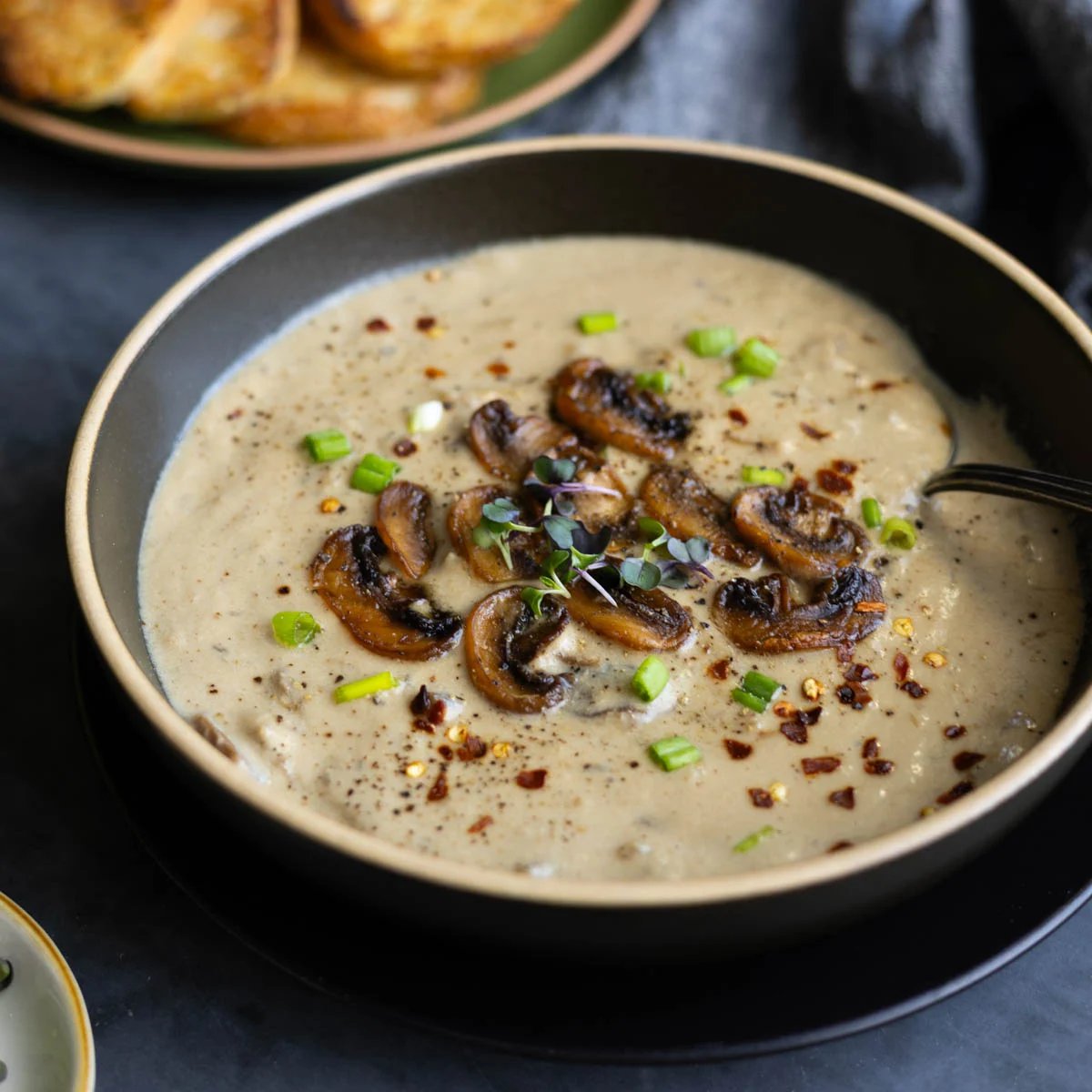
    • Serve this cream of mushroom soup garnished with the browned mushrooms, chives or green onion, pepper flakes, and sprouts. Serve with sourdough bread, bakery bread, garlic bread, pita bread, or crackers.

    Store in the fridge for up to 3 days. Mushrooms don’t always freeze well, but because this is a creamy soup, it might work to freeze.
    If you don’t have wine, substitute 2 tablespoons balsamic vinegar, or a mix of 2 tablespoons balsamic vinegar and 1 tablespoon rice wine vinegar. 
    Variations: You can also add 2 teaspoons soy sauce to deepen the umami flavor. To add even more protein, you can use 1 cup white beans or 1 cup silken tofu to make the cream in the blender with the cashews. You can add hemp seeds, as well, for additional protein.
    This cream of mushroom soup is gluten-free and soy-free. To make it nut-free, you can use a combination of tofu and hemp seeds or tofu and pumpkin seeds to make the cream.

    Calories: 329kcal, Carbohydrates: 27g, Protein: 14g, Fat: 20g, Saturated Fat: 3g, Polyunsaturated Fat: 3g, Monounsaturated Fat: 11g, Sodium: 424mg, Potassium: 953mg, Fiber: 6g, Sugar: 9g, Vitamin A: 15IU, Vitamin C: 11mg, Calcium: 67mg, Iron: 4mg

    Nutrition information is automatically calculated, so should only be used as an approximation.

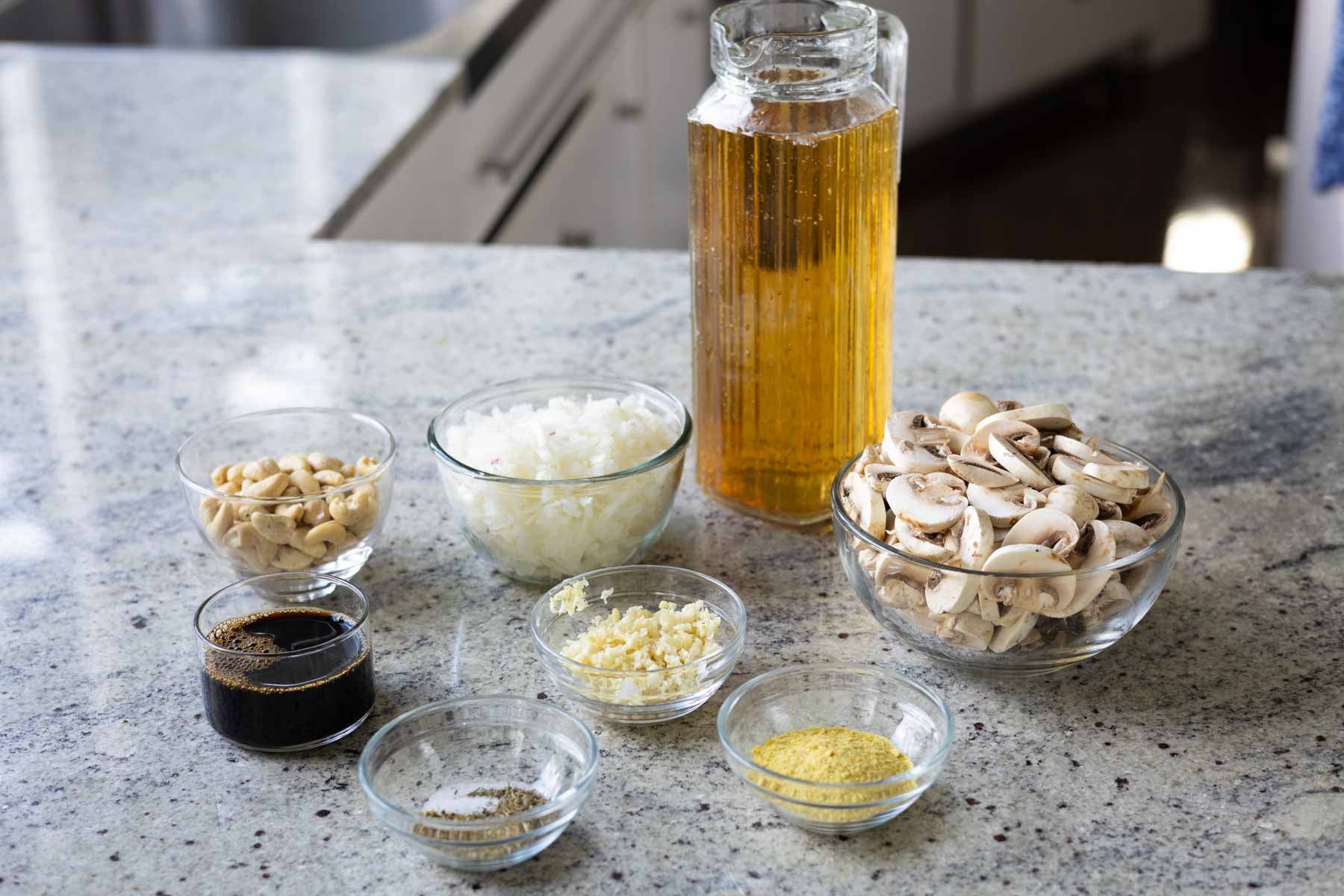
    vegan cream of mushroom soup ingredientsvegan cream of mushroom soup ingredients

    Ingredients

    • oil – To saute. You can broth fry for an oil-free option.
    • mushrooms – Use mushrooms of your choice, such as white, cremini, oyster, shiitake, portobello, or a mix.
    • aromatics – Sautéed garlic and onion add a ton of umami to this soup.
    • sherry – You can also use red wine, balsamic vinegar, or a mix of balsamic vinegar and rice wine vinegar.
    • dried herbs – Oregano, thyme, black pepper, and nutritional yeast add so much flavor!
    • stock – Use vegetable stock or mushroom stock.
    • raw cashews – For creaminess. For a nut-free version, you can use a combination of tofu and hemp seeds or tofu and pumpkin seeds to make the cream.
    • garnishes – Garnish this cream of mushroom soup with some chopped green onion/chives, pepper flakes and sprout.

    💡Tips

    • If the pan starts to dry out while sautéing the aromatics, just add splashes of water or broth to deglaze the pan.
    • You are making the cashew cream mixture while the mushrooms finish simmering in the pan.
    • Make sure the mushrooms are cooked through before adding the cashew cream, because they will stop cooking when you add it to the pan.

    How to Make Cream of Mushroom Soup

    Brown some of the mushrooms for garnish. In a large, thick-bottom saucepan, Dutch oven, or deep skillet, heat 2 teaspoons of the olive oil over medium heat. Once the oil is hot, add in 1 to 2 ounces of the sliced mushrooms in a single layer. Add a good pinch of salt, and cook 2 to 3 minutes per side until browned on both sides. Remove and set aside for garnish. 

    In the same pan, add the onion, garlic, and a good dash of salt. Mix and cook for 5 minutes or until the onion starts to turn translucent. If the pan dries out, add 1 tablespoon or more stock. 

    Add the remaining mushrooms, herbs, and the remaining salt and olive oil, and mix well. You can also add 1 to 2 teaspoons vegan butter at this point for additional flavor. Partially cover and cook for 5 to 6 minutes, stirring once in between, until the mushrooms start to pick up some color.

    Mix in the wine or balsamic vinegar. Cook uncovered for 3 to 4 minutes to cook out the alcohol or vinegar flavor, then reduce the heat to low. 

    Transfer about 1/3 of the mushroom and onion mixture to a blender. 

    Add 3 cups of the stock to the pan. Increase the heat to medium again, cover, and bring to a boil. Let the mushrooms cook for 8 to 10 minutes total, so they are completely cooked through, because they will stop cooking once you add the cashew cream mixture. 

    adding stock to the panadding stock to the pan

    Meanwhile, add the soaked cashews, nutritional yeast, and 2 cups of the stock to the blender. Blend until smooth. I usually blend for 1 minute, let the mixture sit for 2 to 3 minutes for the cashews to rehydrate, then blend again for 1 minute until everything is super smooth. 

    Once the mushrooms are cooked to preference, add the cashew cream mixture to the pan. Partially cover and bring back to a boil. If the soup thickens too much, add more stock and bring to a boil again. Taste and adjust flavor, adding more salt, black pepper, herbs, pepper flakes. For additional flavor, you can also add in some miso, vegan parmesan, and fresh herbs as desired. 

    adding blender contents to the panadding blender contents to the pan

    Serve this cream of mushroom soup garnished with the browned mushrooms, chives or green onion, pepper flakes, and sprouts. Serve with sourdough bread, bakery bread, garlic bread, pita bread, or crackers.

    Frequently Asked Questions

    Is this recipe allergy friendly?

    This cream of mushroom soup is gluten-free and soy-free. To make it nut-free, you can use a combination of tofu and hemp seeds or use white beans to make the cream.

    Credit: Source link