


When pain or a niggling injury lingers despite conventional approaches, rest and rehab, it’s tempting to look alternative therapies for relief.
Pain that won’t budge can wear you down. Maybe it’s a stiff lower back from long days at a desk, a running niggle that flares at 10km, or a shoulder that hasn’t felt right since you lifted your toddler at an awkward angle.
For many women, that’s when complementary therapies enter the conversation. Some are used by physios alongside conventional rehab, others sit well outside mainstream medicine, and the research behind them ranges from promising to thin.
We unpack seven of the most popular options – what happens in a session, who tends to use them and how strong the science is – so you can make an informed choice rather than a hopeful one. Complementary therapies work best alongside your doctor or physio, not instead of them.
READ MORE | Getting to the root of your injury woes
Fascinating fascia
Fascia is your body’s connective ‘cling wrap’. It wraps individual muscle fibres, whole muscles and muscle groups, forms your tendons and ligaments, and surrounds organs, blood vessels and nerves. Two of the therapies below focus on it.
Fascial tissue manipulation, such as Bowen therapy, connective tissue massage and the Stecco Method, uses gentle, precise inputs at key points on the body. The theory is that restoring balanced tension on both sides of the body encourages it to self-regulate and may ease musculoskeletal pain.
Rolfing Structural Integration takes a hands-on and movement-based approach. Developed by an American biochemist in the mid-20th century, it combines deep manual work with movement education, aiming to release fascia and improve alignment, posture and ease of movement.
Your practitioner may ask you to move in specific ways during a session to help tissue relax and lengthen. People describe sensations from warmth to pressure or tingling.
It’s popular with dancers, runners and yogis chasing better range of motion, and with people recovering from injury, surgery or years of poor posture. The research base is small, so results are hard to predict.
READ MORE | A biokineticist shares her top tips to reduce injury risk
Getting to the point
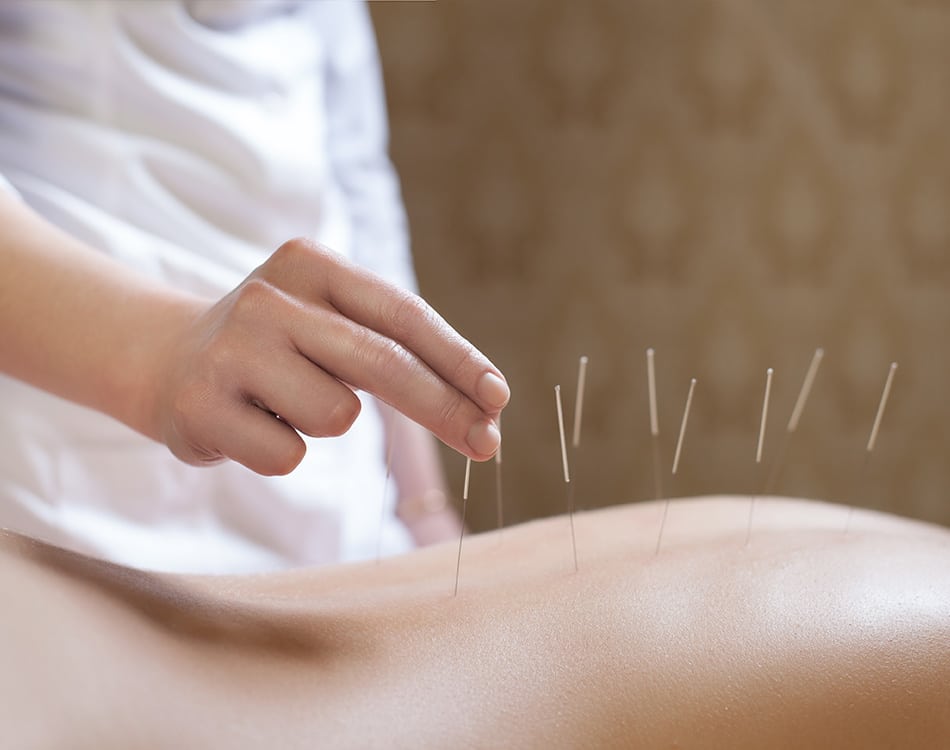
Dry needling is a rehab tool, not a stand-alone fix. Physiotherapists and other trained clinicians insert thin, solid (filiform) needles into myofascial trigger points – tight, tender knots in muscle – to provoke small twitch responses that may help the muscle relax.
It’s used for muscle pain, and for overuse problems such as tennis elbow, Achilles tendinopathy and plantar fasciitis. It should sit within a full rehab programme that includes targeted exercise.
Reviews suggest it may offer short-term pain relief for some myofascial pain, though study quality varies. Expect some muscle soreness for a day or two afterwards.
Acupuncture comes from traditional Chinese medicine. It’s based on the idea that energy, or qi (pronounced ‘chee’), flows through channels called meridians, and that blocked flow contributes to ill health.
Fine needles are placed at specific points and usually left in for five to 30 minutes. Most people feel a mild tingle or dull ache at the needle sites, and many find sessions deeply relaxing.
The evidence is strongest for some chronic pain, such as low back pain, knee osteoarthritis and tension-type headaches. How much of the benefit comes from needle placement itself, rather than placebo effects, is still debated.
Needles can be part of the plan, but the exercise you do between sessions is what builds lasting resilience.
READ MORE | The Truth About Foam Rolling
A hands-on, whole-body approach
Osteopathy is a manual therapy focused on muscles, joints and nerves. It was developed in the 1870s by an American physician and surgeon, and modern practice draws on current anatomy and healthcare science.
Your first visit should start with a full history and examination. Alongside hands-on assessment, an osteopath may check your blood pressure or reflexes, and refer you for X-rays or blood tests if something is unclear.
Treatment usually combines hands-on techniques with home exercises to support recovery. Most people go for back, neck or joint pain, or for sports and work-related injuries; some use regular sessions to stay on top of training niggles.
Manual therapy, including spinal manipulation, appears in some international guidelines as one option for low back pain – usually alongside exercise rather than on its own. A good practitioner of any kind will tell you when your problem needs a doctor instead.
Reflexology works on the feet, hands and ears. It’s based on the idea that reflex areas on these parts of the body correspond to organs and systems, and that precise pressure can support the body’s own healing.
Most sessions are hands-only, using stimulating or calming pressure-point massage. Many people find it deeply relaxing, and some small studies suggest it may help ease pain for some people.
There’s no good evidence that foot reflex points map to organs, or that tender spots or skin colour can reveal disease. If you’re pregnant, check with your midwife or doctor before booking.
Specialised kinesiology centres on muscle testing. Don’t confuse it with the academic study of movement, which underpins biokinetics. A practitioner applies light pressure to your limbs to assess what they describe as imbalances in the body’s energy, an idea linked to acupuncture’s meridians.
Practitioners say it can help with pain, mobility, coordination and food sensitivities. However, controlled tests of muscle testing have not shown it to be more accurate than chance.
An alternative option
Alternative therapies aren’t a cure-all, but some may earn a place in your recovery toolkit. Dry needling, acupuncture and osteopathy have the most research behind them for pain, while reflexology and kinesiology are better seen as relaxation than treatment.
If you want to try one, make it work for you:
- Get a proper diagnosis from a doctor or physio first.
- Pick a registered practitioner and ask what results to expect.
- Agree on a set number of sessions upfront, and track your pain and what you can do – climbing stairs, running 5km, sleeping through the night.
- Keep up your strength and mobility work between sessions.
- Stop if nothing has changed by the end of your trial, and speak to your healthcare professional about next steps.
Author: Pedro van Gaalen
When he’s not writing about sport or health and fitness, Pedro is probably out training for his next marathon or ultra-marathon. He’s worked as a fitness professional and as a marketing and comms expert. He now combines his passions in his role as managing editor at Fitness magazine.
Credit: Source link

