


If you’ve ever stood in the vitamin aisle at Dis-Chem wondering whether vitamin B3 (niacin) deserves a place in your routine, you’re not alone – it pops up in energy formulas, B-complex blends and half the serums on your bathroom shelf.
Niacin is vitamin B3, one of the eight B vitamins your body relies on to turn food into fuel. It’s water-soluble, so your body keeps very little in reserve. Whatever you don’t use leaves in your urine, which is why you need a steady supply from food, or a supplement, day after day.
Niacin is really an umbrella term for two main forms:
- Nicotinic acid
- Nicotinamide
Once absorbed, both forms are converted into a coenzyme called NAD (nicotinamide adenine dinucleotide). Think of NAD as a tireless courier, shuttling electrons between reactions so your cells can get things done.
According to the US National Institutes of Health (NIH), more than 400 enzymes depend on it. Your body also builds a sister molecule, NADP, which helps make fatty acids and cholesterol and keeps your cellular antioxidant defences topped up.
READ MORE | B your best self: Unpacking the benefits of B complex vitamins
Where to find niacin on your plate
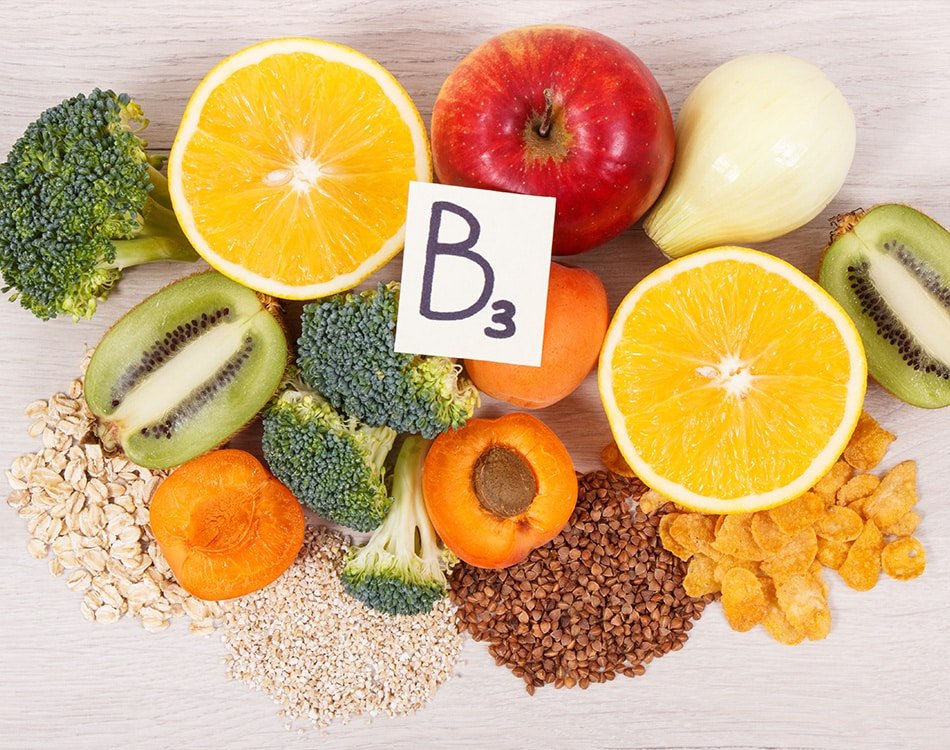
Niacin is easy to come by in your daily diet. Chicken, tuna, salmon and beef are among the richest sources, with a typical serving providing roughly 5 mg to 10 mg.
If you lean toward plant-based eating, peanuts, legumes, brown rice, mushrooms and whole grains tend to offer around 2 mg to 5 mg per serving.
There’s a small catch with grains. In some unrefined cereals, much of the niacin is bound up in a form your gut struggles to release, so you absorb only part of it. Here at home, maize meal and wheat flour are fortified with niacin under South African food regulations, which helps close that gap for many households.
Your body has a backup plan, too. Your liver can make niacin from tryptophan, an amino acid in protein-rich foods like chicken, eggs and dairy. It’s not especially efficient, though: roughly 60 mg of tryptophan yields just 1 mg of niacin.
For most women eating a varied diet, food covers the basics. Shortfalls are more likely if you eat very restrictively, drink alcohol heavily or live with a condition that affects nutrient absorption.
Severe, long-term deficiency causes a condition called pellagra, marked by a rough, darkened skin rash, digestive upset and mental changes. It’s rare today and needs medical diagnosis and treatment; a supplement is not a substitute for that care.
READ MORE | Fuel your fire and fight fatigue with B complex vitamins
What niacin does for you
Niacin isn’t a “women’s vitamin” in the way iron or folate sometimes are. Women need slightly less than men, and needs rise during pregnancy. But the work it does shapes how you feel every single day.
Every time you eat, NAD helps your mitochondria convert the kilojoules from carbohydrates, fats and proteins into ATP, the energy currency your cells run on. The NIH niacin fact sheet describes energy metabolism as one of niacin’s core jobs.
That’s why niacin is recognised for contributing to normal energy-yielding metabolism and the reduction of tiredness and fatigue. A word of honesty: if your intake is already adequate, more won’t give you extra energy. Niacin helps fill a gap; it doesn’t create a surplus.
Your brain is a demanding organ, and it leans heavily on NAD. Niacin plays a role in producing the chemical messengers that help regulate mood, memory and focus, and the NIH notes that a serious shortfall shows up partly in the nervous system.
Niacin contributes to normal psychological function, which matters during busy, high-pressure seasons of life. To be clear, niacin is not a treatment for depression or anxiety, and it should never replace care from a healthcare professional.
Skin is one of the first places a niacin shortfall shows, which tells you how much it relies on a steady supply. Most of the exciting skin research, however, involves niacinamide applied to the skin rather than swallowed.
A study in the British Journal of Dermatology found that topical niacinamide increased production of ceramides, the lipids that help your skin barrier hold on to moisture.
Oral niacin supports the maintenance of normal skin, but evidence that a supplement visibly changes healthy skin is limited. If skin is your focus, browse the Biogen Hair, Skin & Nails range.
NAD also feeds enzymes involved in DNA repair and cell signalling, while NADP helps recycle the antioxidants that protect cells from oxidative stress. These are quiet jobs, and much of the research behind them is lab-based. Treat them as a reason niacin matters in your diet, rather than a reason to take more of it.
READ MORE | Product focus: Biogen Supreme B-Complex – An Activated B-Vitamin Complex For Optimal Absorption
The niacin flush, explained
If you’ve ever taken nicotinic acid and felt your face and chest go hot, pink and prickly, welcome to the niacin flush.
It usually starts 15 to 30 minutes after a dose. Nicotinic acid prompts the skin to release prostaglandins, which widen the small blood vessels near the surface, causing warmth, redness and sometimes itching or tingling.
It can feel alarming the first time, but in healthy adults it generally passes within an hour and isn’t considered dangerous.
Despite what social media might tell you, it’s not your body “detoxing”. It’s simply blood vessels doing what nicotinic acid tells them to do. If you ever notice swelling, hives that don’t settle or difficulty breathing, get medical help straight away, because that isn’t a typical flush.
To soften it, take your supplement with a meal and split larger doses across the day. Nicotinamide doesn’t cause a flush at all. “No-flush” products made with inositol hexanicotinate release very little free nicotinic acid, so they don’t behave the same way in the body, which is worth knowing before you assume they’re a like-for-like swap.
READ MORE | Time your vitamin and mineral intake to get the best benefits
How much vitamin B3 do women need?
Most adult women need 14 mg of niacin a day, rising to 18 mg in pregnancy and 17 mg while breastfeeding. These figures come from the NIH and are measured in niacin equivalents, which count the niacin your body makes from tryptophan.
The upper limit applies to niacin from supplements and fortified foods, not what occurs naturally in your meals, and it’s set mainly to avoid flushing. Products sold in South Africa show their dose against a Nutrient Reference Value (NRV) on the label, so check there too.
The ideal time to take your supplement in the morning with breakfast. Food slows absorption, which softens any flush, and splitting a larger dose across the day helps too.
Always follow the dosage instructions on the product label unless your doctor or pharmacist advises otherwise.
If you are pregnant or breastfeeding, stick with the amount in your prenatal multivitamin and avoid high-dose standalone niacin unless your doctor or midwife recommends it. Large doses haven’t been shown to be safe for a developing baby.
Choosing a niacin supplement
On the shelf at Dis-Chem you’ll find everything from single-ingredient niacin tablets to multivitamins with a little B3 tucked in.
Because the B vitamins depend on each other, a complete B complex is often the more practical everyday choice, with standalone product like Biogen Vitamin B3 Niacin best kept for a specific, identified gap.
Check each label for the exact dose per serving. If you’re 50 or older, a broader formula such as Biogen Multivitamin 50 Plus Advanced covers niacin alongside the other nutrients your needs shift towards.
Author: Pedro van Gaalen
When he’s not writing about sport or health and fitness, Pedro is probably out training for his next marathon or ultra-marathon. He’s worked as a fitness professional and as a marketing and comms expert. He now combines his passions in his role as managing editor at Fitness magazine.
Credit: Source link

