Author: [email protected]

  • DIY MEDITATION CUSHION (QUICK & CHEAP!)

    DIY MEDITATION CUSHION (QUICK & CHEAP!)

    Hello, sweet readers! Today I bring you some a little different from my regular recipe posts. I want to share a super easy tutorial for a DIY meditation cushion/pillow. I improvised this last week and it came together perfectly. For me, an important piece of why I meditate in the first place is to be content with the simple gifts in life, and to not desire more than I need. So, there is no need for me to buy a fancy meditation pillow made with new materials, when I can craft one easily and affordably in my own home, with my own hands. I enjoy being part of the process, too.

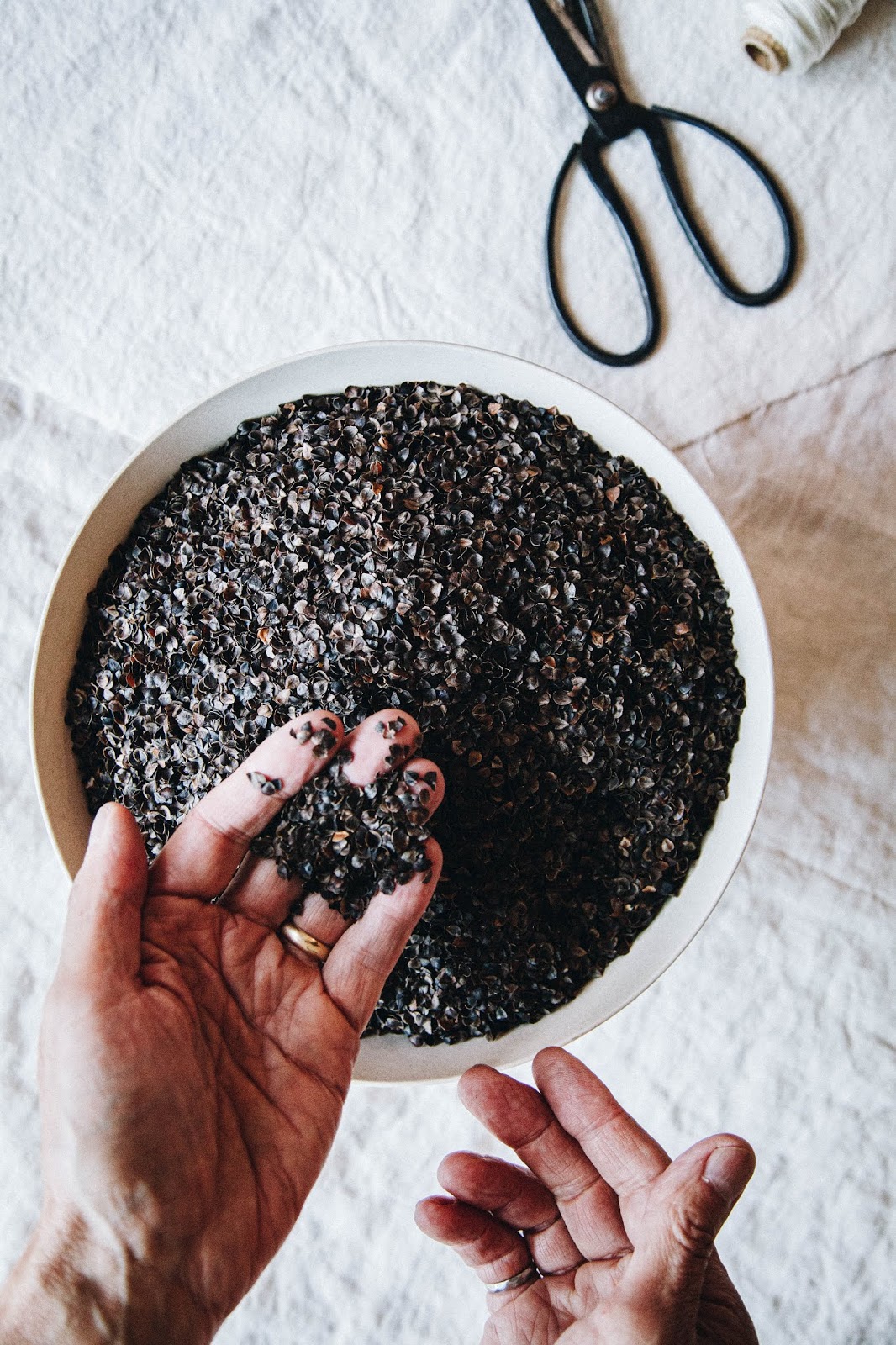
    Buckwheat hulls are used in this tutorial; they are a traditional Japanese pillow filling and a really eco-friendly option. Plus, they make for a suuuper comfortable and firm pillow. I would recommend you acquire a bag of buckwheat hulls to make this cushion, but a large bag of fabric scraps will work too. Or, you can do what I did, and use a mixture. I had a small bag of buckwheat hulls in my house, but not enough for a decent cushion, so I used leftover fabric from other projects to finish up the filling. If you make this meditation cushion, let me know! Talk soon.

    xo,
    em

    //

    DIY MEDITATION CUSHION

    Makes 1 cushion / Print the tutorial

    – 1 piece of fabric for your cushion case, at least 4 feet across
    – 1 piece of fabric for your cushion cover, at least 5 feet across
    – Buckwheat hulls, or scraps of fabric for your cushion filling, at least 2 lbs
    – Large bowl
    – Scissors
    – String
    – 1 zap strap/zip tie (optional)

    Refer to photos for visual instruction.

    Cut your pieces of fabric into circles. The cover will be larger than the case. I’ve left the measurements fairly large, so you can always cut away extra fabric if you end up with too much.

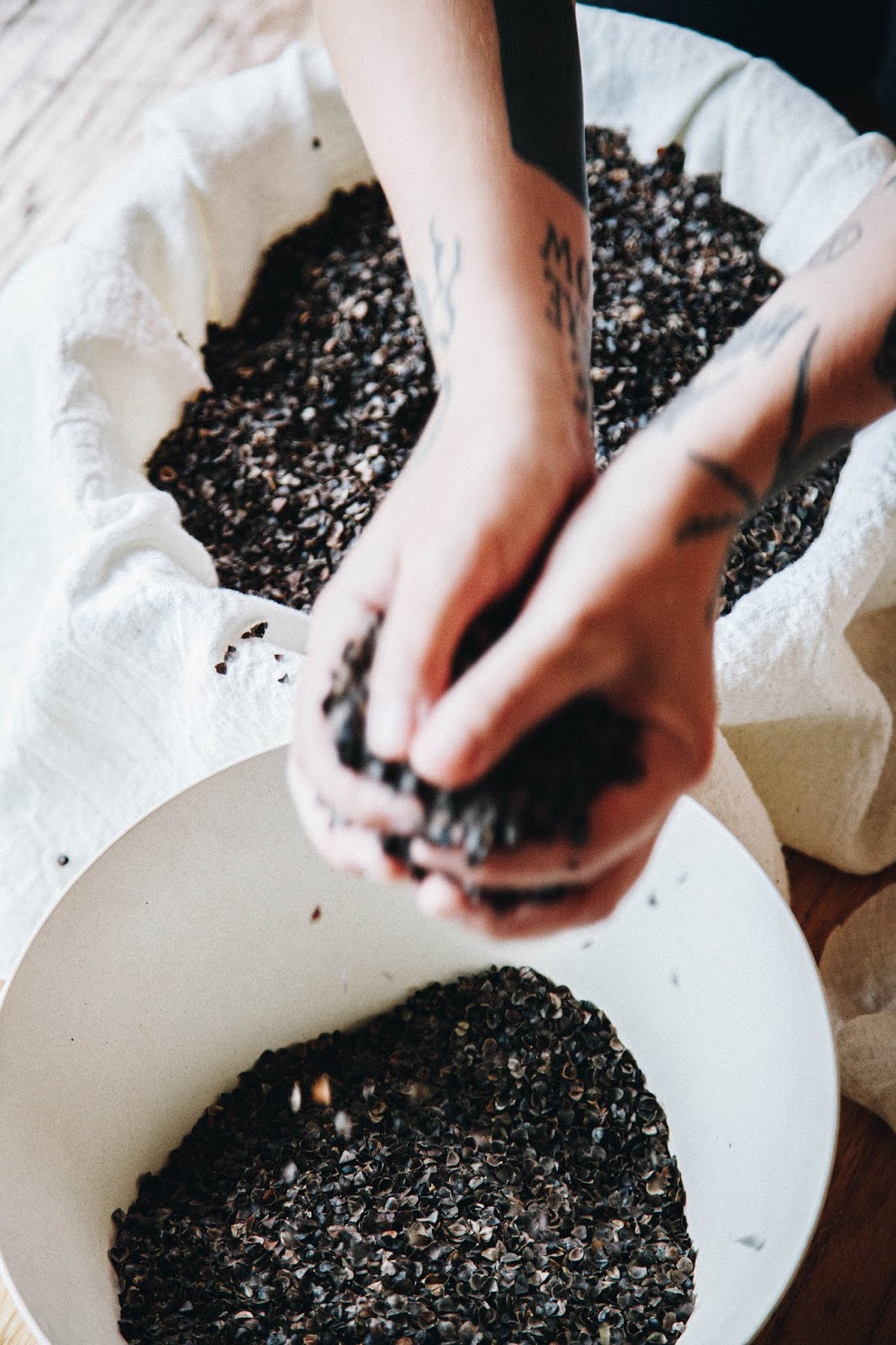
    Place your case into the large bowl, so you can easily add your filling into it.

    Add your filling. Buckwheat hulls are ideal, but cut-up fabric scrap will do just fine too. I used a mixture of both.

    Once your case if full, collect the fabric at the edges and tie it together with string. Try sitting on it to find out if you want more or less filling, and adjust accordingly until you’re happy. Once satisfied, add a zip tie for extra strength (optional). If you have a lot of extra fabric, you can cut some away. I chose to leave it.

    Now simply wrap your cover around your filled case: gather the fabric, and tie together with string. If you have a lot of extra fabric, you can cut some away. I chose to leave it. If you find you can feel the knot of gathered fabric on your butt when you sit on the cushion, you will need to add extra filling. I added extra fabric scraps between my case and cover to solve that problem.

    That’s it! Enjoy your new meditation pillow! This can also be used as a head pillow, yoga bolster, etc.

    Note: an even simpler option would be to find a small pillow case and pillow cover at a thrift store, and use those! No cutting or tying required!

    Credit: Source link

  • Healthy radiant skin needs collagen

    Healthy radiant skin needs collagen

    Our skin is an incredible living organ that constantly regenerates itself by replacing dead cells.

    From a structural perspective, our skin is made up of multiple layers, each with different types of cells. We constantly shed cells on the outer layer (the epidermis), which are replaced with new cells, while the skin cells under the epidermis tend to have a lower turnover rate.

    These lower layers – the dermis and sub-dermis – consist of elastic connective tissues, fibres, blood vessels and various other components that can stretch or contract.

    The dermis makes up roughly 90% of the skin’s thickness and its elastic fibre and collagen composition helps to retain the skin’s shape and tautness.

    READ MORE | 4 Skincare Trends To Watch Out For In 2023

    The stretching and sagging saga

    Factors such as age, poor nutrition, dehydration, excessive sun exposure, smoking and weight loss (especially when it happens rapidly) causes skin to lose its structural integrity and elasticity.

    In particular, the dermis can lose its elasticity or tear when placed under severe stress, which can lead to saggy skin and stretch marks. This can occur due to excessive weight gain, muscle growth, or during pregnancy.

    Hormonal changes associated with puberty, pregnancy, exercise (mainly weight lifting) and hormone replacement therapy can also cause stretch marks.

    The implicated hormones (called glucocorticoids) prevent the body from forming more of the collagen and elastin fibres that keep skin taut. This impacts the skin’s structural integrity and makes it easier for it to tear when placed under stress.

    READ MORE | [RECIPE] Glowing Skin Smoothie

    Common problem areas

    This pulling and stretching can happen anywhere on your body, but is more likely to occur in places that have larger fat deposits.

    The most common places that experience loose skin or stretch marks include:

    • Abdominal region, especially near the belly button
    • Back of the upper arms
    • Inner and outer thighs
    • Hips and buttocks
    • Underarms
    • Breasts
    • Back

    READ MORE | Take Collagen To Give Your Fit Body The Firm Skin It Deserves

    Collagen to the rescue

    Thankfully, there are treatments and products available that may help to reduce stretch marks and firm up loose skin.

    Some of the most commonly used options include supplements and creams that provide or stimulate collagen growth and the formation of new elastin.

    Collagen is a complex protein that makes up 30% of the body’s protein and contains 19 different amino acids, which are vital building blocks for tissues, including skin. From an aesthetic perspective, collagen helps to give our skin elasticity and firmness.

    There are at least 28 different types of collagen. The most common are types 1 to 5, with type 1 the most plentiful, accounting for 90% of total collagen in our bodies. It is a vital form to create firm skin because it has a densely-packed fibre structure.

    READ MORE | Look After Your Skin This Holiday Season

    Boost your skin routine

    In supplement form, collagen peptides or hydrolysed collagen offer the most effective products for skin health.

    For these reasons, consider adding the following supplements to your regular beauty regimen:

    Biogen Collagen with Peptan®: Contains important type 1 Hydrolysed Collagen in the form of Peptan®, a high purity natural bioactive product containing more than 97% protein (on a dry weight basis), supplied in a form that your body can easily digest and use.

    Biogen Collagen: Contains hydrolysed collagen, a form that has undergone a process called hydroxylation that breaks down collagen into peptides for optimal absorption. This collagen helps the body form new connective tissue, including skin, and also supports joint health.

    Biogen Collagen Refresh Ready To Drink: Simplify your skincare approach with this convenient and incredibly tastysugar-free sparkling drink. Biogen Collagen Refresh contains 10 g of collagen in every can and is available in Blueberry & Pomegranate and Passion Fruit Coconut flavours.

    RE NU Collagen & Skin capsules: An advanced nutricosmetics skin health supplement that helps to reduce the signs of ageing and maintain healthy radiant looking skin.

    RE NU Beauty Glow shake: Revitalise and renew your skin from within with an advanced beauty cocktail that includes the Verisol® blend of Bioactive Collagen Peptides to improve skin elasticity and appearance, and reduce wrinkles and signs of ageing.

    Author: Pedro van Gaalen

    When he’s not writing about sport or health and fitness, Pedro is probably out training for his next marathon or ultra-marathon. He’s worked as a fitness professional and as a marketing and comms expert. He now combines his passions in his role as managing editor at Fitness magazine.


    Credit: Source link

  • Take the Daily Dozen Challenge!

    Take the Daily Dozen Challenge!

    We just re-launched the Daily Dozen Challenge to help more people discover how easy it is to fit some of the healthiest of healthy foods into their meals. Join us on social media and show us how you Do the Dozen. 

    • Plan: Pick a day to eat the Daily Dozen. Download our free Daily Dozen app on iPhone and Android that features the checklist, as well as these valuable tools to help you prepare for a successful challenge: The Evidence-Based Eating Guide, The Daily Dozen Meal Planning Guide, and Daily Dozen Digest, our free 11-week email series.
    • Challenge: Use the Daily Dozen checklist in the app to guide you as you take the Challenge. Document your meals, snacks, and activities by taking photos and/or videos throughout your challenge day.
    • Post: Share your Daily Dozen Challenge experience to inspire and motivate others. Post your Challenge pictures or videos on social media, and use the hashtag #DailyDozenChallenge to build the community of participants. 
    • Encourage: The more, the merrier! Challenge others to take part in the Daily Dozen Challenge. Help spread the word!

    For inspiration on how to Do the Dozen, check out these challenge videos:


    Key Takeaways: Fasting 

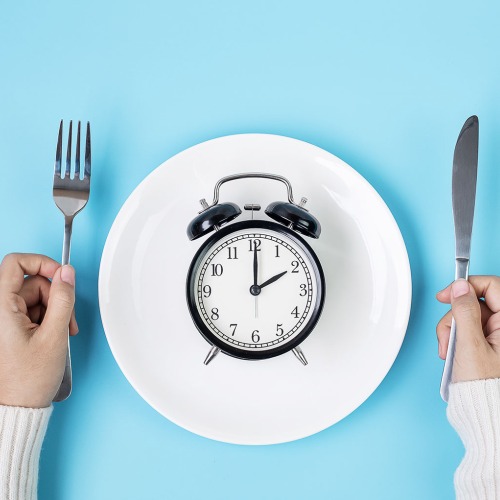
    Fasting has been branded the “next big weight loss fad” but has a long history throughout various spiritual traditions, practiced by Moses, Jesus, Muhammed, and Buddha. Today, about one in seven American adults report using some sort of fasting as a means to control body weight. There are various approaches to fasting, from intermittent fasting to weeks of only water. For more on fasting, check out the topic page and videos such as Is Fasting for Weight Loss Safe? and The Benefits of Fasting for Healing.


    Recipe: Corn Chowder

    Corn Chowder from The How Not to Diet Cookbook is a delicious comfort soup that’s perfect for the winter! This chowder can be as thick and creamy as you like, depending on how much of the soup you puree. Get the free recipe here and watch a video on how it’s made on our Instagram.


    2022 Year in Review

    Thank you for all of your support in 2022! To see what we accomplished last year, check out our 2022 Year in Review report. In addition to continuing to put out new videos and blogs each week, highlights include creating The Daily Dozen Meal Planning Guide, translating the Daily Dozen app into 14 languages, and launching the free Plant-Based Living email series. Download the full report here.


    The Evidence-Based Eating Guide in More Languages

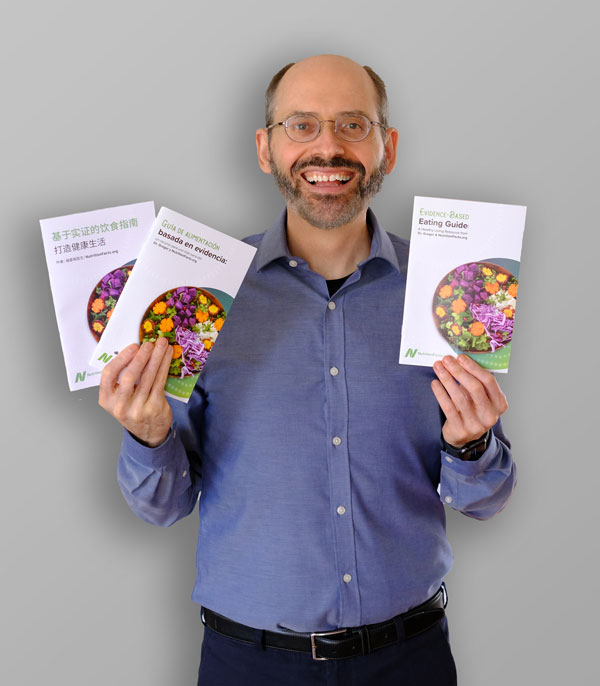
    Our popular eating guide is now available in Spanish and Chinese. You can download these versions on our new Guides and Handouts page or buy hard copies on DrGreger.org.


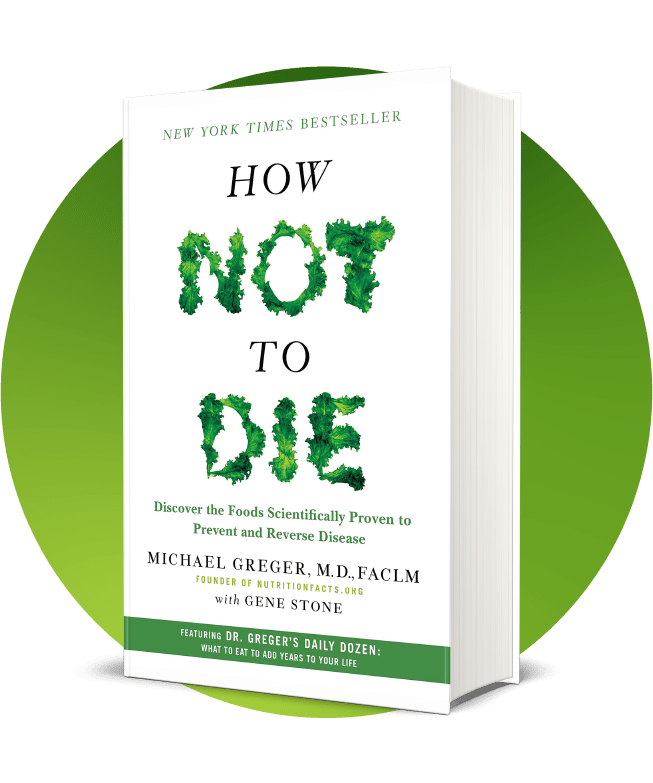
    How Not to Die Kindle Deals

    How Not to Die is part of Amazon’s New Year, New You January Kindle deals. Kindle Unlimited subscribers can get the book through their subscription, and in the UK, it’s available for just .99p. 


    Top Three Videos

    Blue vitamin tablets on white surface

    Vitamin D May Explain the Higher Bone Fracture Risk in Vegans: A combination of low calcium intake and low vitamin D exposure may explain higher bone fracture rates in British vegans.


    Vitamin capsules on dark background

    The Purported Benefits of Vitamin K2: Should You Take Supplements?: Our body can make vitamin K2 from the K1 in green leafy vegetables.


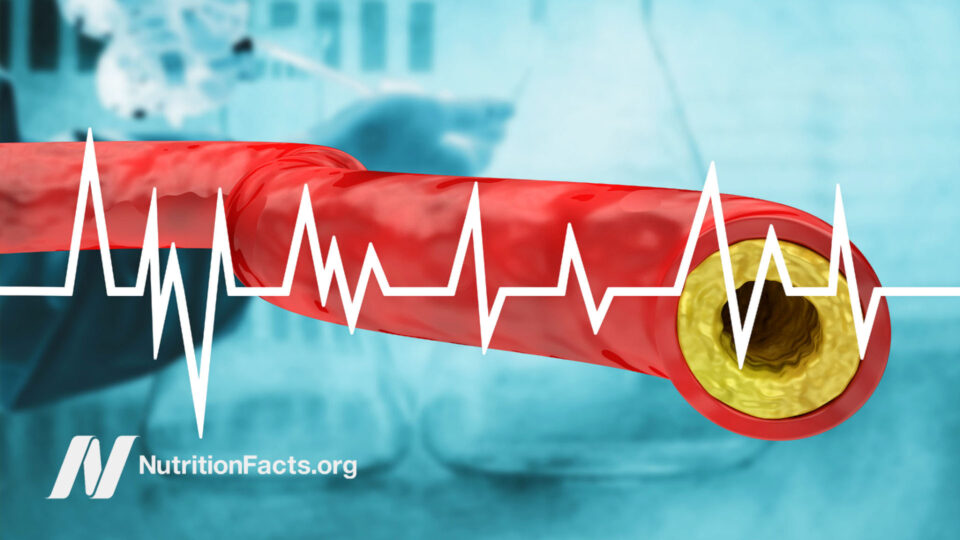
    Digital drawing of plaque in arteries

    Cholesterol and Heart Disease: Why Has There Been So Much Controversy?: Is the role of cholesterol in heart disease settled beyond a reasonable doubt?


    Live Q&A

    image of dr greger

    Every month, I do a live Q&A right from my treadmill, and the next one is January 26! At 3 pm ET, tune in on our Facebook page, YouTube channel, or directly on NutritionFacts.org.

    You can find links to past live Q&As here on NutritionFacts.org. And check out my recent conversation on Physicians Committee for Responsible Medicine’s Exam Room podcast.


    Credit: Source link

  • PERFECT BREAKFAST BAGELS with TOMATOES & BASIL

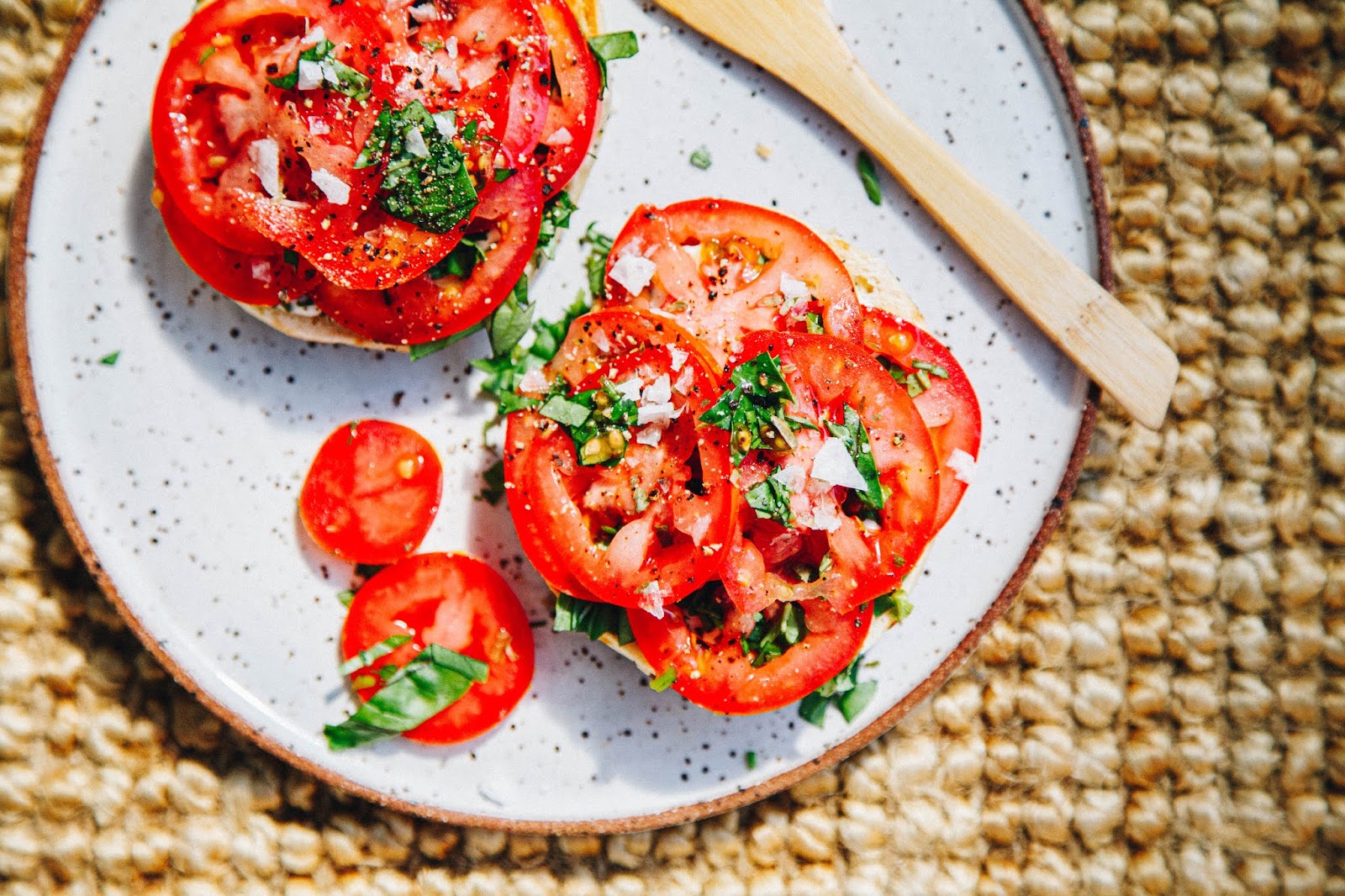
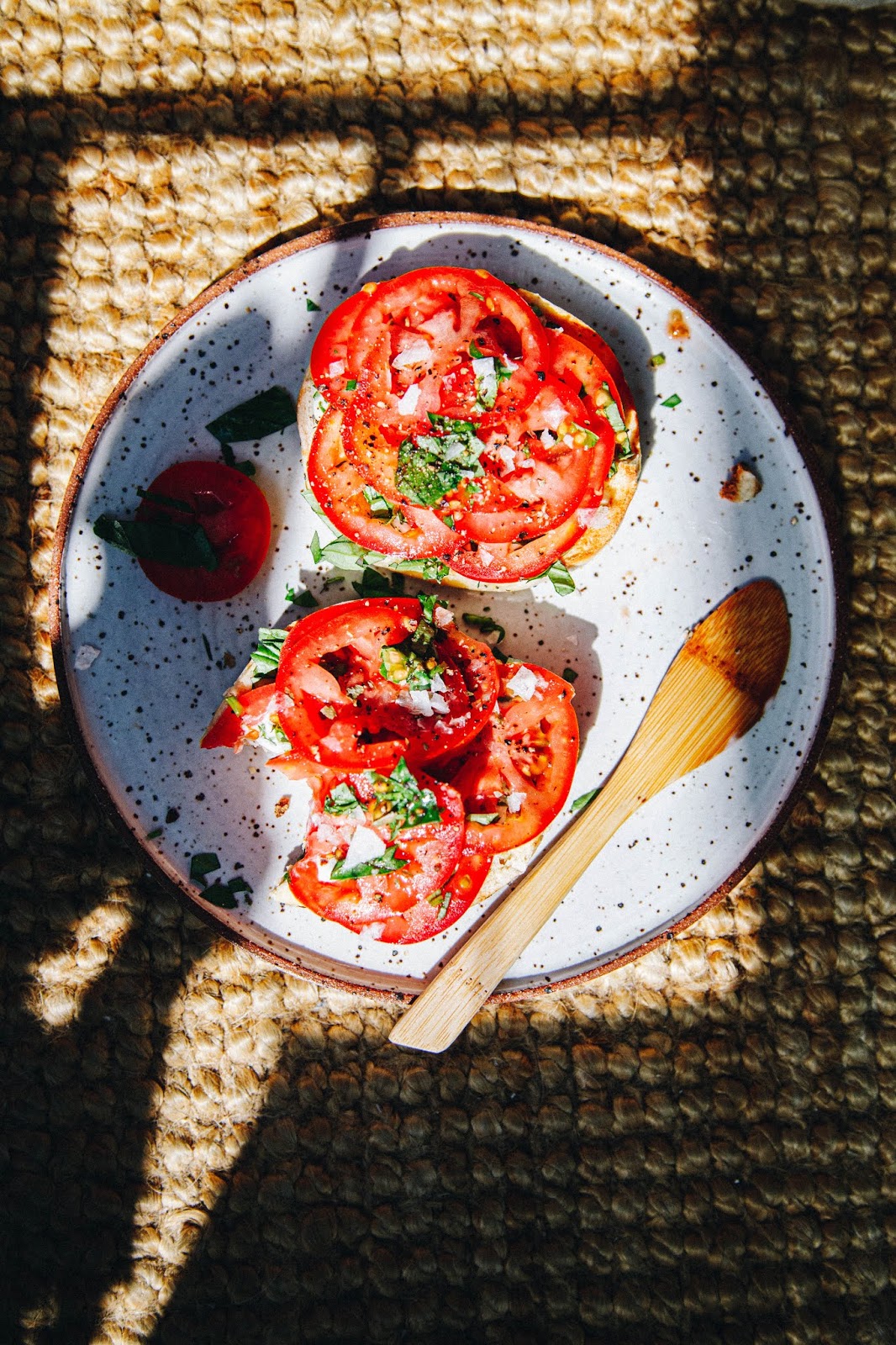
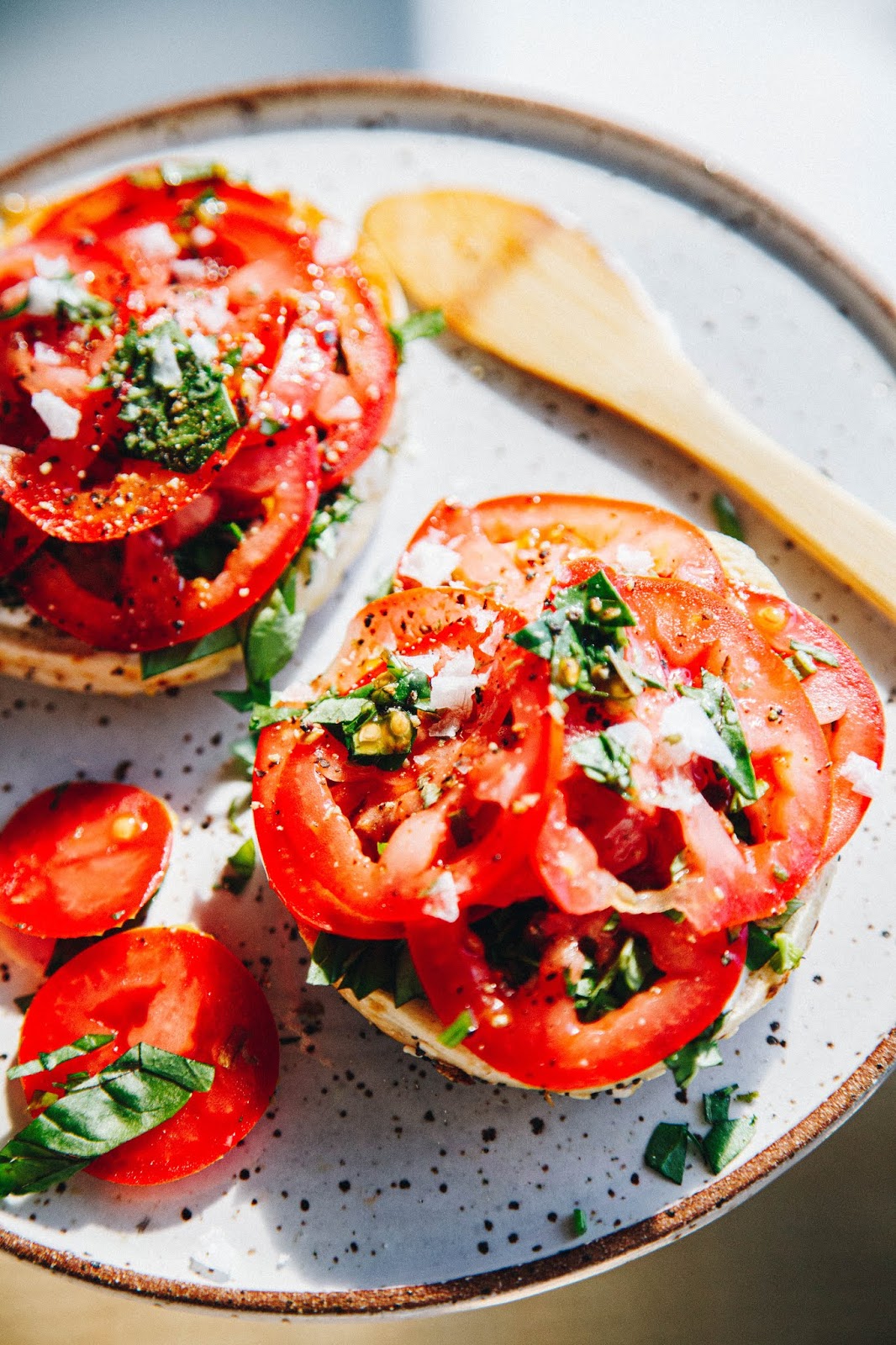
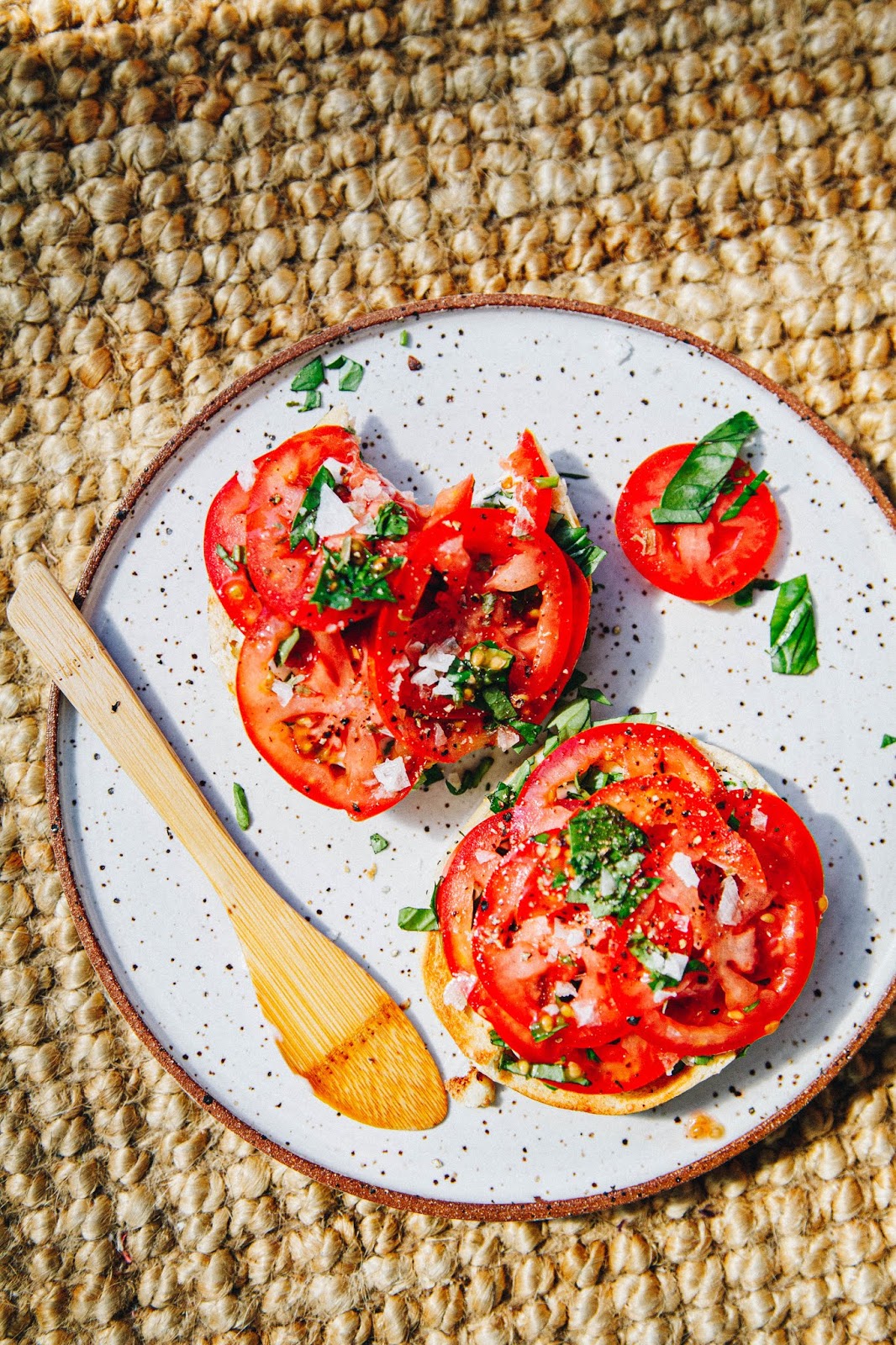
    PERFECT BREAKFAST BAGELS with TOMATOES & BASIL

    Hello, friends. Busy as I am with school, meditation practice, endless to-dos, trips, errands, and life, I am TRYING to post more regularly. It’s not really happening. I remember when I used to publish recipes every week… Oooh, those were the days: back when I was a teenager, with about 200% less worries. ANYHOO. Today is THIS day, and here I am. I want to share with you my current fave breakfast. It’s a bagel. But not just ANY bagel. This recipe includes garden-fresh ingredients to give you nourishing vibrancy all morning.

    My mom’s tomatoes and basil yields have been exploding this year, and that means I get to eat them every day. I have found myself preparing this breakfast bagel every single morning for maybe 3 weeks now? It doesn’t get old. I moan with delight on my sunny balcony as I enjoy all the flavours, colours, and textures. Thanks to the complex carbs of the bagel, the fats in the nutty cheese, and the nutrients in the tomato and basil, this recipe gives you long-lasting satiation AND an energy boost, all while refreshing your palate with Mother Nature’s magic.

    If you don’t wanna use a bagel, you can make this with whole grain pita bread, raw crackers, etc.

    xo,
    em

    PERFECT BREAKFAST BAGELS with TOMATOES & BASIL
    Serves 1. Print the recipe.

    Essential:
    1 “Everything” bagel
    3 heaping tablespoons your fave homemade vegan cheese* (or vegan mayo)
    1 large, juicy tomato
    1/4 cup finely chopped basil leaves
    Flaked salt, to taste
    Black pepper, to taste

    Optional:
    Splash of balsamic
    Drizzle of extra virgin olive oil
    Fresh marjoram leaves
    Fresh thyme leaves

    Toast your bagel lightly. Spread on your vegan cheese or mayo. Add your chopped basil leaves. Slice the tomato thinly and arrange the slices on top. Add salt, pepper, and — if using — the balsamic, olive oil, marjoram and thyme. ENJOY, BABY!

    *I use this recipe for my cheese.

    Credit: Source link

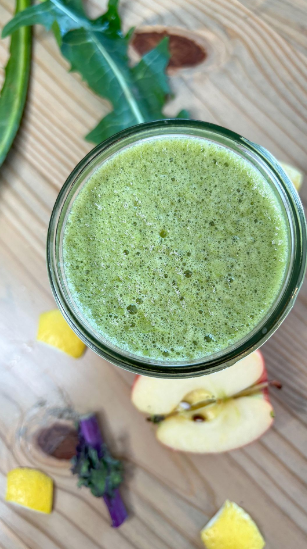
  • This green juice has all kinds of nutrients packed into one

    This green juice has all kinds of nutrients packed into one

    Last updated on

    This green juice has all kinds of nutrients packed into one by thejuiceyard

    This green juice has all kinds of nutrients packed into one 

    Try it out for yourself:

    🌿 1 bunch of Dandelion Greens
    ♥️ 1 bunch of Red Kale
    🍎 3 Apples
    🍋 1 Lemon
    Yield: 24 ounces


    Some of the links I post on this site are affiliate links. If you go through them to make a purchase, I will earn a small commission (at no additional cost to you). However, note that I’m recommending these products because of their quality and that I have good experience using them, not because of the commission to be made.

    About user

    Juicing for Health was founded by certified Wellness Health Coach, Nutritional Consultant and a Detox Specialist. We help busy men and women identify their health issues at the root cause, in order to eliminate the problems for optimum physical/mental health and wellbeing.


    Credit: Source link

  • This Rawsome Vegan Life: MY FAVE VEGAN SUPPLEMENTS

    This Rawsome Vegan Life: MY FAVE VEGAN SUPPLEMENTS

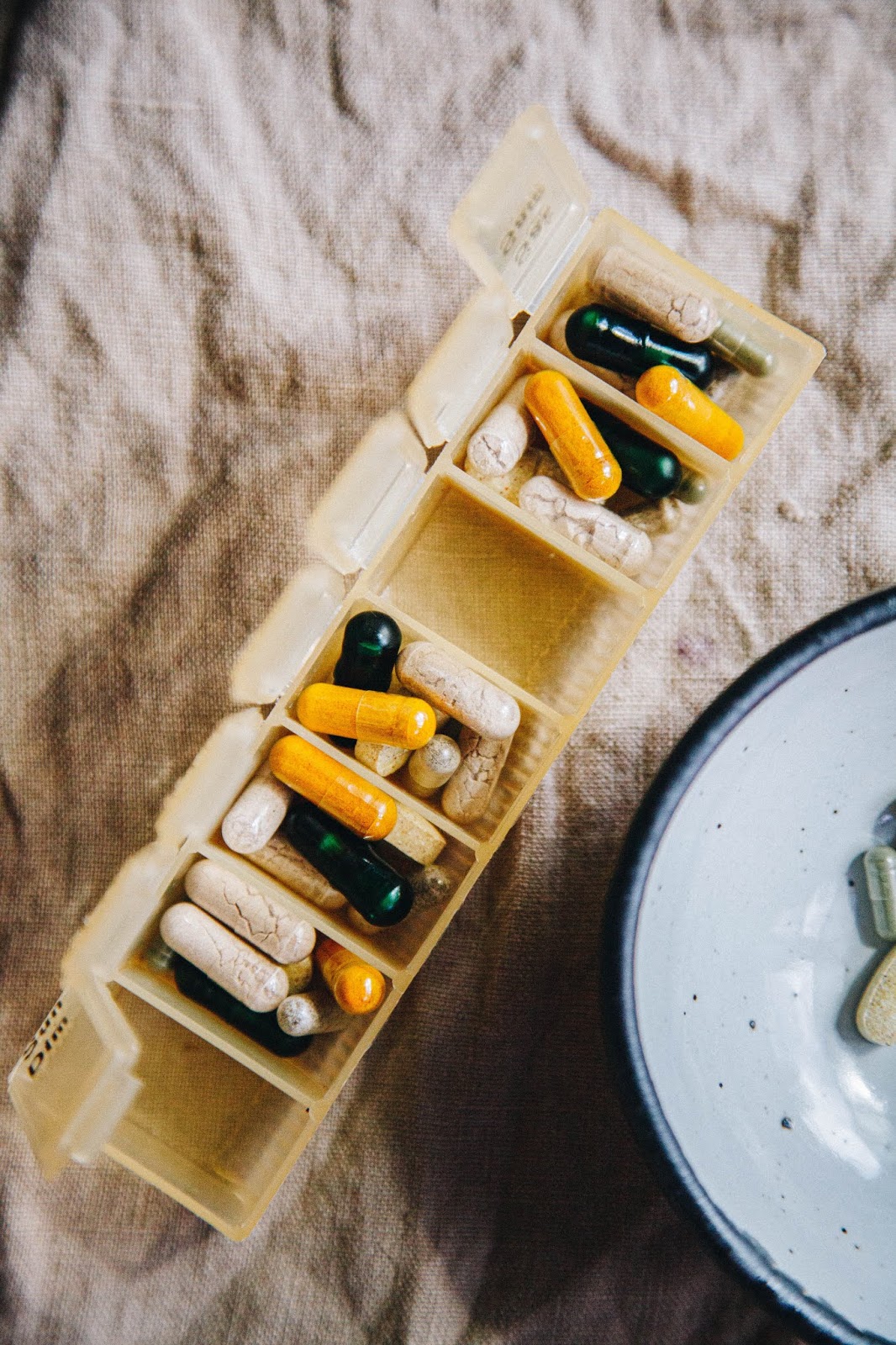
    Today I am giving my own personal response to the age-old vegan question, “Should we take supplements, or nah?” In short, my answer is: it depends, but probably. Read on for the longer version. 

    I have been through many phases in my nearly 10-year vegan journey. They’ve all been pretty public because, hey, this blog. So, you might know that for many years, as I tried to stay all raw, I decided supplements were unnatural and unnecessary. I convinced myself that if food was cooked or processed–and this included supplements–then my body didn’t want it. I had also come to believe that I could and should get all my nutrition from whole foods; so supplements weren’t required if I was doing veganism right. RIGHT!?

    Well, spoiler alert: this was in fact a full-on eating disorder that I was in denial of for a decade. I will be writing more on this in future posts.

    Fast forward: I have since thankfully come round to a more reasonable position on the subject of food in general and supplementation in particular. I have found the power of intuitive eating, mindfulness, body-acceptance and self-compassion. I will probably always be vegan (because that decision is political for me) but beyond that, I eat whatever the heck I want now. Maybe it’ll be a smoothie, maybe it’ll be chips. Maybe it’ll be a salad, maybe it’ll be pasta. Maybe it’ll be dates and almond butter, maybe it’ll be chocolate cake. What I eat at any given time depends on how I am feeling and what my body is telling me it needs. Because my body is smart and I actually pay attention to it now, my diet these days ends up being nourishing, satisfying, balanced and vibrant. 

    Having said all this, whether it was during my hard core raw vegan days of the past, or my intuitive eating days now: I don’t always hit my RDIs (recommended daily intakes) for every nutrient, vitamin and mineral. I’m not a super human. I don’t eat the same things everyday, I don’t do the same things everyday; so what by body needs and what it’s getting vary. In addition to being vegan, I am a 25 year old person with a uterus who bleeds every month, and I live in a pretty rainy part of the world. I additionally deal with anxiety and depression. We have to consider these factors before approaching supplements. What’s your age? What are the specific conditions of your body? What’s your diet high or low in, because of sensitivities or restrictions? How’s your mood? What’s the sun exposure of the geographic zone you live in? Do you donate blood regularly? 

    This is why the supplements we each take depend on who, when, what, and where we are.

    An important tip for figuring out what supplements to take or not take is to get your blood checked! It’s a pretty obvious point, but I feel it needs to be said. In the ‘wellness’ world, there is a lot of hype about foods that are super high in This Vitamin and That Vitamin. That’s all fine, but we don’t need to worry about that if our blood work tells us we are already getting enough of This Vitamin and That Vitamin. 

    Finally, I will say that supplements will not solve all your problems. Brands might hint that taking that making their adaptogenic mix every morning will turn your life into a Magical Sexy Success World, but let’s be realistic. Ultimately, ‘wellness’ needs to be understood as a holistic, personal, dynamic practice. You will not find wellness in an adaptogenic latte. Wellness is found in the practices of self-compassion, mindfulness, acceptance, and non-judgement. If you’re not doing the work of learning to be gentle with yourself, and honouring your body’s, mind’s, and spirit’s needs: supplements will only take you so far. They are but a slice in the pie of self-care. In addition to taking daily supplements, I meditate regularly, take medication for my anxiety and depression, stretch often for my chronic back pain, and literally organize my life around my personal needs (ex. social time, solo time, work time, rest time…) I recognize these needs change, and that’s OK too! 

    Now, let’s get into my fave supplements. Not everyone needs to take these, so know your own particular needs before filling up your shopping cart. QUESTION: Do you take supplements? Why or why not? 

    xo,

    em

    IRON

    Because I get my blood checked every 6 months, I know that over the past year I’ve become low in iron. This is probably because I am vegan, and bleed every month. So, I take an iron supplement. The one I am currently using is from Thorne Research. Note: for vegans, we have to take non-heme iron. Heme iron is from animal sources. (Keep in mind heme iron is often better-absorbed, so that’s your decision to make.) The most absorbable forms of non-heme iron are ferrous iron and carbonyl iron. Remember to take vitamin C with your iron supplement! It helps with absorbency. 

    PROBIOTICS

    I just started taking a beautiful probiotic from Seed and I looove it! The company is totally rad and their product is of an unparalleled quality. I deal with anxiety, so my digestive system needs all the help it can get. The body is complex, y’all, and adding an extra boost in the form of healthful live microorganisms can benefit your whole system. 

    MARINE PHYTOPLANKTON

    The greens of the sea are powerful: they’re rich in nutrients and gentle on the earth to harvest. You don’t need much to feel the positive effects. I take a small capsule from Marphyl everyday. The small company is totally vegan and very focused on the environmental and ethical aspects of their products. They also make delicious sea salts, and a soil enhancer that I water my plants with.

    VITAMIN D

    I do not take vitamin D every day, because our summers in the Pacific Northwest are nice and sunny. The rest of the year, capsules it is! Well Told Health makes a whole-foods based supplement from mushrooms that I take when I need to. The company is all organic and vegan. (But there are cheaper varieties out there that work just as well, I’m sure.) Note: most folks in rainy/cloudy regions are vitamin D deficient, so go get your blood checked! 

    TURMERIC

    Turmeric is a powerhouse of antioxidants. I take a turmeric powder capsule from Well Told Health everyday. (But there are cheaper varieties out there that work just as well, I’m sure.) Remember to take your turmeric with black pepper to increase absorbency! If you like lattes, I would recommend trying out this Golden Milk from Super Good, the product already contains black pepper so you save a step. 

    MUSHROOMS

    Oh, how I adore shroomies. (I do occasionally micro-dose with psychedelic mushrooms, but here I am just recommending the non-trippy kind.) Mushrooms are adaptogenic and thus help with how your brain functions. Two of my favourites are Lion’s Mane and Cordyceps. Other popular and powerful varieties include Chaga, Reishi, Turkey Tail, and Shiitake. Currently I am taking a tincture from rainbo that has 11 different shrooms infused into it; and capsules from Purica. I also looove the 14 Mushroom blend from Harmonic Arts for lattes, chocolate and smoothies. They make a 14 Mushroom tincture as well. I prefer tinctures these days because they’re easier to add to consume. Shrooms help my mood big time, and keep me motivated and energized.

    LEMON BALM 

    I take a lemon balm tincture to help me sleep, it makes me feel relaxed and ready for bed on nights when I don’t get as much down time. Lemon balm also helps with general relaxation in case you’re feeling stressed. The one I use is from Gaia Garden; I’m sure other brands will work just as well.


    MULTI-VITAMIN

    Lastly, I take a multi-vitamin to cover all my bases. Some days I don’t feel like eating vegetables. Some days I don’t feel like eating whole grains. Some days I don’t feel like eating berries. Some days I don’t feel like making my superfood smoothies. To balance those days, a multi comes in handy. I used to spend way more money on fancy multi-vitamins, but honestly, the basic one from Costco works just fine. A multi is not necessary for everyone, and tbh I might not even need to take it. But I sleep better knowing I am playing it safe and meeting all my RDIs, regardless of what I ate or didn’t eat that day.

    P.S. I have not been paid by any of the companies featured in this post. This not sponsored content. 

    Credit: Source link

  • [RECIPE] Chocolate Malt Cookie Dough Slices

    [RECIPE] Chocolate Malt Cookie Dough Slices

    Looking to indulge in a slice of heaven with your next cheat treat?

    These super delicious cookie dough slices contain protein to support your recovery and doesn’t compromise on that cheat day enjoyment factor.

    Cookie Dough Ingredients

    • 1 cup crunchy peanut butter
    • ¼ cup melted coconut oil
    • ¼ cup liquid sweetener of choice
    • 1 tsp vanilla extract
    • Pinch of salt
    • ¼ cup coconut flour
    • ¼ cup almond flour
    • 1¼ scoops Biogen Iso-Whey Protein Powder, Chocolate Malt flavour
    • ⅓ cup dairy-free chocolate chips

    Biogen Iso-Whey Premium Protein contains a Tri Matrix Protein blend that includes Whey Protein Hydrolysate, Isolate and Concentrate, offering high levels of EAAs and BCAAs. This protein powder is quickly digested and easily absorbed to support muscle repair and growth.

    Cookie Dough Topping Ingredients

    • ¼ cup almond flour
    • ¼ cup coconut flour
    • ½ cup smooth peanut butter
    • 1 tbsp coconut oil
    • 1-2 tbsp liquid sweetener (optional)
    • Pinch of salt
    • ½ cup melted dairy-free chocolate

    Method

    1. Melt the peanut butter and coconut oil together and add the rest of the cookie bar ingredients, mix well and press into the parchment paper-lined tin. Place in the fridge to set.
    2. Mix the cookie dough topping, crumble over the bars and drizzle with melted chocolate.
    3. Place in the freezer again for 5-10 minutes. Remove from tin, slice and enjoy!

    The post [RECIPE] Chocolate Malt Cookie Dough Slices appeared first on Fitness Magazine.

    Credit: Source link

  • Testing Greens and Beets, Two of the Best Brain Foods

    Testing Greens and Beets, Two of the Best Brain Foods

    Cocoa and nitrite-rich vegetables, such as leafy greens and beets, are put to the test for cognitive function.

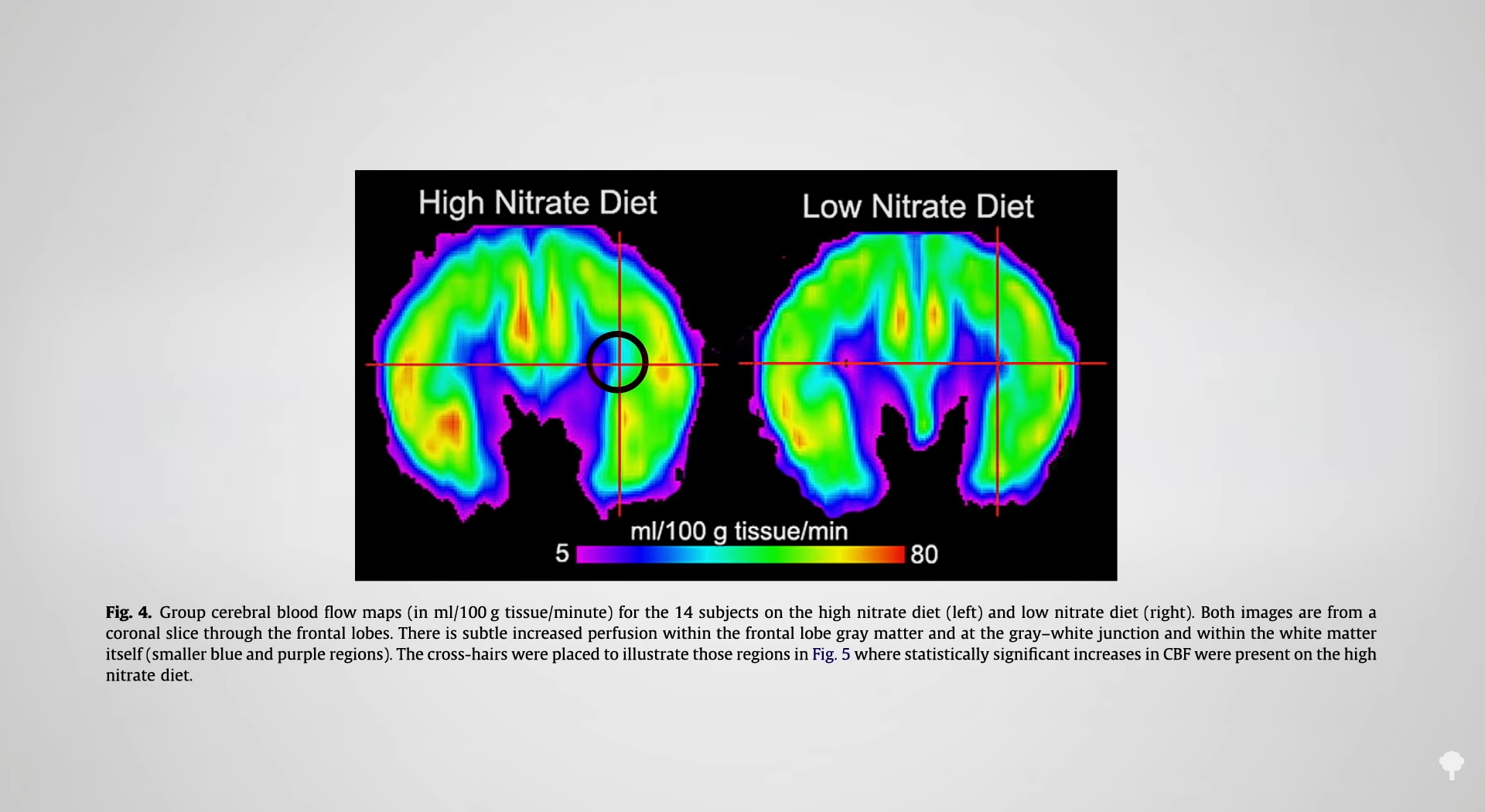
    “The production of NO in the brain and its role in the control of neuronal [nerve] functions has been comprehensively investigated in animals studies.” NO, or nitric oxide, is the “open sesame” molecule that dilates our blood vessels and is boosted by the consumption of nitrate-rich vegetables. “However, little evidence on the role of NO in brain function in humans exists”—until it was recently put to the test, that is.

    As I discuss in my video Best Brain Foods: Greens and Beets Put to the Test, study participants ate a lot of green leafy vegetables with some beet juice, and then researchers measured their cerebral blood flow. At 0:36 in my video, you can see a spot with improved flow within a brain area “known to be involved in executive functioning.” Improved blood flow doesn’t necessarily translate into improved cognitive function, though. For example, when researchers fed people tart cherries, “despite some indication of improved blood flow,” it didn’t appear to manifest as improved cognitive performance.

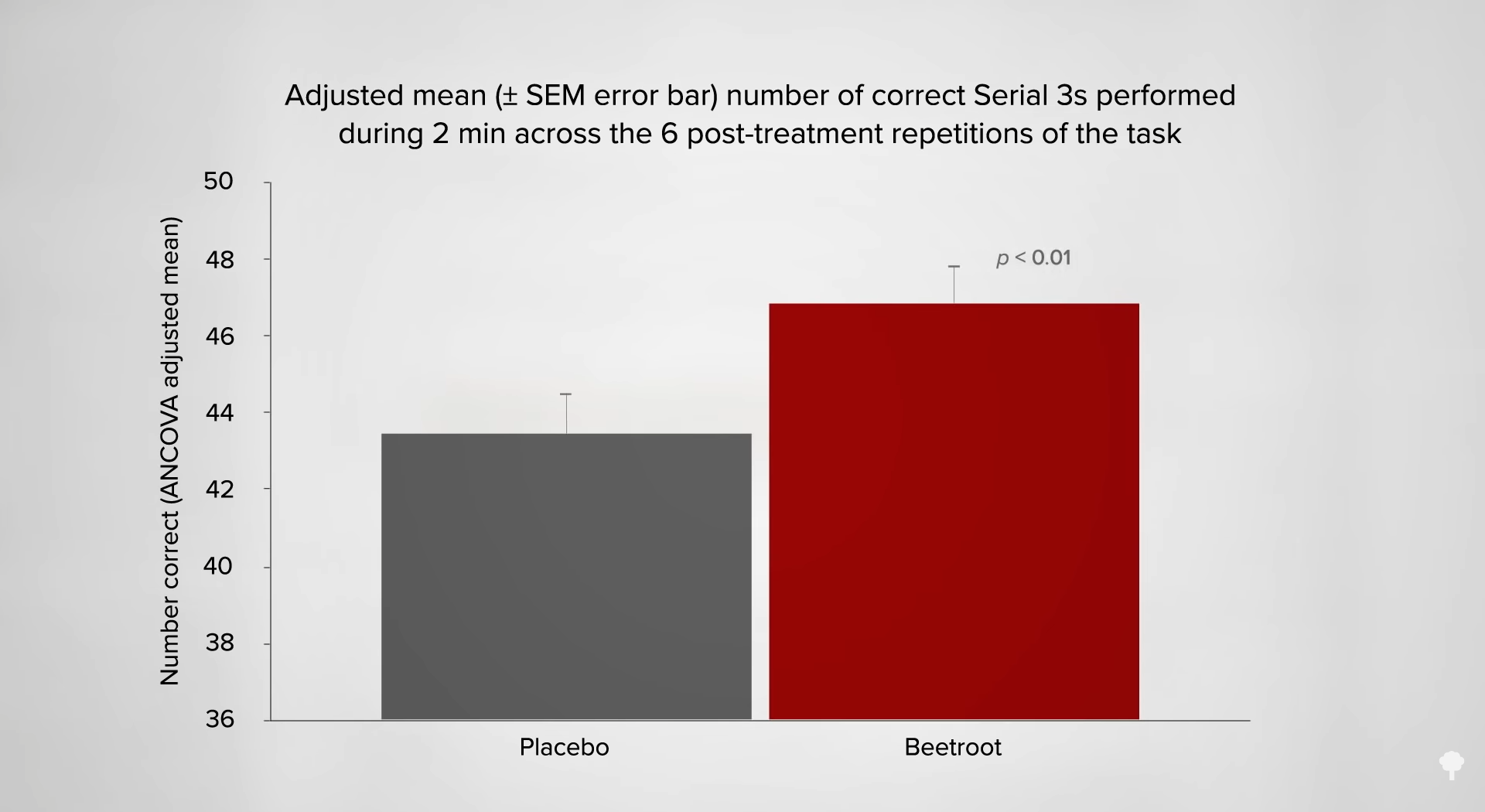
    And, indeed, some of the initial studies were disappointing. Researchers gave study participants more than a cup of cooked spinach, but saw no immediate boost in their ability to carry out simple tasks. When others were given a similar battery of simple tasks after consuming cocoa, again, researchers saw no significant effect. Might the tasks have been too simple? When individuals were put through a more demanding set of tasks, such as counting backwards in threes for minutes at a time, “acute improvements in mood and cognitive performance” were seen after consumption of cocoa. What if you tried doing that same challenge after drinking two cups of organic beet juice, which has about the same amount of nitrate as two cups of cooked arugula?

    As you can see at 1:42 in my video, researchers found significantly improved performance in terms of more correct answers on the sustained subtraction task. “These results suggest that a single dose of dietary nitrate”—for example, nitrate-rich vegetables—“can modify brain function, and that this is likely to be as a result of increased NO [nitric-oxide] synthesis,” but how do we know it’s the nitrate? Beets are packed with all manner of phytonutrients, like the betalain red pigment. One way to tease it out would be to come up with a kind of nitrate-depleted beet juice that has everything in beets but the nitrate and see if that works just as well. Researchers did exactly that.

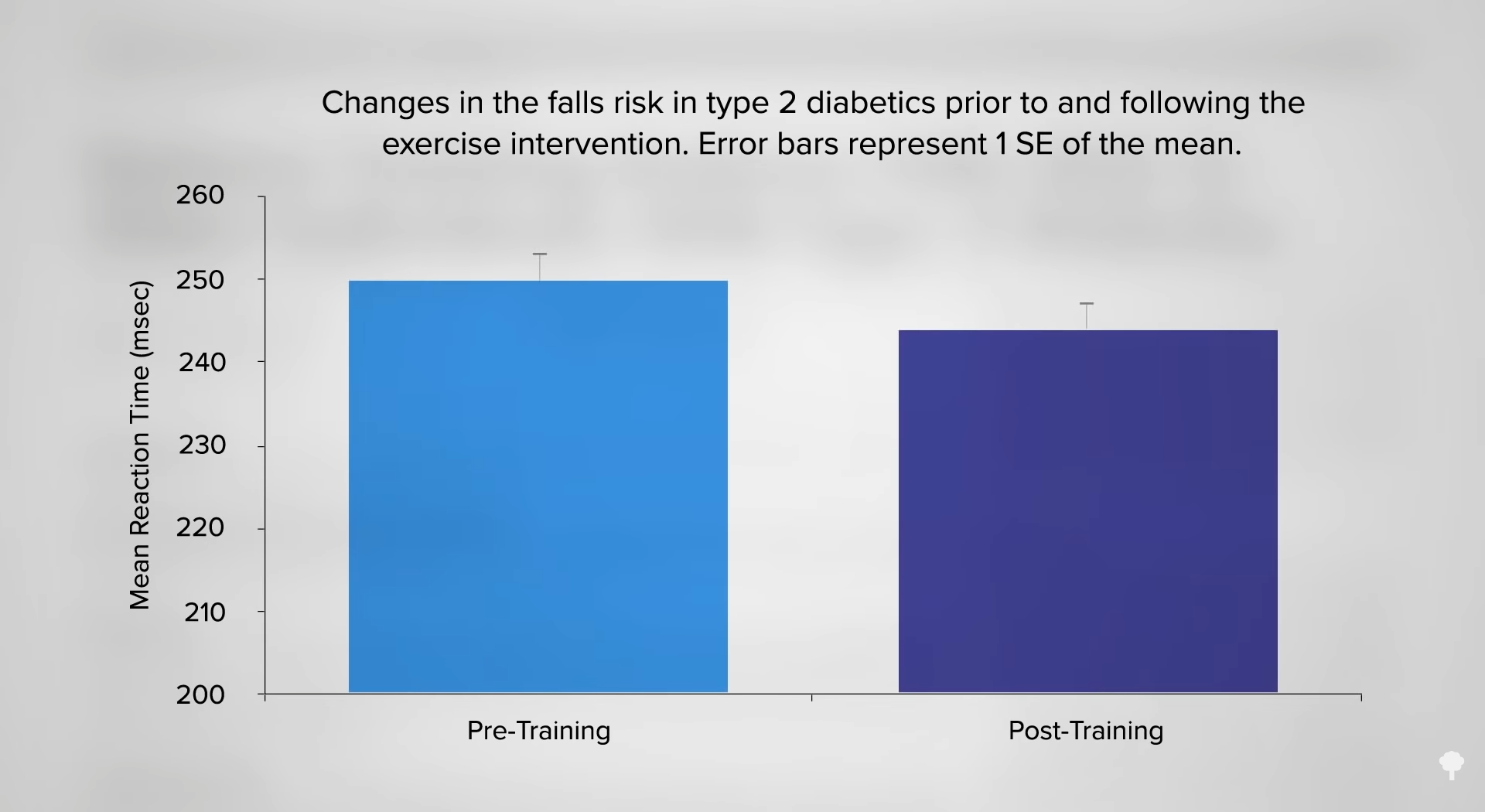
    Indeed, researchers developed a nitrate-depleted beetroot juice placebo. Within two weeks of supplementation with real beet juice, a group of diabetic patients got “a significant improvement in simple reaction time” compared to the nitrate-free placebo. We’re only talking about 13 milliseconds, but other interventions, like balance training, which only increased reaction time by about 7 milliseconds, were associated with significantly lower fall risk, as you can see at 2:42 in my video. And, of course, in athletes, those fractions of a second can sometimes make a difference.

    “At very high exercise intensities…, cognitive task performance deteriorates, with a pronounced detrimental effect on reaction time,” and that may be just when you need it the most—when you’re playing football, for instance, and need to quickly make appropriate decisions while simultaneously going all out. And, once again, beets come to the rescue—significantly reducing reaction time and not only improving physical performance, but mental performance, too.

    Can it improve the structure of our brain? Indeed, cognitive training and aerobic exercise can actually affect the structure of the human brain. There’s something called neuroplasticity, where your brain can adapt, changing its configuration as you learn to play piano, for example.

    We used to think only younger brains could do this, but now we know it can occur in the aging brain as well. Can’t “beet” that! Or, can you? We didn’t know…until now. As you can see at 3:45 in my video, researchers looked at the brain before and after participants engaged in a six-week exercise program and measured connectivity between various parts that control movement. They found no big changes at all. But, when the subjects drank beet juice before doing the same amount of exercise, researchers found a big difference. The exercise plus beetroot juice group developed “brain networks that more closely resembled those of younger adults, showing the potential enhanced neuroplasticity conferred by combining exercise” and nitrate-rich vegetables.


    Credit: Source link

  • This Rawsome Vegan Life: MAPLE HAZELNUT GRANOLA

    This Rawsome Vegan Life: MAPLE HAZELNUT GRANOLA

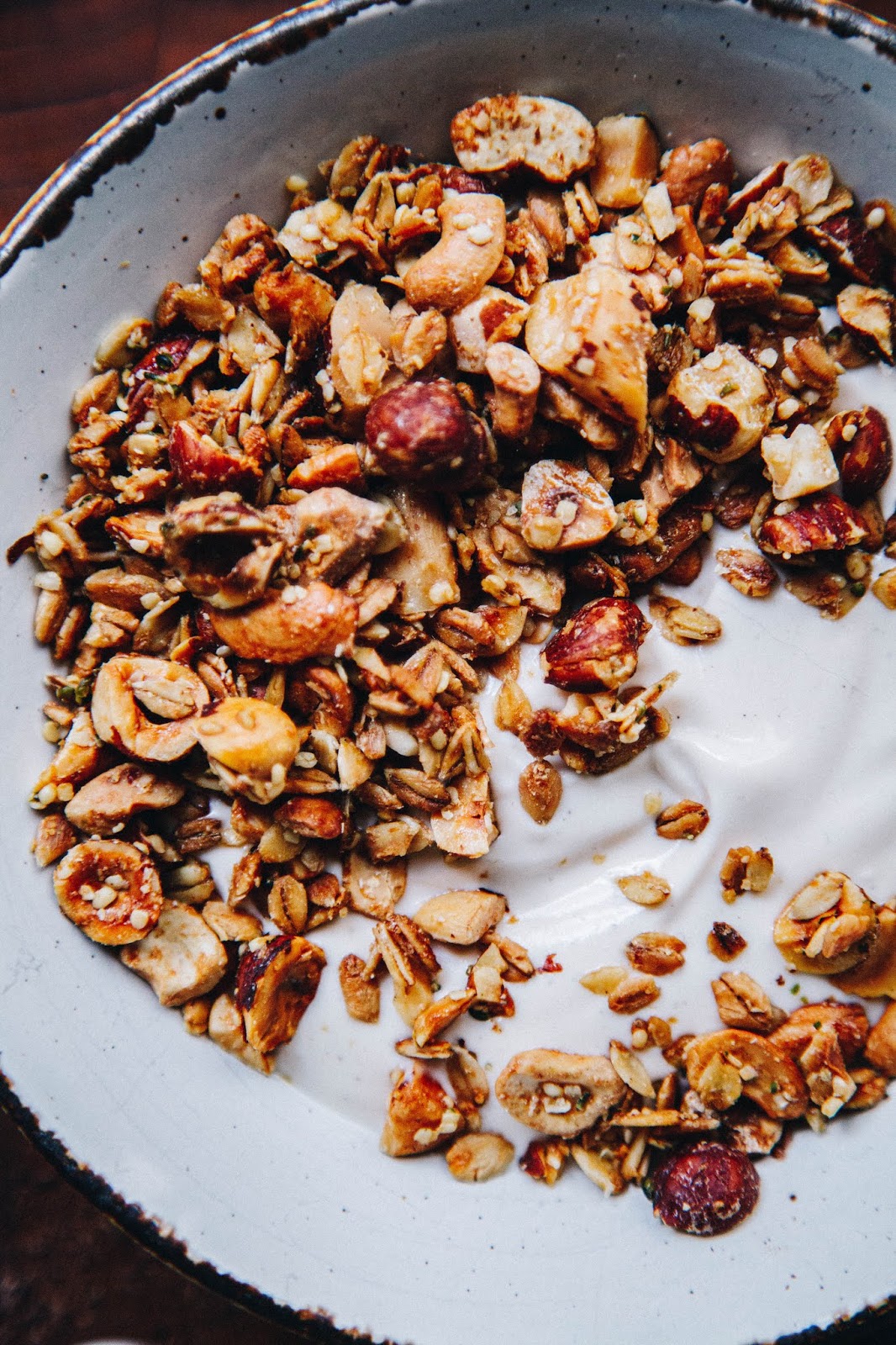
    Hey, fam! September is here, and that means some of us are BACK! IN! SCHOOL! I have been working my way through an undergrad for about 100 years, and that’s no different this semester. So: I’ve been inspired to create some easy, nutritious and delicious recipes, that I can eat at home or on campus. One of these recipes is granola. It’s been a fave food of mine ever since I was a kid. When I realized a few years ago how simple granola is to make yourself, there was no going back to your average store-bought varieties. Seriously: you throw some oats in a bowl, mix them around with nuts and maple syrup, then bake it all for 40 minutes. Voila. Perfect, fresh, and fragrant granola every time. It makes a quick breakfast before school, a light snack, or a terrific topping for ice cream and other sweet treats. 

    Rolled oats are the main ingredient in granola, and (if you like eating them) they are great for you! My favourite rolled oats are from . I prefer One Degree’s because they’re sprouted, i.e. more nutritous and easier on the tummy. Rolled oats an excellent source of soluble fibre; they’re rich in micronutrients and antioxidants; they may help with your cholesterol levels and blood health; and they keep ya regular. This is a pretty nutty granola, thanks to hazelnuts and cashews. They’ve got lots of healthy fats, and make the texture and flavour of this recipe simply dreamy. I also threw in hemp seeds and Brazil nuts for extra protein and selenium.

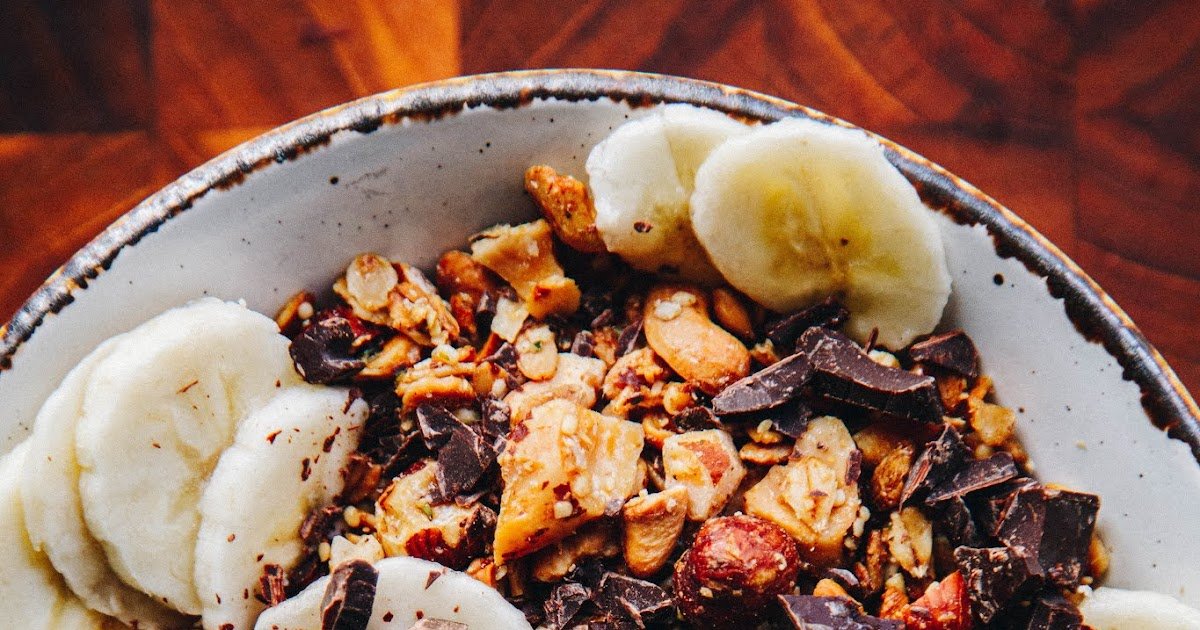
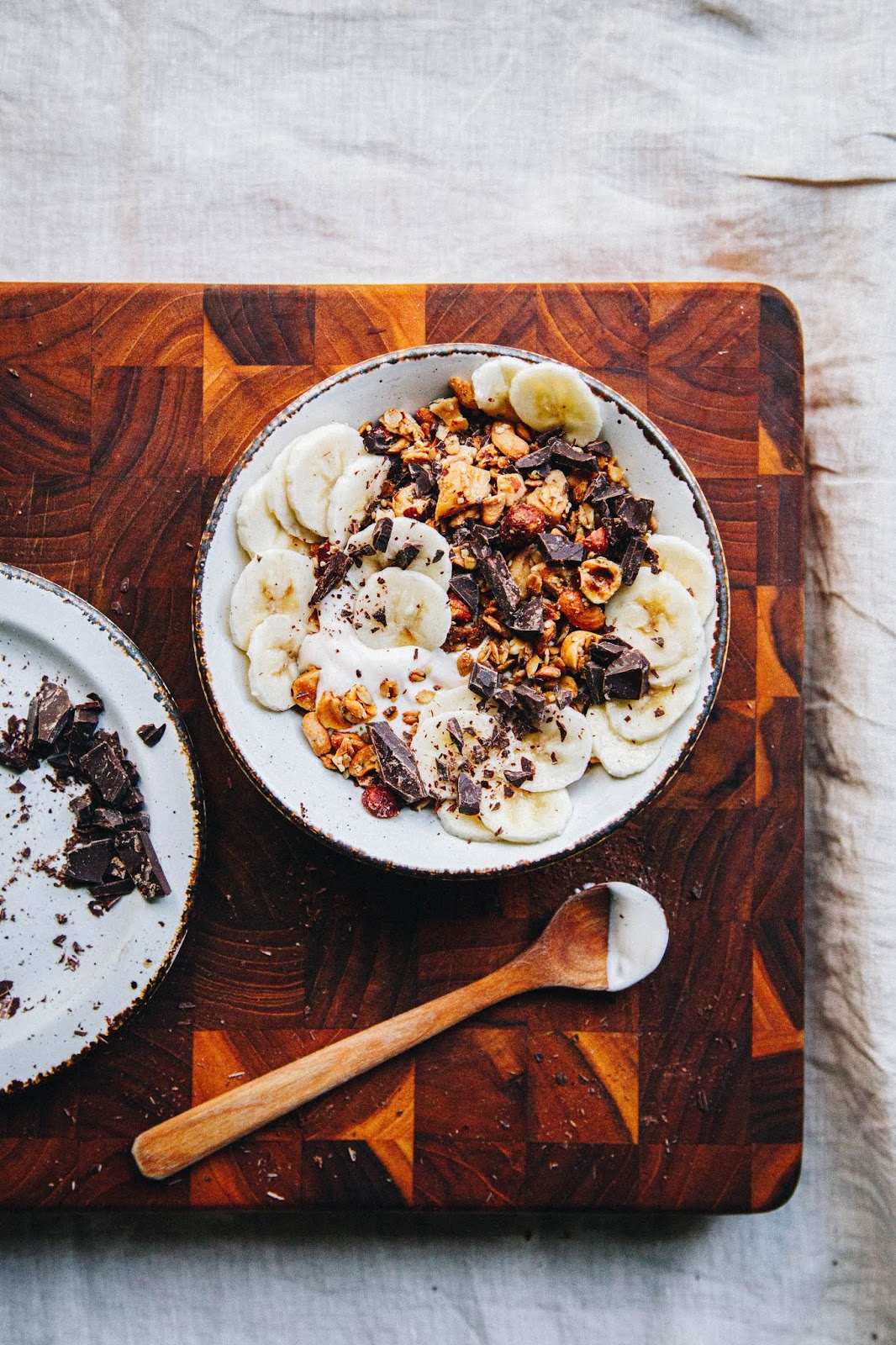
    I highly recommend adding a bit of chocolate to your granola once it’s out of the oven and cooled down. I usually eat my granola with non-dairy milk, or non-dairy yogurt, and fresh and frozen fruit. The bowl pictured in this post features the granola with vanilla soy yogurt, chopped dark chocolate, and sliced banana. I added frozen blueberries after I finished photographing. You can keep this recipe raw by using a dehydrator instead of an oven, but the flavour is about 1000% better if you bake it at a higher temperature. Your choice, my friend! I hope you all enjoy this recipe, and are adjusting well to the back-to-school routine if that’s your situation! Talk soon!

    xo, 

    em

    MAPLE HAZELNUT GRANOLA
    Makes around 5 cups. Print the recipe.

    3 cups One Degree Organics
    1 cup roughly chopped hazelnuts
    1/2 cup roughly chopped cashews
    1/3 cup roughly chopped Brazil nuts
    1/4 cup hemp seeds
    1 teaspoon flaked sea salt
    1/2 cup maple syrup
    1/3 cup coconut oil

    Preheat an oven to 325 degrees Fahrenheit. Mix together the dry ingredients in a large bowl. Add the maple syrup and coconut oil to the bowl of dry ingredients and mix everything up evenly. Spread out onto a large baking sheet (lined with parchment paper, or not) and bake for 20 minutes. Mix up the granola with a spatula or spoon, and put it back in the oven for another 15-20 minutes. Check towards the end of the baking time to make sure it’s not burning. Let cool, and enjoy! Store in airtight glassware (like a glass jar) in the fridge or a dark, cool cupboard. This will stay fresh for 2-3 weeks.

    Notes: If you want to make this low-sugar, use as little maple syrup as you prefer. Compensate with a few more tablespoons of coconut oil. Alternatively, if you want to make this low-fat, substitute more maple syrup for less coconut oil. 


    Other optional additions and substitutions: A splash of vanilla extract would be lovely. You can substitute any nuts or seeds for any others. Chocolate chips would work well instead of chopped chocolate. Dried fruit would be good added after baking too. 

    This post is sponsored by , because I gotta pay the bills somehow! All opinions and words are my own. I only partner with companies I actually like, and mention ingredients I actually use.

    Credit: Source link

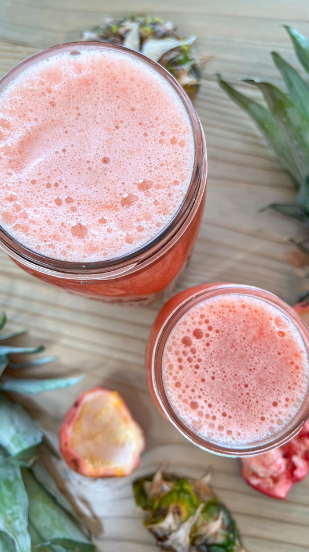
  • This juice blend gives me mad summer vibes

    This juice blend gives me mad summer vibes

    Last updated on

    This juice blend gives me mad summer vibes  by thejuiceyard

    This juice blend gives me mad summer vibes.Try it out for yourself!

    🍍1 pineapple
    🍓1-2 lbs strawberries
    🍎1 apple
    ♥️1 pomegranate
    💛4 passion fruits

    Some of the links I post on this site are affiliate links. If you go through them to make a purchase, I will earn a small commission (at no additional cost to you). However, note that I’m recommending these products because of their quality and that I have good experience using them, not because of the commission to be made.

    About user

    Juicing for Health was founded by certified Wellness Health Coach, Nutritional Consultant and a Detox Specialist. We help busy men and women identify their health issues at the root cause, in order to eliminate the problems for optimum physical/mental health and wellbeing.


    Credit: Source link