Author: [email protected]

  • This Rawsome Vegan Life: PUMPKIN PIE PANCAKES

    This Rawsome Vegan Life: PUMPKIN PIE PANCAKES

    Hello, all. How is everyone doing? I’ve got a treat for you today! It’s cozy, sweet, and seasonally-inspired. In the festive spirit of Autumn, October, and Halloween: I give you… *drum roll* … pumpkin pie pancakes!! (I understand you probably already read the title of this post, so that drum roll wasn’t necessary. I just like drum rolls.) They are vegan and gluten-free, but you really wouldn’t know it.

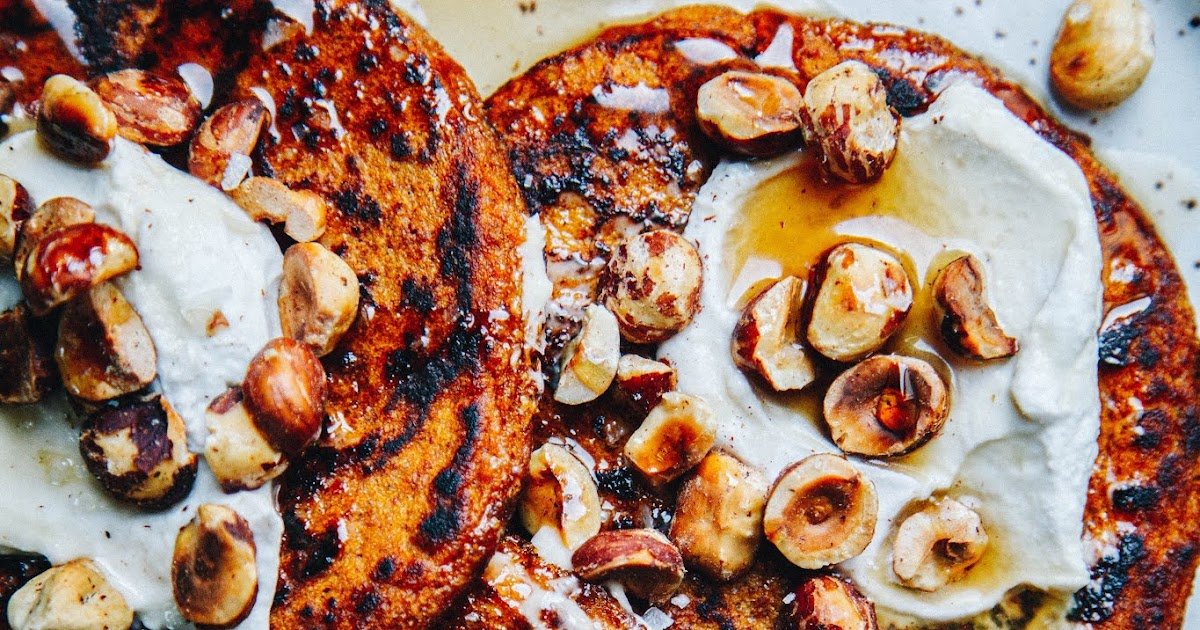
    I readily admit I am not normally great at making pancakes. For whatever reason, they have always been a tricky recipe for me to pull off successfully. I either end up with weird gooey messes, or burnt pieces of batter. That’s why I feel confident sharing this recipe: if I can make it work, anyone can. These pancakes turned out PERFECT. (My parents agree.) This recipe is sublime when you want pumpkin pie and pancakes all in one. Then, top them off with whipped coconut cream, maple syrup, roasted hazelnuts and oooh, baby! This recipe is excellent for a decadent breakfast, and it works just as well – if not better – as a dessert. You can make these pancakes in just a few minutes, and they look so darn cute garnished with all the toppings. I strongly believe we all deserve cute pancakes. Let me know if you make this recipe, and how it turns out!

    xo, em

    PUMPKIN PIE PANCAKES
    Makes 7-8 pancakes. Print the recipe.

    Pancakes:
    1 cup gluten-free flour mix (I used GoGo Quinoa)
    1 1/2 cups almond milk
    1 cup pumpkin puree
    3 tablespoons maple syrup
    1 tablespoon ground chia seeds
    1 teaspoon vanilla extract
    1 teaspoon cinnamon powder
    1/2 teaspoon ginger powder
    1/2 teaspoon sea salt
    Vegan butter (or coconut oil), as needed (I used Earth Balance)

    Toppings (non-negotiable!!!):
    Coconut whipped cream
    Roasted hazelnuts, roughly chopped
    Maple syrup
    Flaked salt

    In a large bowl, mix together the flour, chia seeds, cinnamon, ginger, and salt. Add the pumpkin puree, milk, and maple syrup, and whisk everything together until evenly smooth. Let the batter sit for 5 minutes while you heat up a pan.

    Heat up a non-stick pan on high heat, then reduce to medium-low (you just need to get the pan hot). Add a small scoop of vegan butter* to the pan; it should be hot enough that the butter quickly melts and sizzles. Scoop in 1/4 cup of batter; cook for 3-4 minutes on each side. Continue this process until you’ve used up all your batter.

    Serve your pancakes with all the toppings, and enjooooy!

    *Note: I used a small pan and made my pancakes one at a time, using about a 1/2 teaspoon of vegan butter to cook each one. If you’re using a larger pan, add more vegan butter, and cook several pancakes at once. Up to you, and the size of your pan!
    (more…)

  • Compensation hunger: Why your grocery bill increases when you train harder

    Compensation hunger: Why your grocery bill increases when you train harder

    We’ve all been there before – neck deep in the fridge, battling ravenous hunger and on the hunt for more food mere minutes after dinner.

    It’s fairly common for individuals who train hard to find themselves in this compromising situation, which is far from ideal when you’re trying to maintain race weight or keep that conditioning you’ve worked so hard to achieve.

    Having devoured all the leftovers from dinner, and your pre-prepped lunch for the next day, you’ll probably be plagued by feelings of guilt and resentment at your perceived inability to control your cravings.

    But don’t beat yourself up about it. There is a perfectly logical physiological answer to your plight of ravenous, insatiable hunger, and it’s called compensation hunger.

    READ MORE | Put The ‘Eat’ In ‘Cheat’ With This Diet Hack

    Exercise-induced hunger

    A growing body of research shows that, in general, energy expenditure from exercise results in an associated increase in caloric intake.

    By burning calories through intense or voluminous activity, researchers have found that feelings of hunger intensify as the sensitivity of the body’s hormonally-mediated appetite signalling system increases.

    This can also stimulate unconscious changes in food preferences, and alters the pleasure response to food in ways that significantly boost daily calorie intake.

    Often referred to as compensation, this exercise-induced hunger not only cancels out the calories burnt during an exercise session, but it’s not uncommon for hard-training individuals to consume more calories than they expended.

    This happens because the body initiates a hormonally-driven survival response aimed at restoring the energy reserves that were depleted, and simultaneously tries to compensate for future bouts of excessive energy expenditure.

    While the degree of compensation is highly individualised, research findings suggest that energy intake begins to exceed energy expenditure by up to 30% during periods of chronic exercising, especially the longer one spends in an energy deficit.

    READ MORE | Halt Hunger Pangs: The Best Supplements To Suppress Appetite

    Seeking homeostasis

    This response relates to the hunger-stimulating effects that exercise produces, as the body tries to return to a state of homeostasis – the more we train, the more our bodies crave fuel.

    This process is underpinned by the body’s regulation of energy balance, a dynamic process comprised of a number of metabolic, physiological and hormonal components that seek to achieve energy balance or homeostasis in a coordinated fashion.

    When energy balance is disrupted to a large degree, either through chronic exercise or calorie restriction, or a combination of both, it’s often the most readily available and immediate source of fuel that our brains and bodies crave – carbohydrates and sugar.

    This then leads to the hormonal cascade that increases hunger through the release of ghrelin. The subsequent release of insulin when we binge on carbs then increases the ease with which excess calories are stored as fat, particularly around our mid-sections.

    READ MORE | 3 Rules To Successful, Sustainable Weight Loss

    Managing compensation hunger

    It is important to acknowledge and understand that your hunger is a natural response. In so doing, you’ll be prepared for the spike is cravings when you start getting into the meat of training programme.

    The key then is to make better food choices when diving head first into the fridge or pantry cupboard.

    It is also beneficial to eat something immediately after a hard training session. In these cases, a well-formulated supplement is often best, as it delivers precise doses of the macronutrients your body needs most to kickstart the recovery and rebuilding process.

    By scheduling your workouts before main meals, you’ll also ensure that a large dose of calories soon follow a post-workout supplement. This will further satiate any exercise-induced hunger pangs that may develop. Again, the important factor to consider is meal composition and total energy content. You don’t want to break the proverbial calorie bank in a single sitting, so manage your portions.

    Also, stay away from high-GI carbs, particularly the processed variety, as these can amplify the hormonal response mentioned previously.

    A solid, nutritious meal comprised predominantly of protein, some healthy fats and lots of vegetables will deliver across the macronutrient and micronutrient spectrums to feed and nourish your body.

    Lastly, never use food as a reward for exercising. Numerous studies demonstrate that individuals who contextualise hard or intense exercise as a reward-worthy endeavour tend to overeat during post-workout meals, and tend to reward themselves with less healthful meal options.

    Author: Pedro van Gaalen

    When he’s not writing about sport or health and fitness, Pedro is probably out training for his next marathon or ultra-marathon. He’s worked as a fitness professional and as a marketing and comms expert. He now combines his passions in his role as managing editor at Fitness magazine.


    Credit: Source link

  • Is Cheese Really Good for Our Health?

    Is Cheese Really Good for Our Health?

    What is the real story behind the recent studies that show cheese has neutral or positive health effects?

    In my series of videos on saturated fat, I talked about a major campaign launched by the global dairy industry to “neutralize the negative image of milk-fat among regulators and health professionals as related to heart disease.” As you can see in my video Is Cheese Really Bad for You?, that campaign continues to this day with the publication of a meta-analysis demonstrating “neutral [non-harmful] associations between dairy products and cardiovascular and all-cause mortality,” that is, death.

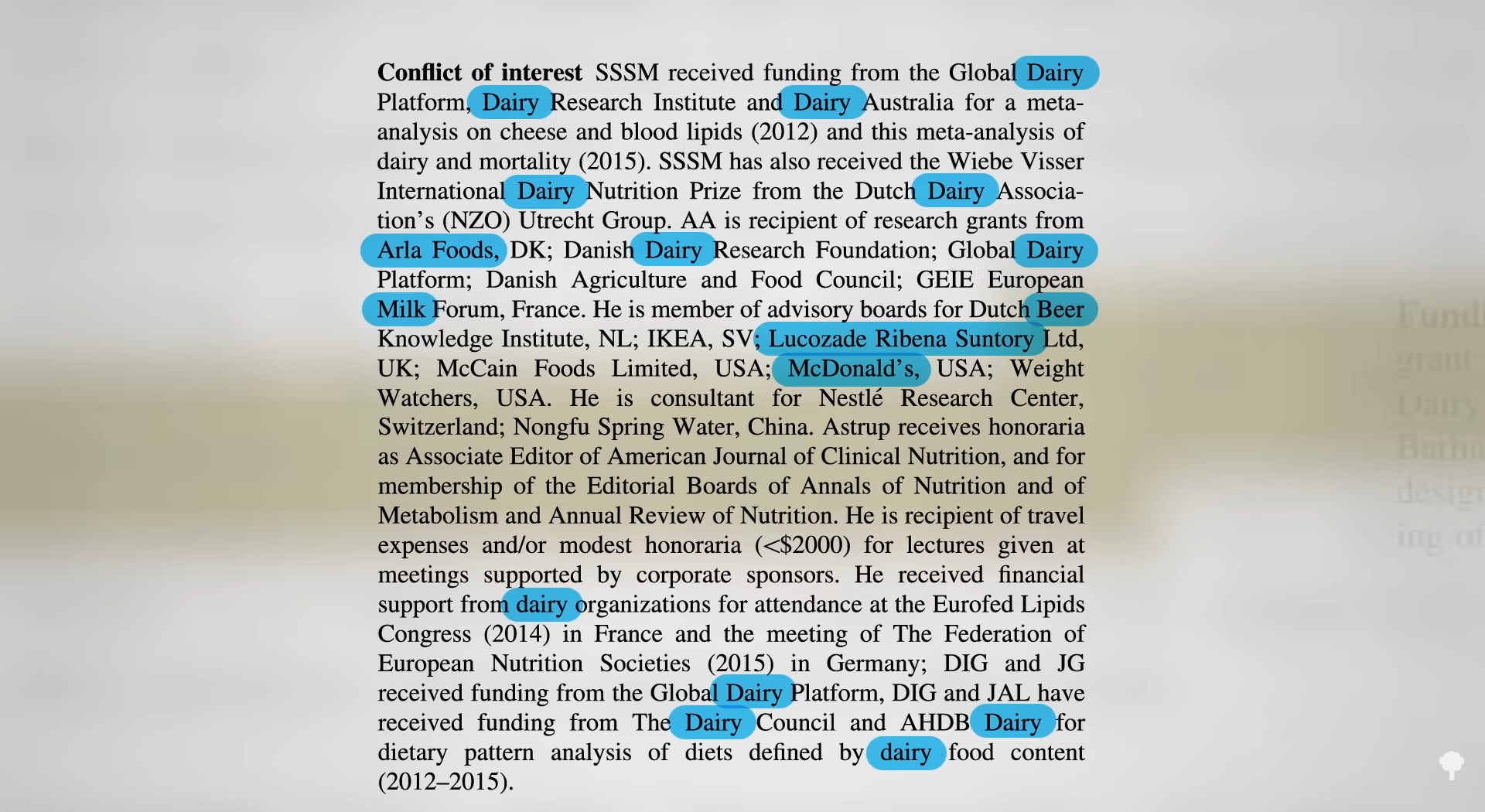
    How do we know the dairy industry had anything to do with this study? Well, it was published in a journal that requires authors to disclose financial conflicts of interest. So, what ties were divulged? As you can see at 0:47 in my video: Dairy, dairy, dairy, dairy, dairy, dairy, the fourth largest dairy company in the world, dairy, dairy, milk, beer, soda, McDonald’s, dairy, dairy, dairy, dairy, and more dairy. Oh, and the study itself was “partly funded by…the Global Dairy Platform, Dairy Research Institute and Dairy Australia.” So, there we have it.

    The other big new study suggested that a little bit of cheese every day isn’t just neutral but actually good for you. And, researchers in that study make it clear that they have “no conflict of interest” despite some of the authors being employees of the Yili Innovation Center and the Yili R&D Center, with Yili being “China’s largest dairy producer,” which makes it one of the world’s largest dairy companies.

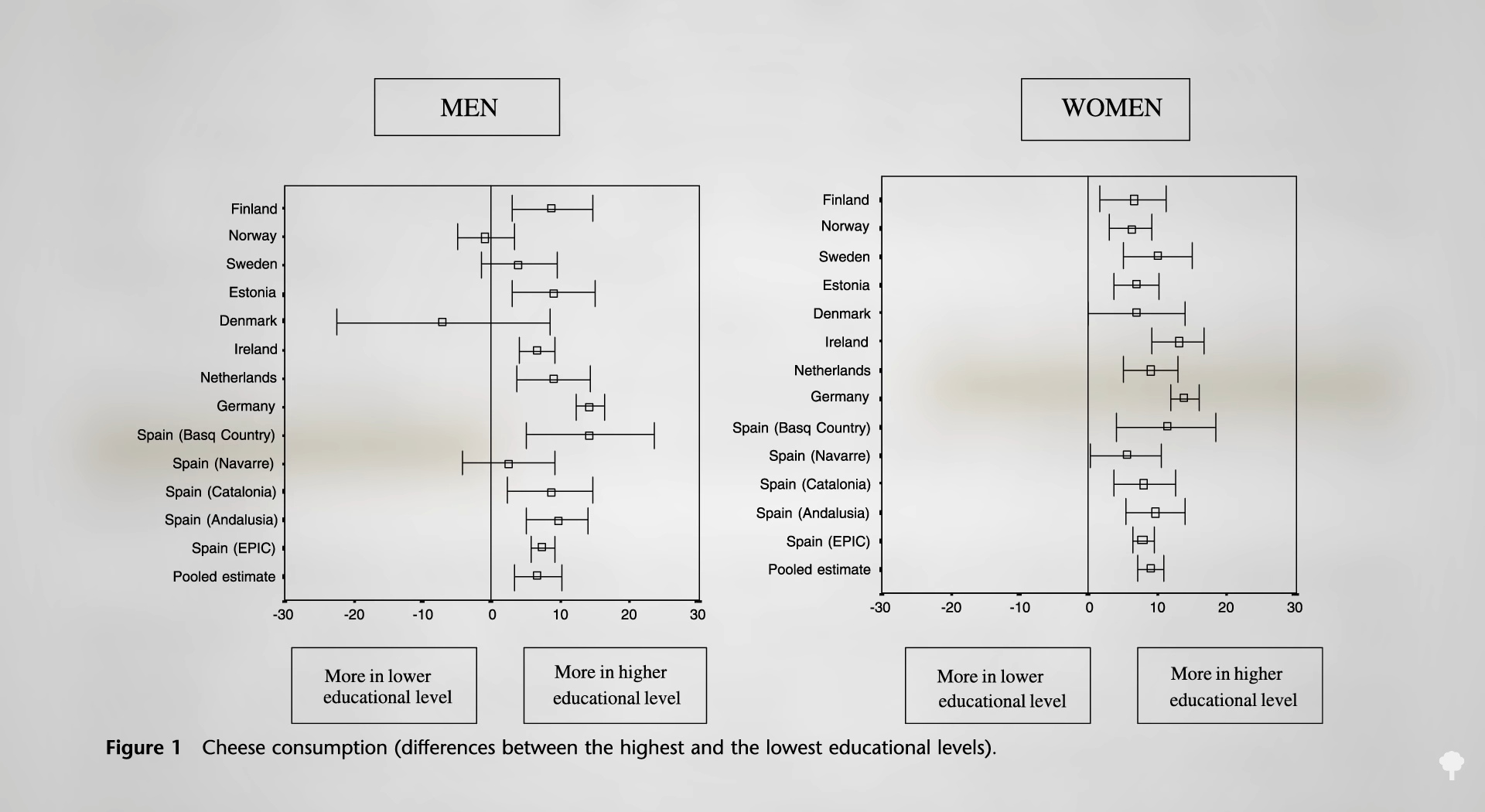
    How can cheese consumption be associated with better health outcomes? Most of these studies were from Europe, where a “higher socioeconomic status was associated with a greater consumption of cheese.” In Europe, they aren’t eating Cheez Whiz and Velveeta. There, cheese is “generally an expensive product,” so who eats it? As you can see at 1:45 in my video, cheese consumers are those with higher paying jobs, those in a higher socioeconomic strata, and those with higher education levels, all of which are associated with better health outcomes, which may have nothing at all to do with their cheese consumption. Higher socioeconomic groups also consume more fruits and vegetables…and more candies. So, I bet you could do a population study and show that candy consumption is associated with better health. (Shh! Don’t tell the National Confectioner’s Association.) Too late! Did you know that candy consumers have lower levels of inflammation and a 14 percent decreased risk of elevated blood pressure? This information is brought to you by the candy industry and the U.S. Department of Agriculture from our very own government, which props up the sugar industry to the tune of a billion dollars a year.

    It’s like when the government uses our tax dollars to buy up surplus cheese. Paul Shapiro, CEO of The Better Meat Co., wrote a great editorial on this: “Imagine the following CNN headline: ‘Government Buys $20 Million in Surplus Pepsi as Demand Plummets.’ The fictional article informs readers that our tax dollars will soon be buying up millions of unwanted cola cans, all as a favor to the flailing soda industry, which just kept producing drinks no one wanted. “As outrageous as such a government handout to the soda industry would be, that’s exactly what the U.S. Department of Agriculture is doing for the industrial dairy industry.”

    Michele Simon, JD, MPH, produced a great report on how our government colludes with the industry to promote dairy junk foods. “The federal government mandates the collection of industry fees for ‘checkoff programs’ to promote milk and dairy.” In fact, “McDonald’s has six dedicated dairy checkoff program employees at its corporate headquarters” to try to squeeze in more cheese. That’s how we got double steak quesadillas from Taco Bell and 3-Cheese Stuffed Crust Pizza and the “Summer of Cheese” ad campaign from Pizza Hut. “These funds are used to promote junk foods, which contribute to the very diseases our federal government is allegedly trying to prevent. Does it make sense to tell Americans to avoid foods high in salt, sugar, and saturated fat, while engaging in the promotion of those same foods?” Look, “the meat and dairy industries can do what they like with their own money. The public power of taxation should be used for the public good,” though, not to support the dairy and candy industries.


    Credit: Source link

  • CULTIVATING LOVE with CHANOYU (MATCHA TEA CEREMONY)

    CULTIVATING LOVE with CHANOYU (MATCHA TEA CEREMONY)

    Tea: “the adoration of the beautiful among the facts of everyday existence. It inculcates purity and harmony. It is a worship of the Imperfect, as it is a tender attempt to accomplish something possible in this impossible thing we know as life.”

    — Kakuzō Okakura, The Book of Tea

    Hello, friends! Happy Valentine’s Day. I have been reconsidering the art and act of love this year. I’m in a place where nurturing my relationship with myself is fundamental to the health of all my other relationships. As RuPaul exclaims at the end of every Drag Race episode: “If you can’t love yourself, how the hell you gonna love somebody else!?” Point taken. 

    So for this Valentine’s Day, I want to share one ritual which allows me cultivate a deep sense of love, peace, and groundedness in my life: chanoyu! In English: hot water for tea. It refers to the centuries-old Japanese matcha tea ceremony developed by Taoist and Zen Buddhist monks. I’m going to talk about love for a second, then we’ll get into tea, and finally you’ll find my match tea recipe at the end of the post.

    “On this sacred path of Radical Acceptance, rather than striving for perfection, we discover how to love ourselves into wholeness.”

    So! What does this have to do with matcha tea? Everything. Chanoyu is about embracing imperfections, balance, simplicity/austerity (wabi), ritual, respect, the present moment, and all the senses in order to connect with the universe and our own bodies. For me, this is an incredibly powerful act of acceptance of the Now, of myself, and of the forever-changing nature of the world. As I go through the stages of preparing and then drinking matcha, I am aware of my senses, and the temporariness of identity, feelings, and thoughts. All the lessons remind me I am but one mortal mammal in the universe, no better or worse than anyone else. Each imperfect part of the ceremony comes together to form a sacred whole, and I am part of this process. I am home. I deserve the tranquility chanoyu brings, and I deserve love. We all do.

    I won’t go into the details of the history of matcha and chanoyu, because other people have written about it with more knowledge and articulation than I possibly could. I am just beginning my journey into the ceremony. I recommend the following resources if you are yearnin’ to learn more!

    Videos:

    Books:

    – Way of Tea, by Rand Castile, forward by Sen no Soshitsu

    MATCHA TEA (usucha)

    2-4 grams ceremonial grade matcha powder (I’ve been using Matcha Kari)

    60-80 ml water, just below boiling (70–85 °C)

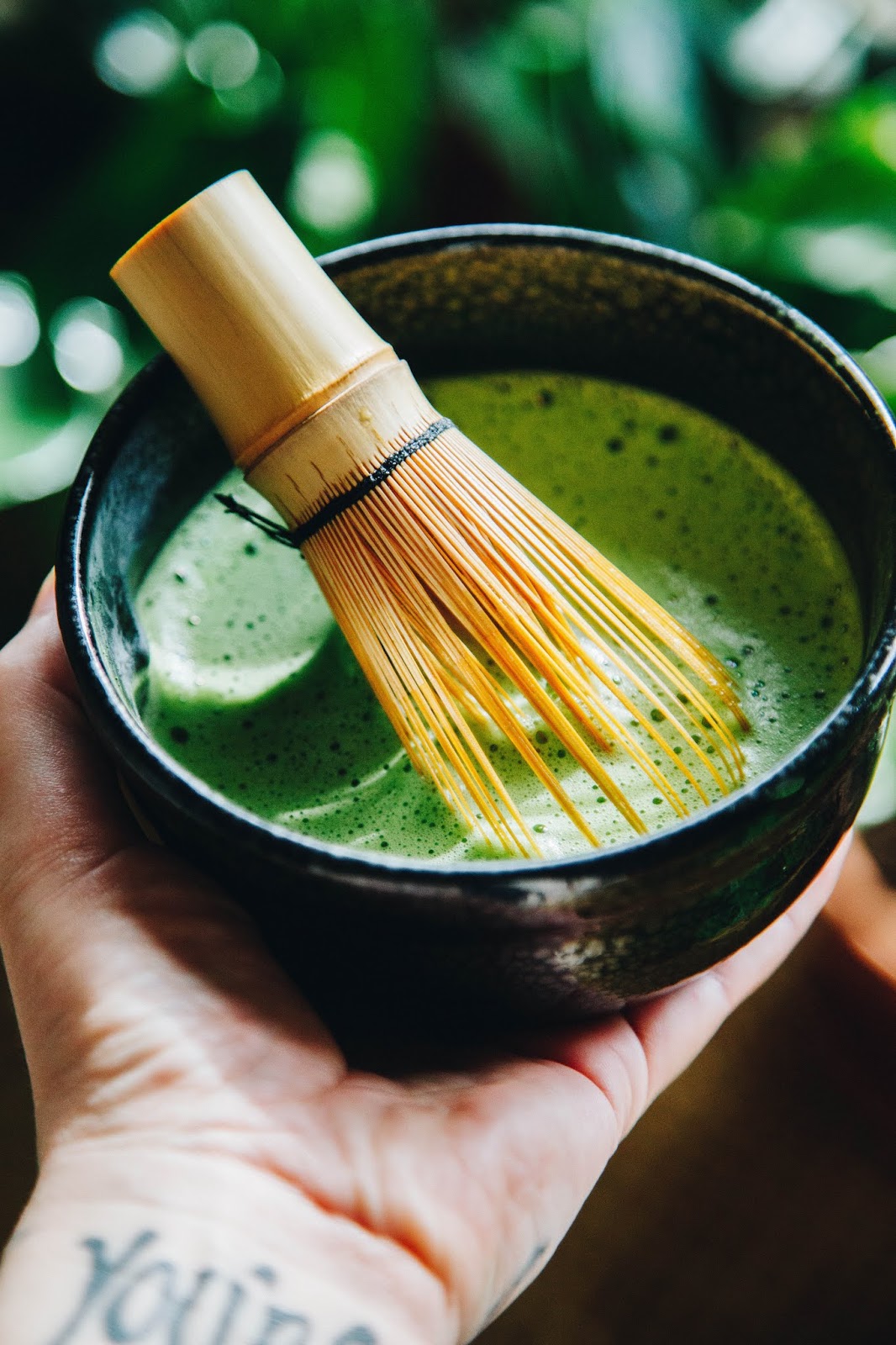
    Preparation: Before making your matcha, prepare your tea bowl (chawan) and bamboo whisk (chasen). Pour some hot water into the bowl and gently stir the whisk around in the water. This warms up the bowl and whisk so they are ready for your matcha. If you wish, wipe the bowl dry with a linen cloth. Now, let’s make the tea!

    Making the matcha: Carefully sift 2-4 grams of matcha powder through a fine sieve into your bowl. Next, pour in 60-80 ml of water heated to 70–85 °C. Introduce the whisk to the matcha and water, making a few W shapes slowly. Then, whisk as quickly as you can for 20 seconds in a vertical back and forth pattern. This will produce that wonderful foam. 

    Drinking the matcha: drink the matcha right away, or else it becomes very bitter. Take a deep breath, coming back to your body and spirit. Notice all the beautiful details in your bowl of matcha: the colours, textures, smells and shapes. The whole universe is in this bowl! Take 3 and a half sips in total: the last half sip will be the remaining foam. With each sip, stay concentrated on how the matcha tastes and how it is moving through your whole body. This tea is nourishing, energizing, and becoming part of you. Think of all the people who played a part in bringing this matcha to you. Notice how the matcha makes you feel after you’ve drunken it. 

    Optional additions: I like having my matcha with a sweet treat like a cookie to balance the bitterness. Traditionally in chanoyu, these sweets (wagashi) are eaten before the matcha is served to guests. You can also add nondairy milk or a sweetener to your matcha if you like. Or, have it over ice. 

    Credit: Source link

  • Skip the lemonade packets this summer

    Skip the lemonade packets this summer

    Last updated on

    Skip the lemonade packets this summer by thejuiceyard

    Doesn’t get any better than homemade lemonade (with a twist).

    🍍Pineapple
    🍓Strawberry
    🍋Lemon

    Some of the links I post on this site are affiliate links. If you go through them to make a purchase, I will earn a small commission (at no additional cost to you). However, note that I’m recommending these products because of their quality and that I have good experience using them, not because of the commission to be made.

    About user

    Juicing for Health was founded by certified Wellness Health Coach, Nutritional Consultant and a Detox Specialist. We help busy men and women identify their health issues at the root cause, in order to eliminate the problems for optimum physical/mental health and wellbeing.


    Credit: Source link

  • Blackstrap Molasses

    Blackstrap Molasses

    As part of Dr. Christopher’s Mucusless Diet, he recommended using supplements that help build strength in the body, remove mucus, and revitalize health. Today when people think of supplements, they most often think of individual vitamins or minerals, like iron or zinc that can be taken in a capsule. Dr. Christopher’s supplement recommendations are exactly the opposite – he believed in using whole foods to build a healthy body, so of course his “supplement” recommendations are powerful, nutrient rich foods. 


    These supplements are listed in Dr. Christopher’s booklet Three Day Cleansing Program, Mucusless Diet and Herbal Combinations and are: cayenne, apple cider vinegar with honey, kelp, molasses, and wheat germ oil. Each of these plays a role in nurturing a healthy body.


    One of my favorite supplements from Dr. Christopher’s list is molasses. He recommended taking 1 tablespoon three times a day of either sorghum syrup or blackstrap molasses. 


    What is the difference between sorghum and molasses? Sorghum syrup is made from the green juice of sorghum (a grass that originated in Africa) while molasses is the byproduct of processing sugar cane to make sugar. Sorghum syrup is made by crushing the stalks to extract the juice and then heating the juice to steam off the excess water, leaving the syrup behind. It has a thinner consistency than molasses and a sourer
    taste.


    Molasses comes in different varieties, sulphured, unsulphered, light, dark and blackstrap. Sulphured molasses is made from young, green sugarcane that
    has been treated with sulphur dioxide. Unsulphered molasses comes from ripe sugarcane, and Dr. Christopher always recommended using fully ripe produce. Light, dark, and blackstrap delineations come from the amount of processing done to the sugar cane, each processing removes more sugar crystals leaving behind a nutrient rich goop. Light molasses refers to the first processing and contains the most sugar. Dark molasses is from the second processing and yields a darker color, slightly less sugar,
    and more flavor. Blackstrap molasses come from the third processing, is the darkest and most bitter yield, and contains the least amount of sugar and most nutrients than other cane products.


    Blackstrap molasses is high in iron, calcium, magnesium, potassium, vitamin B6, phosphorus, antioxidants, and electrolytes. These are all important supplements for anemia, bone and nerve health, digestion, stabilizing blood sugar, and more. It is a powerhouse! Just a tablespoon provides 20% of the required daily iron intake, 8% of required calcium intake and 10% of magnesium intake.  Sorghum syrup is also high in these nutrients and can be used for the same benefits. 


    Whole foods provide nutrients that are easy for the body to utilize. They contain a variety of nutrients – some are extremely beneficial in helping absorption of others. For example, the sulfur, copper, and fructose in molasses help with iron absorption, which helps anemia. Take a spoonful of molasses to help increase energy when feeling run down (iron and electrolytes), or to help relax in the evening (magnesium and potassium). The body will utilize what it needs at the
    time, whether that’s channeling more energy for activity, calming the system down to sleep, or utilizing nutrients for healing and regeneration.


    Scientific research is constantly finding new benefits for individual vitamins and minerals. This research confirms the truths that herbalists have taught for decades. Vitamins and minerals are important to maintain a healthy body. Furthermore, consuming them in whole, living foods is the optimal way to ensure that you are getting
    all these vital nutrients. As more research is done, I believe it will continue to confirm the simple truths that Dr. Christopher taught in the School of Natural Healing. Whole, living foods provide the essential nutrients needed for optimal health. When choosing “supplements” look for nutrient rich, whole foods – you can’t go wrong!


    Credit: Source link

  • Idli Sambhar Casserole – Vegan Richa

    Idli Sambhar Casserole – Vegan Richa

    Idli Sambhar Casserole is a simplified spin on traditional Idli Sambar – a layered casserole! With Sambar split pea stew and savory Semolina Rava idli layered and baked! Fewer pans and fewer steps. Gluten-free option

    a piece of Idli Sambhar Casserole on a white plate

    I am back at my favorite cooking challenge: turning traditional Indian food into easier casseroles. Some Indian dishes can take a lot of preparation work and cooking time. For eg making south Indian Idli (rice lentil cakes) is a 2-day process. Soak the rice and lentils, blend, ferment and then we use the batter to make steamed cakes -idli or crepes -dosa, or other sides.

    Vegan Idli sambar casserole in a glass casserole dish

    When in a hurry I often make Rava idli that uses coarse semolina (cream of wheat). The Rava idli batter takes just 10 mins to prep, then 15 mins to steam. Idlis are often served with sambar ( split pea stew).

    But Instead of making the idli and sambar separately, and using up multiple pans, I converted the two recipes into a layered casserole dish! The Sambar is baked right into the casserole dish. So only 1 baking dish to wash up later!

    a piece of Idli Sambhar Casserole on a white plate

    This sambar here is quite a bit thicker than the traditional version. That is necessary so that the idli batter on top doesn’t sink in. I also add quinoa to the sambar to up the protein and to keep the sambar thick.

    Once the lentils are cooked, add the idli batter on top, bake again and serve it like a shepherd’s pie!

    There are of course more steps in this recipe and spices(often repeated spices for both layers). These are necessary for the traditional flavor. But you can skip some steps for a quicker and still very delicious result!

    why you’ll love this idli sambar casserole!

    • Fewer pans
    • Less steps
    • enjoy the authentic Southern Indian flavors in a casserole form!
    • It’s Soyfree and can be made Nutfree and gluten-free.

    More vegan casserole dishes:

    Shahi Tofu Kofta Casserole

    Baked Kitchari Casserole (Spiced Lentil Rice Casserole)

    Vegan Lentil Shepherds Pie 

    Saag Cornbread Casserole

    Print Recipe

    Idli Sambhar Casserole

    Idli Sambhar Casserole is a simplified spin on traditional Idli Sambar – a layered casserole! With Sambar split pea stew and savory Semolina Rava idli layered and baked! ! Fewer pans and fewer steps. Gluten-free option  

    Prep Time15 mins

    Cook Time1 hr

    Total Time1 hr 15 mins

    Course: dinner

    Cuisine: Indian

    Keyword: idli sambhar casserole

    Servings: 6

    Calories: 225kcal

    Author: Vegan Richa

    Ingredients

    For the sambar stew

    • 1 tsp oil
    • 1/2 teaspoon mustard seeds
    • 6 curry leaves fresh or frozen or dried
    • 2 Dried red chilies such a large cayenne or Indian
    • 1/2 cup (70 g) toor dal – split pigeon pea or use moong dal (petite yellow lentils) or masoor dal( split red lentils)
    • 1/4 cup (42.5 g) quinoa, optional
    • 1/4 cup chopped onion
    • 1 tomato chopped
    • 1 cup chopped veggies such as carrots peppers green beans
    • 2 tsp ground coriander, preferably dry toasted on a skillet until fragrant
    • 3 tsp sambar masala see notes for substitute
    • 1/4 tsp turmeric
    • 1/4 tsp cayenne
    • 1 tbsp tamarind chutney or tamarind pulp
    • 2.5 cups (591.47 ml) water
    • 1/2 teaspoon salt

    For the rava idli

    • 2 tsp oil
    • 1/2 teaspoon mustard seeds
    • 1/4 teaspoon cumin seeds
    • 1 teaspoon chopped ginger
    • 1 green chili chopped
    • 10 curry leaves , fresh, frozen or dried
    • 3 tablespoons chopped raw cashews or peanuts
    • 1/2 cup rava/sooji (coarse semolina)
    • 1/2 teaspoon salt
    • 1/4 tsp baking soda
    • 3 tablespoons chopped cilantro
    • 1/3 cup (81.67 g) non dairy yogurt
    • 1 tsp lemon juice
    • 1/2 cup (120 ml) water

    Garnish

    • lemon juice, cilantro for garnish

    Instructions

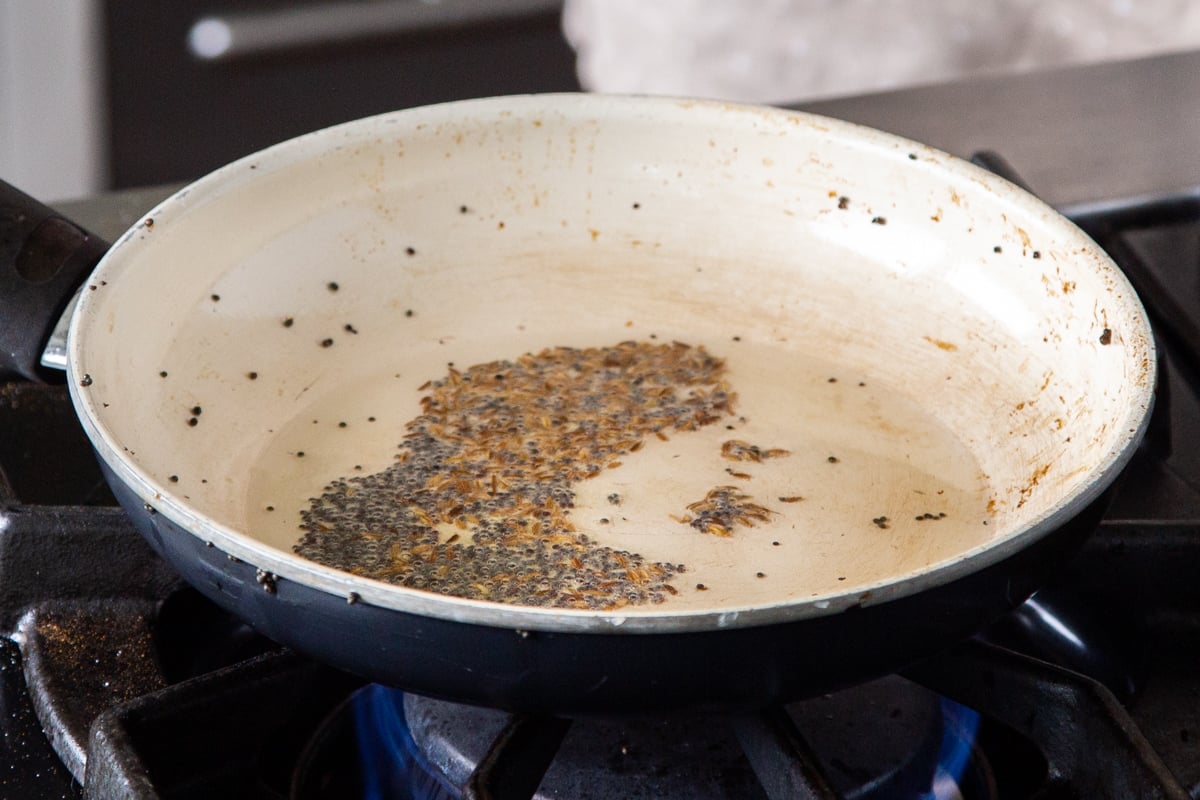
    • Make the tempering for sambar. Heat the oil in a small skillet. Once hot add the mustard seeds and then wait for them to start popping or change color. Then add curry leaves and red chilies and mix well. Then switch off the heat.

    • Add this tempering to 9 x 9“ or a similar size baking dish. Then add the rest of the ingredients under Sambar and mix well and even them out.

    • Cover the baking dish with the parchment and put it in a preheated oven at 400°F / 205c for 35 to 45 minutes. The exact time depends on the lentils used.

    • In the meanwhile, make the Rava idli batter: Heat the same skillet over medium heat , add the oil. Once the oil is hot add the mustard seeds and cumin seeds, and wait for them to change colors significantly. Add the curry leaves, and cashews and mix well then add the ginger and green chili and continue to cook for a minute. Then add in the semolina and continue to roast For 3 to 4 minutes or until fluffy and toasty. Then take off heat.

    • Transfer this mixture to a bowl. Add cilantro, baking soda, salt and mix in. Then add in the yogurt, lemon juice and water and mix in. Let’s sit for 10 minutes. If the batter has thickened too much then you can add another few tablespoons of water until mixture is a spreadable consistency.

    • Take the baking dish out of the oven. Then spread this semolina mixture over the stew and even it out. Then cover with parchment (important) and put it back into the oven for 11 minutes. Check as a 10 minute mark if the center is cooked through then take the dish out of the oven. Drizzle some lemon juice and cilantro on top and serve.

    Notes

    Make the sambar in the saucepan: Prepare the tempering in the saucepan over medium heat , then add onion and cook until translucent. Then add the rest of the ingredients, partially cover and cook for 20- 45 mins(depending on the lentils used) . Then transfer to the baking dish. Top with the idli batter, cover with parchment and bake.  Sambar masala substitute: use 2 tsp ground coriander, 1:/4 teaspoon cayenne and 1/4 teaspoon ground fenugreek or mustard 
    • To make this Nut free omit the cashews
    • To make this Glutenfree, use rice rava(coarse rice flour) or use a rice lentil idli batter.

    Nutrition

    Nutrition Facts

    Idli Sambhar Casserole

    Amount Per Serving

    Calories 225 Calories from Fat 54

    % Daily Value*

    Fat 6g9%

    Saturated Fat 1g6%

    Sodium 487mg21%

    Potassium 445mg13%

    Carbohydrates 35g12%

    Fiber 8g33%

    Sugar 4g4%

    Protein 10g20%

    Vitamin A 2032IU41%

    Vitamin C 85mg103%

    Calcium 64mg6%

    Iron 3mg17%

    * Percent Daily Values are based on a 2000 calorie diet.

    ingredients for making Idli Sambar casserole

    Ingredients:

    • sambar tempering: Mustard seeds, curry leaves, chilies, such a large cayenne or Indian
    • the sambhar is made with toor dal(split pigeon pea) or use moong dal or use split red lentils and you can also add some quinoa (optional)
    • veggies: chopped onion, tomato and veggies of choice
    • ground spices: ground coriander,  sambar masala, turmeric and cayenne
    • tamarind chutney or pulp lends the lentil stew its signature tanginess
    • For the second tempering (rava idli) we fry mustard seeds and cumin seeds in hot oil along with ginger, green chili  and curry leaves
    • for the idli base, we add chopped cashews and rava/sooji aka coarse semolina,
    • yogurt and lemon juice are added to bring the rava idli batter together
    • baking soda is added for the rise


    Tips:

    • if you cannot find fresh curry leaves you can use dried ones.
    • To make this nut free omit the cashews
    • to make this Glutenfree, use rice rava(coarse rice flour) or use a rice lentil idli batter.

    ingredients for making topping for idli sambar casserole dish

    How to make Idli Sambar Casserole:

    curry leaves and chili in a sauteeing pan

    Make  the tempering for sambar. Heat the oil in a small skillet.

    Once hot add the mustard seeds and then wait for them to start popping or change color. Then add curry leaves and red chilies and mix well. Then switch off the heat. The tempering is optional, but adds a lot of traditonal sambar  flavor

    chili and curry leaves in a glass casserole dish

    Add this tempering to 9 x 9“ or a similar size baking dish. Then add the rest of the ingredients and mix well and even them out.

    lentils being added to tempering in casserole dish

    Cover the baking dish with the parchment and put it in a preheated oven at 400°F / 205c for 35 to 45 minutes. The exact time depends on the lentils used.

    onions, lentils, tomatoes, and tempering in a glass casserole dish

    veggies being added to tempering in a glass casserole dish

    veggies in a glass casserole dish


    spices frying in a tempering

    In the meanwhile, make the Rava idli batter:

    Heat the same skillet over medium heat , add the oil. Once the oil is hot add the mustard seed, &  cumin seeds, and made for them to change colors significantly.

    spices, chili and ginger in a sauteeing pan

    Add the curry leaves, and cashews and mix well then add the Ginger and green chili and continue to cook for a minute.

    spices, semolina, ginger and chili in a sauteeing pan

    Then add in the semolina and continue to roast For 3 to 4 minutes. Then take off the heat.

    tempering and semolina in a frying pan

    dry mix for idli topping in a white bowl

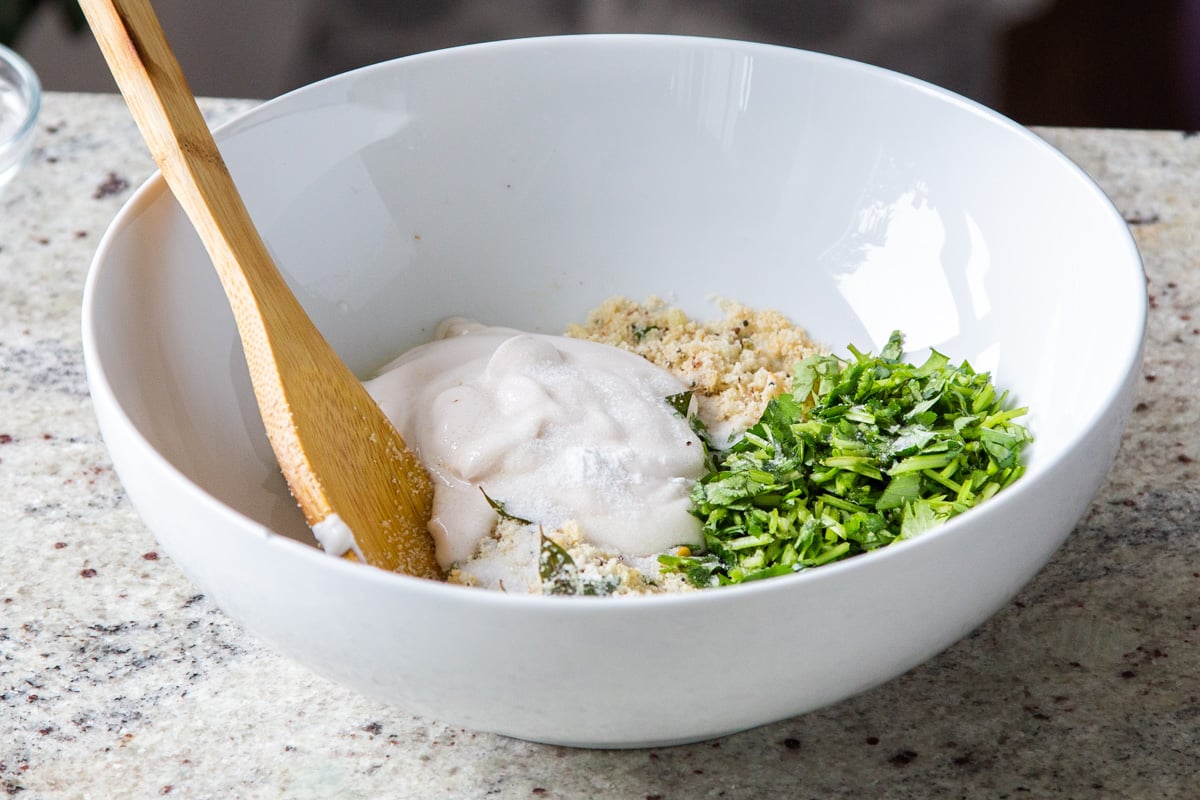
    Transfer this mixture to a large bowl. Add cilantro, baking soda, salt and mix in.

    yogurt being added to topping for idli casserole

    Then add in the yogurt, lemon juice and water and mix in. Let’s sit for 10 minutes and if it has thickened too much then you can add another few tablespoons of water until mixture is a spreadable consistency.

    idli batter in a white bowl

    Take the baking  dish out of the oven.

    sambar baked in a glass casserole dish

    Then spread this semolina mixture over just you and even it out.

    assembled Idli Sambhar casserole before baking

    Then cover with parchment(important)  and put it back into the oven for 11 minutes. Check at the 10-minute mark if the semolina is  cooked through then take the dish out of the oven. Drizzle some lemon juice on top and serve.

    freshly baked idli sambhar casserole on a kitchen counter with a plate with once square cut

    Alternatively, make the sambar in the saucepan:

    Prepare the tempering in the saucepan over medium heat, then add onion and cook until translucent. Then add the rest of the ingredients, partially cover, and cook for 20- 45 mins(depending on the lentils used).

    Then transfer to the baking dish. Top with the idli batter, cover with parchment, and bake for 11 mins.

    a serving of idli sambar casserole in a deep white plate

    Storage

    Slice and cover the baking dish to store refrigerated for up 3 days

    a square of idli sambar casserole on a white plate


    Credit: Source link

  • [RECIPE] Grilled Corn Avo Cream Pasta

    [RECIPE] Grilled Corn Avo Cream Pasta

    Looking for a different and tasty pasta recipe for your next meat-free Monday dinner?

    Try this flavoursome gluten-free Grilled Corn Avo Cream Pasta recipe.

    Ingredients

    • Grilled corn
    • Lifestyle Food Gluten-Free pasta
    • 1 ripe avocado
    • 200ml coconut milk
    • Handful fresh cilantro
    • ½ fresh lime
    • ¼ cup nutritional yeast
    • ½ tsp smoked paprika
    • ½ tsp ground cumin
    • Top with fresh herbs and edible flowers
    • Fresh avocado slices
    • Pine nuts
    • Water
    • Salt and pepper to taste

    Lifestyle Food Gluten Pasta makes it easier than ever to enjoy pasta night, even if you’re gluten intolerant. Made from 100% corn flour. Ideal for your favourite pasta salads, family Italian dishes and casseroles

    Method:

    1. Cook the pasta according to packet instructions. Drain and drizzle with some oil.
    2. In a high-speed blender add the avocado, coconut milk, cilantro, nutritional yeast, paprika, cumin, lime juice, salt and pepper and blend until smooth. Pour the sauce over the pasta and mix well.
    3. Add the grilled corn, avocado slices, herbs, edible flowers and pine nuts.

    The post [RECIPE] Grilled Corn Avo Cream Pasta appeared first on Fitness Magazine.

    Credit: Source link

  • Cheese and the Comparison Challenge

    Cheese and the Comparison Challenge

    Dairy is compared to other foods for cardiovascular (heart attack and stroke) risk.

    When studies funded by industries suggest their products have neutral health effects or are even beneficial, one question you always have to ask is, “Compared to what?” Is cheese healthy? Compared to what? If you’re sitting down to make a sandwich, cheese is probably healthy—if you compare it to bologna, but what if you compare it to peanut butter? No way. That’s the point made by Walter Willet, former Chair of Nutrition at Harvard, as I discuss in my video Friday Favorites: Is Cheese Harmful or Healthy? Compared to What?

     “To conclude that dairy foods are ‘neutral’…could be misleading, as many would interpret this to mean that increasing consumption of dairy foods would have no effects on cardiovascular disease or mortality. Lost is that the health effects of increasing or decreasing consumption of dairy foods could depend importantly on the specific foods that are substituted for dairy foods.”

    Think about what you’d put on your salad. Cheese would be healthy compared to bacon, but not compared to nuts. “For example, consumption of nuts or plant protein has been inversely associated”—that is, protectively associated—“with risks of coronary heart disease and type 2 diabetes; in contrast, intake of red meat has been positively associated with these outcomes. Thus, it is reasonable to assume that the lack of association with dairy foods…puts these foods somewhere in the middle of a spectrum of healthfulness, but not an optimal source of energy or protein…More broadly, the available evidence supports policies that limit dairy production and encourages production of healthier sources of protein and fats.”

    Willet wasn’t just speculating. His statements were based on three famous Harvard studies involving hundreds of thousands of men and women exceeding five million person-years of follow-up.

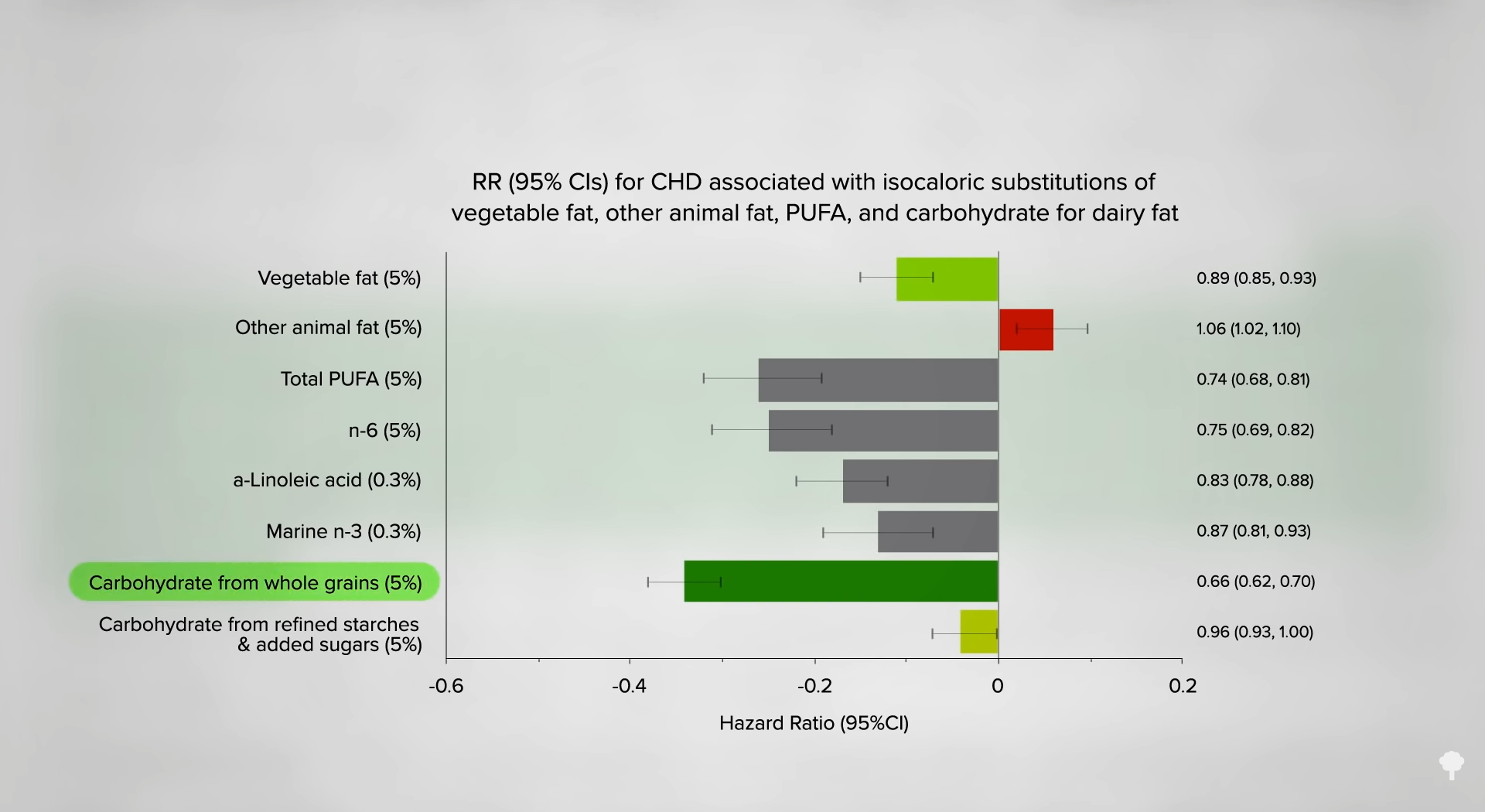
    What was learned in the first large-scale prospective study to examine dairy fat intake compared to other types of fat in relation to heart attack and stroke risk? Replacing about 100 calories worth of fat from cheese with 100 calories worth of fat from peanut butter on a daily basis might reduce risk up to 24 percent, whereas substitution with other animal fats might make things worse. You can see a graph showing how it breaks down for heart disease at 2:07 in my video. Swapping vegetable oil for dairy fat would be associated with a decrease in disease risk, whereas swapping meat for dairy increases risk. Calories form dairy fat may be as bad as, or even worse than, straight sugar. The lowest risk would entail replacing dairy fat with a whole plant food, like whole grains.

    Yes, “dairy products are also a major contributor to the saturated fat in the diet and have thus been targeted as one of the main dietary causes of cardiovascular disease (CVD),” the number one killer of men and women, but the dairy industry likes to argue that there are other components of dairy products, like fermentation by-products in cheese, that could counteract the effects of their saturated fat. This is all part of an explicit campaign by the dairy industry to “neutralize the negative image of milk fat among regulators and health professionals as related to heart disease.” If the Global Dairy Platform looks familiar to you, you may recall that it was one of the funders of the milk-and-dairy-is-neutral study, trotting out their dairy-fat-is-counteracted notion, to which the American Heart Association responded that “no information from controlled studies supports the hypothesis that fermentation adds beneficial nutrients to cheese that counteract the harmful effects of its saturated fat.”

    We need to cut down on dairy, meat, coconut oil, and the like, no matter what their respective industries say. In fact, that’s the reason the American Heart Association felt it needed to release a special Presidential Advisory in 2017. It wanted to “set the record straight on why well-conducted scientific research overwhelmingly supports limiting saturated fat in the diet.”

    Everything we eat has an opportunity cost. Every time we put something in our mouth, it’s a lost opportunity to eat something even healthier.


    Credit: Source link

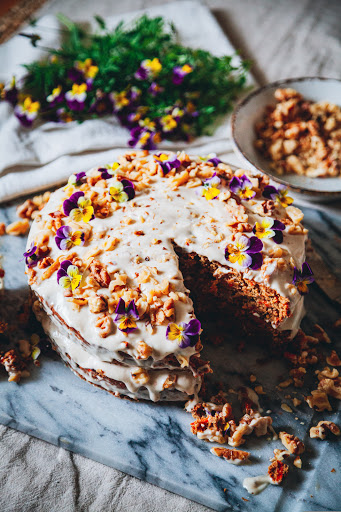
  • SPICED CARROT CAKE with CASHEW YOGURT FROSTING

    SPICED CARROT CAKE with CASHEW YOGURT FROSTING

    Hello! I have returned after a loooong hiatus! I’ve just been, you know, getting through this global pandemic and trying to take care of myself. These past few weeks have been really good for me, though, and I feel myself starting to get inspired again. The skies are opening up, and so is my spirit. So, there’s no better a time than now to share a wonderful recipe I have been working on.

    This is one of the most moist, decadent, nourishing carrot cakes I have ever eaten. It’s gluten-free, vegan (of course) and sweetened without refined sugars. It makes for an excellent breakfast cake, a snack anytime of day, and a dessert. The frosting is made with cashews and yogurt, so it’s super creamy and rich. Plus you get a probiotic boost from the yogurt. I just found out Liberté now makes a dairy-free yogurt and it’s SO GOOD. Vegan yogurt that is actually like yogurt is hard to find, but Liberté has done it. 

    Let me know if you try this recipe! I love to hear from you. Hope everyone has been staying safe (and home!) during this weird weird time. We will get through this… with carrot cake and community! 

    xo, em

    Spiced Carrot Cake with Cashew Yogurt Frosting (Gluten-Free, Vegan) 

    Makes 1 two-layer 9” cake; 9-12 servings

    Cake:

    2 ½ cups gluten-free flour (I use a blend of quinoa, almond, buckwheat, tapioca and white rice)

    1 teaspoon baking soda

    1 teaspoon baking powder

    1 teaspoon ground cinnamon

    ½ teaspoon ginger powder

    ¼ teaspoon ground nutmeg

    1 teaspoon sea salt 

    1 cup unrefined cane sugar

    ½ cup brown sugar

    3 flex eggs (3 tablespoons ground flax seed mixed with ½ cup water)

    ⅔ cup vegan yogurt (I love Liberté Dairy-Free Vanilla Yogurt)

    ⅔ cup refined coconut oil 

    ⅓ cup pineapple juice

    2 tablespoons apple cider vinegar (or lemon juice)

    3 cup shredded carrot (about 4-6 carrots)

    ⅔ cup finely chopped walnuts

    Preheat the oven to 350 degrees Fahrehnheit. Grease two 9” cake pans, or line them with parchment paper. In a large bowl, evenly mix together the flour, baking soda, baking powder, cinnamon, ginger, nutmeg and sea salt. In another medium bowl, evenly stir together the sugars, flax eggs, yogurt, coconut oil, pineapple juice, and vinegar or lemon juice. Add the wet mixture to the dry mixture. Add the carrot and walnuts and mix everything together until evenly combined. Scoop your batter into the cake pans. Bake for 30 minutes or until a toothpick poked in the center of the cakes comes out clean. Let cool on cooling racks, then gently remove from the pans.

    Frosting:

    1 ¼ cups cashews, soaked for 3 hours in water then rinsed 

    ¼ cup Liberté Dairy-Free Vanilla Yogurt

    ¼ cup refined coconut oil

    1-2 tablespoons apple cider vinegar (or lemon juice)

    2 tablespoons pineapple juice

    2 tablespoons brown rice syrup (or maple syrup)

    ½ teaspoon sea salt

    Blend all ingredients together until smooth and thick. Adjust according to taste (I personally like my frosting to be pretty tart). Store in the fridge for a few hours to let it thicken up more. 

    Assembly:

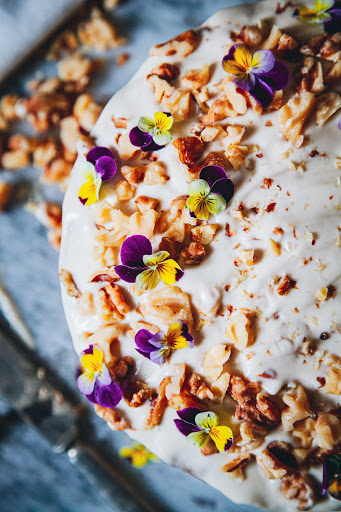
    Decorate your cake layers with the frosting and add extra chopped walnuts or flowers for a garnish. Store in the fridge. Eat within 5 days.

    Credit: Source link