Author: [email protected]

  • Thank You for Your Support!

    Thank You for Your Support!

    Thank you SO MUCH to everyone who has donated this month. I’m thrilled to announce that we unlocked the $100,000 match, and we are all so grateful for the donor who generously provided it. If you haven’t yet donated, there is still time to get your contribution in before the end of the year. 

    What we raise this month helps us plan for the year ahead, and we have a lot of exciting things in store, such as new webinars, a free email series on longevity (which will perfectly complement my book, How Not to Age, coming to you next December!), and, of course, the heart of our work, videos! New video topics will include updated research on collagen, fluoride, osteoporosis, and vaccines, just to name a few. 

    So, please support this work by making a donation in this final week of 2022. Thank you!


    Volunteer Spotlight: Dr. Alan Kadish

    Alan Kadish photo“As a Health Support volunteer, I address a number of questions posed by visitors to NutritionFacts.org. Although my participation is centered on the medical aspects of questions, I’m inspired by continually learning and integrating into my practice the newest science-based findings, which allows me to dive deeply into the nutritional and environmental roles that shape our health. The ‘why’ is easy, as NutritionFacts gives me an opportunity to influence a wide and growing audience who will reap health benefits. 

    As a physician at The Center of Health, I’ve been practicing what’s now known as ‘functional medicine’ for three decades. I approach medical challenges as a detective, using the full scope of options, especially emphasizing lifestyle, emotional, and physical concerns.

    My favorite WFPB dish is a stir fry. Bring on the various herbs, spices, and sauces, and I’m ready for a great meal.”


    Daily Dozen Challenge 2023

    At the start of the new year, we will relaunch the Daily Dozen Challenge to help even more people discover how easy it is to fit some of the healthiest of healthy foods into their daily routine. Keep your eyes out for the details in the next few weeks! In the meantime, download Dr. Greger’s free Daily Dozen app for your Apple or Android devices and follow us on Instagram and TikTok for inspiration and to see a few of our staff member’s challenges. Then join us to kickstart 2023 by building healthy habits.


    Now Hiring: Web Developer

    Now HiringWe are currently hiring for a web development position on our fully-remote team here at NutritionFacts.org. A complete job description and application can be found on our employment page. Please share these job openings with anyone who would be a good fit!


    Credit: Source link

  • THE POWER OF INTENTIONAL LIVING + MINIMALISM

    THE POWER OF INTENTIONAL LIVING + MINIMALISM

    Sweet readers! Salutations! I had a particularly powerful meditation on a recent morning. I was struck by the energy of inspiration to share my thoughts on minimalism and intention. I want to share these with you because for me, “minimalism” is not a simply matter of material possessions, or lack thereof. In this post I will discuss how living simply and intentionally benefits my psychological, spiritual, and emotional being. This will not be relevant to some. We are all on our own path. I recognize “minimalism” is not resonant – or accessible – to everyone. For as many of us humans as there are, there are that many ways to be. (This is a whole political discussion about access and power which I will get to in a later post. For now, you can google minimalism and privilege, if you like.)

    I have mixed feelings about the term “minimalism” because of how it has been appropriated by elite demographics. (I acknowledge my own level of privilege as I am in a stable housing situation, do not experience food scarcity, etc.) The term minimalism has sometimes come to denote a mere aesthetic that is practically as tied with consumerism as other lifestyles. I prefer the mentality and concept of intention over minimalism, since intentionality is what minimalism means for me. Refer to Oprah for more on intention (I adore her, aaaand speaking of privilege…) 


    I easily get wrapped up in the consumerism game of Keepin Up With The Jones’ and find myself placing my identity into the objects I possess. For example, if I don’t keep these earrings and wear them out one night, I won’t end up finding my soul mate!? They need to see I’m ~cool~ and the only way they’ll see that is if I have the earring! I AM THE EARRING!? AHH! My ego becomes bound to these objects, and my happiness becomes superficially dependent on material things, or certain people, behaviours, or thought patterns. What makes me ME is not the earring, not the thoughts, not the partner or friend, but my own spirit. My spirit is always with me, my spirit is all I need (along with food, water, shelter, nature documentaries, hot baths, chocolate,
    lesbian romance films… I do have some needs, okay.) Through intentional living, every thing I possess and choose to keep around me becomes more special.

    I have always been a highly sensitive person, so having less stimulation of most kinds is generally preferred. I favour basic colours, natural light, instrumental music, lots of space to breath, essential oils, and comfortable fabrics. I choose very intentionally the people I surround myself with, the cognitive patterns I engage in, and the behavioural patterns I act out. These aspects of my physical, emotional and psychological living space keep me grounded and calm, alleviating some of my challenges with neurodivergency. I experience less anxiety when I have a simpler environment. When I am surrounded by people/objects/practices I have specially chosen, I can more easily connect with feelings of gratitude and joy.

    The more I meditate, the more I am able to recognize I do not have to cling to preconceived ideas of what and who I am. This concept is connected to theories in certain sects of Buddhism, which tells us in order to find nibbāna, we must unbind from the pleasures and pains of life that are bound to the ego and individual self. I find great peace in the moments I know that my “self” is impermanent (anicca) and imagined (anattā). I do not have to compare my self to others, worry if I am [fill in the blank] enough, or be embarrassed or regretful about my future or past. This is incredibly powerful in the moments I can feel my place in the world as an immortal slice of energy, lucky enough to get a human experience for a few years. I am of the earth! 

    //

    Ultimately, having less stuff around me frees up space, time and energy to do and be more. That is intention and minimalism for me. Living simply brings my spirit enrichment, and brings me closer to what and who I am, because I have less distractions in my path. What I choose to keep becomes more sacred, thus I have more gratitude for it. I am surrounded by calm, and by what I truly love.

    //

    A couple final notes. 1) This process has been gradual and comfortable at pretty much every stage. I believe going at my own pace has been crucial to the sustainability of this lifestyle. Each time I choose to let go of something else, it feels right, and natural. I genuinely don’t need the thing anymore. I have no regrets or worries, because I truly understand the object/practice/relationship/identity is no longer serving me. I am happy to let go of these things, more than scared. Where I am now has been years in the making, arguably my whole life. I recommend moving at a pace that is comfortable and natural for you, if such movement is something you’re interested in at all! 2) As I write this post, I notice that I am allowing my identity to become a bit wrapped up in “big M” minimalism, wanting to be seen as a hip babe who meditates all the time and has transcended ego. Lol. No. Stay alert to where the ego goes! It wants to bind to everything, like a flax egg!

    I’d love to know: what is your relationship with intention and minimalism? Email me and comment below, if you like! Until next time, darlings…

    xo, 

    em

    Credit: Source link

  • Are Energy Drinks Beneficial? | NutritionFacts.org

    Are Energy Drinks Beneficial? | NutritionFacts.org

    What effects do Red Bull and Monster brand energy drinks have on artery function and athletic performance?

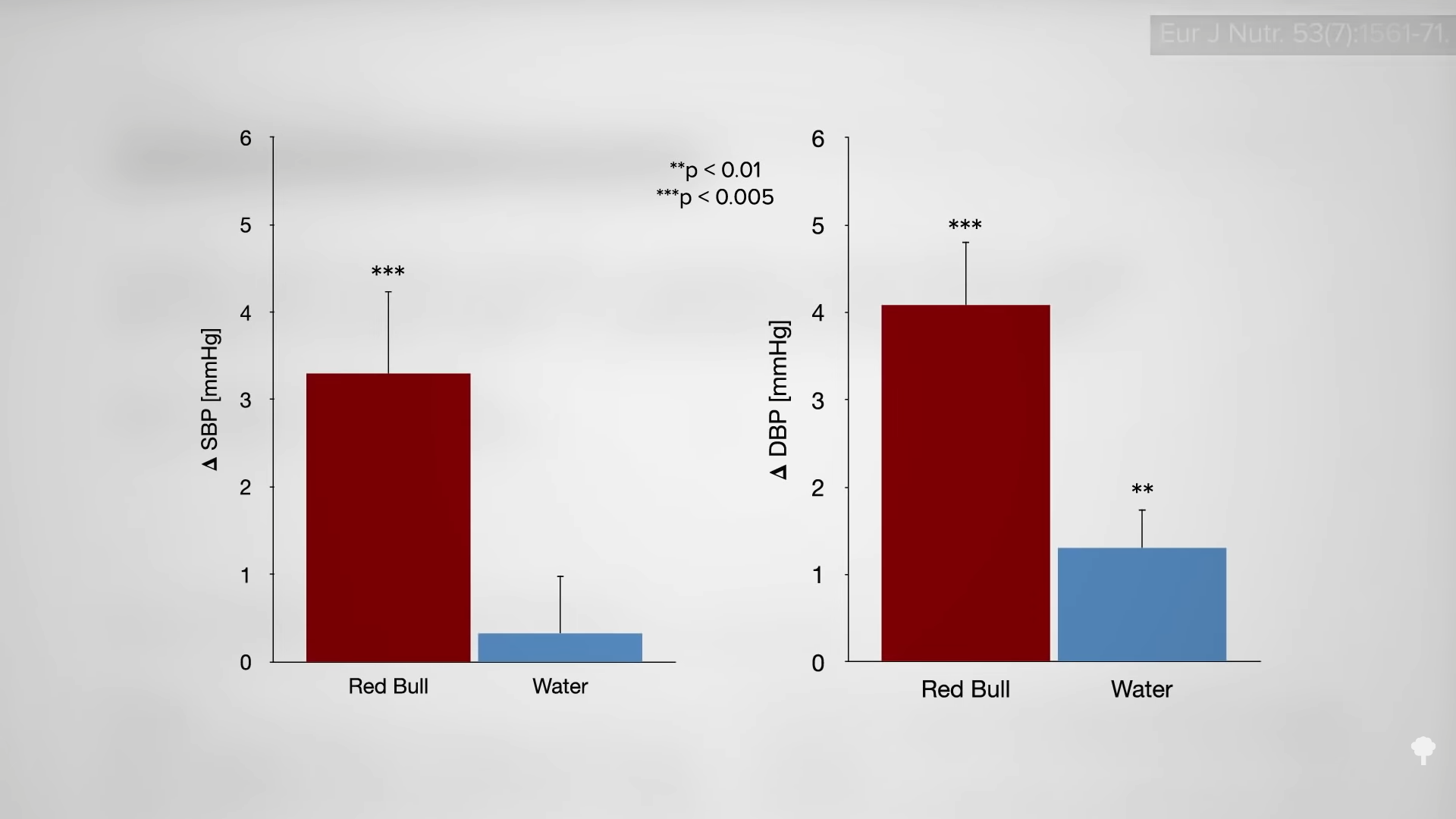
    Given the “global popularity” of the multibillion-dollar energy drink industry, it is critical we determine if the beverages have any “potential adverse effects,” as I discuss in my video Are There Benefits of Energy Drinks?. “There are currently more than 500 energy drink products available on the market” today. “The most popular, and the most studied,” is Red Bull. A single can has been found to bump up blood pressure by 3 or 4 points within 90 minutes of consumption, as you can see in the graph below and at 0:27 in my video. What about all the other energy drinks? Studies show they similarly increase blood pressure by 3 to 4 points on average.

    Is a 3- to 4-point bump really a big deal? I’d say so. If you have elevated blood pressure day in and day out, that bump means a 20 percent higher risk of dying from a stroke and a 12 percent higher risk of dying from a heart attack. Can Red Bull increase your day-long average blood pressure? Researchers put it to the test: “Comparison of the Effects of Energy Drink Versus Caffeine Supplementation on…24-Hour Ambulatory Blood Pressure.”

    The Food and Drug Administration imposes a limit on caffeine in soda. Energy drink manufacturers get around this by claiming their carbonated sugar water beverages are not sodas, but “natural dietary supplements.” Red Bull doesn’t have any more caffeine than a cup of coffee, but what are the effects of all of the other proprietary ingredients added to the energy drink?

    Researchers gave study participants four small cans of Red Bull or four cups of coffee, each containing the same amount of caffeine. Their blood pressures were measured over the course of the entire day. Even though the Red Bull contained the same amount of caffeine as the coffee, it resulted in significantly higher average blood pressure—about five points higher, compared to coffee. Is it the taurine or some other combination of added ingredients in energy drinks that makes them so harmful?

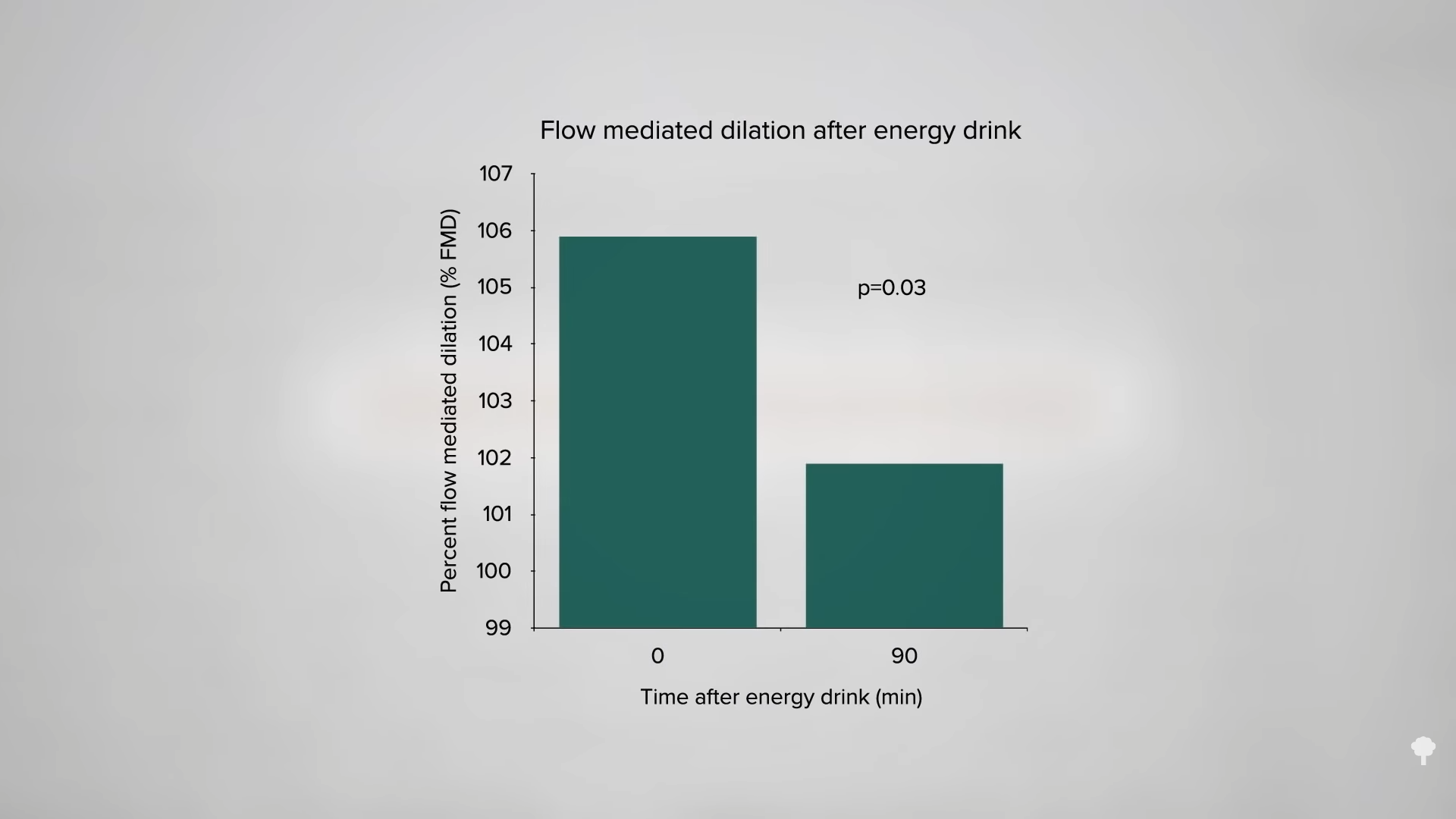
    Energy drinks may also impair artery function. As you can see in the graph below and at 1:55 in my video, drinking just one big can of Monster Energy has been shown to lead to a significant drop in our arteries’ ability to relax normally within just 90 minutes of consumption. The biggest risk, though, is likely the EKG changes that signal an increase in the risk of our hearts flipping into a fatal rhythm. There are cases of young people suffering cardiac arrest after consuming seven or eight cans in a row, or even just drinking three cans one after the other. Some people are just more susceptible. “There are a number of case reports in the literature highlighting multiple potentially fatal cardiac side effects from high-energy drinks in the general population, and the overall toxic effects of energy drinks are being reported more frequently.” But, at the highest risk are the families with a history of sudden cardiac death or fainting. Educating this population about the risks is even more critical, as energy drinks may unmask Long QT syndrome (LQTS), a potentially life-threatening genetic condition, which occurs in about 1 in 2,000 people.

    There are safety issues, certainly, but do the benefits outweigh the risks? Unfortunately, “little evidence exists in the literature to support beneficial effects of energy drinks.” What about for athletes? Energy drinks were originally marketed to them, and, boy, did that marketing work! Eighty percent of college athletes reportedly drink them. Do they help their athletic performance? Researchers determined that “preexercise energy drink consumption does not improve endurance,” but it does seem to increase inflammation! In a simulated 25-mile cycling road race, they could not find any athletic performance–enhancing potential for Red Bull above that of just sugar water and caffeine. In addition, the data indicated Red Bull “induced greater inflammatory-related responses” than straight caffeinated sugar water or placebo.

    It wasn’t a flop only for endurance sports; there was no apparent effect on resistance training either. Those hoping energy drinks will help rev up their metabolism to lose weight may be disappointed to learn you can get the same stimulatory effects with straight caffeine, though they may cheer up quickly when they realize black coffee or tea is much cheaper than cans of energy drinks.

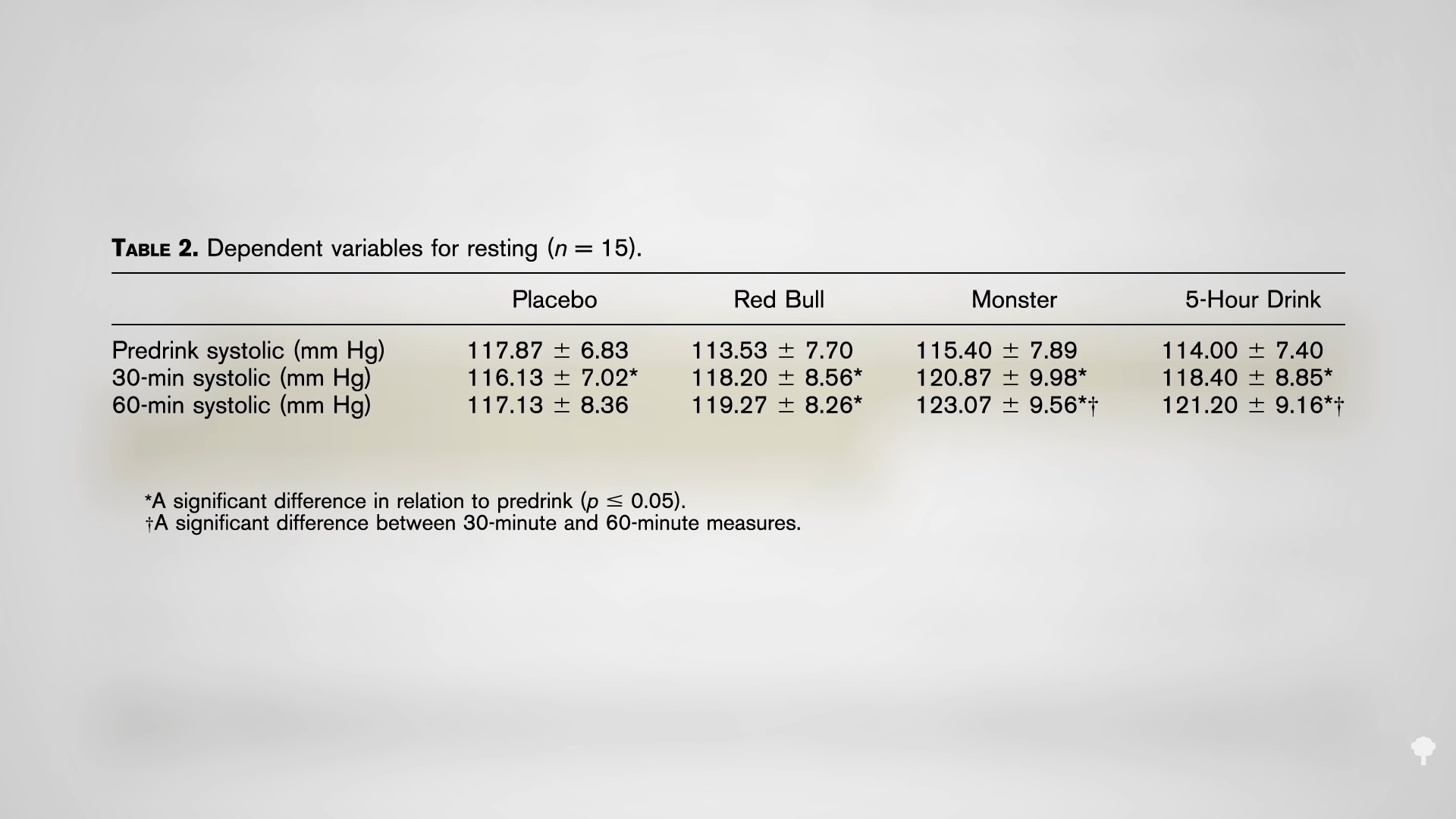
    No wonder there was no change in athletic performance: Unlike nitrate-rich vegetables, energy drinks don’t change oxygen utilization or ratings of perceived exertion. They do, however, raise your resting blood pressure, as you can see at 4:13 in my video. This is the opposite effect of vegetables, like beets and greens, both of which improve athletic performance and reduce blood pressure at the same time. “Energy drinks have no therapeutic benefit.”

    For more on this QT thing that I referenced above, see my video Are There Risks to Energy Drinks?. If you have questions about sports drinks, check out my video Are Sports Drinks Safe and Effective?.


    Credit: Source link

  • Plant-Based Foods May Slow the Spread of Prostate Cancer, Reduce Recurrence: New Study

    Plant-Based Foods May Slow the Spread of Prostate Cancer, Reduce Recurrence: New Study

    Eating more plant-based foods, such as fruits and vegetables, could help reduce the progression of prostate cancer and significantly decrease its chance of returning, according to new research from the University of California at San Francisco.

    Researchers led by Vivian Liu, a clinical research coordinator for the Osher Center for Integrative Health at the university, examined men who had already been diagnosed with prostate cancer and remained at risk for the cancer growing or returning following treatment. Liu and her team observed more than 2,000 participants to determine how diet might influence prostate cancer outcomes, finding that participants eating more plant-based foods displayed a 52% lower risk of disease progression and a 53% lower risk of recurrence compared with those whose diets contained the least amounts of plants.

    The Winter 2023 Issue
    is here!

    Our gorgeous “bookazine” features expert tips, inspiration, and 81 comforting recipes for Winter.

    Eating to Beat Prostate Cancer

    Prostate cancer is currently the second-most common cancer among men, with an estimated 288,300 new diagnoses and 34,700 deaths expected this year. Risk factors include age and certain gene mutations. Additionally, African Americans are disproportionately impacted by the disease. Despite the risks, Liu notes that this study provides evidence that men can protect themselves from prostate cancer with a simple dietary solution.

    “This is something men can do for themselves with a healthy grocery shopping list,” Liu told The Washington Post. “And it doesn’t require drugs or other medical interventions.”

    The researchers observed 2,038 men with early to midstage prostate cancer, observing how plant-based diets correlated with cancer survivorship by using data from the CaPSURE Diet and Lifestyle (CDL) sub-study. The plant-based sub-study research started in 2004 to allow researchers to track changes in prostate cancer patients. To conduct the study, the participants were asked to complete questionnaires about the foods they ate. Participants weren’t provided any information about the study’s designated purpose.

    Using the data, Liu and her team observed how dietary patterns affected prostate cancer recurrence and progression for a median period of 7.4 years. During the study period, only 10% of participants (204) experienced advances in prostate cancer, which Liu emphasizes is a low number. Liu also noted this study provides clear evidence that eating more plant-based foods offers significant benefits for those fighting prostate cancer.

    “While not all diets are equal in terms of modifiable risk factors for prostate cancer progression, we hope these results guide people at risk to make better, more healthful choices across their entire diet,” Liu said in a statement.“We’ve known that diets that include vegetables, fruits, legumes, and whole grains are associated with numerous health benefits, including a reduction in diabetes, cardiovascular disease, and overall mortality. We can now add benefits in reducing prostate cancer progression to that list.”

    The study was presented last week at the 2023 American Society of Clinical Oncology (ASCO) Genitourinary Cancers Symposium. The team aims to continue this research in the coming years. Liu plans to analyze how plant-based diets affect prostate cancer mortality rates and quality of life following a cancer diagnosis.

    Animal Products Associated With Higher Risk of Prostate Cancer

    This recent study joins a growing body of research showing that plant-based diets can help reduce cancer risks, whereas diets high in animal products significantly increase the risk of cancer. For example, a study published in The American Journal of Clinical Nutrition in 2016 found that men who followed a vegan diet had a 35% lower risk of prostate cancer.

    One study published in 2022 found that men who consume dairy on a regular basis have a 60% greater risk of developing prostate cancer than men who completely avoid dairy. However, dairy is not the only culprit. Several studies have linked the consumption of meat—and in particular, processed meat—with prostate cancer risk.

    Liu and her team’s research supports previous evidence that a healthier diet can slow or stop several types of cancer. A 2011 study showed that a low-fat, plant-based diet positively impacts survival rates for those diagnosed with breast, colon, skin, and prostate cancers.

    To learn more about a whole-food, plant-based diet, visit our Plant-Based Primer. For meal-planning support, check out Forks Meal Planner, FOK’s easy weekly meal-planning tool to keep you on a healthy plant-based path.

    Credit: Source link

  • CARROT BEETROOT CAKE with BUTTERCREAM FROSTING

    CARROT BEETROOT CAKE with BUTTERCREAM FROSTING

    Hello, friends! This cake is soft, sweet, creamy, moist and full of flavour. The recipe contains loads of micronutrients from oats, beets and carrots, and kind of reminds me of fancy scones.

    In celebration of Earth Day, let’s share plant-based treats with those we love, be conscious of where our foods come from, and grateful that we have the privilege of delicious food in the first place (for those of us who do, which is too few). We must also pause to recognize the harms being done to the earth and many of its inhabitants, our fellow humans and non-human animals alike. We can fight this systemic injustice by acting in solidarity with marginalized communities and organizations that are working to make this world fair, free and sustainable. We can go to the rally for transgender rights. We can give our money (back) to the local Black Lives Matter chapter. We can protest the lack of disabled-accommodating spaces. We can buy less from amoral companies, and more from local and ethical producers. We can eat less meat, and more plants. We can support small farmers and ethical production. We must stay aware of the privilege of having these choices, as always. We all deserve this right of choice, but not all of us have it.

    One Degree Organics is a wonderful example of a company that works from a foundation of environmental sustainability and transparent production. They are local to Metro Vancouver (Abbotsford) and have actual relationships with the
    organic, plant-based, small-scale farmers that supply their granolas, cereals, oats and other fine foods. I am very happy to be working with them for this recipe, as I’ve been enjoying their products before they ever got in touch with me about doing a sponsored post. They were the first company to market organic, gluten- and glyphosate-free sprouted oats, which I use in this recipe as a flour. Thanks to the sprouting, One Degree Organics oats are easier for the body to digest, and their minerals and micronutrients are more bioavailable.

    I wish you a plentiful and peaceful Earth Day, however you are spending it! Much love.
    em

    CARROT BEETROOT CAKE with BUTTERCREAM FROSTING
    Serves 12-16. Print the recipe.
    Prep time 30 minutes; bake time 20-25 minutes; total time ~2 hours.

    Cake:
    1 1/2 cups One Degree Organics Sprouted Rolled Oats
    2 cups shredded carrot
    1 1/2 cups shredded beetroot
    1 1/4 cups vegan milk
    1 cup brown sugar
    1/2 cup all-purpose white flour
    1/2 cup coconut oil, melted
    1/4 cup maple syrup
    1 Tbsp poppy seeds
    1 Tbsp vanilla extract
    1 tsp baking soda
    1 tsp baking powder
    1 tsp sea salt

    Frosting:
    2-3 cups powdered sugar
    1 cup vegan butter, softened
    1-2 tsps vegan milk, if necessary
    1/2 tsp lemon juice
    1/2 tsp vanilla extract
    1/2 tsp sea salt

    Add-ons:
    Berries
    Edible flowers

    To make the cake:
    Preheat your oven at 350 degrees Fahrenheit. Line two 9″ cake pans with parchment paper and coconut oil. Grind the oats into flour in a high speed blender. Mix together all the cake ingredients – including your ground oats – with a wooden spoon until you have a wet batter, slightly thinner than yogurt. Pour evenly into both cake pans and bake for 20-25 minutes, or until a tooth pick comes out clean once poked in the middle of the cakes. Let cool completely before frosting.

    To make the frosting:
    Using half the powdered sugar, whisk the ingredients together until smooth and fluffy. A stand mixer is ideal, or you can do this by hand with a whisk or wooden spoon. Add the remaining sugar and whisk until smooth and fluffy. If your frosting is too thin, add 1-2 teaspoons vegan milk. You have the option to mash in some raspberries for a pink frosting. You can do with with some or all of your frosting.

    Assembly:
    Frost the top of one cake, place your second cake on top, then frost the second cake, and the sides of the cakes, if you wish. Decorate with berries and edible flowers. Enjoy!

    This post is sponsored by One Degree Organics (thank you!) 

    All opinions and words are my own. 

    Credit: Source link

  • Is It Safe to Take Acid-Blocking Drugs?

    Is It Safe to Take Acid-Blocking Drugs?

    Do the benefits outweigh the risks of acid-blocker drugs, also known as proton pump inhibitors like Nexium, Prilosec, and Zantac? What about baking soda?

    Dyspepsia is the medical term for upset stomach. After eating, your stomach may hurt, you may feel bloated, nauseous, or overly full, or you may belch. “Despite the high prevalence of the disorder, there are no approved treatments” for dyspepsia in the Western world. As I discuss in my video Are Acid-Blocking Drugs Safe?, this leads people to seek out alternatives like baking soda, which a manufacturer promotes for use in upset stomach. The problem is that it contains sodium bicarbonate, so it “has the potential for significant toxicity when ingested in excessive amounts.” And, “issue of baking soda can result in serious electrolyte and acid/base imbalances.”

    Baking soda labels were modified in 1990 to include the warning “Do not administer to children under age 5,” “because of reported seizure and respiratory depression in children.” Even “a pinch” may be too much for an infant, and a few large spoonsful could be fatal for a child.

    Another new addition to the product’s label is the “stomach warning,” stressing the importance of not taking baking soda when overly full with food or drink. Why not? If you’re familiar with baking soda and vinegar volcanoes, popular at most every scholastic science fair, you understand the risk! It’s just like adding baking soda to the acid in your stomach. “This warning was added at the request of the U.S. Food and Drug Administration (FDA) because of multiple case reports of spontaneous gastric rupture”—that is, when stomachs actually burst.

    Exploding stomachs aside, just sticking to the suggested dose may still cause adverse effects. So, baking soda cannot be recommended for dyspepsia, especially for young children, pregnant women, alcoholics, and people on diuretics, which are common blood pressure medications sometimes referred to as water pills.

    What about acid-blocking drugs like Nexium or Prilosec? They work better than sugar pills, but not by much, helping 31 percent of dyspepsia sufferers compared to 26 percent helped by placebo. In other words, the drugs are 5 percent better than nothing! These so-called proton pump inhibitors “have also been extremely lucrative for the pharmaceutical industry,” raking in billions of dollars annually. But, we now have massive computerized databases of patients, so we can start to evaluate their possible long-term adverse effects, including increased pneumonia, bone fractures, intestinal infections, heart disease, kidney failure, and even all-cause mortality. “The latest concern to surface has been the association between PPI [proton pump inhibitor] use and risk of dementia”!

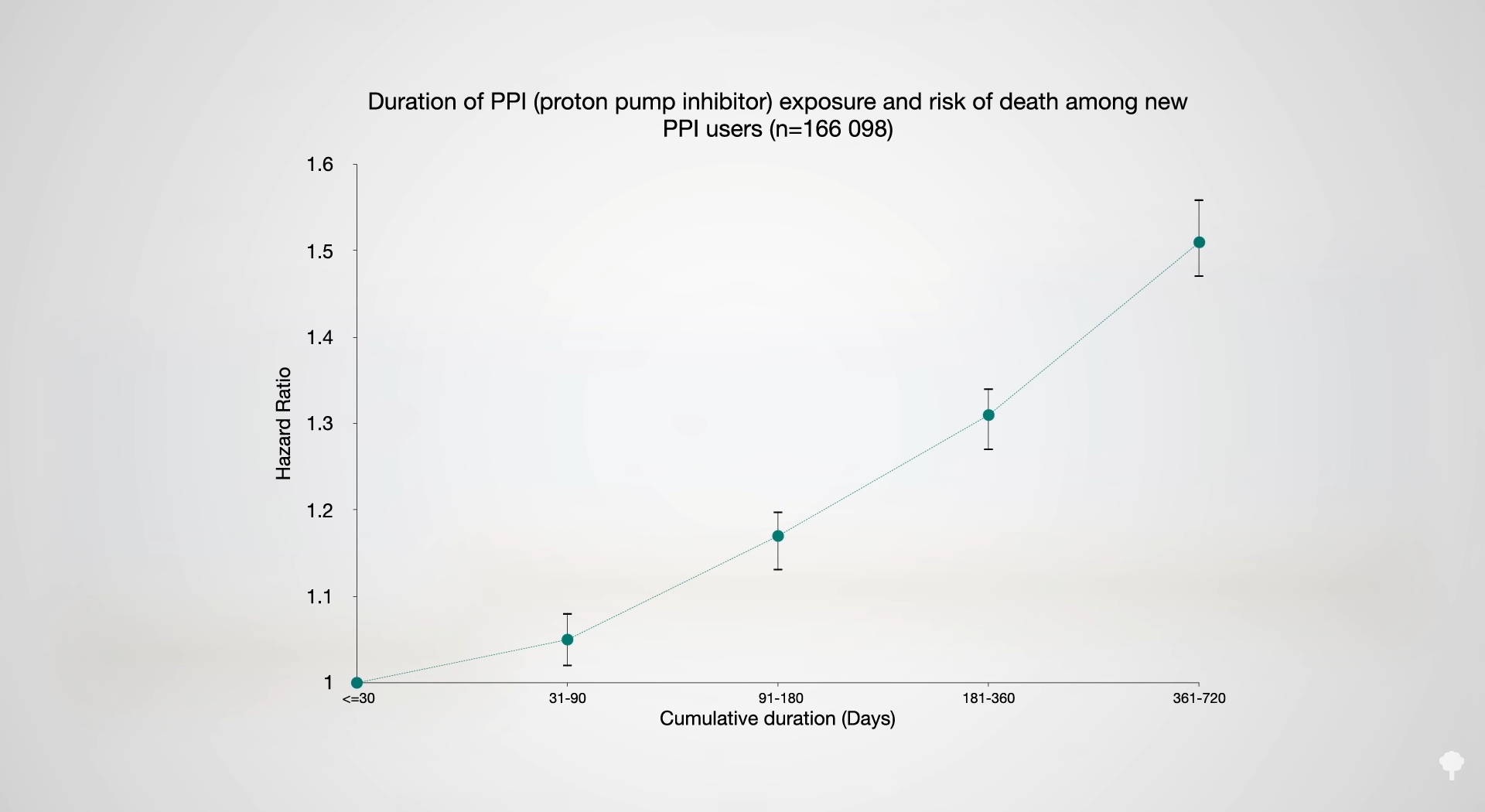
    The problem with all of these studies just showing “associations” is they don’t prove cause-and-effect. Maybe taking the drugs didn’t make people sick. Maybe being sick made people take the drugs. Or, maybe these drugs are not the cause of these infections, fractures, death, and dementia. Maybe they are markers for being sicker. There are potential mechanisms by which these drugs could have some of these effects. As you can see at 3:00 in my video, the longer people are exposed to the drugs, the higher their apparent risk of dying prematurely. How could suppressing acid production in the stomach increase mortality from a cause like heart disease? Well, suppressing acid isn’t the only thing these drugs do. They may also a reduction in nitric-oxide synthase, the enzyme that makes the “open sesame” molecule that helps keep our arteries healthy.

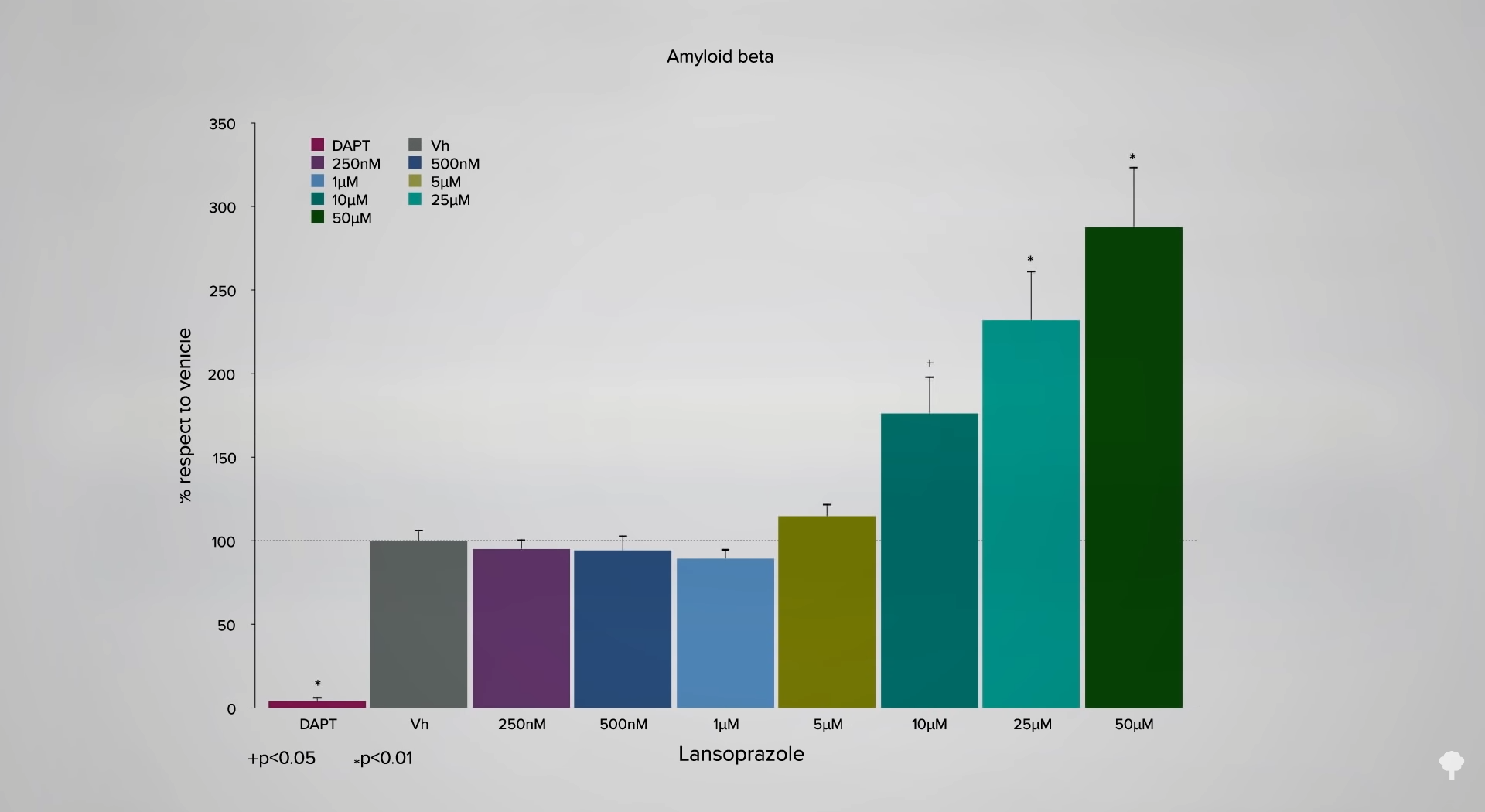
    In terms of dementia, a key event in the development of Alzheimer’s disease is the accumulation of sticky protein plaques called amyloid-beta. If you put Alzheimer’s-like cells in a petri dish and drip on increasing levels of the drug Prevacid, the diseased cells start churning out more amyloid. The same occurs with Prilosec, Losec, Protonix, and Nexium, as you can see at 3:39 in my video.

    Just because something happens in a petri dish or a mouse model doesn’t mean it happens in humans, though. That is certainly true, but most studies to date have found this link between “an increased risk of dementia with the use of PPIs,” these proton pump inhibitor drugs. The largest such study to date, involving tens of thousands of patients, concluded that avoiding the chronic use of these drugs “may prevent the development of dementia.” An alternative explanation of the link is aluminum exposure, which itself may play a role in dementia. Maybe people using acid-blocking drugs have heartburn and use more aluminum-containing antacids, which are the actual culprit? We still don’t know.

    We do know, however, there is “an almost cultish faith” in stomach-acid suppression as some kind of medical panacea, which “has led to a progressive escalation of PPI dosage and potency,” while mounting evidence suggests the drugs “are associated with a number of adverse effects and are overprescribed.” How overprescribed? The “rate of inappropriate use of these drugs is on average above 57% in patients admitted to general medical wards and 50% in patients managed in the primary care setting,” so about half. Half of the people on these drugs shouldn’t even be on them! “These rates are very high and worrying, because they mean that PPIs are prescribed for indications other than those recommended by expert consensus statements”—that is, for conditions they shouldn’t even be prescribed for, meaning there are no proven benefits to outweigh the risks.

    I explore dyspepsia further in my video Flashback Friday: The Best Diet for Upset Stomach.


    Credit: Source link

  • This Rawsome Vegan Life: VISIONS OF EARTH: HAWAI’I

    This Rawsome Vegan Life: VISIONS OF EARTH: HAWAI’I

    I recently had the privilege of visiting the island of Maui, part of the nation of Hawai’i. In this post I will be sharing some photos I captured, as well as the diary entries I wrote during my time there. Thank you, as always, for reading! xo

    I firstly need to address that Hawai’i is a U.S.-occupied state, and is in reality a sovereign realm unto itself. Like the rest of Canada and America, these lands are colonized. I am a settler of European descent. I walk these lands as a colonizer, no matter how much I commit myself to the work decolonization. I own this identity and I aim to keep it at a the forefront of my actions when I interact on unceded territories. I am still unsure if travelling around these spaces is even appropriate. When I do, I try to keep my footsteps gentle, return resources that were stolen, and help those who are already doing that work. This might look like donating money or time to indigenous rights organizations and movements, and boycotting businesses and organizations that profit of anti-indigenous sentiments and pro-colonial structures. Onto the trip.

    The island welcomed me with lush greens, double rainbows, windy beaches, wild birds, friendly faces, and – thank Goddess – cheap and GOOD inari nigiri at every 7-11. I did a lot of lying around, walking around, and sitting around in gratitude and awe. Diary entries follow, below.

    April 8

    Our plane was delayed to tomorrow. We found this out once we got to the airport. Oops. 

    April 9

    Our plane was almost empty. A gift. Maui: Beautiful small homes covered in vines. Roosters everywhere. Humid, very humid air, and salty, fresh ocean waves. This is “America,” but not really? What are borders for, and what do they mean? Who gets to decide?

    April 10

    Drove to get groceries and find a beach. We were not especially satisfied with either excursion. Groceries were expensive and the beach area was crowded. We did eventually find a lovely family-friendly park. Did some stretching and sun-gratitude. I think I saw a turtle in the ocean. Instant noodles for dinner… too spicy for me. 

    April 11

    Got our rental car. Drove to ‘Īao State Park while we listened to Janelle Monae. Beautiful monsteras everywhere, and rushing river water through misty forested mountain tops. Which embodied souls roamed these valleys before we? What feelings ran through their bodies as this river runs through the trees?

    April 12

    Drove up to Haleakalā in the mists and rain, hiked the Waihee Ridge Trail, ended up at Baldwin Beach Park. A beautiful day. Later drove on the road to Hana at night while blasting Robyn. This place is breath-taking. Ancient. Wise. These mountains have been here for an eternity and beyond, while I am a temporary bird floating through. Yet still, these lands are their own sort of momentary spark when held up to the light of the universe. All is in/finite and in wonderful, inexplicable motion, is it not?

    April 13

    Long story short: we got out of a sketchy hostel situation and stayed with friends Amber made. They are a married ex-Mormon couple, with charismatic daughters, one cat and one dog. Lovely and generous people in a sweet neighbourhood. So grateful. I feel I am just beginning to settle into the energy here, and of course we fly home in a couple days. 

    April 14

    Finally had our lazy beach day back at Baldwin, then danced in our field surrounded by warm wind and an empty beach. I burned my shoulders a little. 

    April 15

    I am in the middle seat in the middle row at the back of the plane. Not being able to see out the windows makes me feel I’m in a loud tube that might not be moving at all. I’m not really excited to go home, because it means going back to school, work, and maintaining social relationships. I am most interested in spending more time alone and meditating. I am doing what I am doing now, though, in order to make that interest reality, in time. In time.

    Credit: Source link

  • Top 10 NutritionFacts.org Videos of 2022

    Top 10 NutritionFacts.org Videos of 2022

    We create more than a hundred new videos every year. They are the culmination of hundreds of hours of researching, writing, animating, editing, and producing. We comb through thousands of scientific papers from the peer-reviewed medical literature so that busy people like you don’t have to. 

    In 2022, I covered topics from athletics and atrial fibrillation to vitamin supplements and wrinkles. Which videos floated to the top of the charts this year? Check out the top ten.


    #10 The Purported Benefits of Vitamin K2: Should You Take Supplements?

    Vitamin capsules on dark backgroundThis video just came out and has already become one of the most popular of the year. To summarize, there is no good evidence that vitamin K has bone, brain, or heart benefits beyond its blood-clotting function. And, even if such evidence arose, we can get all of the vitamin K we need from eating greens, since there’s no requirement specifically for vitamin K2. Further, if some evidence did arise that there was some unique benefit from K2, our microbiome makes K2 from the K1 we get from greens. And, even if we had a problem with our microbiome, we can make K1 from K2, just like other animals do. So, the bottom line: Eat your greens.


    #9 How to Treat H. Pylori Naturally with Diet

    fresh broccoli sprouts in a spoon over clothThis video asks and answers the question: What food can eradicate H. pylori in the majority of patients? For some background on the Achilles’ heel in certain Asian diets, check out The Role of Kimchi and H. Pylori in Stomach Cancer.


    #8 Food for Hair Growth

    roasted pumpkin seeds on cloth over black surfaceThis video captured the eighth spot in our top ten, but I also covered Supplements for Hair Growth and Pills for Hair Growth in case you want to take an even deeper dive. Note I added a correction to the pepper information in the table around minute 2:40. As our new in-house video fact-checker just pointed out, the mg/g values for capsaicin weren’t for regular fresh peppers, but fresh peppers that were then dried! So, it’s a little more daunting. Instead of “a quarter of a fresh jalapeño,” it’s more like “a third of a habanero or a teaspoon of medium-hot red pepper spice.”


    #7 Do Vitamin C Supplements Help with Anxiety?

    Yellow supplement pillsA few months ago, the acclaimed U.S. Preventive Services Task Force published a recommendation to begin screening kids for anxiety starting at age eight. I’m planning to create an entire series of videos next year on dealing with anxiety, but until then, check out this video discussing the risks and benefits of using vitamin C for depression and anxiety.


    #6 Glycemic Index of Potatoes: Why You Should Chill and Reheat Them

    cooked potatoes in a potIf you eat potatoes when they’re cold, as in potato salad, or chilled and reheated, you can get a nearly 40 percent lower glycemic impact. Chilling isn’t the only trick to blunting glycemic impact. You can also add vinegar, lemon, or broccoli. See How to Reduce the Glycemic Impact of Potatoes for more information, and, if you’re in a particularly spuddy mood, check out these others from last year: Do Potatoes Increase the Risk of Diabetes?, Do Potatoes Increase the Risk of High Blood Pressure and Death?, and The Healthiest Type of Potato.


    #5 How to Heal a Leaky Gut with Diet

    High fiber super foods with whole grain crackers, fruit, vegetables, whole wheat pasta, grains, and nutsIn this video, which took fifth place in our top ten, I address the foods and food components that can boost the integrity of our intestinal barrier. If you missed the backgrounder video, check out Avoid These Foods to Prevent a Leaky Gut, in which I talk about the over-the-counter drugs and diets that make things worse.


    #4 Which Foods Are Anti-Inflammatory?

    spice and herb collection in bowls and spoons on a black wooden backgroundA whole food, plant-based diet is basically synonymous with an anti-inflammatory diet, whereas inflammatory markers can double within six hours of eating a pro-inflammatory meal, which I cover in the companion video Foods That Cause Inflammation. This may help explain the remarkable findings in another popular video this year: Plant-Based Eating Score Put to the Test. So, Why Don’t People Eat Healthier? That’s another one of my favorites released in 2022!


    #3 The Best Diet for Treating Atrial Fibrillation

    Blue illustration of circulatory systemThis important video is a long time coming, addressing which foods we should eat and avoid to reduce our risk of Afib. It’s chock full of information and ends with a compelling and emotional case report of the power of evidence-based nutrition to reverse disease.


    #2 Fighting the Ten Hallmarks of Cancer with Food

    Plant foods high in fiber with whole wheat pasta, nuts, fruit and vegetables on a rustic backgroundAs you may know, I’ve been researching and writing a new book on longevity. After it’s been put to bed, edited, fact-checked, copyedited, and published, and I’ve completed my book tour, my next book will be on cancer survival; so, there will be a lot more forthcoming on this critically important topic. Until then, I have dozens of videos on cancer prevention and treatment, including a mind-blowing series on chemotherapy released this year that asked and answered the questions: How Effective Is Chemotherapy? and How Much Does Chemotherapy Improve Survival?.


    #1 The Best Diet for Healthy Aging

    Assortment of vegetables, dried beans, and berries2023 is the year my new book How Not to Age will be released. It’s heartening that there is so much interest, as evidenced by this video reaching number one, as well as the popularity of two other 2022 hits—How to Boost FGF21 with Diet for Longevity and How to Increase Your Life Expectancy 12 to 14 Years. And these just scratch the surface.

    I can’t wait to share everything else I’ve uncovered!


    Credit: Source link

  • ICED LATTE & VANILLA ICE CREAM FLOAT

    ICED LATTE & VANILLA ICE CREAM FLOAT

    Yep. This is a magical mix of rich, roasted brew and sweet, melty ice cream. I am delighted by the way the two components balance one another to create a perfect taste experience. This recipe hits the spot on hot summer days. I use Dandy Blend instead of coffee (it is DELICIOUS and caffeine-free), but you do you, babe. If real coffee is your preference, use real coffee. Dandy Blend is not sponsoring this post and – sad face – they’ve never even gotten in touch with me about working together. (HINT HINT DANDY, PLZ EMAIL ME!!) I am simply a big fan of their product. 

    In other news, I have some recommendations! I do not know if any who reads my blog even cares, but I can’t help sharing what I’ve been loving. 

    – Grilled sandwiches with lots of vegan cheese, meat, mayo and greens

    – Metta (aka Loving-Kindness) meditations, lets me be my higher self

    – Slowing down my mornings, really enjoying the smell of my tea and the way the sun light hits my floor

    That’s it for now, darlings. Talk soon! x

    //

    ICED LATTE & VANILLA ICE CREAM FLOAT
    Serves 1.
    Print the recipe.

    • 1-2 scoops vegan vanilla ice cream (I use Coconut Bliss)
    • 1 cup water
    • 1/4 cup vegan milk (I prefer homemade, or Barista-quality soy milk)
    • 1 1/2 teaspoons Dandy Blend
    • 1 teaspoon maple syrup
    • 1/2 teaspoon vanilla extract
    • 3 ice cubes

    Blend or whisk together the water, Dandy Blend, milk, maple syrup and vanilla extract until smooth (I use an electric latte whisk and it makes a wonderful foam). You can use any temperature water at this point; just make sure the mixture is room temperature or colder when you use it in the next step.

    Put the ice cubes in a glass, then pour in your Dandy Blend mixture. Scoop the ice cream on top, and enjoy! Best to drink before the ice cubes melt.

    Credit: Source link

  • Explore African Cuisines with Chef Marie Kacouchia

    Explore African Cuisines with Chef Marie Kacouchia


    In your experience, how have you found food to tell a story and shape culture?

    Food is both created by history and creates history. Cuisines are created by history because they mix with invasions and population movements. It shows the movements of people and the introduction of new ingredients, cooking methods, and recipes. Sometimes these cuisines are impoverished–think of the globalization of cuisine and fast foods–but often they come out richer. In my book Vegan Africa, for example, I highlight the Indo-Chinese influence on the cuisine of East Africa and the Lebanese influence on all of West Africa. These result in unique dishes that are consubstantial with the history of these parts of the world.

    On a personal level, the way we eat says a lot about who we are, where we come from, and all of the people who came before us.

    And, finally, cooking creates history because it brings people together. It creates bridges between people through commonality. In fact, it is often the first introduction we have to another culture.


    How do you educate people about the intersection of food, history, health, and culture?

    This book is the materialization of my personal journey. As a young adult, I began to question my identity and naturally my relationship with food was at the center of this reflection. I made the work of becoming more intentional about food because it plays such a big part in our lives. I began to ask myself more systematically: Why am I eating what I am eating? How was this food produced? By whom? How can I live fully without inflicting suffering on other beings? And, finally, How can I reclaim my ancestral culinary heritage?

    I wanted to share the fruit of my research to shed light on African cuisines and to encourage others to want to know and appreciate them better. I hope to inspire others to see food for what it is: a sacred fuel for our bodies and a central component of our identity.


    Please tell us a little bit about your cookbook Vegan Africa. What countries and cultures are highlighted in it?

    Africa is a huge continent and the culinary cultures are very diverse. With my book, I humbly wanted to represent the whole continent, from North to South and from East to West. Vegan Africa includes recipes from Ivory Coast, Senegal, Mali, South Africa, Ghana, Kenya, and many other countries! It is, of course, more of an initiation or, as I like to say, an invitation to discover these rich African culinary cultures. During the writing of the book, I had the pleasure of exchanging recipes with many people from different African countries, and they entrusted me with recipes from their countries of origin.

    In addition, some of the recipes in my cookbook are my own creations, the result of my travels and my experiments, such as Cassava Tabbouleh with radishes and Herbs and Red Cabbage Salad with Mango and Raw Okra. My book is also full of personal anecdotes, cooking tips, and family cooking secrets.


    As a chef, what do you envision as the way forward to encourage people to include more fruits and vegetables into their diets?

    Often, fruits and vegetables are seen as boring side dishes. We need to reverse this narrative and really put them back at the center of the plate. I believe this necessarily involves education. We have to make people aware of the need to eat a nutrient-dense diet for good health. I am also convinced that it involves kindness and curiosity. Often, people are resistant to change because they are afraid of changing their routines. That’s why, in my cooking, I make it a point of honor to use ingredients that are accessible everywhere and by nearly everyone. Then I try to show that with a few spices, it is possible to totally transform everyday foods and give them a new dimension. For example, the next time you cook carrots, why not try roasting them instead of boiling them? And have fun with flavors! Try citrus zest, cumin, sumac, cardamom, ginger, or smoked paprika. Open up the field of possibilities.


    Please tell us a little bit about your work and career.

    By day, I work in the health and wellness sector. I help companies whose mission is to help people take care of themselves to improve their Customer Experience. In addition to this, I run workshops and cooking classes.

    I am also occasionally a chef for individuals and companies for very intimate dinners. And on top of that, one thing I never stop doing is developing new recipes that I share on my Instagram account @thespicysoul.

    I have a very holistic approach to health, and bringing wellness to others is what motivates everything I do.


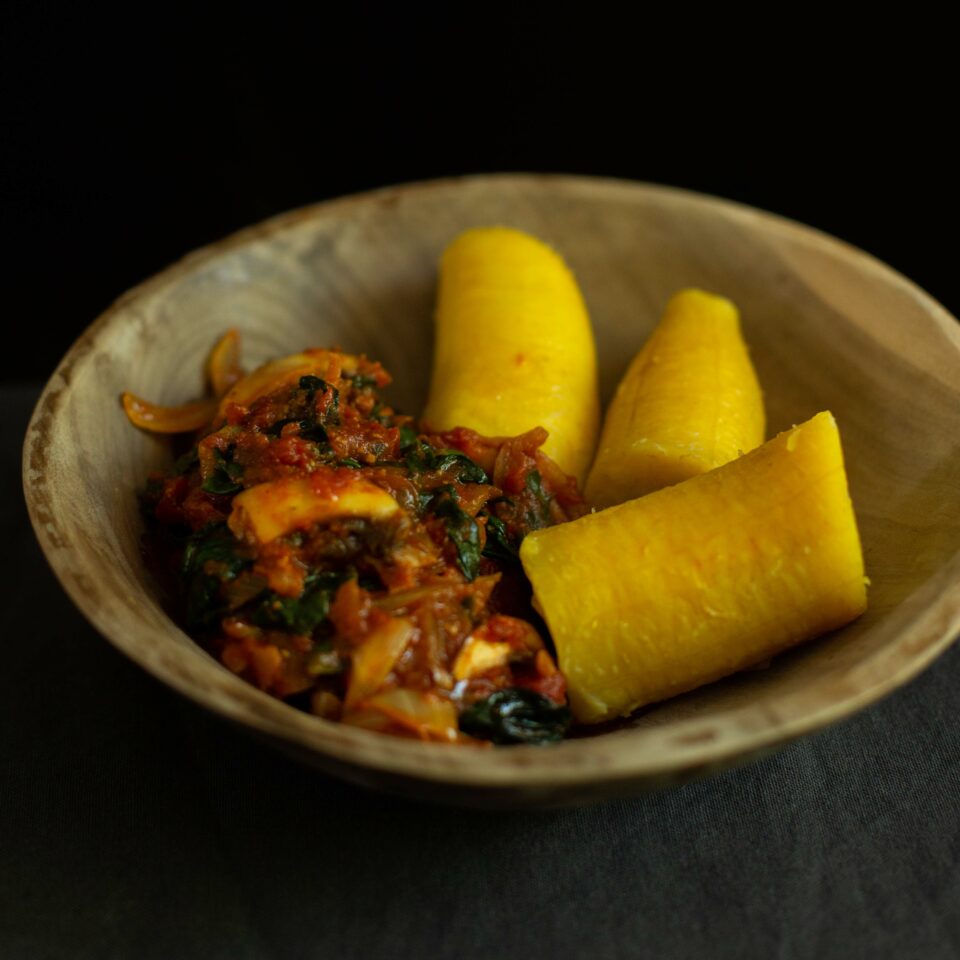
    Sautéed Spinach and Mushrooms with Plantains

    SERVES 4 ✦ PREP TIME: 15 minutes ✦ COOK TIME: 35 minutes

    Dishes made with leafy greens are very popular in sub-Saharan Africa, particularly in South and Central Africa. Any leafy green will do—such as taro, cassava, sorrel, or sweet potato leaves—but here I opted for spinach leaves since they’re easy to find in most parts of the world.

    2 tablespoons water
    1 onion, chopped
    4 tomatoes, diced
    8 ounces (225 g) button mushrooms, chopped
    31⁄3 pounds (1.5 kg) fresh spinach
    1 tablespoon curry
    1 teaspoon smoked paprika
    2 teaspoons garlic powder
    Black pepper (to taste)
    4 firm plantains, peeled and cut into large chunks


    1. Heat a large pan over medium heat. Add the water and onion, and cook until the onion is translucent, about 5 minutes. 
    2. Add the tomatoes, and cook for about 5 more minutes, stirring regularly.
    3. Add the mushrooms, and stir to combine. 
    4. Gradually add the spinach, stirring until it wilts.
    5. Stir in the curry, smoked paprika, garlic powder, and black pepper (to taste). Bring to a simmer, cover, and cook, stirring occasionally, until thickened, about 10 minutes. If the mixture sticks to the pan, stir in a splash of water.
    6. Meanwhile, place the plantains in a large pot, cover with water, and bring to a boil. Cook until easily pierced with a fork, about 15 minutes.
    7. Serve the spinach and mushrooms along with the plantains.

    TIP: The greener the plantains, the less sugar they have. To steam the plantains, make a small cut halfway through each piece. Place in a steamer, and steam until easily pierced with a fork, about 10 minutes.

    You can find Chef Marie Kacouchia on Instagram @thespicysoul


    Credit:
    Source link