



If you’re struggling with the stress of juggling work deadlines and family logistics, or experiencing the first hints of midlife brain fog, you want to some cognitive support to get you through your day.
Lion’s mane is an edible medicinal mushroom with a growing research base to support its potential health and cognitive benefits.
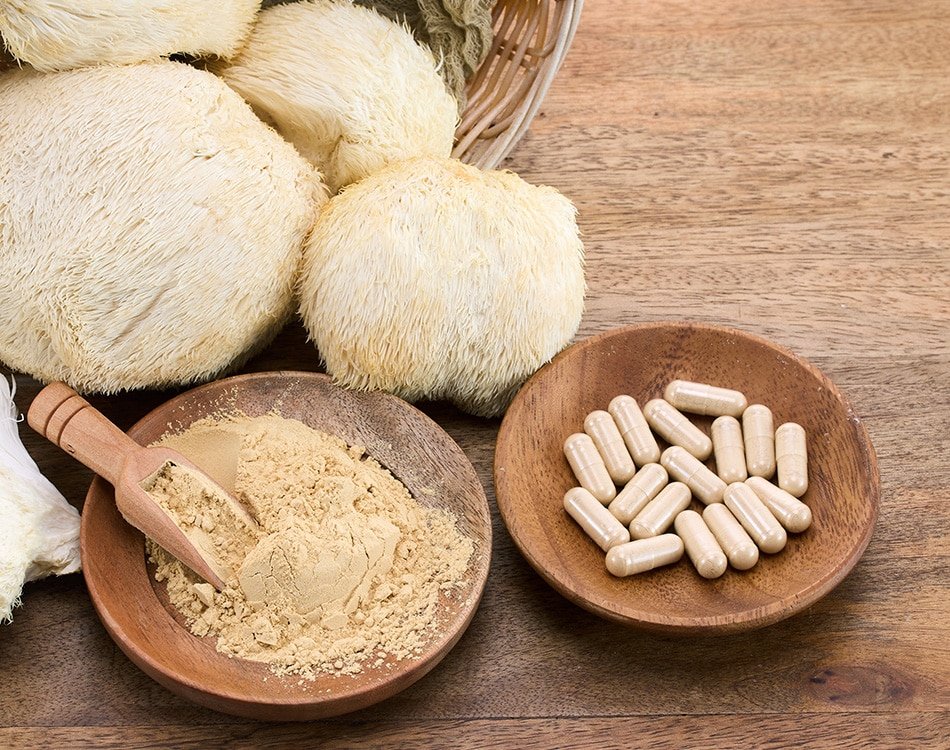
Lion’s mane mushrooms grow in shaggy white clusters on hardwood trees, looking more like a frozen waterfall than a typical cap-and-stem mushroom.
As fresh lion’s mane mushroom is hard to find in South African supermarkets, so most people take it in supplement formas capsules or powder.
It’s often grouped with nootropics, a loose term for ingredients that may support mental performance, although it works nothing like caffeine.
READ MORE | Are you a fungi fanatic? We unpack the mushroom mania nutrition trend
Lion’s mane benefits
Much of the interest in lion’s mane comes from its effect on NGF in laboratory and animal research. A review in the Journal of Agricultural and Food Chemistry1 describes how hericenones and erinacines supported NGF production in cell studies, and also discusses the mushroom’s beta-glucans and antioxidant activity. These findings explain why researchers keep studying it.
While studies conducted exclusively on women are limited, one such trial is a small Japanese study published in Biomedical Research2.
It followed 30 women who ate cookies containing lion’s mane or a placebo for four weeks. Those in the lion’s mane group reported lower scores for irritation and feelings of anxiousness than the placebo group.
It may also help improve memory in later life. A double-blind trial in Phytotherapy Research3 gave about 30 men and women aged 50 to 80 with mild cognitive decline 3g of lion’s mane powder a day for 16 weeks.
The lion’s mane group scored higher on a cognitive function scale than the placebo group, but scores fell again within four weeks of stopping.
For women who aren’t yet in midlife, a 2023 pilot study in Nutrients4 is more relevant. Healthy adults aged 18 to 45 took 1.8g of lion’s mane daily for 28 days.
A single dose was linked to faster performance on one attention task, and over the month there was a trend towards lower self-reported stress that did not reach statistical significance.
READ MORE | Get your mental performance roaring with a lion’s mane nootropic supplement
Get the lion’s share of benefits
Lion’s mane is generally available in supplement form as an extract, with standardised doses typically recommended at 200mg to 500mg a day, depending on the extract ratio.
To get the most from its potential cognitive benefits, most people take lion’s mane in the morning or early afternoon with breakfast or lunch, which is also gentler on the stomach.
The studies above ran for between four and 16 weeks, so give it at least a month of consistent daily use before judging whether it’s doing anything for you.
Some people cycle lion’s mane, for example five days on and two days off, or four weeks on and one week off. There’s little research on whether cycling is necessary, so treat it as personal preference rather than an established rule.
As there isn’t enough human safety data on lion’s mane during pregnancy or breastfeeding, it is best to avoid it during these times.
If you’re allergic to mushrooms or other fungi, it is best to avoid lion’s mane as allergic reactions have been reported. Because it may slow blood clotting, anyone with a bleeding disorder should speak to a doctor first, and you should stop taking it at least two weeks before surgery or a dental procedure.
Women with diabetes who take glucose-lowering medication should also check first, since lion’s mane may affect blood sugar levels.
If you have an autoimmune condition such as lupus, rheumatoid arthritis or multiple sclerosis, or take immunosuppressants, seek medical advice, as the mushroom’s immune-modulating compounds could in theory interfere.
A supplement worth considering
While lion’s mane is not a quick fix for stress, focus or memory, it may be worth considering a quality supplement if you are managing busy schedules, training demands, midlife changes or everyday mental fatigue, provided it fits safely with your health status and medication use.
Start with the recommended dose, give it time to work, and speak to a healthcare professional if you are pregnant, breastfeeding, managing a medical condition or taking chronic medication.
References
- Friedman M. Chemistry, Nutrition, and Health-Promoting Properties of Hericium erinaceus (Lion’s Mane) Mushroom Fruiting Bodies and Mycelia and Their Bioactive Compounds. J Agric Food Chem. 2015 Aug 19;63(32):7108-23. doi: 10.1021/acs.jafc.5b02914. PMID: 26244378.
- Nagano M, Shimizu K, Kondo R, Hayashi C, Sato D, Kitagawa K, Ohnuki K. Reduction of depression and anxiety by 4 weeks Hericium erinaceus intake. Biomed Res. 2010 Aug;31(4):231-7. doi: 10.2220/biomedres.31.231. PMID: 20834180.
- Mori K, Inatomi S, Ouchi K, Azumi Y, Tuchida T. Improving effects of the mushroom Yamabushitake (Hericium erinaceus) on mild cognitive impairment: a double-blind placebo-controlled clinical trial. Phytother Res. 2009 Mar;23(3):367-72. doi: 10.1002/ptr.2634. PMID: 18844328.
- Docherty S, Doughty FL, Smith EF. The Acute and Chronic Effects of Lion’s Mane Mushroom Supplementation on Cognitive Function, Stress and Mood in Young Adults: A Double-Blind, Parallel Groups, Pilot Study. Nutrients. 2023 Nov;15(22):4842. doi: 10.3390/nu15224842.
Author: Pedro van Gaalen
When he’s not writing about sport or health and fitness, Pedro is probably out training for his next marathon or ultra-marathon. He’s worked as a fitness professional and as a marketing and comms expert. He now combines his passions in his role as managing editor at Fitness magazine.
Credit: Source link