Author: [email protected]

  • Creamy Garlic Pepper Beans Crispy Chickpea Crumble

    Creamy Garlic Pepper Beans Crispy Chickpea Crumble

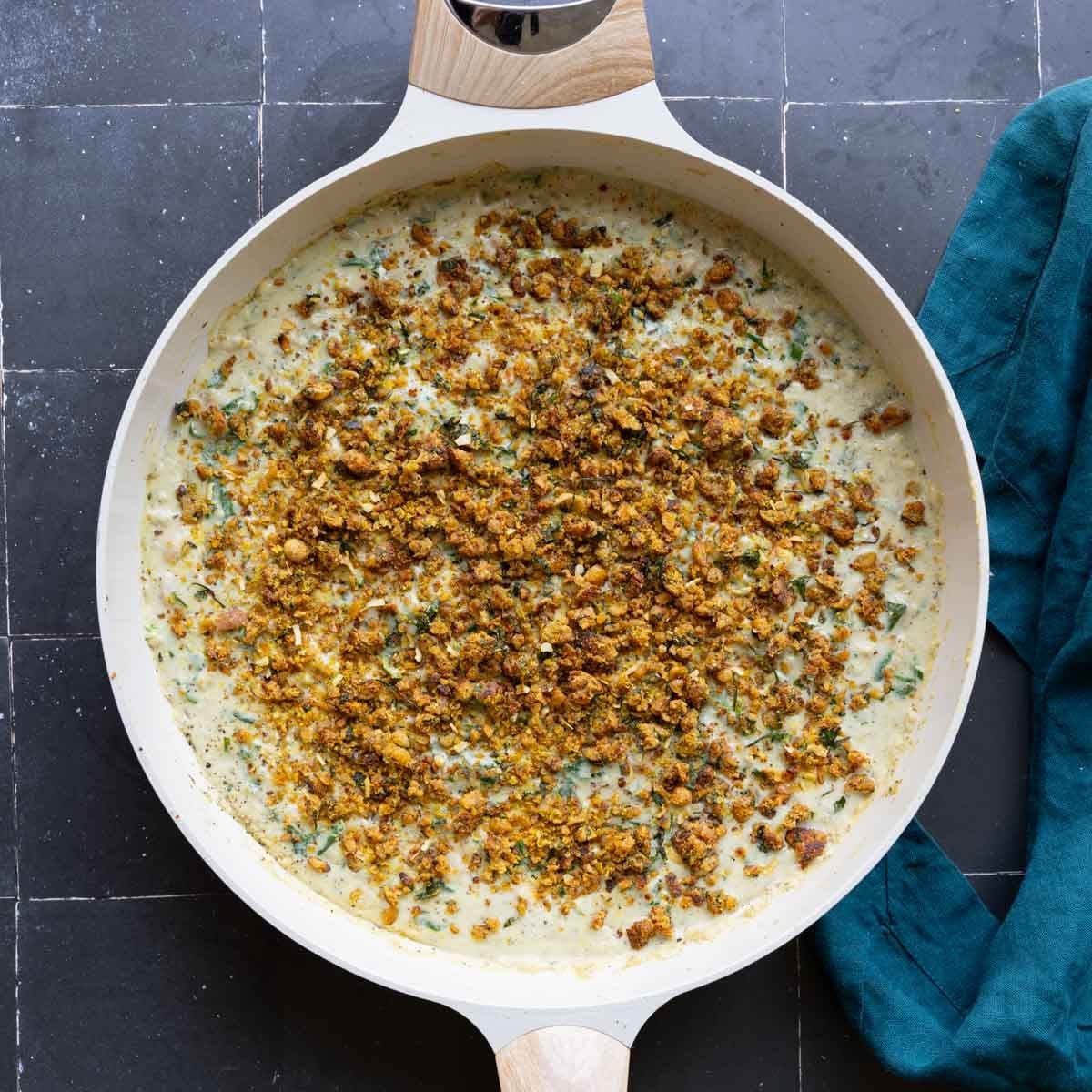
    Creamy, garlicky pepper white beans with spinach, finished with an irresistible crispy chickpea crumble, is the high-protein pantry meal I make on repeat, because it doesn’t even taste like a pantry meal. 20g Protein 13g fiber 8mg iron (Soy-free with gluten-free and nut-free options)
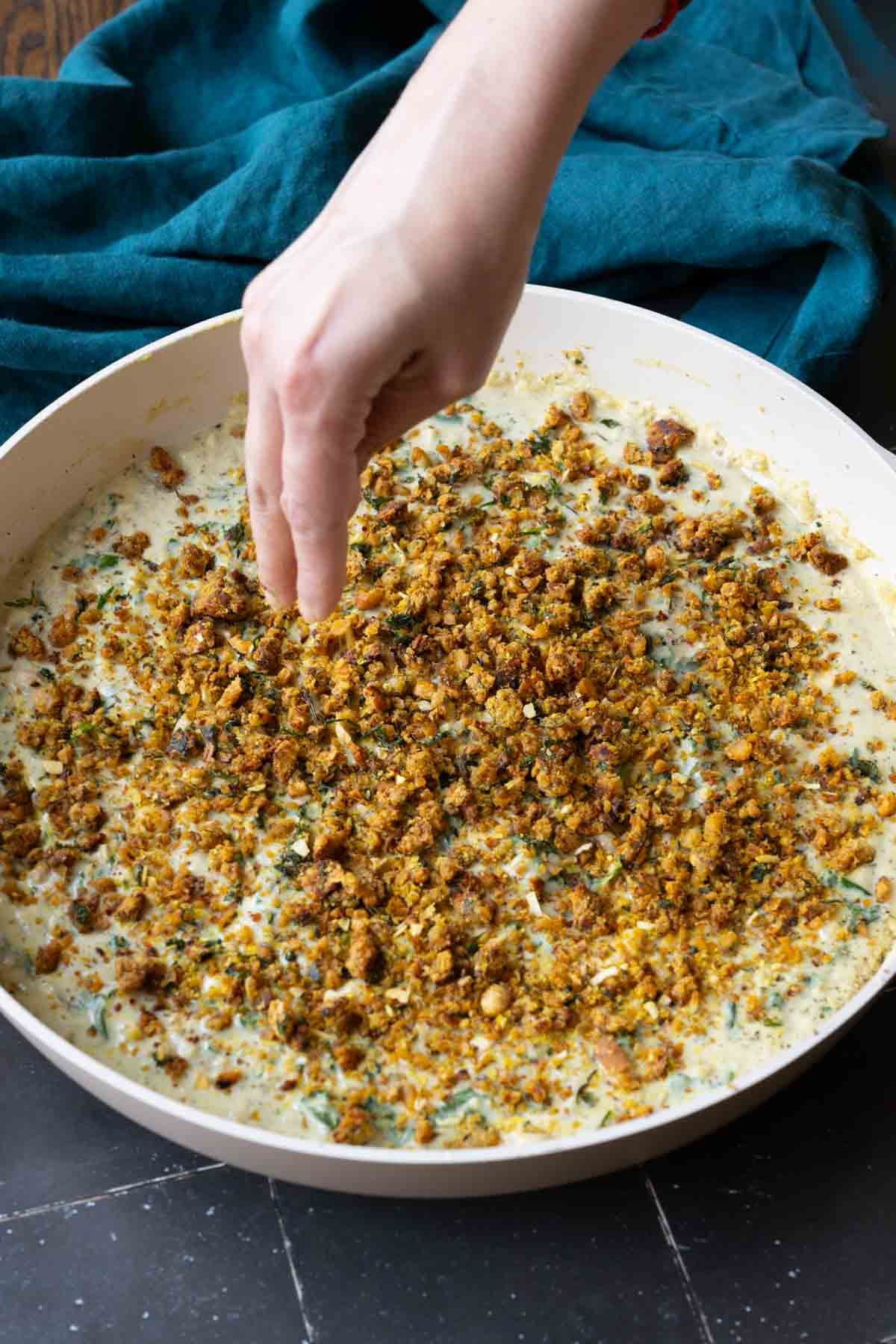
    adding the chickpea crumble to the pepper beans

    This creamy garlic pepper sauce with beans and kale or spinach is fantastic on its own. But then we level it up with this crispy chickpea breadcrumb topping, which adds texture, another pop of flavor, and more even protein and fiber. Think high protein croutons!

    There is tons of protein in this recipe (80 grams in the entire pan) along with about 52 grams of fiber and 32 milligrams of iron. There is protein from the beans, chickpeas, cashews, hemp seeds, nutritional yeast, and kale, along with loads of fiber from the beans, chickpeas, kale, and hemp seeds.
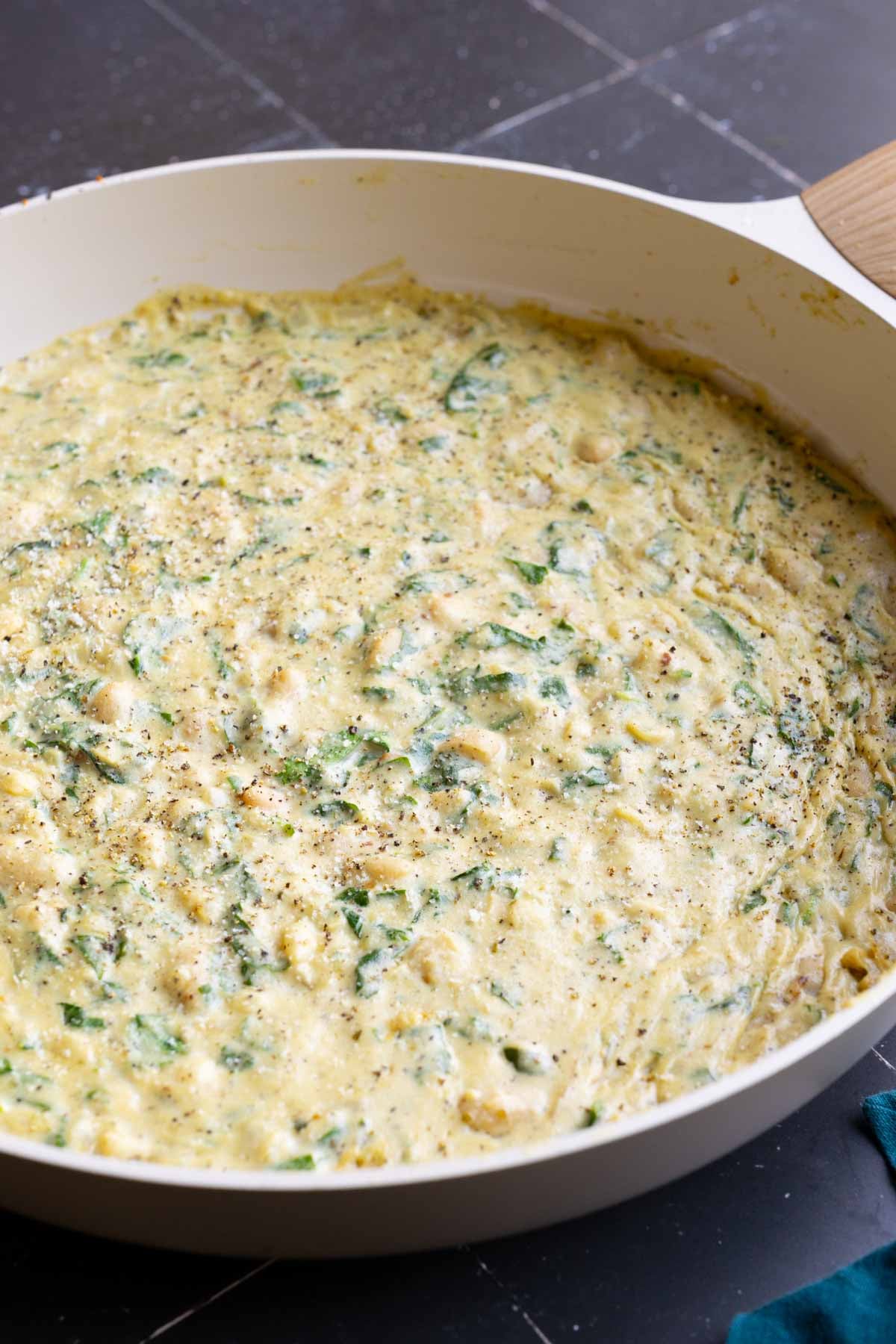
    pepper beans in the pan before adding the topping

    This is a nutrient-packed meal, and you can increase the protein and fiber even more, depending on what sides you serve it with. Serve it with a side of multigrain bread or a good sourdough to bump up the protein and fiber even more. It’s also rich in iron, folate, magnesium, potassium, and B vitamins, and it comes together pretty quickly.

    You can also serve it over pasta, baked potatoes, or roasted vegetables. Or make a quick bean toast by topping bread with the creamy beans and air frying for 6 to 7 minutes for a super quick and satisfying lunch. It smells so good as it’s cooking. It smells peppery, cheesy, and heavenly. 
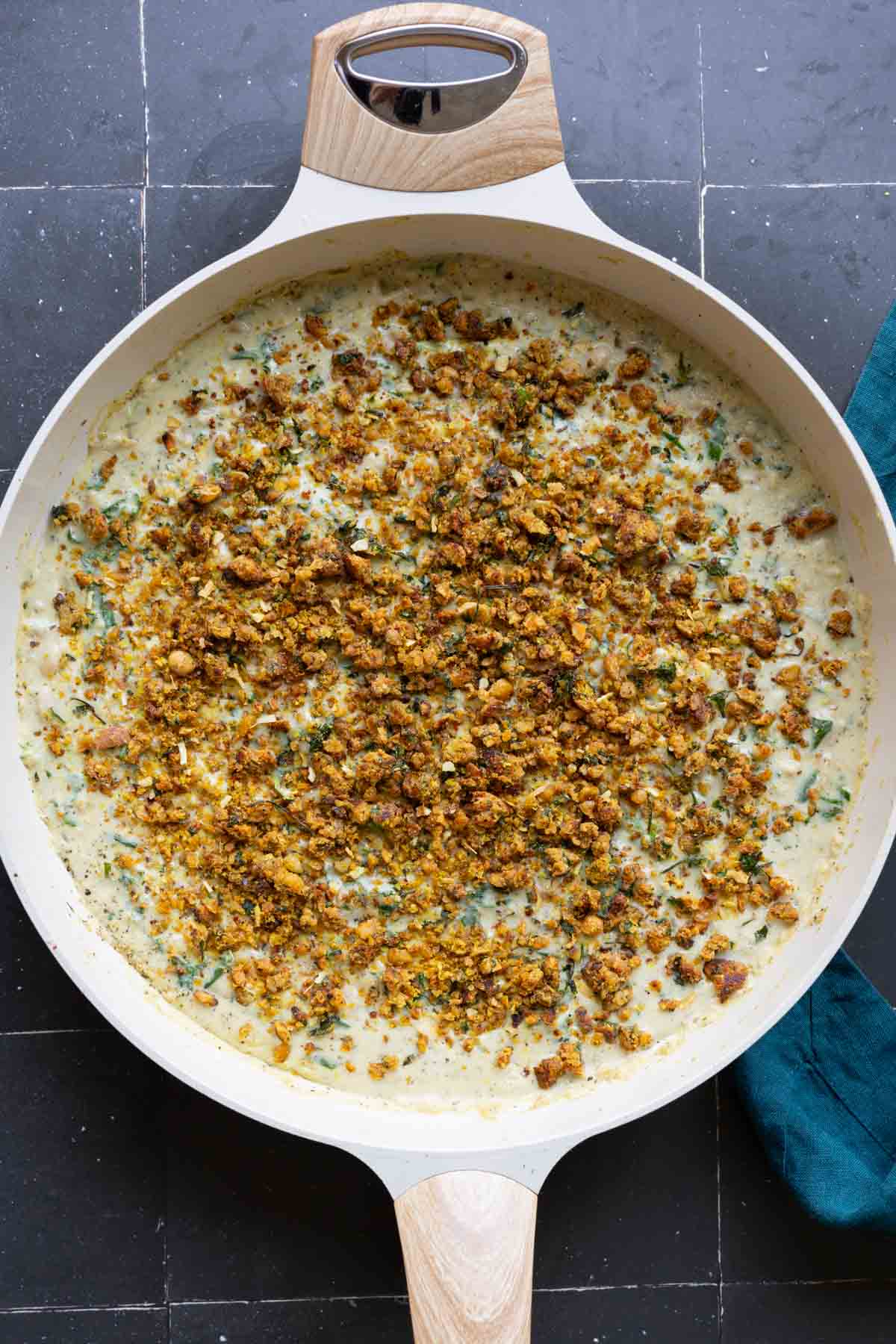
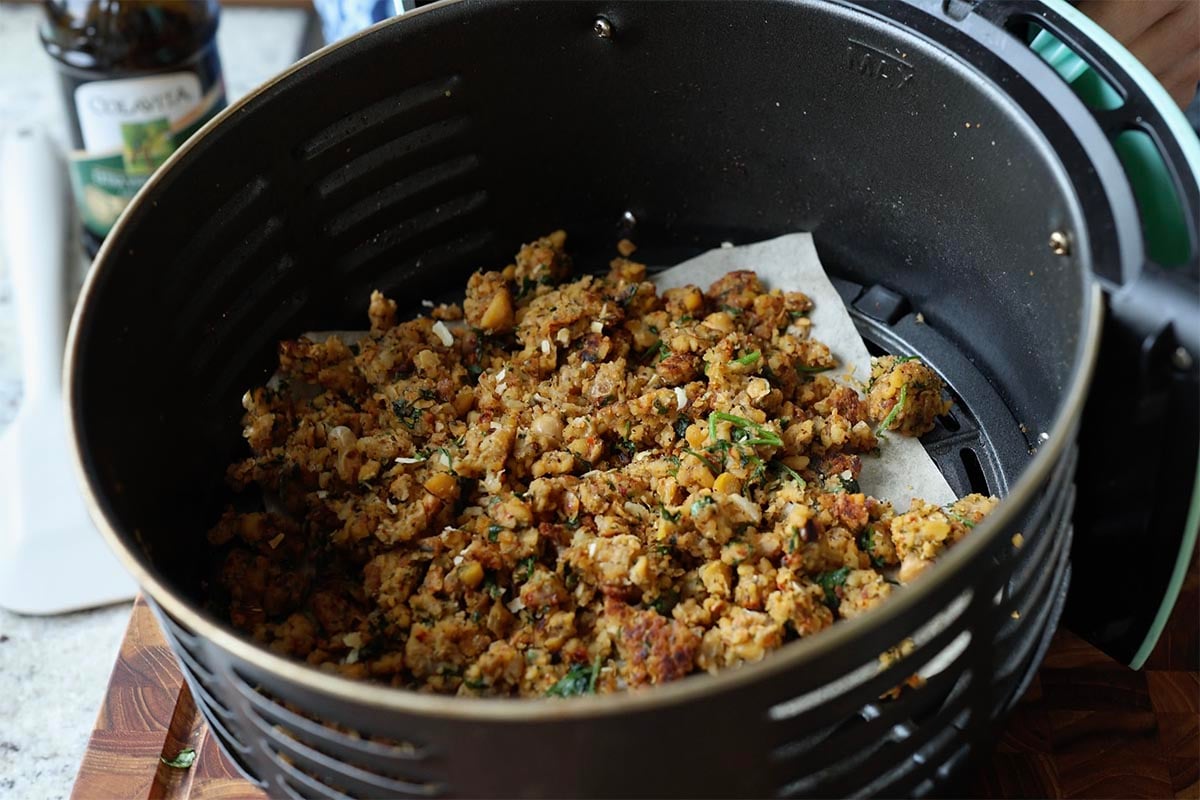
    pepper beans in the pan after adding the topping

    The crispy chickpeas on top are so addictive! You can use that topping over any pasta or salad. The topping alone is a must-make.

    This recipe uses two cans of beans. The whole can of white beans will simmer in the creamy garlic sauce, while you are dividing up a can of chickpeas. Some of the chickpeas get blended into the sauce to make it creamy, and the rest gets crisped up to make this amazing breadcrumb topping.

    close-up of spoon serving pepper beans from the pan

    Why You’ll Love Pepper Beans

    • super easy pantry meal that doesn’t taste like a pantry meal
    • High protein and fiber
    • crispy chickpea-breadcrumb topping, you’ll want on everything
    • naturally soy-free with easy gluten-free and nut-free options
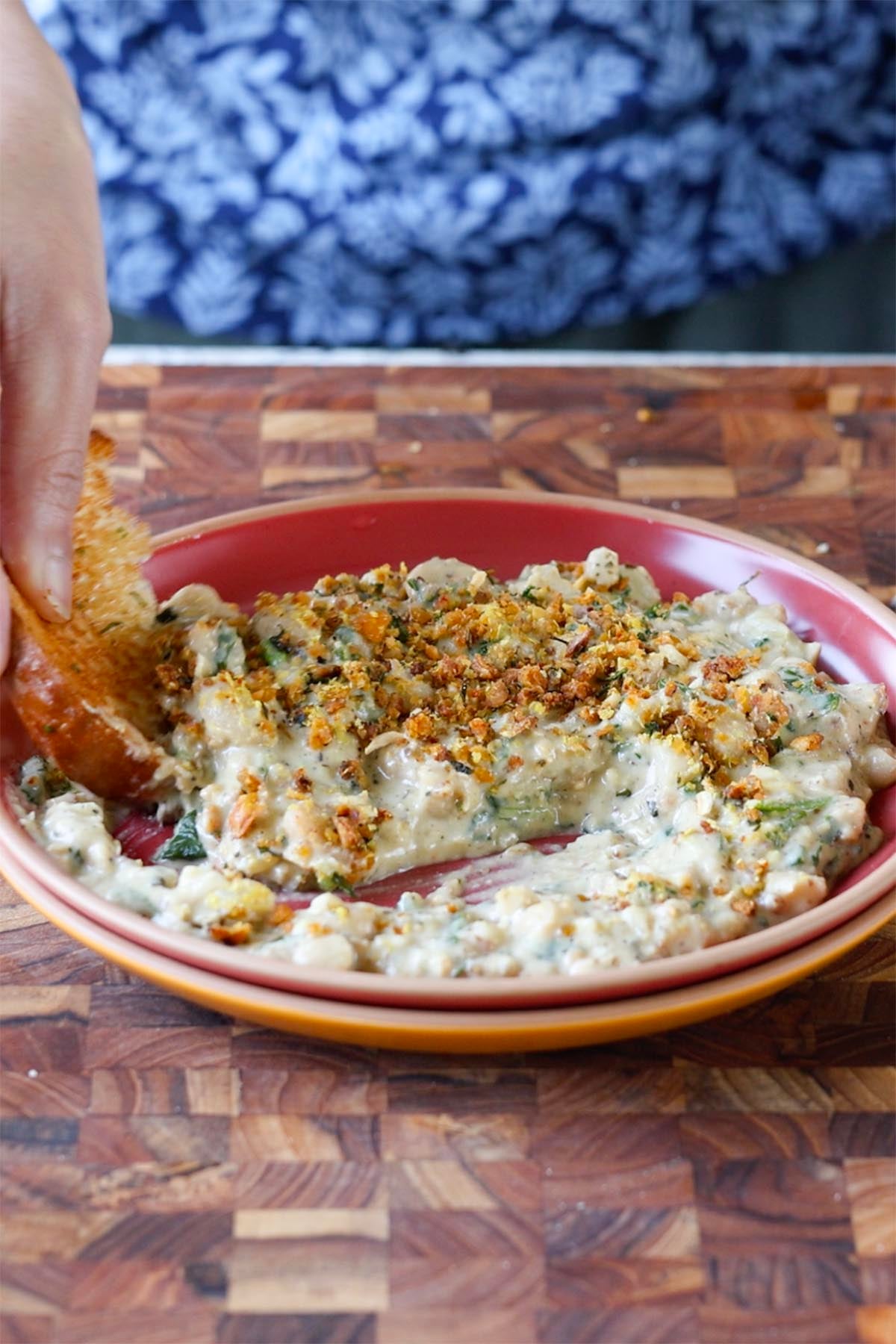
    scooping up some pepper beans with a piece of toast

    For the Crispy Chickpea Topping

    For the Pepper Beans

    • 2 teaspoons extra virgin olive oil
    • 5 cloves garlic, minced
    • 1 to 1 1/2 cups chopped yellow or white onion
    • 1/2 teaspoon salt, divided
    • 1 teaspoon dried oregano
    • 1 teaspoon freshly ground black pepper
    • 1/4 cup raw cashews
    • 2 tablespoons hemp seeds
    • 1/2 cup cooked chickpeas
    • 1 tablespoon nutritional yeast, or more, to taste
    • 1 teaspoon Dijon mustard
    • 2 to 3 cups chopped baby kale, or a mix of kale and spinach
    • 15 ounce can white beans, such as cannellini beans, navy beans, or butter beans, or 1 1/2 cups cooked beans of choice
    • 1 teaspoon miso, optional

    Prevent your screen from going dark

    Make the crispy chickpea topping.

    • Add the 1 cup of the chickpeas, plus the breadcrumbs, parsley, onion powder, salt, black pepper, and thyme to a food processor. Process until the mixture is coarsely chopped. If you don’t have a food processor, place everything on a cutting board and chop with a knife until you have a coarse mixture.

    • Heat a skillet over medium heat. Add the 2 teaspoons extra virgin olive oil. Once the oil is hot, add the garlic, reduce the heat to low, and cook until the garlic is just starting to turn golden. Add the chickpea-breadcrumb mixture and the Aleppo pepper flakes. Mix well and cook for 3 to 4 minutes. Add the onion flakes, and continue cooking for another 5 to 7 minutes, or until the mixture is becoming crispy.

    • Air Fryer Option: Mix the pan toasted garlic with the chickpea mixture and the remaining topping ingredients, then transfer everything to an air fryer. Air fry at 370° F (188° C) for 8 to 10 minutes, until crispy.

    Make the pepper beans.

    • Heat the same skillet over medium heat. Add 2 teaspoons extra virgin olive oil. Once the oil is hot, add the garlic, reduce the heat to low, and cook until the garlic starts to pick up a little bit of color. Add the onion and 1/4 teaspoon salt. Mix well, so the onion cools the garlic slightly and stops it from browning too quickly. Increase the heat to medium and cook until the onion is evenly golden. If the pan starts to dry out after about 3 to 4 minutes, add a splash of water. Continue cooking until the onion is nicely golden, about 6 to 8 minutes.

    • Meanwhile, make the cream mixture. Add the cashews, hemp seeds, 1/2 cup chickpeas, Dijon mustard, 1/4 teaspoon salt, nutritional yeast, and 1 cup water to a blender. Blend until smooth and creamy. I usually blend for about 1 minute, let the mixture sit for 2 to 3 minutes so the cashews soften further, then blend again for another 30 seconds to 1 minute until completely smooth. Set this aside.

    • Once the onion is golden, add the black pepper and oregano to the pan, and mix well. Add the kale or spinach, and cook until it begins to wilt. Pour in the cream mixture, and mix well. Add the white beans, and stir to combine. Rinse the blender with 1/4 cup water and add that to the pan. Depending on how saucy you want the beans, you can add more water, since the cashew cream thickens significantly as it cooks. Partially cover, and cook for 3 to 5 minutes, stirring once or twice, until the sauce has thickened evenly.

    • Taste and adjust the flavor. Add more salt, more black pepper, or more herbs such as oregano, fresh basil, thyme, and mix in. Switch off the heat and top the beans evenly with the crispy chickpea breadcrumb mixture. Serve immediately with a side of toasted bread, garlic bread, pita or a side salad, or pasta, or over quinoa or baked potato/veg.

    Storage: If you’re making this ahead, keep the crispy topping separate. Otherwise, it will absorb moisture from the creamy beans and lose its crunch. Add the topping just before serving. Store the beans and topping refrigerated for upto 3 days, Aur fry the topping for 2-3 mins to crisp up and serve  
    Allergy friendly: Pepper beans are naturally soy-free. To make this nut-free, replace the cashews with 1/2 cup silken tofu or firm tofu, or use additional hemp seeds and chickpeas. To make this gluten-free, omit the breadcrumbs and use more chickpeas, or use rolled oats processed with the chickpeas.
    To make this without nutritional yeast, omit it and add the miso to the sauce instead.
    This recipe is rich in protein, fiber, iron, folate, magnesium, potassium, and B vitamins, and it comes together pretty quickly.

    Calories: 425kcal, Carbohydrates: 58g, Protein: 20g, Fat: 14g, Saturated Fat: 2g, Polyunsaturated Fat: 5g, Monounsaturated Fat: 6g, Sodium: 632mg, Potassium: 899mg, Fiber: 13g, Sugar: 8g, Vitamin A: 1837IU, Vitamin C: 29mg, Calcium: 205mg, Iron: 8mg

    Nutrition information is automatically calculated, so should only be used as an approximation.
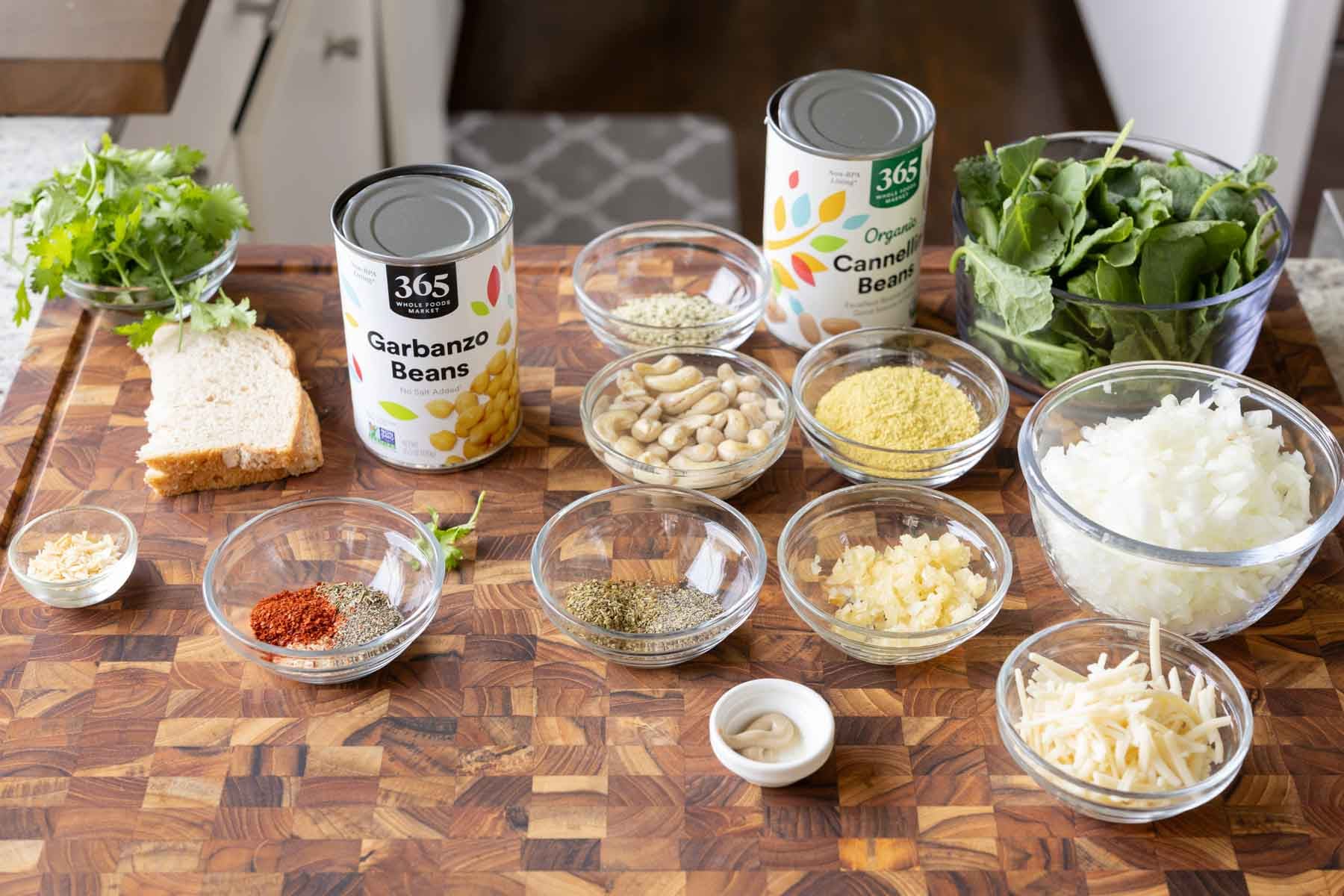
    pepper beans ingredients

    Ingredients

    • beans – You need a can of chickpeas and a can of white beans for this recipe. You can use 1 1/2 cups each of homemade beans instead, if you prefer. We will divide the chickpeas and use 1 cup in the topping and 1/2 cup in the sauce for the pepper beans.
    • breadcrumbs – Or a slice of bread. You can use gluten-free or omit, if needed.
    • parsley – Or fresh herbs of choice, like cilantro, give the crumble topping a great, fresh flavor.
    • dried spices – For the crispy chickpea topping, we are using onion powder, thyme (or a mix of thyme and oregano), black pepper, salt, Aleppo pepper flakes, and onion flakes. You can also add nutritional yeast for a cheesy flavor, if you like. For the pepper beans, you need oregano, black pepper, and nutritional yeast or miso.
    • olive oil – To crisp up the chickpea topping and to sauté the aromatics for the pepper beans.
    • aromatics – We are crisping some garlic for the topping and there is onion and garlic in the sauce for the pepper beans.
    • lemon zest – This is optional but adds more depth of flavor to the chickpea topping.
    • cashews and hemp seeds – Makes the sauce so creamy!
    • Dijon mustard – For tang in the beans.
    • baby kale – Or a mix of kale and spinach.

    💡Tips

    • To save time, make the creamy blender sauce while the onions cook in the pan.
    • Cashew cream thickens as it cooks, so you can add more water, if needed, to get the consistency you want.

    How to Make Pepper Beans

    Drain the cans of chickpeas and white beans and let them sit to drain for a few minutes. Divide the chickpeas into 1 cup for the topping and 1/2 cup for the sauce.

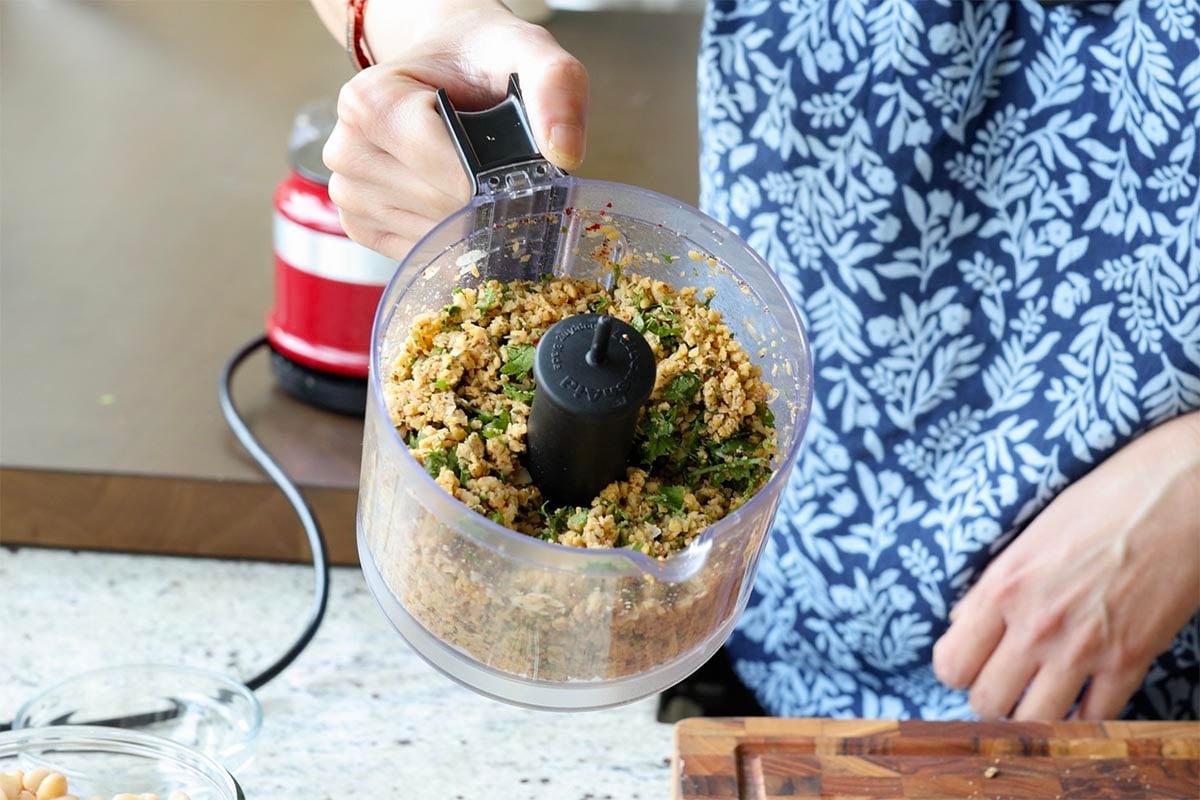
    Add the 1 cup of the chickpeas, plus the breadcrumbs, parsley, onion powder, salt, black pepper, and thyme to a food processor. Process until the mixture is coarsely chopped. If you don’t have a food processor, place everything on a cutting board and chop with a knife until you have a coarse mixture.
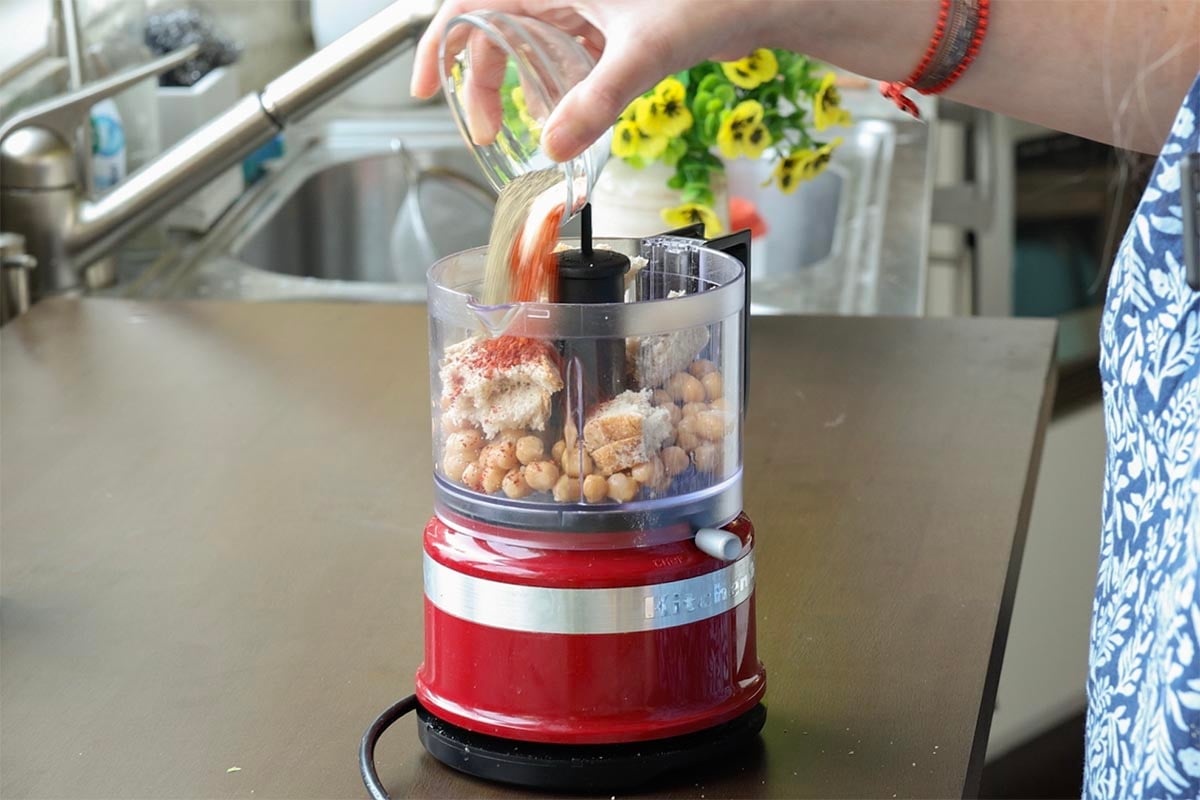
    chickpea topping ingredients in the food processor before running it
    chickpea topping in the food processor after running it

    Heat a skillet over medium heat. Add the 2 teaspoons extra virgin olive oil. Once the oil is hot, add the garlic, reduce the heat to low, and cook until the garlic is just starting to turn golden.
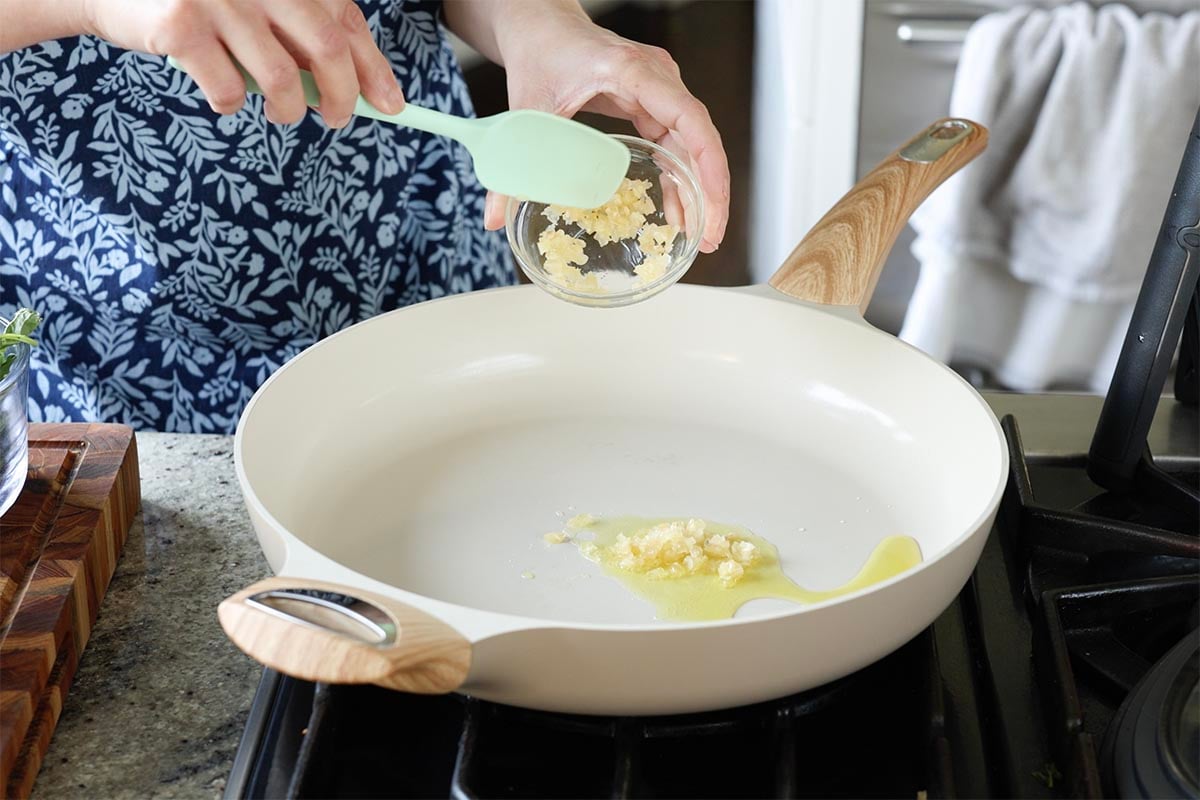
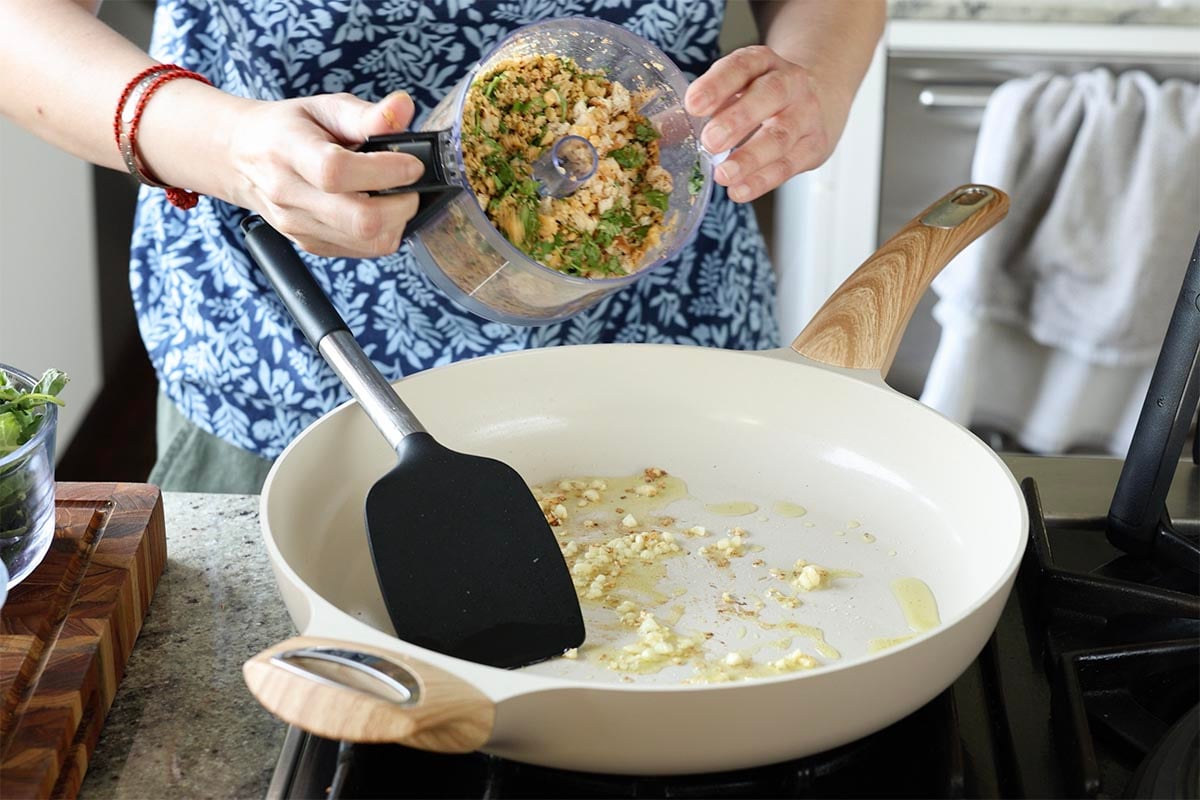
    adding the garlic to the pan
    garlic in the pan after cooking

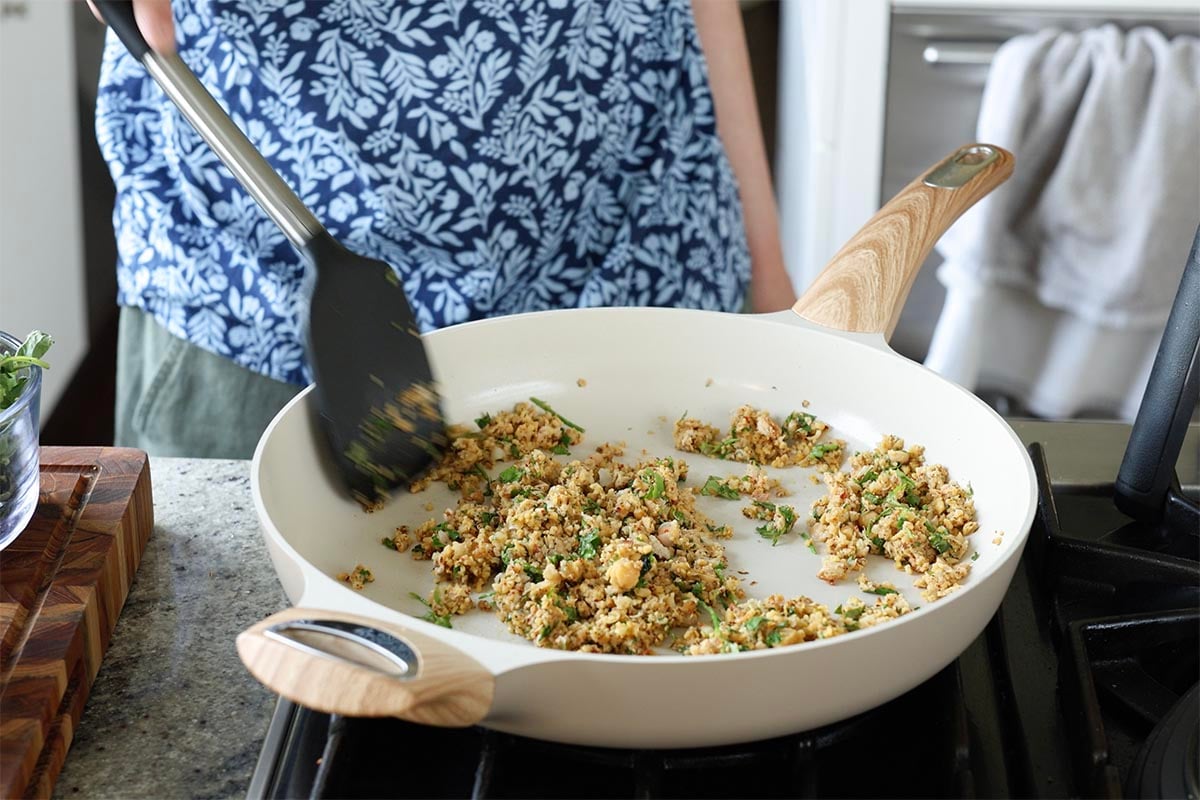
    Add the chickpea-breadcrumb mixture and the Aleppo pepper flakes. Mix well and cook for 3 to 4 minutes. Add the onion flakes, and continue cooking for another 5 to 7 minutes, or until the mixture is becoming crispy.
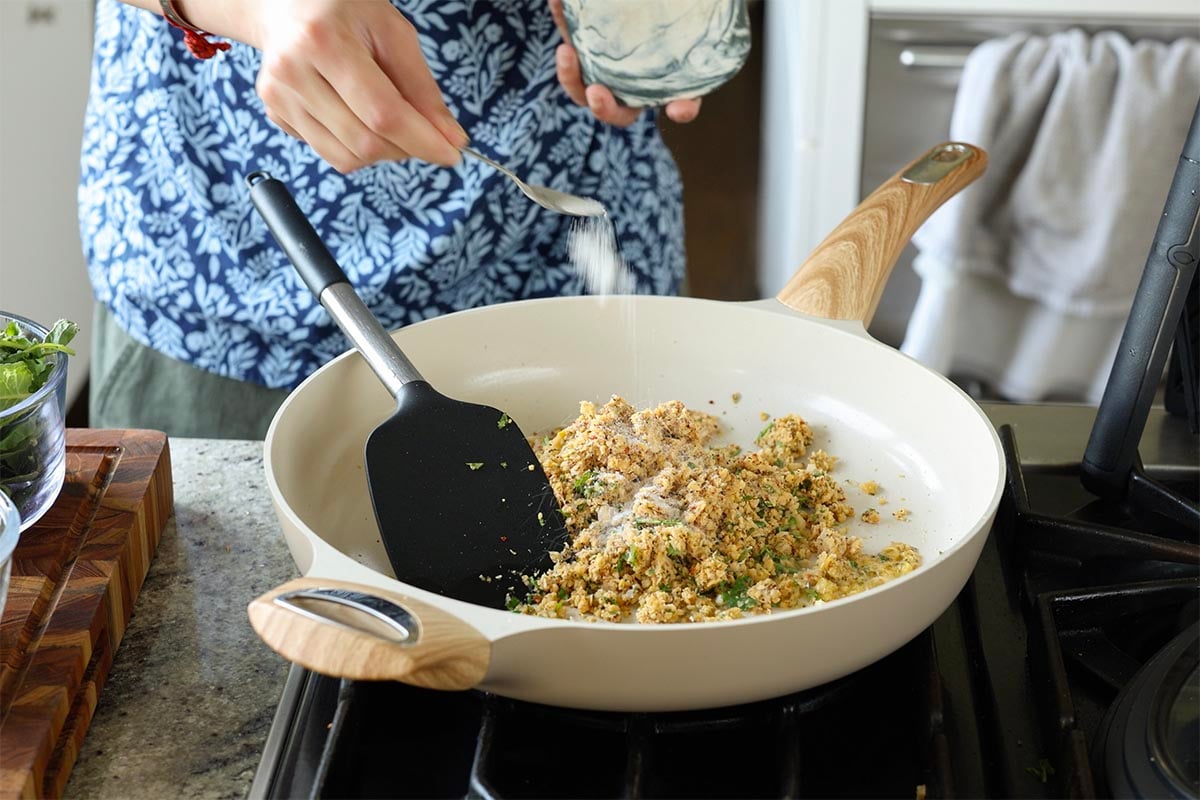
    adding chickpea mixture to the pan
    cooking the chickpea mixture

    To make the chickpea mixture in the air fryer instead, mix the toasted garlic with the chickpea mixture and the remaining topping ingredients.
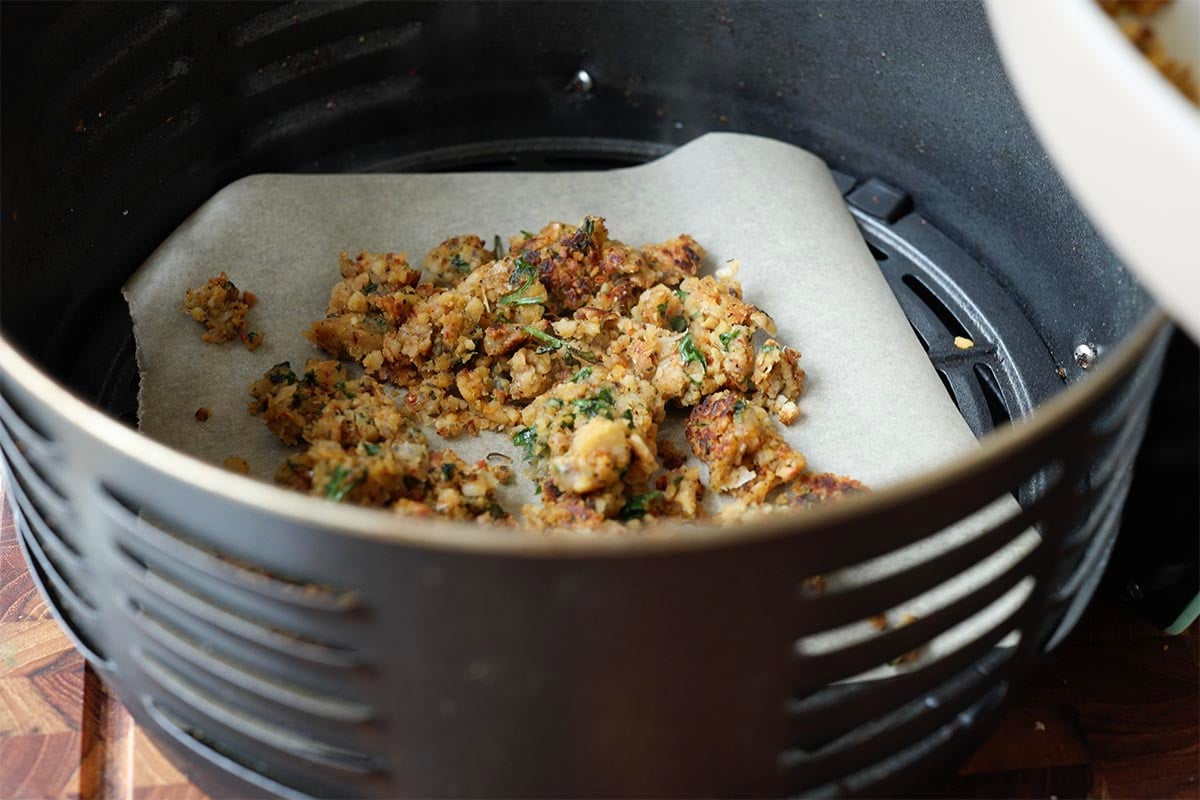
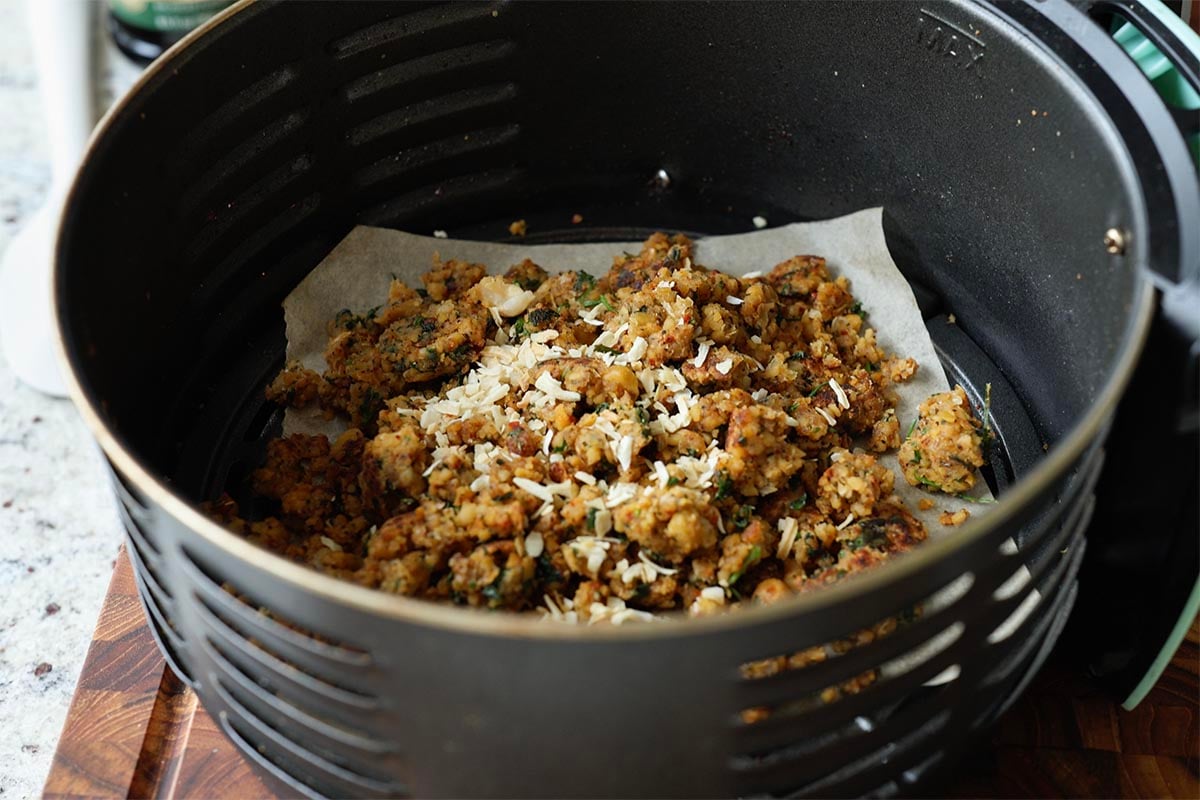
    adding chickpea topping to the air fryer
    adding onion flakes to the chickpea toping in the food processor

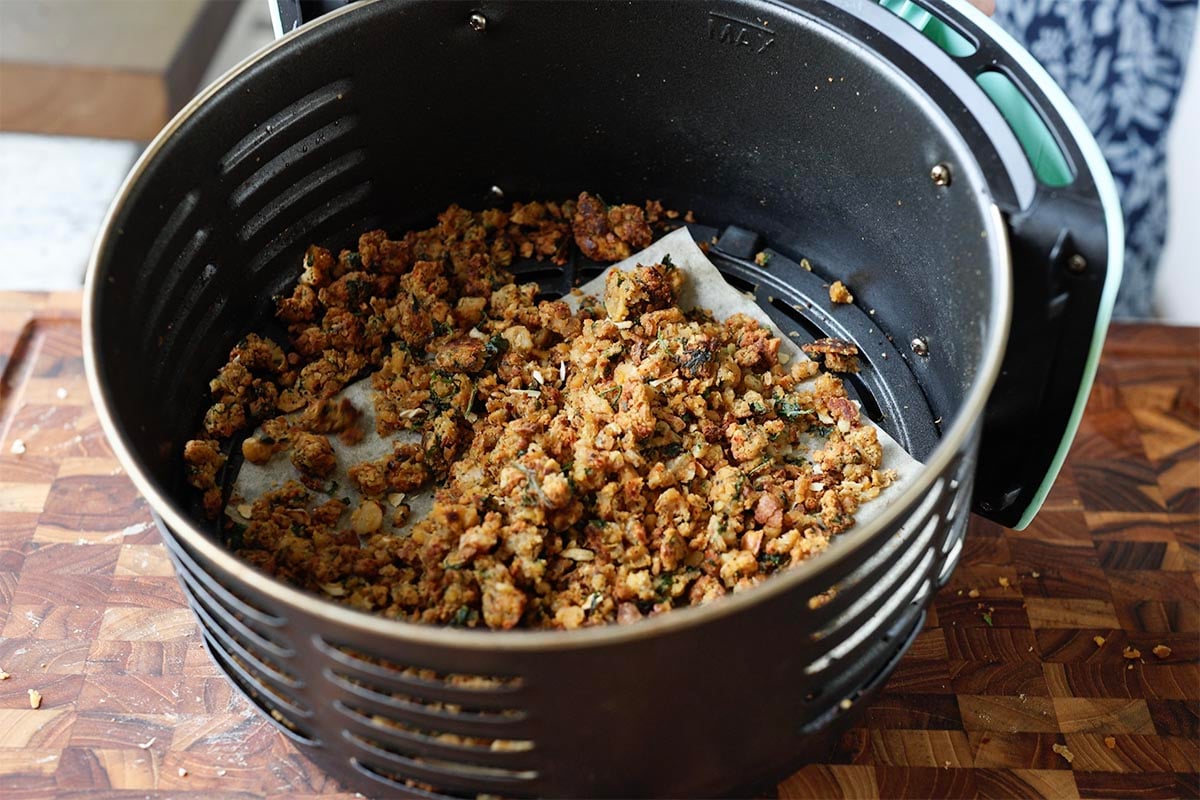
    Then, transfer everything to an air fryer. Air fry at 370° F (188° C) for 8 to 10 minutes, until crispy.
    onion flakes mixed into the chickpea topping in the food processor
    chickpea mixture in the air fryer after cooking

    Heat the same skillet over medium heat. Add 2 teaspoons extra virgin olive oil. Once the oil is hot, add the garlic, reduce the heat to low, and cook until the garlic starts to pick up a little bit of color.

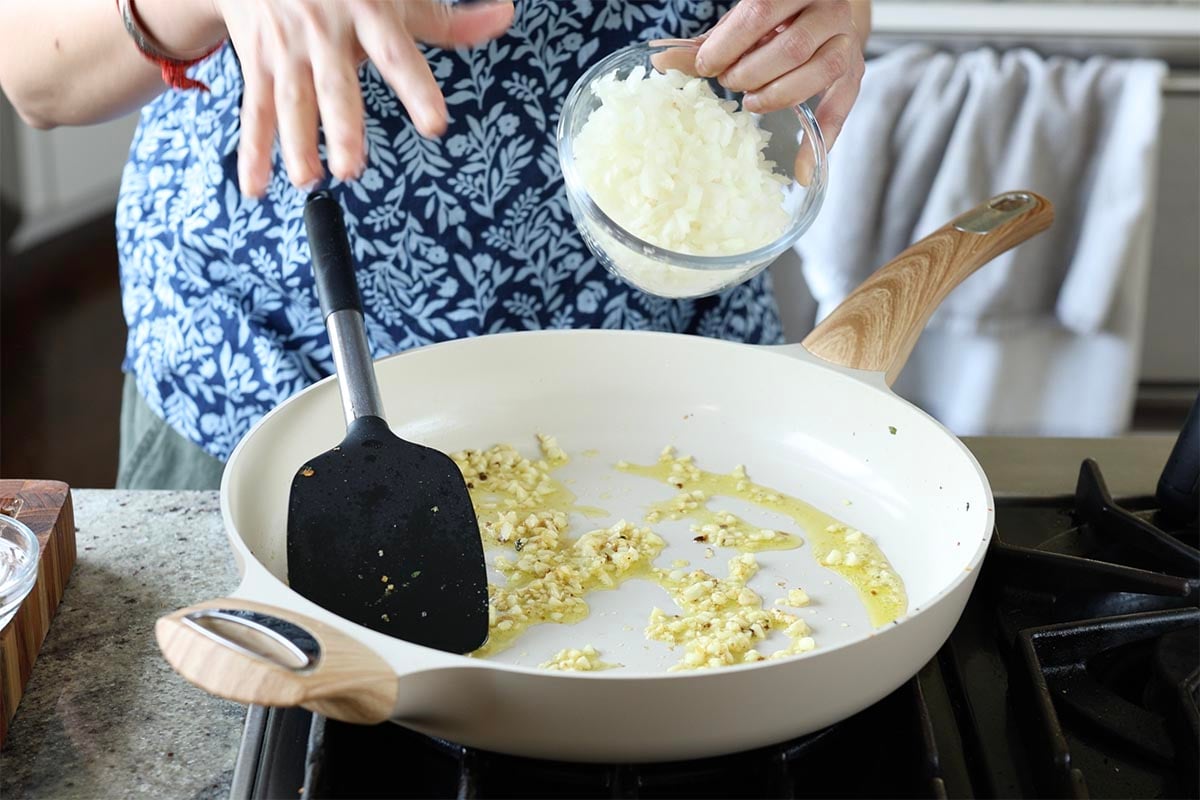
    garlic in the pan before cooking
    garlic in the pan after cooking

    Add the onion and 1/4 teaspoon salt. Mix well, so the onion cools the garlic slightly and stops it from browning too quickly. Increase the heat to medium and cook until the onion is evenly golden. If the pan starts to dry out after about 3 to 4 minutes, add a splash of water. Continue cooking until the onion is nicely golden, about 6 to 8 minutes.
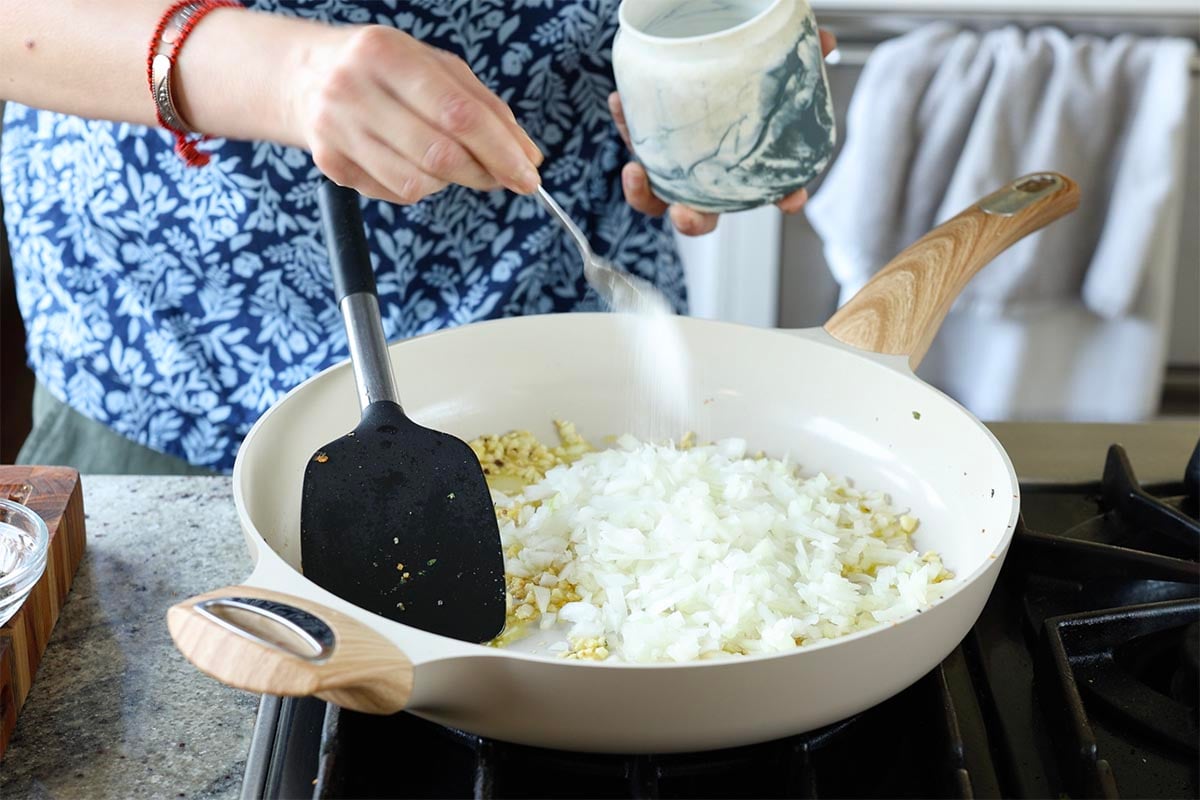
    adding onions and salt to the pan

    Meanwhile, make the cream mixture. Add the cashews, hemp seeds, 1/2 cup chickpeas, Dijon mustard, 1/4 teaspoon salt, nutritional yeast, and 1 cup water to a blender. Blend until smooth and creamy. I usually blend for about 1 minute, let the mixture sit for 2 to 3 minutes so the cashews soften further, then blend again for another 30 seconds to 1 minute until completely smooth. Set this aside.
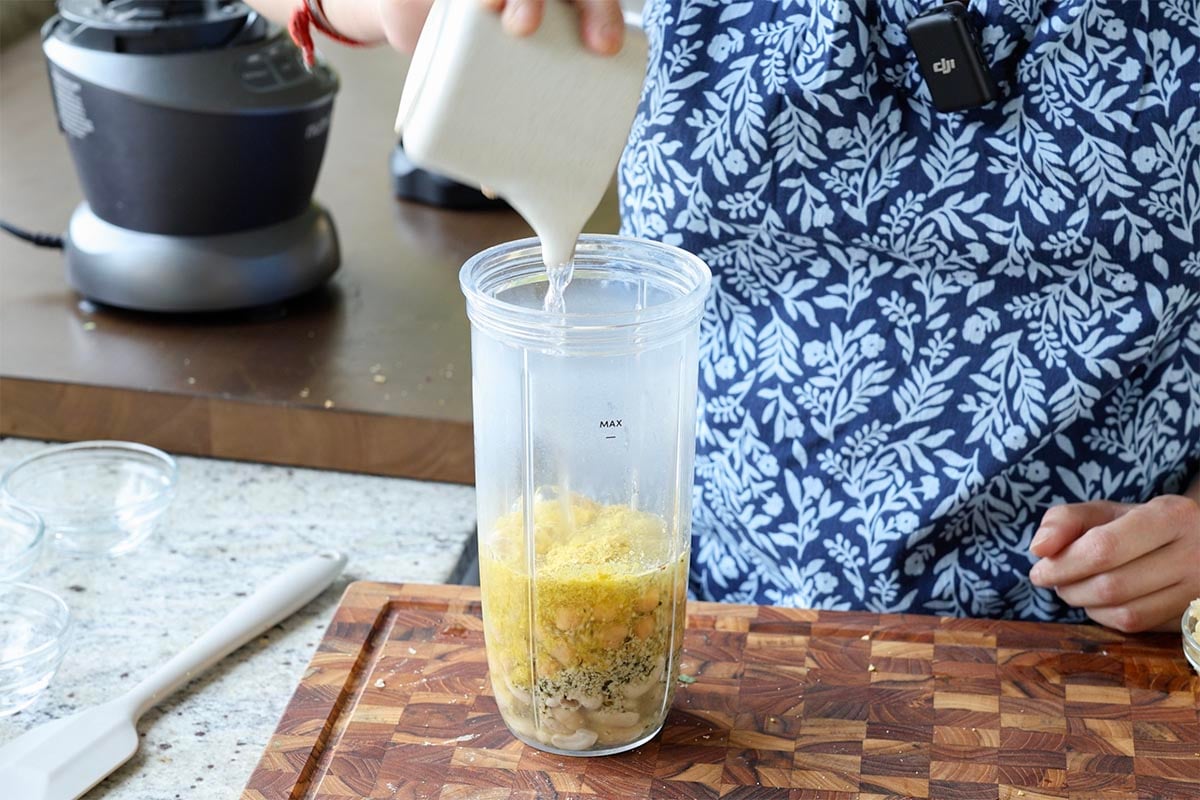
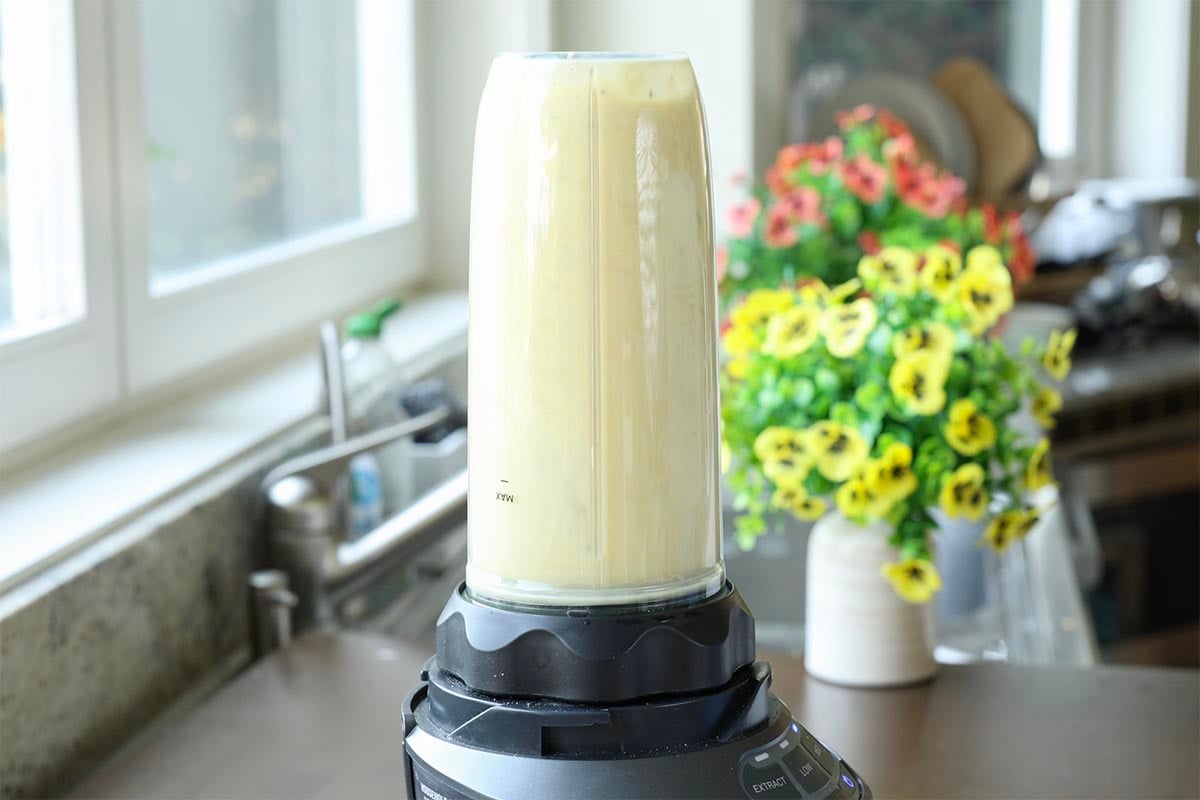
    adding cream sauce ingredients to the blender

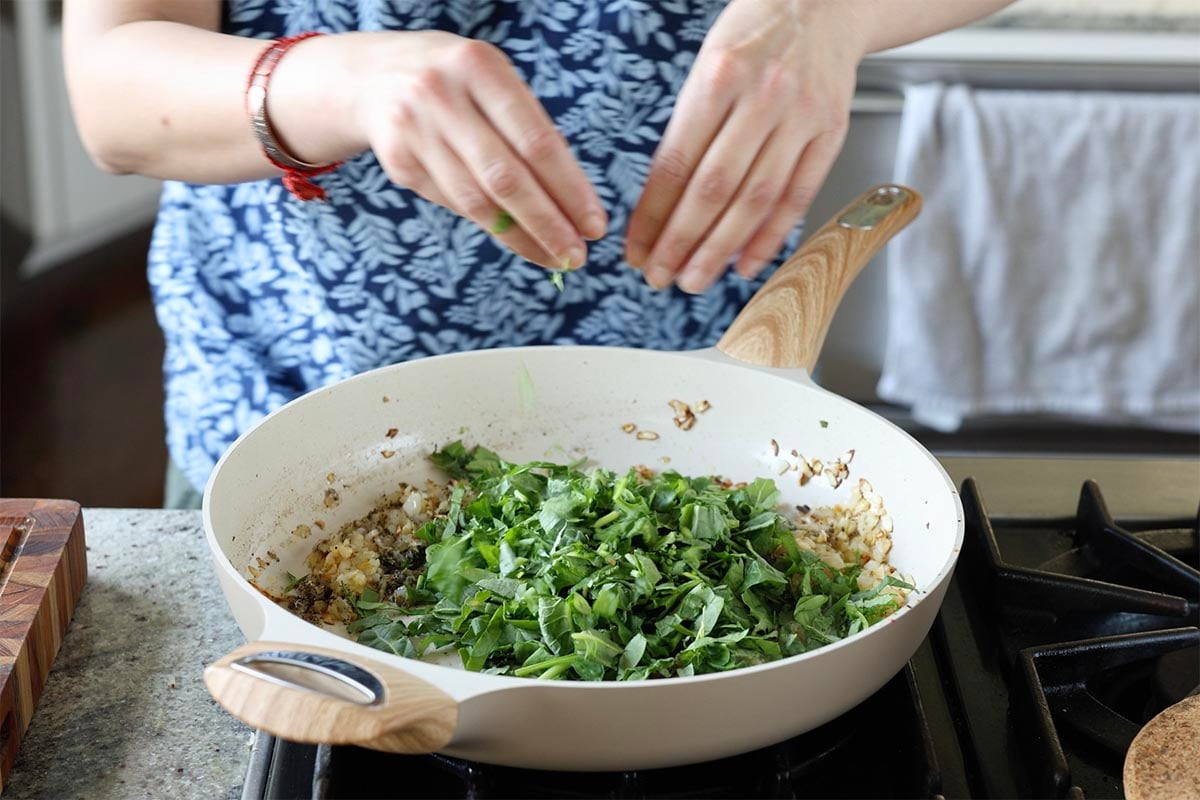
    Once the onion is golden, add the black pepper and oregano to the pan, and mix well. Add the kale or spinach, and cook until it begins to wilt.
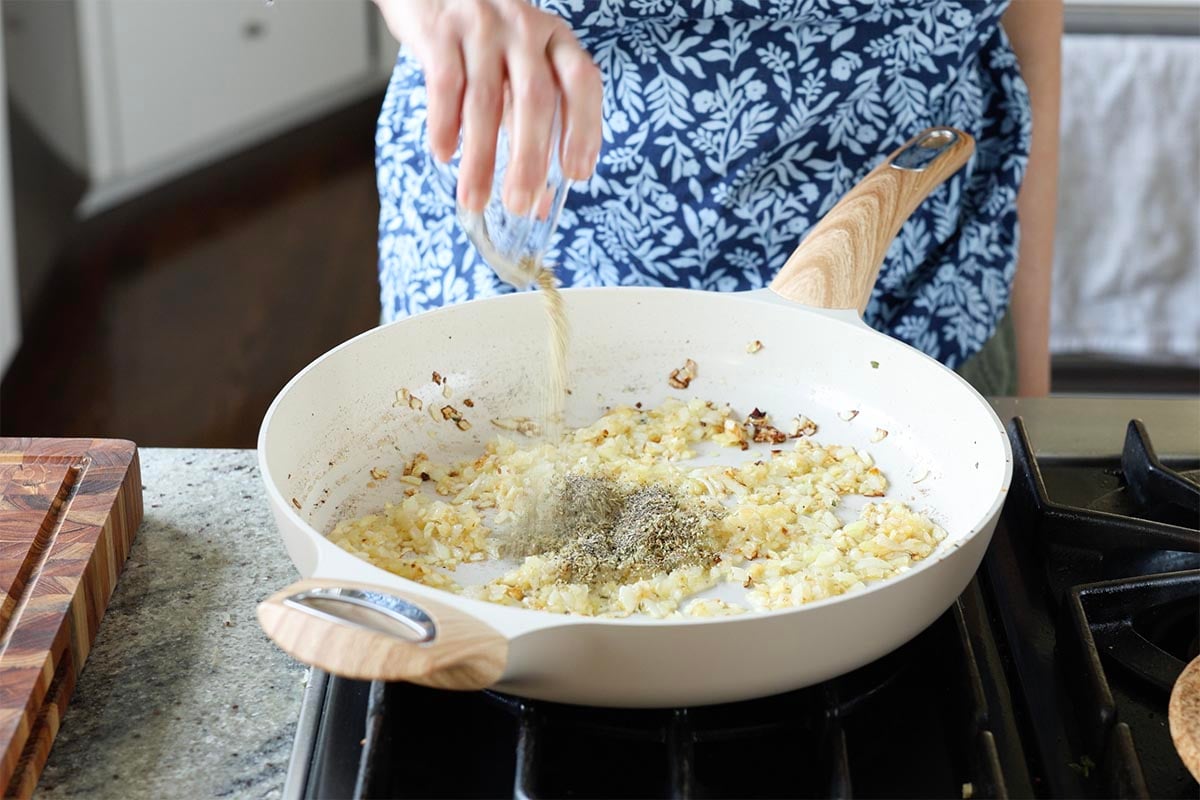
    adding pepper to the pan
    adding the greens to the pan

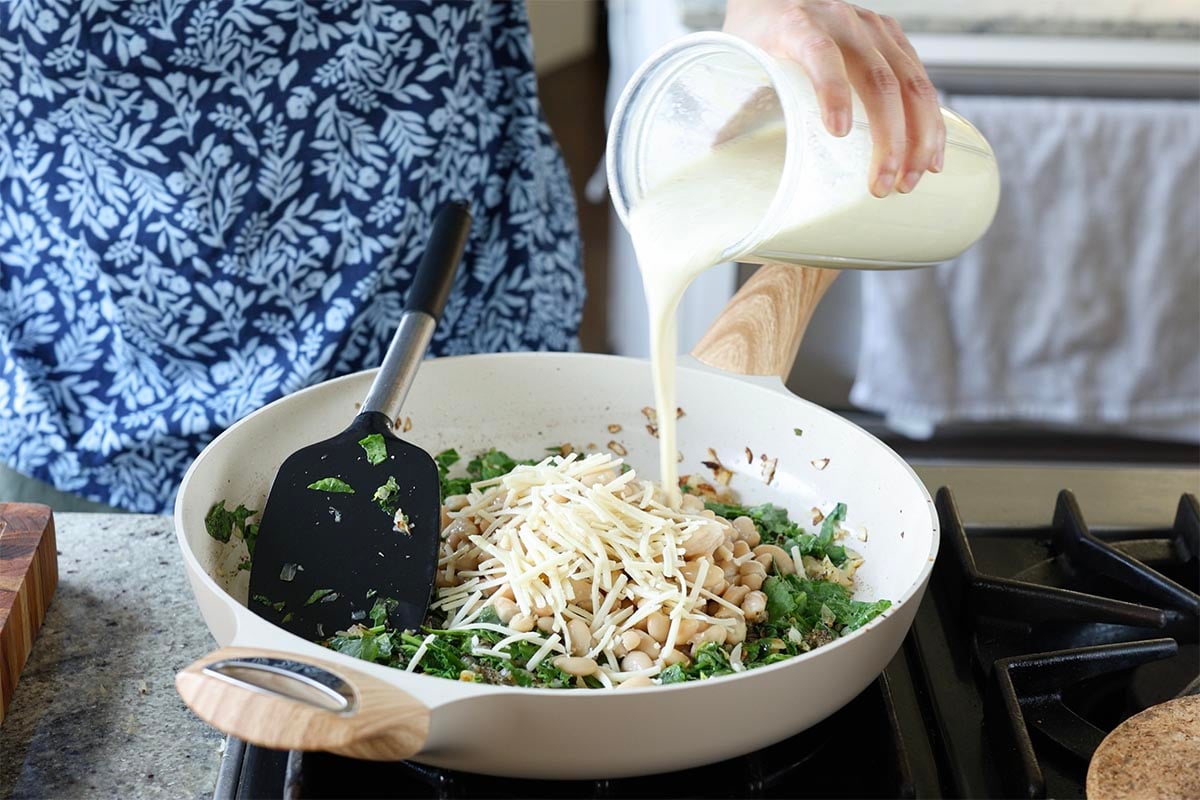
    Pour in the cream mixture, and mix well. Add the white beans, and stir to combine.
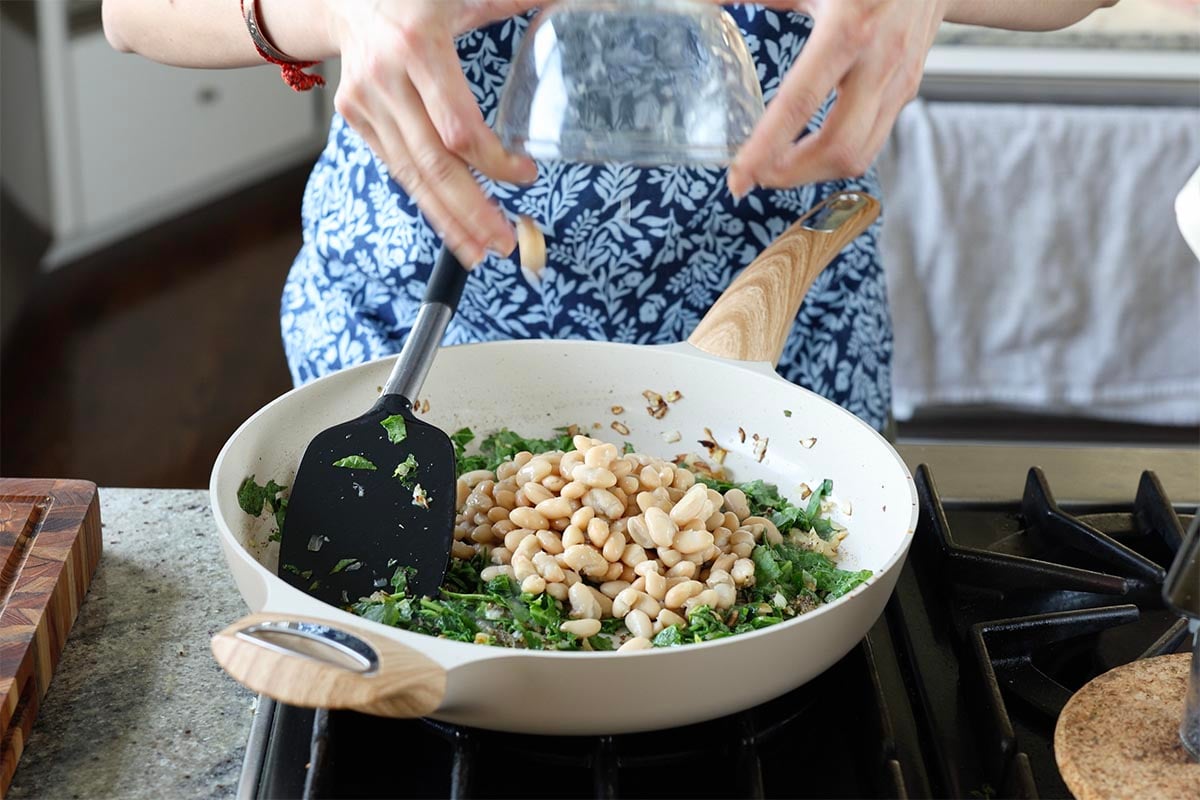
    adding the white beans to the pan
    adding the cheese and cream sauce

    Rinse the blender with 1/4 cup water and add that to the pan. Depending on how saucy you want the beans, you can add more water, since the cashew cream thickens significantly as it cooks. Partially cover, and cook for 3 to 5 minutes, stirring once or twice, until the sauce has thickened evenly.


    stirring the pepper beans

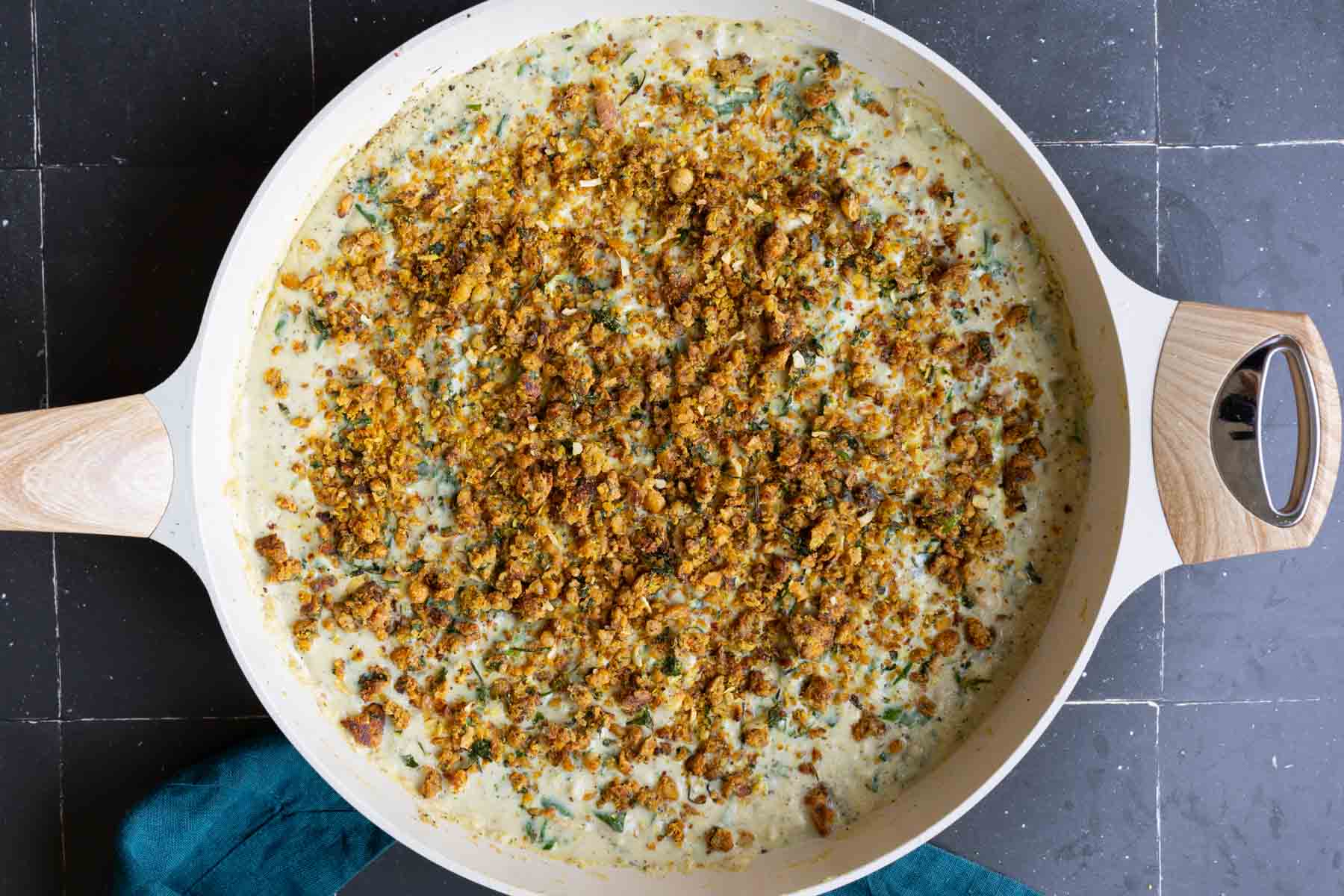
    Taste and adjust the flavor. Add more salt, more black pepper, or more herbs such as oregano, fresh basil, thyme, or rosemary, and mix in. Switch off the heat and top the beans evenly with the crispy chickpea breadcrumb mixture. Serve immediately.
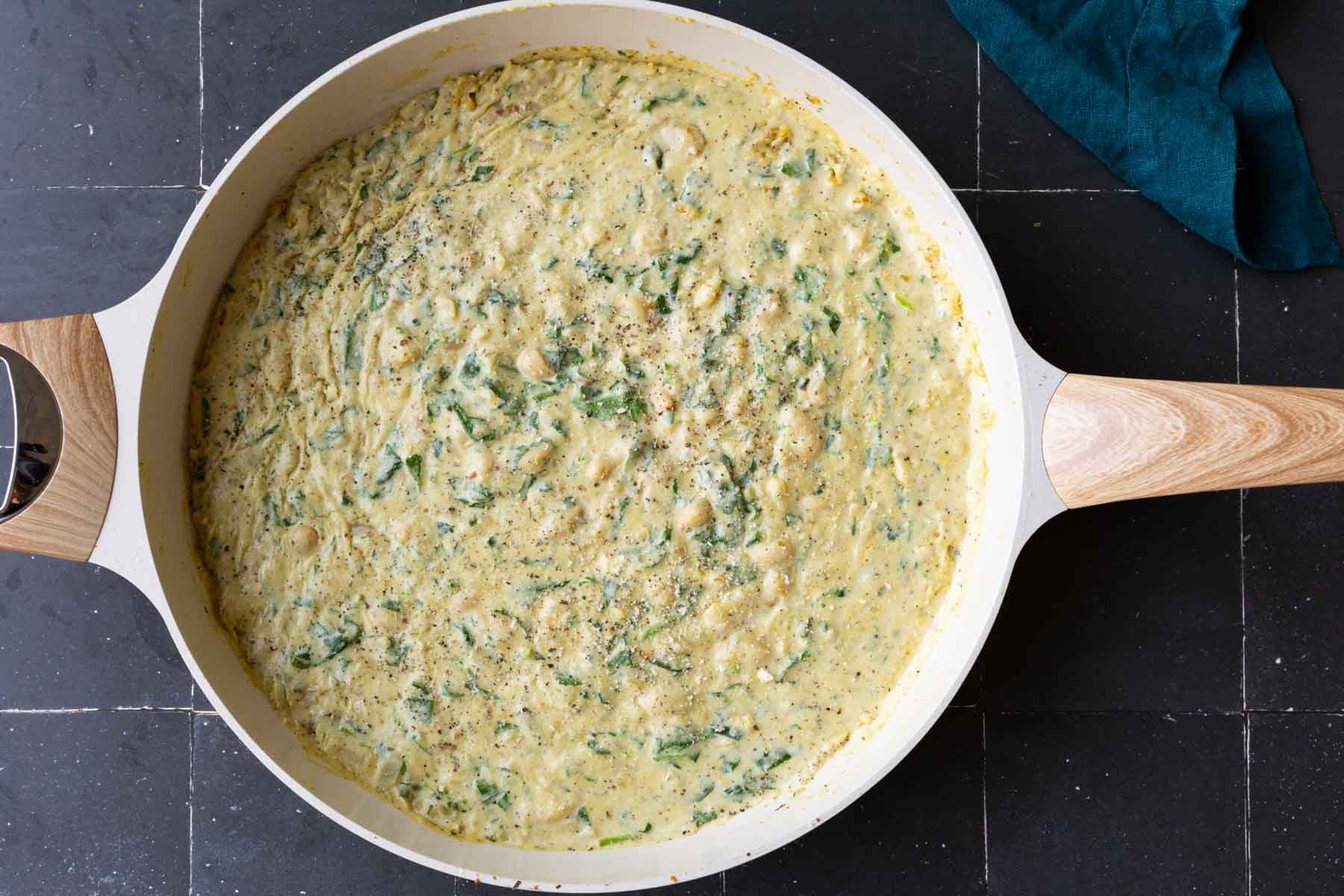
    pepper beans in the pan before adding the topping
    pepper beans in the pan after adding the topping

    Make-Ahead Directions

    You can make the topping up to a day ahead, and the pepper beans will keep for three to four days in the refrigerator. Keep the crispy topping separate. Otherwise, it will absorb moisture from the creamy beans and lose its crunch. Reheat separately, and add the topping just before serving.
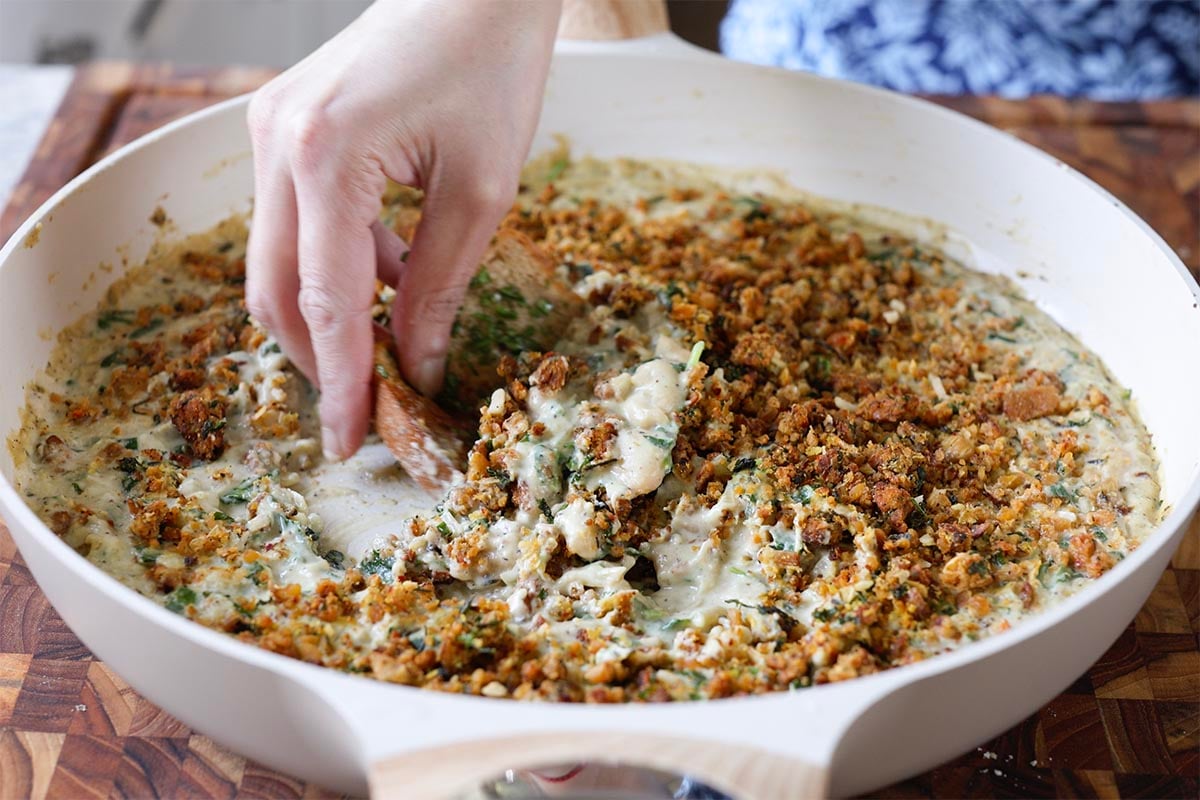
    scooping up some pepper beans with a piece of toast

    How to Serve Pepper Beans

    Serve it with a side of multigrain bread or a good sourdough to bump up the protein and fiber even more.

    You can also serve it over pasta, baked potatoes, or roasted vegetables. Or make a quick bean toast by topping bread with the creamy beans and air frying for 6 to 7 minutes for a super quick and satisfying lunch.

    Frequently Asked Questions

    Is this recipe allergy friendly?

    Pepper beans are naturally soy-free.To make this nut-free, replace the cashews with 1/2 cup silken tofu or firm tofu, or use additional hemp seeds and chickpeas. To make this gluten-free, omit the breadcrumbs and use more chickpeas, or use rolled oats processed with the chickpeas.

    Can I make the chickpea topping in the air fryer?

    You can! To do that, mix the toasted garlic with the chickpea mixture and the remaining topping ingredients, then transfer everything to an air fryer. Air fry at 370° F (188° C) for 8 to 10 minutes, until crispy.

    What can I use instead of nutritional yeast?

    To make this without nutritional yeast, omit it and add the miso to the sauce instead.

    Credit: Source link

  • Alpha-Gal

    Alpha-Gal

    No, we’re not talking about Wonder Woman or Amazon women. This article is about Alpha-Gal Syndrome. Yes, it is a real medical condition, and it is a relatively recent phenomenon.


    I received a call
    this week concerning Alpha-Gal Syndrome and what to do to ameliorate the symptoms, so I thought I would look into it.


    In 2013, there were a few cases showing up, which then exploded 10,000%. Currently, society is aware of more than 500,000 infections, with suspicions of many more.


    According to the NIH, Alpha-Gal Syndrome (AGS) is a serious, potentially life-threatening allergic condition associated with certain tick bites. It can cause an allergy to red meat and other products derived from mammals.

    • Delayed Timing: Unlike typical food allergies that react immediately, AGS
      symptoms usually appear 2 to 6 hours after eating mammalian meat or animal derivatives. 
    • Common Signs: Hives, itchy rash, stomach pain, nausea, vomiting, diarrhea, heartburn, trouble breathing, or a drop in blood pressure. 
    • Severe Reactions: It can cause
      life-threatening anaphylaxis. 

    My thoughts are that this sounds like a mixture of Lyme disease on steroids and life-threatening nut allergies. My questions are: Why haven’t we ever seen this in nature, with our ancestors afflicted? And why is it so specific to red meat?


    Could this outbreak have anything to do with bioengineering? Could it have something to do with artificial or lab-grown meat, altered mosquitoes and ticks, or other changes we are making to our environment?


    There are many questions here that deserve to be asked.


    Before we decide who is responsible for this new fire and then hire them as the firemen to contain the blaze, let’s look carefully at what we know and what we don’t know. We have certainly learned during COVID that health recommendations can have enormous effects on our lives, and that we should be willing to ask questions when something doesn’t make sense
    to us.


    I believe we need to realize how to avoid the trigger. Not everyone bitten by Lone Star ticks will develop the syndrome. Why? What prepares the body for this allergy? What other factors may be involved? Could it be gelatin from beef used as a component in vaccines?


    There are way too many unanswered questions, and too many inquiries that can be stifled when there are financial interests involved.


    As an example, I will bring up the medically “debunked” theory of peanut oil being tested, put through trials, and injected as an
    adjuvant in vaccines into at least 15,000 people. This raises an interesting question: Could an adjuvant contribute to the development of allergies?


    These are the kinds of questions we should be willing to investigate rather than simply dismissing them.


    In answer to the inquiry I received about what to do for Alpha-Gal Syndrome, I answered, “If it was me and I had this condition, I would avoid the foods that trigger the reaction and use herbs and nourishment to support my immune system.” 


    Personally, my experience with Dr.
    Christopher’s Immucalm Formula has shown me how it calms down the immune system and helps the body not react as strongly to things it has been allergic to. The herbs in this formula have traditionally been used by herbalists in large amounts and over a long period of time. If it were me, I would personally take a heaping tablespoon of the combined herbs five times a day.


    As always, I would also suggest following Dr. Christopher’s cleansing and nourishing practices as contained in his booklet Three Day Cleansing Program.


    If you suspect you have Alpha-Gal Syndrome, remember that it can cause serious allergic reactions, so identifying and avoiding your triggers and seeking
    appropriate care are important.


    Be healthy, and remember: Although mankind disrupts natural order, Nature Cures.


    David Christopher is a Master Herbalist, director of The School of Natural Healing, and son of our beloved
    Dr. John R. Christopher. He is continually helping others improve their health and that of their family members. The School loves having him as the director.


    Credit: Source link

  • Big Sugar Twists the Science behind the Dietary Guidelines

    Big Sugar Twists the Science behind the Dietary Guidelines

    How did Big Corn Syrup and other corporate sugar titans hijack the scientific process?

    In 2016, a Washington-based lobby group published a scientific review that concluded the evidence behind guidelines recommending limits on added dietary sugar was “low quality” and didn’t “meet criteria for trustworthy recommendations.” This was a group funded by multinational food and agrochemical companies, from Coca-Cola to Monsanto to the captains of corn syrup, accused of “hijacking the scientific process in a disingenuous way to sow doubt and jeopardize public health.” But exactly how did they get away with it?

    As I discuss in my video How Big Sugar Manipulated the Science for Dietary Guidelines, the lobby group questioned “the scientific basis of guideline recommendations on sugar intake” in its paper titled just that. Using the GRADE approach, they concluded that “the overall quality of evidence to support [such] recommendations was low to very low.” GRADE stands for the Grading of Recommendations Assessment, Development and Evaluation initiative, which was developed to make clinical guidelines more evidence-based, and thank heavens for that. Clinical guidelines, like which drug to give to whom, used to be developed by something like the “Good Old Boys Sat Around the Table” (GOBSAT) method.

    Under GRADE, it appears that high-quality evidence is exclusively derived from randomized trials. This is not surprising given that the GRADE process was designed for drugs, and, of course, you want your drugs put to the test. The Premarin story is a prime example. For a decade, organizations recommended that clinicians encourage the use of hormone replacement therapy in postmenopausal women, because women who were taking it appeared to have fewer heart attacks. But when put to the test, randomized controlled trials instead showed the opposite. So, we definitely want drugs put through randomized, double-blind, placebo-controlled trials, where people are randomized to take the drug or unknowingly take a placebo instead, and no one knows who’s in which group until the code is broken at the end and the groups can be compared.

    Everyone agrees that randomized controlled trials are extremely valuable in many areas of medical research, such as drug testing. But how can this be done with diet? There’s no such thing as a placebo diet. How can people be randomized to different diets while remaining unaware of which one they’re following? People tend to notice what they put into their own mouths. Also, randomized controlled trials are so expensive they typically last for only weeks or months, but it may take decades for cancers to develop; so, it’s nearly impossible to see if different diets prevent or cause cancer in shorter-term trials like that. To see if smoking causes cancer, large cohorts of smokers and nonsmokers can be followed for decades to see who gets cancer and who doesn’t, but people can’t be randomized to smoke or not smoke for decades. When studying lifestyle interventions, randomized controlled trials are often just not possible, and even when they are, they might not be ethical.

    Take crib death, for example, also known as sudden infant death syndrome (SIDS). A pivotal study examining the habits of infants who died discovered that sleeping on their stomachs was a risk factor; so, parents were educated with the message “face up to wake up,” and SIDS rates dropped. What more do we need? Would it even be ethical to randomize thousands of babies to sleep on their backs or fronts and count up the deaths? You can get sufficient evidence to make lifestyle recommendations that save lives without randomized controlled trials.

    Critical questions, like “What dietary pattern produces the best health outcomes over a lifetime?”, simply can’t be answered with randomized controlled trials. People can’t be randomized to different lifelong diets and be expected to stick to them. So, we need to compile an amalgamation of evidence from other study designs.

    The lack of evidence from randomized controlled trials “has become a common argumentation strategy for criticizing nutrition recommendations.” The tobacco industry made similar claims when trying to discredit evidence on the harms of tobacco. Case in point: the “sound science” campaign carried out by Philip Morris. This is all straight out of the tobacco industry playbook.

    Philip Morris worked with public relations firms and lawyers to create a “sound science” program that recruited other industries and issues in order to obscure the tobacco industry’s role. They tried to enshrine “‘good epidemiological practices’ that would make it impossible to conclude that secondhand smoke—and thus other environmental toxins—caused diseases.”

    “Public health professionals need to be aware that the ‘sound science’ movement is not an indigenous effort from within the profession to improve the quality of scientific discourse, but reflects sophisticated public relations campaigns controlled by industry executives and lawyers whose aim is to manipulate the standards of scientific proof to serve the corporate interests of their clients”—and not just tobacco clients, but potentially those in the food, plastics, and chemical industries, as well. Philip Morris went beyond just “creating doubt” and “controversy” about the scientific evidence; it tried to change the scientific standards of proof. But randomized controlled trials aren’t the only source of good evidence. As Sir Austin Bradford Hill, the pioneer of the randomized controlled trial, put it: “Any belief that the controlled trial is the only way would mean not that the pendulum had swung too far but that it had come right off its hook.”

    Doctor’s Note

    This is the second in an eight-part series on how industries impact dietary and health guidelines. If you missed the first blog, see The Corporate Playbook behind Undermining Dietary Guidelines. Stay tuned for more; check the related posts below.

    The hormone replacement video I mentioned is How Did Doctors Not Know About the Risks of Hormone Therapy?.

    For more on sugar industry hijinks, see Sugar Industry Attempts to Manipulate the Science.

    You may also be interested in Big Food Using the Tobacco Industry Playbook.


    Credit: Source link

  • [RECIPE] Hibiscus Hot Toddy | Fitness Magazine

    [RECIPE] Hibiscus Hot Toddy | Fitness Magazine

    This Hibiscus Hot Toddy recipe is a fragrant, soothing, and gently spiced twist on a classic warm drink.

    The comforting tart floral notes of hibiscus pair beautifully with citrus, ginger, and cinnamon, creating a vibrant, immune-supporting sip that’s perfect for cooler evenings or when you need a calming reset.

    Ingredients

    • 2 hibiscus tea bags
    • 4 cups boiling water
    • 1 orange, sliced
    • 2 cinnamon sticks
    • ¼ cup sliced fresh ginger
    • Honey, to sweeten

    Hibiscus tea is a nutrient-dense, calorie-free beverage packed with powerful antioxidants, particularly anthocyanins and polyphenols, which fight oxidative stress and support cardiovascular health. It’s an excellent caffeine-free source of essential minerals like iron, calcium, and magnesium, alongside a robust dose of vitamin C to bolster immune function. Additionally, the tea contains organic acids, such as malic and citric acid, which aid digestion.

    Instructions

    1. Place the hibiscus tea bags, orange slices, cinnamon sticks, and ginger into a heatproof jug or pot. Pour over the boiling water.
    2. Steep for 10 minutes to infuse all the flavours.
    3. Sweeten with honey to taste, stir, and serve warm.

    Author: Pedro van Gaalen

    When he’s not writing about sport or health and fitness, Pedro is probably out training for his next marathon or ultra-marathon. He’s worked as a fitness professional and as a marketing and comms expert. He now combines his passions in his role as managing editor at Fitness magazine.

    Credit: Source link

  • [NOV] Boxer Super Run Joburg

    [NOV] Boxer Super Run Joburg

    Date: 15 November 2026

    Secure your place in one of Joburg’s most exciting 5km experiences. Building on the event’s growing popularity, the 2026 edition will welcome an increased field of 5000 participants. The Boxer Super Run is a high-energy 5km road running event that brings together runners of all abilities, from elite athletes and serious runners to social runners, walkers and first-time participants. Launched in Durban in 2023, the event combines competitive racing with a fun, inclusive and family-friendly race-day experience. The race takes place around Emmarentia, finishing at the Marks Park Sports Club. There is also a 1km kid’s race. Enter online via www.webtickets.co.za.

    Author: Pedro van Gaalen

    When he’s not writing about sport or health and fitness, Pedro is probably out training for his next marathon or ultra-marathon. He’s worked as a fitness professional and as a marketing and comms expert. He now combines his passions in his role as managing editor at Fitness magazine.

    Credit: Source link

  • Milk Thistle for Women: Supporting Liver Health Through Life’s Hormonal Shifts

    Milk Thistle for Women: Supporting Liver Health Through Life’s Hormonal Shifts

    For women navigating hormonal changes, whether that’s the monthly fluctuations of your menstrual cycle, the transition of perimenopause, or the adjustments of menopause itself, milk thistle is a less mainstream supplement worth considering.

    This ancient botanical is widely known for its ability to support liver function, but hat you may not know is that this organ plays a vital role in women’s hormonal health.

    READ MORE | Support Liver Function and Natural Detoxification with Milk Thistle

    Your Liver and Your Hormones

    Your liver isn’t just the organ that filters toxins. It’s also your body’s main processing centre for oestrogen. Every month, your ovaries produce oestrogen, your liver metabolises it, and then your body excretes it.

    But when your liver isn’t working optimally, whether because of stress, diet, age, or just the ordinary wear and tear of living, this hormonal recycling system can become sluggish.

    And a sluggish liver metabolism can mean hormonal imbalances that ripple through your entire cycle. This is where the conversation around milk thistle for women begins.

    The herb doesn’t directly alter your hormones. Instead, research suggests it may support your liver’s capacity to process and clear oestrogen more efficiently.

    For some women, particularly those navigating perimenopause or menopause, this translates to noticeably smoother hormonal transitions.

    “The theory is elegant,” says the research on this subject, “but the direct human evidence is still emerging.” Which is why it is important to think of milk thistle as a supportive tool, not a hormonal medicine.

    If you’re dealing with diagnosed hormone-related conditions, it should sit alongside professional medical guidance, not replace it.

    READ MORE | Don’t Let Perimenopause Pause Your Life: Thrive Through the Change

    Milk Thistle and Hormone Metabolism

    Milk thistle’s active compound, silymarin, works through a specific mechanism that matters for hormonal health. It supports liver function by acting as an antioxidant and anti-inflammatory, helping protect liver cells from the oxidative stress that builds up when your body is under strain.

    Here’s the practical part: when your liver cells are protected and functioning well, they’re better equipped to handle the constant job of metabolising hormones.

    A 2016 systematic review published in the Journal of Diabetes Research found that silymarin supplementation was associated with improved metabolic markers in people with type 2 diabetes. While this wasn’t specifically about hormonal health, it showed that the active compounds in milk thistle do influence how your liver metabolises and regulates substances in the bloodstream.

    For women, this matters because better liver function theoretically means more efficient oestrogen clearance. Less circulating oestrogen can mean fewer heavy periods, reduced breast tenderness, and potentially easier transitions through perimenopause.

    But direct clinical trials specifically measuring milk thistle’s effects on women’s hormonal symptoms are limited. Most of the research has focused on liver health in isolation.

    So when you’re considering milk thistle for hormonal support, treat it as a complementary approach grounded in promising theory, not a guaranteed fix. 

    Three windows where milk thistle may help women include:

    1. The Menstrual Cycle: Managing Monthly Hormonal Fluctuations

    Your menstrual cycle isn’t just about your reproductive system – it’s a whole-body hormonal orchestra, and your liver is the conductor’s assistant.

    In the luteal phase (the second half of your cycle, after ovulation), your body produces more progesterone to prepare for either menstruation or pregnancy. This phase can bring symptoms like bloating, mood changes, and breast tenderness—what many women call PMS. While these are normal, they can be intensified by sluggish hormonal metabolism.

    By supporting your liver’s ability to efficiently process and clear hormones, milk thistle may help reduce the severity of these cyclical symptoms. Some women report noticing the difference within 4 to 6 weeks of consistent use. Others see changes over months. The variation in response is likely due to differences in baseline liver function, diet, stress, and individual chemistry.

    1. Perimenopause: The Long Transition

    Perimenopause is the 4 to 10 years (yes, that long) leading up to menopause, when your ovaries begin producing less oestrogen and your hormones become increasingly erratic. Hot flushes, night sweats, mood swings, brain fog—these aren’t bugs in your system, they’re features of a major hormonal transition.

    One reason perimenopause can feel so chaotic is that your liver is suddenly dealing with wildly fluctuating oestrogen levels. Your body hasn’t yet adapted to the new baseline.

    Milk thistle won’t stop this transition or prevent hot flushes, but by supporting your liver’s processing capacity, it may help smooth some of the rougher edges.

    Research on milk thistle and perimenopause specifically is sparse, which is why this remains a theoretical benefit grounded in how the ingredient works rather than direct clinical evidence. If you’re considering milk thistle during this phase, combine it with other evidence-based strategies: consistent sleep, regular movement, dietary support, and professional guidance if symptoms are severe.

    1. Menopause: Liver Support as Part of Broader Wellness

    Once you’ve crossed into menopause (defined as 12 months without a period), your hormonal landscape changes permanently. Oestrogen drops significantly, and your liver’s job shifts—it’s no longer processing the monthly cyclical surge of hormones.

    But menopause brings its own challenges: bone health becomes more vulnerable, cardiovascular risk shifts, skin and hair change, and many women experience ongoing hot flushes and night sweats for years.

    Milk thistle doesn’t address these directly: it supports your liver’s general capacity to process the hormones that are still circulating and support overall metabolic health during a phase when metabolic support matters more than ever.

    Beyond Hormones: Other Reasons Women Take Milk Thistle

    While hormonal support is the draw for many women, milk thistle offers other potential benefits worth mentioning.

    • Antioxidant and anti-inflammatory support during high-stress periods: Women often carry higher baseline stress loads, juggling work, family, health responsibilities, caregiving. Milk thistle’s antioxidant activity may help protect liver cells from the oxidative damage that chronic stress accelerates.
    • Supporting digestive comfort: Many women notice their digestion shifts through their cycle. The luteal phase can bring bloating and sluggish digestion. Milk thistle’s traditional role in supporting bile production and gentle digestive function may help ease these monthly changes. This is a supportive benefit, not a treatment for diagnosed digestive conditions.
    • Energy and metabolic support: Because your liver is central to energy production and metabolism, supporting liver function can indirectly support your overall energy levels – something many women report needing more of, particularly through perimenopause.

    How to Use Milk Thistle

    If you’re considering milk thistle supplement, most clinical studies use standardised extracts delivering 200 to 400 mg of milk thistle per day, typically split into one to three doses.

    Look at the silymarin content on the label – this is the active compound you’re after, not the raw plant weight. A product like Biogen Milk Thistle delivers 200 mg of silymarin per capsule, which aligns with research doses.

    Take it with a meal containing some fat (olive oil, nuts, avocado, animal protein). This supports absorption and reduces the chance of mild stomach upset. Morning or evening doesn’t matter; consistency matters more than timing.

    Author: Pedro van Gaalen

    When he’s not writing about sport or health and fitness, Pedro is probably out training for his next marathon or ultra-marathon. He’s worked as a fitness professional and as a marketing and comms expert. He now combines his passions in his role as managing editor at Fitness magazine.

    Credit: Source link

  • [RECIPE] Apple, Date and Cinnamon Salad

    [RECIPE] Apple, Date and Cinnamon Salad

    This Apple, Date and Cinnamon Salad recipe is easy to make and comes together in just a few minutes.

    Crisp apples, naturally sweet dates, toasted pecans, and creamy yoghurt are finished with a touch of cinnamon and honey for a simple dish that’s perfect as a snack or lunchtime side dish.

    Ingredients

    Pitted dates a dense source of natural carbohydrates, providing about 277 calories, 75 grams of carbs, and 7 grams of fiber per 100-gram serving. They contain almost no fat and offer essential minerals like potassium, copper, and magnesium, alongside small amounts of protein and iron. They have a rich caramel-like sweet flavour and aroma, and are ideal to add to smoothies, muesli and porridge, as well as many different sauces and stuffing.

    Instructions

    1. Add the apples, dates, roasted pecans, yoghurt, cinnamon, and honey to a serving bowl.
    2. Gently mix until everything is evenly coated.
    3. Serve immediately and enjoy.

    Author: Pedro van Gaalen

    When he’s not writing about sport or health and fitness, Pedro is probably out training for his next marathon or ultra-marathon. He’s worked as a fitness professional and as a marketing and comms expert. He now combines his passions in his role as managing editor at Fitness magazine.

    Credit: Source link

  • Biotin for Women: Why This B-Vitamin Matters More Than You Think

    Biotin for Women: Why This B-Vitamin Matters More Than You Think

    While many women take biotin supplements to promote healthy hair growth and strengthen their nails, this vitamin is much more than an overhyped beauty fix.

    Also known as vitamin B7, biotin’s true benefit lies in its ability to support women who are juggling their career, fitness, relationships, families and wellness routines, as it plays a legitimate role in your body’s energy production, nervous system function, and cellular maintenance.

    READ MORE | The Science of Inner Beauty: Nutritional Support for Strong Hair and Nails

    Why Your Body Needs Biotin

    Biotin is a water-soluble B-complex vitamin (vitamin B7) that your body cannot manufacture on its own.

    Unlike fat-soluble vitamins that your liver can store and ration out, biotin doesn’t remain in your body. It’s absorbed in your small intestine, transported to your liver, and any excess is excreted in your urine.

    This means you need consistent dietary intake or supplementation to maintain adequate levels, particularly if you’re under stress, exercising regularly, or have dietary restrictions.

    At the biochemical level, biotin acts as a coenzyme – essentially a helper molecule that allows enzymes to do their job. Specifically, it enables the enzymatic reactions that break down carbohydrates, fats, and proteins from your food into glucose and fatty acids, which your cells then convert into usable energy.

    It also participates in gene expression, supporting cell growth and division, which becomes particularly relevant during different life stages (pregnancy, perimenopause, and menopause included).

    While biotin does support keratin production, its direct link to hair and nail strength is greatly overstated in many cases, with only limited evidence to show it may offer some nutritional support for those suffering hair loss.

    READ MORE | Fuel your fire and fight fatigue with B complex vitamins

    Biotin Sources

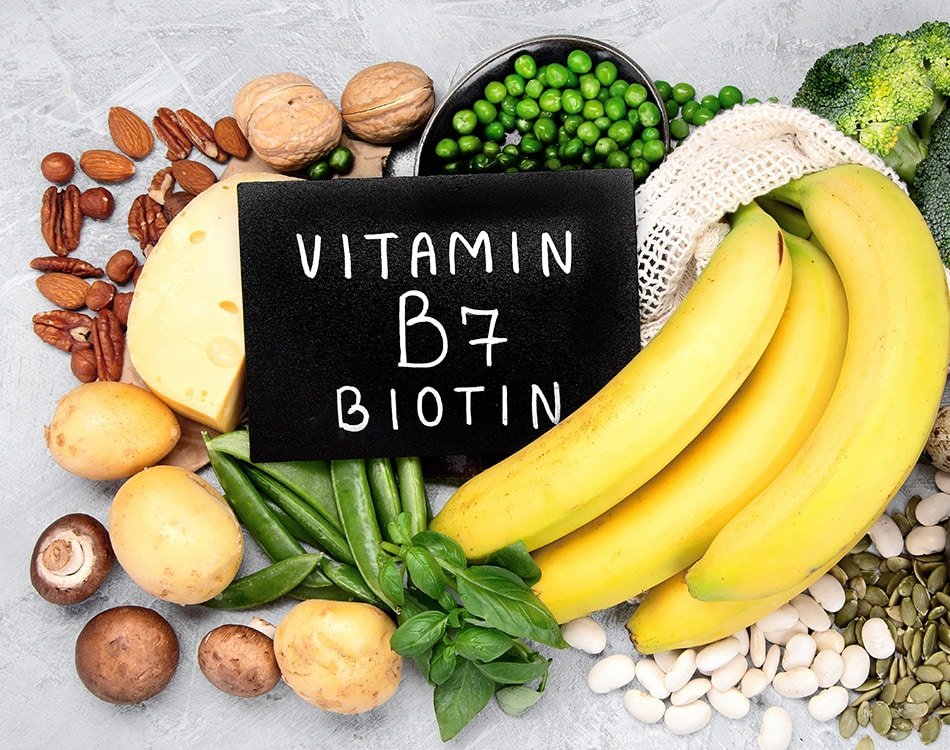
    You can get biotin from food, with egg yolks one of the richest sources, along with liver, mushrooms, nuts, seeds, cauliflower, and chicken.

    However, much of the biotin in food is bound to protein, which means your digestive system has to release it before your small intestine can absorb it.

    That processing step doesn’t always happen completely, especially if your gut health is compromised or if you’re taking certain medications.

    READ MORE | B your best self: Unpacking the benefits of B complex vitamins

    Fight Fatigue with Biotin

    Here’s where biotin becomes relevant for a lot of women: fatigue. Whether it’s the afternoon slump at 3 p.m., post-workout exhaustion, or that bone-deep tiredness that accompanies hormonal shifts, managing your energy levels can make a real difference.

    Biotin’s role in energy metabolism is biochemically sound. Research published in major biochemistry journals confirms that biotin is indispensable for the enzymatic reactions that extract energy from carbohydrates and fats.

    Without adequate biotin, your body struggles to convert food into ATP, the cellular currency of energy, which can contribute to fatigue and reduced physical performance.

    If you’re eating a reasonably varied diet (eggs, nuts, whole grains, vegetables), you probably have adequate biotin status already. Biotin deficiency in otherwise healthy women is genuinely rare, even in South Africa.

    So supplementation won’t necessarily give you an energy boost unless you’re actually deficient, which you wouldn’t know without specific testing. However, certain groups of women are more likely to have compromised biotin status:

    • If you consume high levels of alcohol regularly, your biotin absorption is reduced.
    • If you’re on anticonvulsant medications (phenytoin, carbamazepine), long-term use depletes biotin levels significantly.
    • If you’re pregnant, approximately one-third of women develop marginal biotin deficiency despite normal intake, possibly because pregnancy increases metabolic demand.

    If you fall into any of these categories, supplementation might genuinely support your energy production and recovery, particularly if you’re training or managing high stress.

    The Nervous System Connection

    Beyond energy, biotin plays an under-appreciated role in nervous system function. It’s involved in myelin formation – the protective sheath around nerve fibres – and neurotransmitter synthesis, the chemical messengers your brain uses to regulate mood, memory, and cognitive clarity.

    For women specifically, this matters during transitions. The fluctuations in oestrogen and progesterone across your menstrual cycle, during perimenopause, and at menopause create shifting demands on your nervous system.

    Adequate B-vitamin status, including biotin, supports stable neurotransmitter production when your hormones are doing their monthly or seasonal dance.

    Research indicates biotin also participates in gene expression, influencing how your cells read and use genetic instructions.

    This is particularly relevant during periods of rapid cell turnover or demand, which, again, includes pregnancy, intense training, and hormonal transitions. It’s not a magic fix for mood or focus, but it’s a genuine biochemical player in the game.

    The Biotin Bottom Line

    Biotin is safe, inexpensive, and plays genuine roles in energy metabolism and nervous system function. It’s not a cure-all, and it won’t dramatically transform your hair or skin if you’re already well-nourished.

    But if you’re training hard, navigating a life transition, managing stress, or in one of the groups more likely to have compromised status, ensuring adequate biotin intake with a product, like Biogen Biotin Super Potency, is a sensible, evidence-informed choice.

    The key is approaching it realistically: as a nutritional foundation stone, not a magic bullet. Pair it with adequate sleep, consistent training, stress management, and a reasonably varied diet.

    And if you’re considering supplementation, particularly at higher doses, give your healthcare provider a heads-up before your next blood work as it can interfere with your results.

    Author: Pedro van Gaalen

    When he’s not writing about sport or health and fitness, Pedro is probably out training for his next marathon or ultra-marathon. He’s worked as a fitness professional and as a marketing and comms expert. He now combines his passions in his role as managing editor at Fitness magazine.

    Credit: Source link

  • Ginkgo Biloba for Women: Support Circulation, Cognition and Recovery

    Ginkgo Biloba for Women: Support Circulation, Cognition and Recovery

    Ginkgo biloba is a herbal supplement increasingly recognised for supporting circulation, mental clarity and physical recovery – benefits that matter especially for women managing demanding work, training and life pressures.

    Extracted from leaves of an ancient species that predates the dinosaurs, ginkgo contains compounds believed to enhance blood flow and provide antioxidant protection.

    For female athletes, fitness enthusiasts and women balancing cognitive and physical demands, understanding what ginkgo does can help you decide whether it fits your supplement routine.

    READ MORE | Pass the stress test with these supplements

    What is Ginkgo Biloba?

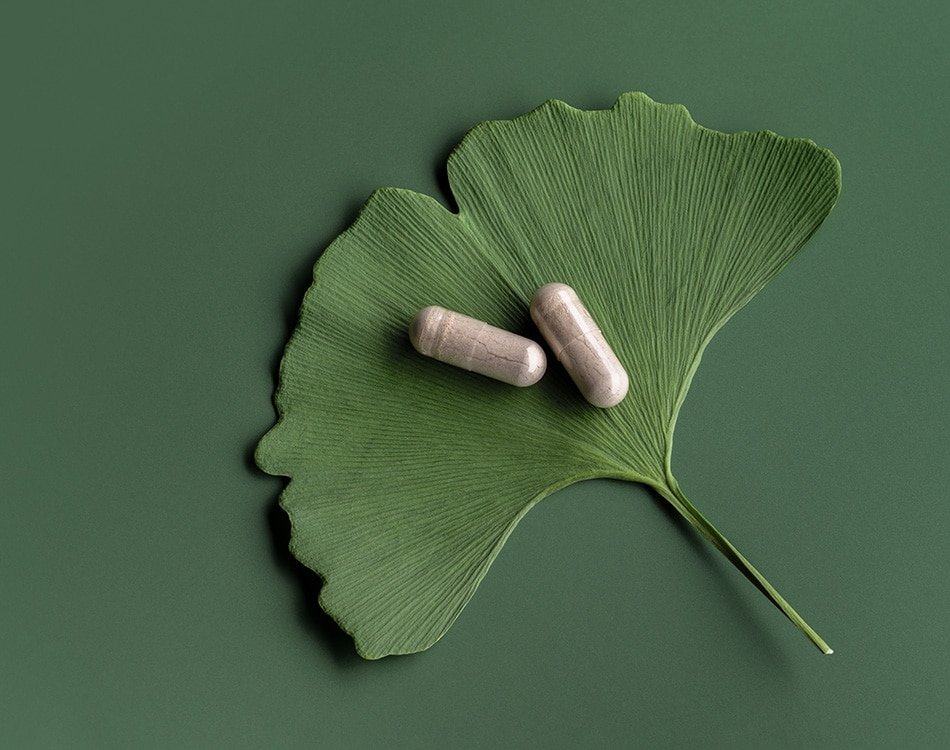
    Ginkgo biloba is a herbal supplement made from the leaves of the maidenhair tree. The active compounds in ginkgo leaves – flavonoid glycosides and terpene lactones – are the elements researchers believe drive its effects on blood flow and cellular antioxidant activity.

    Because these compounds don’t exist in meaningful amounts in everyday food, supplementation offers a practical way to access a clinically relevant dose.

    In supplement form, ginkgo leaf is processed into a standardised extract. You’ll find it sold as capsules, tablets, and liquid tinctures.

    READ MORE | 5 Steps for A Health and Lifestyle Spring Reset

    Ginkgo Biloba Benefits

    Ginkgo is traditionally used to support peripheral circulation (the blood flow to your hands, feet and extremities) and research supports this traditional use due to its mild vasodilatory effect (helping blood vessels relax and widen) combined with reduced platelet stickiness, which may help blood move more freely to the extremities.

    For women who experience cold hands and feet, or those training hard and seeking to optimise cardiovascular function during exercise, this benefit is particularly relevant.

    Effects are generally modest and require consistent use over several weeks to become noticeable; this is not a quick fix, but rather a foundational support.

    Ginkgo leaf extract is also rich in flavonoids and terpenoids, compounds recognised in the scientific literature for their antioxidant activity.

    Research notes that these compounds may help neutralise oxidative stress within cells and support healthy blood vessel function.

    For female athletes and fitness enthusiasts, this antioxidant protection is relevant after training, when intense exercise naturally generates free radicals. By helping manage this oxidative load, ginkgo may play a supporting role in recovery without replacing proper rest, nutrition and training periodisation.

    Ginkgo is sometimes used for feelings of anxiousness, stress and low mood, particularly during high-pressure work periods or intense training cycles. Evidence in these areas is limited and inconsistent, and none of these uses are firmly established. If you’re considering ginkgo for stress or mood, it’s best approached as a complementary option alongside guidance from a healthcare provider rather than a stand-alone solution.

    For women managing cortisol through training and supplement stacks, ginkgo may play a supporting role as part of a broader strategy, not as a replacement for sleep, stress management or professional support.

    Some women use ginkgo during their menstrual cycle to support occasional bloating, energy dips or mild irritability associated with premenstrual symptoms. Evidence here is mixed and limited; a small randomised controlled trial published in The Journal of Alternative and Complementary Medicine found modest support for premenstrual symptom relief, but larger, more robust trials are needed.

    Taking Ginkgo Biloba

    As Ginkgo is a botanical extract, dosages depend on your goal and product formulation. Most ginkgo biloba pills and extracts on the market are standardised to a 50:1 ratio, meaning 50 kg of raw leaf is concentrated into 1 kg of finished product. This standardisation helps ensure a consistent dose of active compounds from one capsule to the next.

    Clinical studies have commonly used standardised ginkgo biloba extract at total daily doses of 120 mg to 240 mg for circulation and cognitive support. Depending on the formulation, this may be taken as a single daily dose or divided into two or three doses.

    A product like Biogen Ginkgo Biloba 200mg delivers a straightforward, single-ingredient dose designed to support mental clarity, circulation and physical recovery in adults. Taken as one capsule daily with breakfast, it fits easily into an existing routine without requiring multiple pills throughout the day.

    The 50:1 extract standardisation ensures batch-to-batch consistency, so you know what you’re getting with every serving.

    It is usually best to take a ginkgo extract supplement with a meal to reduce the mild stomach upset some people experience on an empty stomach. Because its effects on circulation and cognition build up gradually, consistency matters far more than timing.

    If you are pregnant or breastfeeding, it is best to avoid this supplement as there isn’t enough reliable safety data, and its blood-thinning effect is a specific concern during pregnancy and around childbirth.

    Author: Pedro van Gaalen

    When he’s not writing about sport or health and fitness, Pedro is probably out training for his next marathon or ultra-marathon. He’s worked as a fitness professional and as a marketing and comms expert. He now combines his passions in his role as managing editor at Fitness magazine.

    Credit: Source link

  • Become a Wonder Woman with the power of ashwagandha and its effects on stress

    Become a Wonder Woman with the power of ashwagandha and its effects on stress

    As a woman, we juggle a lot, and stress is an everyday companion. Whether we’re managing a demanding career, balancing family responsibilities, navigating hormonal shifts, or pushing through our fitness goals, the pressure accumulates.

    But help is at hand in the form of ashwagandha; not as a quick fix, but as a legitimate plant-based tool that addresses some of the unique challenges women face when it comes to stress, sleep, hormones and recovery.

    But don’t dismiss it as “just another stress supplement”, because this adaptogenic herb has some genuinely compelling research behind its potential to support women’s health in ways that go well beyond calming an anxious mind.

    READ MORE | Manage stress and improve mental health with these supplements

    ashwagada

    Why Ashwagandha Matters for Women

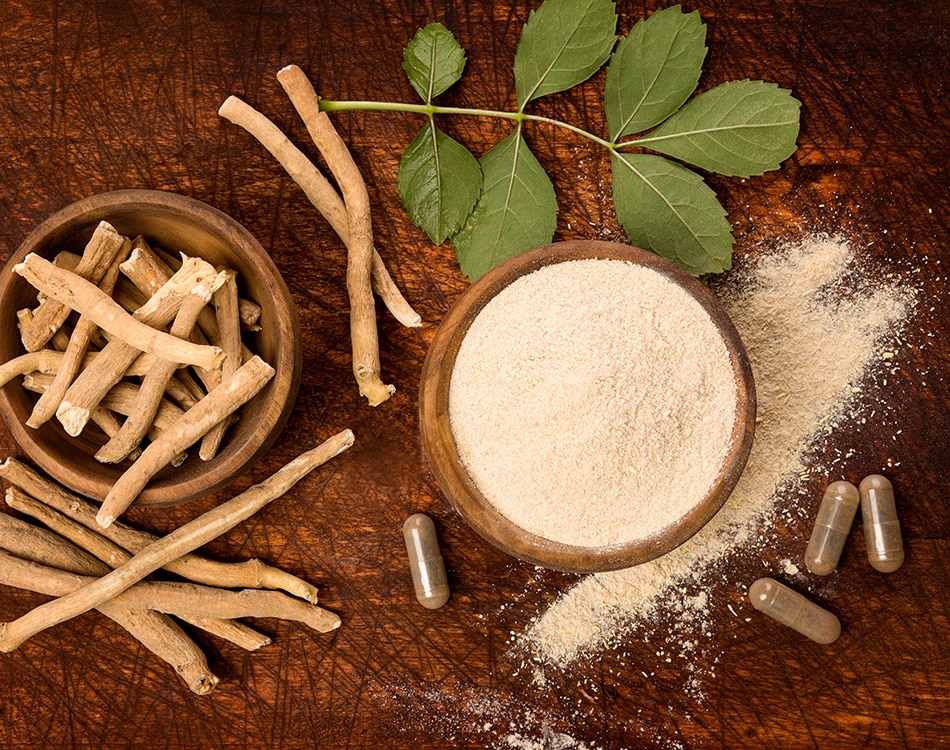
    Ashwagandha (Withania somnifera), also called Indian ginseng or winter cherry, is an adaptogenic herb, which means it helps your body respond better to both physical and mental stress without harsh side effects.

    The plant’s active compounds, called withanolides, work on your nervous, endocrine (hormonal) and immune systems to bring things back into balance.

    And here’s the thing: women’s bodies are particularly sensitive to stress hormones, especially cortisol. When cortisol remains elevated, it doesn’t just make you feel wired; it can disrupt your menstrual cycle, tank your sleep, fuel cravings, and slow recovery from exercise. Ashwagandha targets exactly that problem.

    In a landmark double-blind trial, adults who took a standardised ashwagandha extract showed measurable drops in cortisol levels compared to placebo, alongside reduced stress scores. For women dealing with chronic work pressure, hormonal fluctuations or the cumulative stress of modern life, this matters.

    READ MORE | Is burnout to blame for your brain fog?

    The Cortisol Connection: Why Women Should Care

    Chronic stress doesn’t affect men and women the same way. Women’s cortisol patterns are closely tied to oestrogen and progesterone, which means stress can throw your entire hormonal cycle out of sync – longer periods, irregular ovulation, worsening PMS symptoms, or accelerated perimenopause symptoms.

    When cortisol stays high, your body also prioritises stress response over reproductive health. This is why stressed women often experience disrupted cycles or intensified hormonal symptoms.

    Ashwagandha’s ability to support healthy cortisol levels is particularly valuable. Research suggests that by helping regulate your stress response, the herb creates space for your hormonal systems to work more smoothly.

    This isn’t about curing anything – it’s about supporting the body’s natural ability to maintain hormonal balance when external stress is constant.

    Many women report noticing changes in their cycle regularity, PMS intensity, or menopausal symptoms within 4-6 weeks of consistent ashwagandha use. The mechanism isn’t dramatic – it’s subtle, gradual hormonal support rather than a reset button.

    READ MORE | Become a super sleeper with these natural sleep enhancers

    Better Sleep Quality

    Insomnia and fragmented sleep affect women disproportionately, especially around hormonal transitions. And it’s not always about racing thoughts. Often, it’s shallow sleep, frequent waking, or that 3 a.m. jolt that keeps you exhausted.

    Ashwagandha addresses sleep differently than most supplements. Instead of sedating you (which can leave you groggy), it works by calming an overactive nervous system. The herb helps soothe the brain chatter and nervous tension that keeps you in a light sleep state.

    Studies show that ashwagandha can help people fall asleep faster, spend more time in restorative deep sleep phases, and wake fewer times during the night.

    For women juggling early alarms, kids’ schedules, or shift work, this kind of sleep architecture improvement can be genuinely transformative.

    The timing matters too. If sleep is your main goal, taking ashwagandha with your evening meal or an hour before bed works best, especially when paired with other sleep hygiene habits like reducing screen time or keeping your bedroom cool.

    READ MORE | Our Nervous System: The Hidden Key to Better Training, Recovery & Results

    Athletic Performance and Recovery

    Women’s bodies recover differently from training. You’ve probably noticed that the same workout that leaves a man sore for two days might sideline you for four.

    Partly it’s individual variation, but partly it’s hormonal – oestrogen and progesterone affect muscle protein synthesis, glycogen storage, and inflammation differently across your cycle.

    Ashwagandha can support recovery by helping manage chronic systemic stress, which allows your body to allocate more resources toward muscle repair and cellular energy production.

    Research on athletic populations shows the herb supports endurance, strength and post-workout recovery — benefits that extend to women just as much as men. For competitive athletes or serious gym-goers, this is significant.

    A 2021 review found that ashwagandha supplementation was associated with improvements in athletic performance markers and training recovery. The effect isn’t dramatic (you’re not suddenly getting stronger overnight), but over weeks of training, the cumulative benefit of better recovery can shift your progress trajectory.

    Plus, if you’re someone who tends toward overtraining or gets stuck in that stress-training-poor-recovery cycle, ashwagandha’s adaptogenic effect can help break the pattern.

    READ MORE | Beat Brain Fog: Natural Nootropics for Sharper Focus & Motivation

    Cognitive Function Under Pressure

    Women’s cognitive performance is sensitive to stress and sleep deprivation. When cortisol is high and sleep is fragmented, your working memory takes a hit, focus scatters, and mental fatigue sets in faster.

    Ashwagandha supports cognitive function by doing two things simultaneously:

    1. Reducing oxidative stress in brain cells
    2. Supporting your nervous system’s ability to stay calm under pressure.

    Research suggests the herb helps maintain mental clarity, sharp working memory, and stable mood during demanding tasks. This matters if you’re in a high-pressure job, studying while managing other responsibilities, or simply trying to stay mentally sharp through a hectic week.

    It’s not a “smart drug” that magically makes you more intelligent – it’s support for your brain’s ability to function well when stress and fatigue would normally diminish it.

    READ MORE | Pass the stress test with these supplements

    How to Take Ashwagandha

    Effective dosing is based on clinical trial data: most research uses 225-600mg daily of a standardised extract (which matters, as unstandardised powder requires larger doses).

    The active compounds, withanolides, are fat-soluble, so take ashwagandha with a meal containing healthy fats (olive oil, nuts, avocado, fatty fish). This improves absorption and reduces the mild stomach upset some people experience on an empty stomach.

    Timing depends on your goal:

    • Daytime stress or workout performance? Take it with breakfast.
    • Sleep quality or evening relaxation? Take it with your evening meal or an hour before bed.

    Cycling is important. Unlike daily vitamins, your body can build tolerance to adaptogens if you use them constantly.

    The evidence-backed approach is to take ashwagandha daily for 6-8 weeks, then take a 2-week break before resuming. This keeps your nervous system responsive to the herb’s effects.

    Most women notice changes within 2-4 weeks of consistent use, but the full benefits emerge over 6-8 weeks. Consistency matters more than timing – choose a routine you’ll stick to.

    If you’re pregnant or breastfeeding, avoid ashwagandha as it can trigger uterine contractions, making it unsafe during pregnancy. Avoid it while breastfeeding unless explicitly approved by your midwife or doctor.

    It is also important to avoid this ashwagandha if you suffer from autoimmune  and thyroid conditions, or take medication that may cause interactions, like sedatives, anti-anxiety medications and antidepressants. It also lowers blood pressure and blood glucose naturally, so combining it with blood pressure or diabetes medication could cause levels to drop dangerously low.

    Always speak to your doctor or pharmacist before starting ashwagandha if you’re on prescription medication.

    Well Worth Considering

    Ashwagandha isn’t a miracle supplement, and it’s definitely not a substitute for treating diagnosed conditions. What it is is a credible botanical support for the specific stressors women face – hormonal sensitivity to cortisol, sleep fragmentation, recovery demands, and cognitive performance under pressure.

    If you’re a healthy woman dealing with everyday stress, training hard, or navigating hormonal transitions, a product like Biogen Ashwagandha Root, which provides 200mg daily of a quality extract, is affordable, well-tolerated, and unlikely to interfere with your other supplements.

    Author: Pedro van Gaalen

    When he’s not writing about sport or health and fitness, Pedro is probably out training for his next marathon or ultra-marathon. He’s worked as a fitness professional and as a marketing and comms expert. He now combines his passions in his role as managing editor at Fitness magazine.

    Credit: Source link