



A micromort, a unit for comparing and communicating risk to patients, is equivalent to a one-in-a-million chance of dying.
Hundreds of millions of operations are performed every year, and the risk of death is typically around half a percent, to which patients might say things like, “I could die just as easily crossing the road,” making it clear they really don’t understand the difference in magnitude of risk. One way to communicate risk is by analogy. For example, just going under anesthesia carries about a 1-in-100,000 chance you won’t wake up. How much is that? Well, that’s about the same risk as an expert sky dive. But that still may be kind of tough to wrap your head around. It’s hard to think in terms of small numbers. Can you imagine a 0.0017 mile by 0.00227 mile rug? How big (or small) is that? We need more digestible units. Enter the micromort as a unit for comparing and communicating risk.
A micromort (mM) is a unit equivalent to a one-in-a-million chance of dying. That’s like the odds of flipping a coin and getting tails 20 times in a row, or a little less than the chances of getting a royal flush in poker. But the real utility is to help compare different risks to one another using the same metric. For example, driving 100 miles entails about a one-in-a-million chance of death, so that’s one micromort. Scuba diving is about five micromorts per dive, so each dive is as risky as driving 500 miles. So, now we have a way to directly compare the risk of surgical procedures and common activities.
Giving birth is as risky as driving from New York to Los Angeles and back again, but getting a Caesarean section is more than twice as risky. Even something like a simple hernia repair carries the same risk of dying as something like skydiving 200 times. Now, obviously, sometimes you have no choice, but death from varicose vein surgery or circumcision could probably be avoided, as you can see below and at 2:32 in my video Micromorts: How Risky Is It to Go Under Anesthesia?.I was surprised to learn that horseback riding is about four times deadlier than rock climbing, but getting chemotherapy and radiation for head and neck cancer is riskier than rock climbing for 500 years, driving 5 million miles, or skydiving 5,000 times.
One leading cause of death I didn’t really talk about in How Not to Die is accidental death. We have approximately a one-in-a-million chance of dying just by accident every day of our lives, and about half of that risk is dying in a car crash, based on U.S. averages. There are all sorts of other hazards, which you can see below and at 3:19 in my video.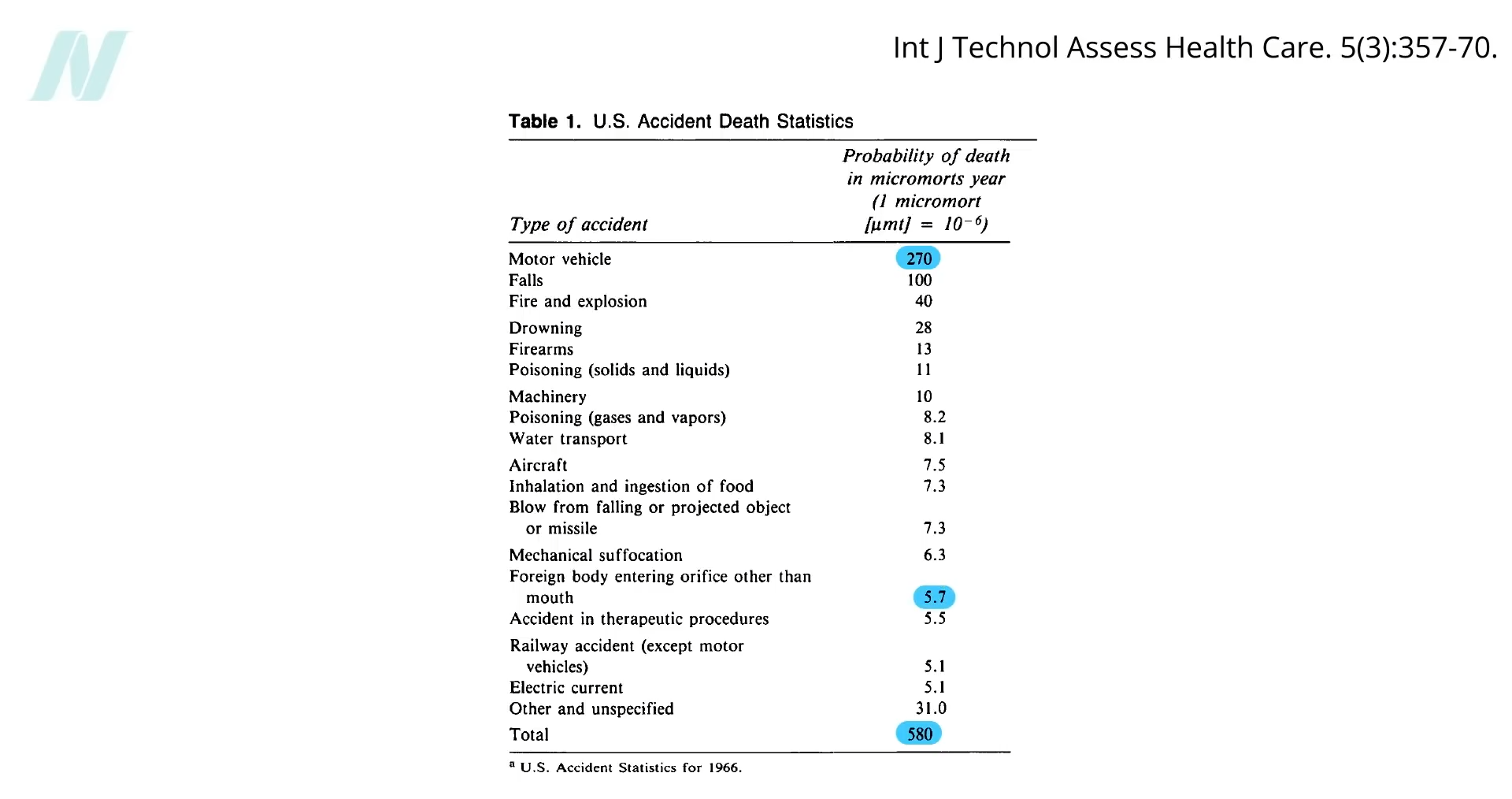
I was surprised to learn Americans have about a 1-in-200,000 chance every year of dying from a foreign body entering an orifice other than the mouth.
Other things we may want to avoid include climbing Mount Everest, which is about 30 times riskier than coal mining or base jumping. Trains and planes are actually equivalent over the same distance, but riding a motorcycle is about 50 times deadlier than riding in a car, though cycling to a destination is riskier too, about 10 times as deadly as driving in the near term.
Here’s a good example of how one can use micromort comparisons to help put things in perspective. Certain types of breast implants can cause a rare type of cancer, a type of breast implant–associated lymphoma. You can imagine how scary this is for the millions of women who have implants, but check out that risk compared to the risk of other common activities in the table below and at 4:12 in my video.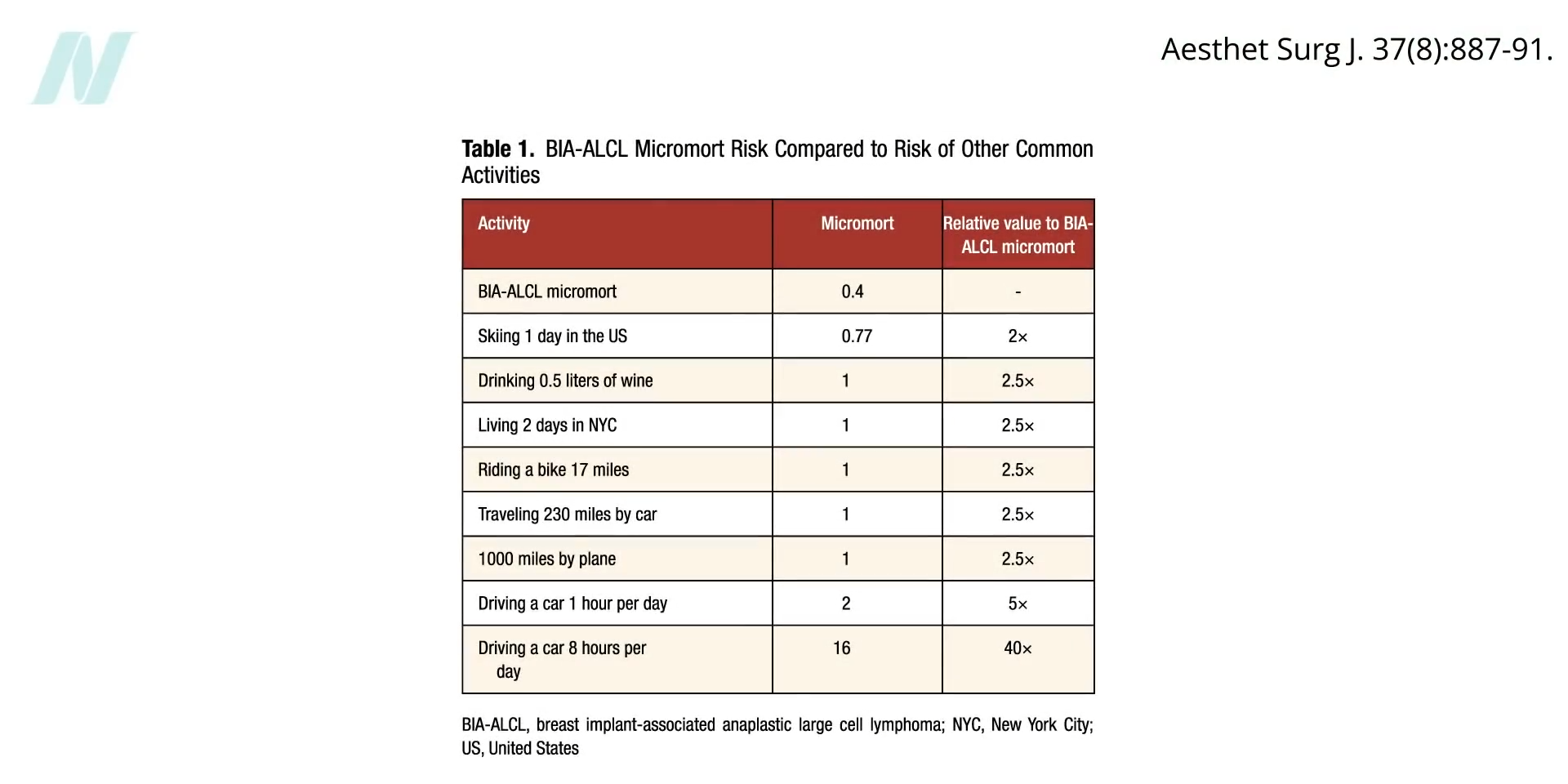
Your risk of dying from that kind of cancer is less than a single day of skiing. Some might say it’s preferable to die quickly on the slopes than going through the slow suffering of cancer, and without the risk of bankrupting your family, but at least it can put the risk of the implant-cancer killing you in context.
Doctor’s Note
How dangerous are medical interventions in general? Surprisingly, physicians are a leading cause of death. See Why Prevention Is Worth a Ton of Cure. You can also check out How Doctors Responded to Being Named a Leading Killer.
Credit: Source link