


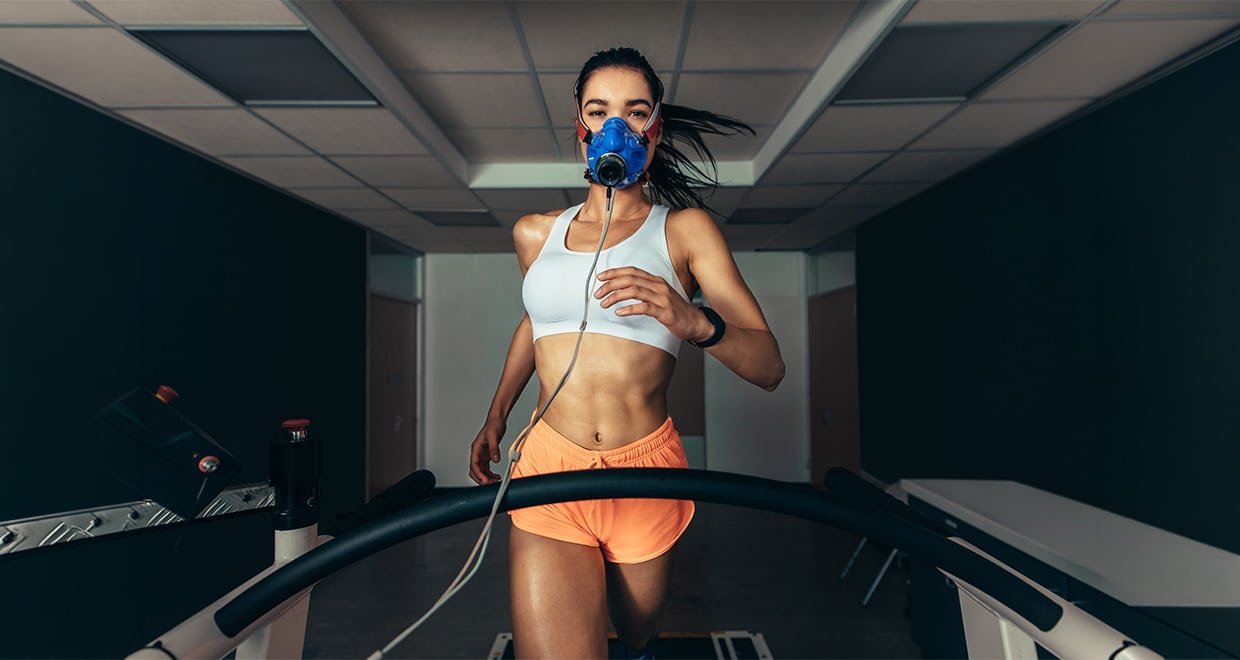
If you want to live longer, age better and stay strong enough to enjoy the decades ahead, one fitness metric deserves your attention: VO2 max.
Once seen as a performance number for endurance athletes, VO2 max is now emerging as a powerful marker of longevity, healthspan and cardiorespiratory fitness.
Put simply, VO2 max measures how well your body takes in oxygen, delivers it to working muscles and turns it into energy during exercise. The higher your aerobic capacity, the more resilient your heart, lungs and muscles are likely to be as you age.
That matters because longevity is no longer just about lifespan – the total number of years you live. The real goal is healthspan: spending more of those years mobile, independent and free from chronic, age-related disease.
And while sleep, nutrition, strength training and metabolic health all play a role, improving VO2 max may be one of the most practical ways to build a stronger body for the long run.
READ MORE | HIIT the zone: How intense interval training can blast fat and improve fitness exponentially
Take your health to the max
While some tips are gimmicks, many hold validity, with rigorous research backing their effectiveness.
While improving your metabolic health, getting better sleep, and lifestyle changes are all effective and relevant ways to improve longevity, one approach seems to be more effective than the others.
Increasing your VO2 max is widely considered one of the most powerful, independent, modifiable predictors of longevity and all-cause mortality1.
While this measure of fitness is usually a focus for elite and serious endurance athletes, as it is a key measure of performance, it is a figure that everyone should understand and know.
Research shows that higher cardiorespiratory fitness, measured by VO2 max, is more strongly associated with reduced mortality risk than conventional risk factors, such as blood pressure, smoking, or cholesterol levels.
This is evident in studies that show endurance athletes typically live longer than the general population.
For example, a meta-analysis2 of 24 studies that included 165,033 former elite athletes (15.6% women) showed that overall, these athletes lived longer and had a reduced incidence of both cardiovascular disease (CVD) and cancer mortality compared with the general population.
READ MORE | Heart rate training zones
Understanding VO2 max
Think of your VO2 max as the size of your body’s “engine”. Just like a sports car can handle more fuel and air to go faster, a high VO2 max means your body is incredibly efficient at using the oxygen we get from the air we breathe and turning it into energy to power your muscles.
Within this context, the term simply means the Volume (V) of Oxygen (O2) your body can use at its Maximum (max)limit. This is known as your aerobic capacity3.
VO2 max is typically measured as millilitres of oxygen consumed per kilogram of body weight per minute of exercise (ml/kg/minute).
The longevity link
If you have a high VO2 max, it means your heart, lungs, and muscles are all in peak condition and synchronisation. This means things are less likely to break down.
Research shows that people with higher aerobic fitness tend to live longer because their cardiovascular systems are more resilient. A moderate improvement in VO2 max can reduce the risk of death by 21% to 30%, according to research presented in a white paper by Discovery Vitality.
In fact, each unit increase in VO2 max was associated with a 45-day increase in longevity, according to findings from a 2018 study4.
Those with a higher VO2 max can handle physical stress better, have lower risks of heart disease, and generally maintain independence much later into old age.
For optimal longevity and reduced all-cause mortality, women aged 40 to 49 should aim for a VO2 max in the “Good” to “Excellent” range for their age (generally >33–39 ml/kg/min). The key is to be in the top 25-50% for your age group, or higher.
The Discovery Vitality research based on member data also found that:
- The risk of all-cause cancer mortality dropped by 20% and 45% among those with medium and high levels of cardio fitness, respectively.
- The risk of certain cancers and diabetes was reduced with an improved VO2 max.
- Hospital costs were as much as 30% lower among members with higher cardio fitness levels.
- Lower levels of obesity (95% lower), high-risk blood glucose levels (84%) and high blood pressure (70%) were found among members with higher cardio fitness.
- Anxiety and depression symptoms were lower among these members.
- Sleep was longer among fitter members.
Measuring your VO2 max
The average person doesn’t need a lab with a treadmill and a gas mask (a “CPET” test) to get a very useful estimate of your VO2 max.
Since safety is the priority, especially if you don’t exercise regularly yet, there are three reliable ways to do this at home.
The “Sub-Max” Walking Test (Rockport Test): This is the safest and most common method for beginners. Instead of running as fast as you can, you walk quickly and use your heart rate to predict your fitness.
How to do it: Find a flat 1.6km loop or use a treadmill at the gym. Walk the distance as fast as you possibly can without breaking into a run. Note exactly how many minutes/seconds it took and immediately check your heart rate at the finish.
Input your time, heart rate, age, and weight into one of the many Rockport Calculators available for free online.
The Cooper 12-Minute Test: If you already walk or jog regularly and feel comfortable pushing your pace, then the Cooper 12-Minute Test is a classic field test.
How to do it: See how much distance you can cover in exactly 12 minutes (running or walking). Use the following formula to calculate your VO2 max:
- VO2 max = (22.35 x kilometres) – 11.29
Strap on a wearable
If you own an Apple Watch, Garmin, or Fitbit, you likely already have a VO2 max estimate sitting in your health app.
These devices use optical heart rate sensors to track your heart rate relative to your walking or running pace.
While they can be inaccurate and are often off by about 5% compared to a lab test, they are excellent for tracking trends. If your watch says your number is going up over six months, your heart health is improving.
For the most accurate reading, ensure the watch strap is snug, and your User Profile (age, weight, height) is updated.
Improving your VO2 max
While genetics play a significant role in determining our base VO2 max, it is possible to increase it.
Scientists have identified almost 100 genes specifically related to VO2 max trainability5, which indicates your genetic potential to improve your cardiorespiratory capacity with the right type of exercise.
Fortunately, you don’t need to train like a marathon runner to improve your longevity. The goal is to make your heart and lungs robust enough to handle whatever life throws at you decades from now.
The best way to improve your VO2 max is by engaging in a structured and varied training programme.
The aim is to do about 80% of your activity at a low-to-moderate intensity. This is the foundation of your fitness. This strengthens your heart’s ability to pump more blood with each beat and helps your muscles use oxygen more efficiently without overstressing your joints.
The other 20% should include some High-Intensity Interval Training (HIIT). This is the most effective way to raise your VO2 max, but you only need to do this 1–2 times a week.
Instead of going fast for a long time, go hard for short bursts – 30 seconds to 4 minutes – then recover with a slow walk or rest. For non-athletes, walking up a steep hill until you’re breathing quite hard is the perfect option.
Building more muscle with regular weight training can also improve overall fitness and indirectly benefit VO2 max.
By structuring your training like this, you aren’t just getting fitter and faster; you are widening your aerobic buffer to slow the natural age-related decline in our VO2 max.
By starting from a higher point and maintaining it, you ensure that simple tasks, like carrying groceries or climbing stairs, remain easy as you get older.
References:
- Strasser B, Burtscher M. Survival of the fittest: VO2max, a key predictor of longevity? Front Biosci (Landmark Ed). 2018 Mar 1;23(8):1505-1516. doi: 10.2741/4657. PMID: 29293447.
- Runacres A, Mackintosh KA, McNarry MA. Health Consequences of an Elite Sporting Career: Long-Term Detriment or Long-Term Gain? A Meta-Analysis of 165,000 Former Athletes. Sports Med. 2021 Feb;51(2):289-301. doi: 10.1007/s40279-020-01379-5. Epub 2020 Dec 24. PMID: 33368029; PMCID: PMC7846545.
- Rankovic G, Mutavdzic V, Toskic D, Preljevic A, Kocic M, Nedin Rankovic G, Damjanovic N. Aerobic capacity as an indicator in different kinds of sports. Bosn J Basic Med Sci. 2010 Feb;10(1):44-8. doi: 10.17305/bjbms.2010.2734. PMID: 20192930; PMCID: PMC5596610.
- Clausen, J, Marott, J, Holtermann, A. et al. Midlife Cardiorespiratory Fitness and the Long-Term Risk of Mortality: 46 Years of Follow-Up. JACC. 2018 Aug, 72 (9) 987–995.https://doi.org/10.1016/j.jacc.2018.06.045.
- Williams CJ, Williams MG, Eynon N, Ashton KJ, Little JP, Wisloff U, Coombes JS. Genes to predict VO2max trainability: a systematic review. BMC Genomics. 2017 Nov 14;18(Suppl 8):831. doi: 10.1186/s12864-017-4192-6. PMID: 29143670; PMCID: PMC5688475.
Author: Pedro van Gaalen
When he’s not writing about sport or health and fitness, Pedro is probably out training for his next marathon or ultra-marathon. He’s worked as a fitness professional and as a marketing and comms expert. He now combines his passions in his role as managing editor at Fitness magazine.
Credit: Source link